The previous month felt somewhat like April Fool’s Day when Google revealed its transformation into Alphabet, Inc., a newly formed parent company encompassing Google’s existing operations within a revamped organizational framework. You’ve likely observed the shift to the refreshed Google logo, now harmonizing with its parent company’s aesthetic.
Initially, numerous search industry analysts were puzzled by the official announcement, yet it quickly became evident that Google was serious, and Alphabet was indeed a genuine entity. Despite the unremarkable name, Alphabet will undeniably empower Google to shake things up, though many marketers past and present have questions regarding this move. Here’s a comprehensive guide to understanding Google, Alphabet, and the new structure’s potential implications for you.
What Exactly is Alphabet, Inc.?
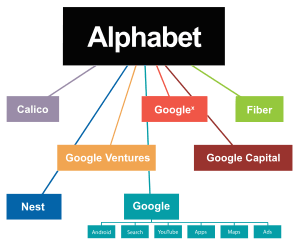
Alphabet, Inc. is a proposed holding company intended to serve as the “parent” to Google and a multitude of its subsidiary entities. Alphabet won’t directly manufacture or market products but will instead house Google’s search operations alongside numerous subsidiary organizations currently under Google’s umbrella.
What’s the Rationale Behind This Move by Google?
Over time, Google’s acquisition of numerous companies and expansion beyond its core search business has resulted in a rather intricate operational structure. Larry Page, Sergey Brin, and many company stakeholders believed it was opportune to consolidate these smaller companies, along with Google itself, into a larger corporate entity. This move aims to enable each business component to function more effectively, independent of Google’s primary search operations.
Who Will Assume Leadership Roles at Alphabet?
Larry Page will take on the role of CEO at Alphabet, while Sergey Brin will serve as the company’s president. Sundar Pichai, currently overseeing Google’s Internet business, will become CEO of Google, Inc., within this new framework. Furthermore, each subsidiary organization will have its own CEO to enhance organizational control and supervision, key drivers behind this restructuring. Many current CEOs of Google-owned companies, such as Nest’s Tony Fadell and YouTube’s Susan Wojcicki, will maintain their positions.
When Will This Transition Take Effect?
Currently, Alphabet remains a proposed umbrella company, with nothing definitively finalized. To execute this transition, Alphabet must first be established as a subsidiary of Google. Subsequently, their roles will be reversed, making Google a subsidiary of Alphabet. Based on Google’s official filing with the Securities and Exchange Commission, Alphabet is projected to release its earnings as a Google subsidiary by year’s end, suggesting a finalized transition by sometime next year.
Will the Google Search Engine Be Rebranded as Alphabet?
No. The familiar Google search engine will remain unchanged. You won’t need to switch to alphabet.com as your primary search engine, and “alphabetting” won’t become a verb like “Google” did. Google, as we know it today, will persist within this new structure.
What Impact Will This Have on AdWords?
None. AdWords, being integral to Google’s search business and representing a significant portion of its substantial annual revenue, will also remain untouched. No changes will be required for your existing or future campaigns, and you won’t encounter any new editors or tools beyond what Google would have introduced otherwise. All AdWords-related operations will continue as usual.
What Happens to My Existing Google Shares?
If you hold Google shares, there’s no need for concern. Stock in Google, Inc. (representing Google’s Internet business) will continue to be traded under the GOOG and GOOGL ticker symbols on the NASDAQ. Upon completion of the transition, Google stock will be rebranded as Alphabet stock, retaining its value and price history. In essence, nothing substantial will change except for some naming conventions (depending on the specific stock you own). If you have any apprehensions, consult your investment manager.

Is Google Divesting Parts of Its Business?
While no formal announcements have been made about potential sales of Google properties, it’s improbable that Google would readily part with any companies acquired in recent years. A sale of YouTube or similar entities due to the organizational restructuring is unlikely. Any such event would likely have been in motion regardless.
How Many Subsidiary Companies Will Be Integrated into Alphabet?
In short, a considerable number. Google, Inc., the Google we’re all familiar with, will constitute the largest entity under the Alphabet umbrella. Moving forward, many of Google’s current departments, including Android and YouTube, will be spun off into smaller, self-contained subsidiary organizations.
What’s the Significance of Contact Lenses and Internet Balloons in This Context?
Google’s scope has long transcended that of a conventional Internet company. Over the past decade, Google has embarked on ambitious projects with the potential to reshape human history. Many of these initiatives, such as the driverless car project, originated within Google X, the company’s secretive innovation lab. Within the new Alphabet corporate structure, Google X and other ventures will gain greater operational autonomy outside Google, Inc. This includes Calico Labs (focusing on life expectancy and anti-aging), Google Life Sciences (home to the Google contact lens project), and Google’s robotics division, all operating independently under Alphabet. To witness Google’s evolution from its humble beginnings to its potentially world-altering future, check out this captivating video: