For the average person, Google’s search engine might seem simple: you type in a word, and it shows you websites about that word. For example, if you search for “corgi,” you’ll find articles about corgis, information about the breed, and even suggestions for related searches like “corgi butt.” While seemingly straightforward, the goal of Google Search is to provide you with results from which you’ll derive value. And most people find value in adorable corgi butts. However, Google’s algorithm wasn’t always this good at understanding what people find valuable. It has evolved significantly over the years. Today, we’ll explore the major milestones of this evolution. Below is a chronological list of the most impactful Google algorithm updates since 2003. This list will be updated as new updates roll out. Check out the top Google algorithm updates of 2021 here. Let’s begin!
Google Fred Update – March 2017
Image via Search Engine Roundtable March 2017 saw the arrival of Google’s “Fred” update (its unofficial name). This update aimed to penalize websites that prioritized making money over providing a good user experience. The name “Fred” is random and jokingly assigned by Google analytics expert Gary Illyes. However, the update’s impact was far from random.
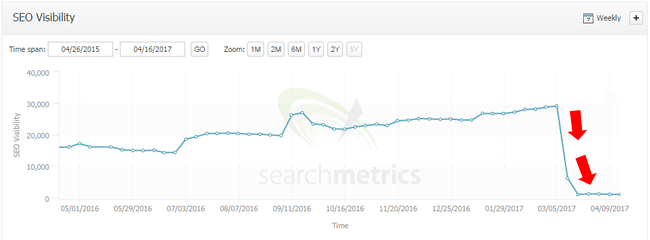
Image via GSQi Websites offering low-quality user experiences, such as those with thin content, overly promotional material, poor navigation, and intrusive ads, saw their organic search traffic plummet overnight. Some sites even reported a 90% drop in traffic.
Google Intrusive Interstitial Penalty – January 2017
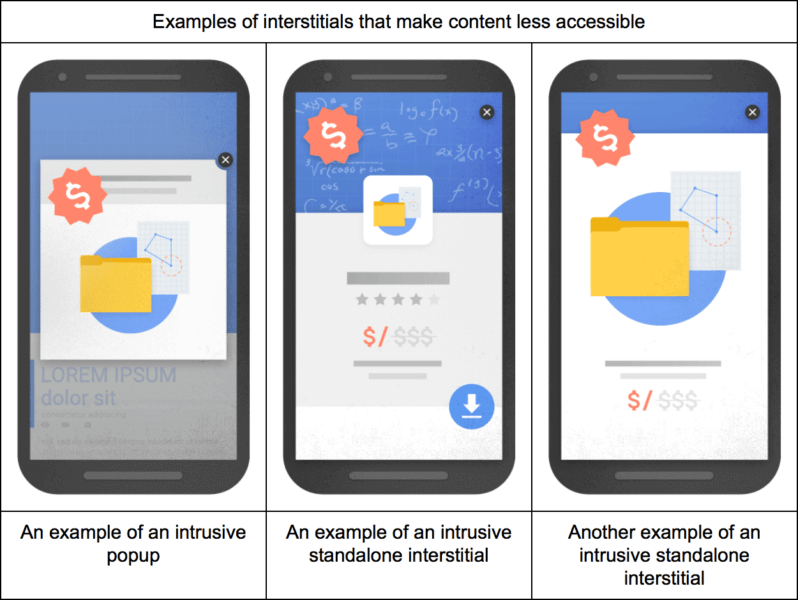
Image via Google Webmaster Central Blog In August 2016, Google announced the Intrusive Interstitial Penalty. They stated that “Pages where content is not easily accessible to a user on the transition from the mobile search results may not rank as highly.” Rolled out in January 2017, this update penalized websites using intrusive pop-ups on their mobile versions. Google provided examples of practices that would negatively impact a website’s ranking: 1. Showing a popup that covers the main content, either immediately after a user lands on the page from search results or while they are browsing the page. 2. Displaying a standalone interstitial that users have to close before accessing the main content. 3. Designing a layout where the above-the-fold portion of the page appears similar to a standalone interstitial, even though the main content is below the fold. Glenn Gabe studied the penalty’s impact and documented insightful observations in this blog post.
Google Penguin 4.0 – September 2016

Penguin 4.0: the Penguin we deserve. Image via Pew Trusts. September 2016 marked a significant upgrade with the introduction of Google announces Penguin 4.0. The two primary changes from the original Penguin update were: 1. Penguin goes real time, integrating into Google’s core algorithm. 2. **Penguin now devalues “spammy” links at a granular level, reversing previously imposed site-wide penalties. As a result, websites penalized by Penguin updates 1.0-3.0 saw ranking improvements if they had cleaned up their spammy links.
Google “Possum” Update – September 2016
Image via Tech Critic The September 2016 update, dubbed “Possum gets its name” due to its impact on Google My Business listings, was neither announced nor confirmed by Google. This update refined Google’s location filter, causing some business listings to become less visible or “play possum.” Here’s how Possum impacted local search rankings: 1. Businesses outside of a city’s limits experienced higher rankings for local search keywords**.** Previously, businesses not physically located within city limits faced difficulty ranking for relevant keywords. 2. A new location filter was introduced, filtering out businesses sharing the same address. 3. The physical location of the user conducting the search gained more significance in determining results.
Google RankBrain – October 2015
Image via The Next Web In October 2015, Bloomberg breaks the news announced the integration of RankBrain, a machine-learning artificial intelligence system, into its core algorithm. Senior research scientist at Google, Greg Corrado, revealed to Bloomberg that RankBrain had been operational for months and quickly become Google’s third most important ranking signal. This system enabled Google’s algorithm to understand relationships between words and deliver results for never-before-seen search queries.
“Mobilegeddon” – April 2015

February 2015 saw Google announce the expansion of mobile-friendliness as a ranking signal. This update, known as “Mobilegeddon,” launched in April and prioritized mobile-friendly websites and relevant app content in search results. Consequently, websites labeled “mobile-friendly” gained better visibility.
Google Pigeon Update – July 2014

Image via Search Engine Land July 2014 saw a significant local search algorithm update, which Search Engine Land nicknamed “Pigeon,” as “pigeons tend to fly back home.” This update deeply integrated local search with Google’s web search capabilities, incorporating hundreds of core algorithm ranking signals and features like the Knowledge Graph, spelling correction, and synonyms.
Google Hummingbird – August 2013
Google recognized a shift in user behavior, with search queries becoming more conversational as people began treating their devices more like humans. To adapt to this growing need to understand user intent, Google launched Hummingbird in the summer of 2013. Hummingbird wasn’t just a minor tweak but a complete overhaul of Google’s core algorithm. It possessed the ability to understand both context and intent behind search queries. Google’s Matt Cutts estimated that Hummingbird impacted 90% of all search results.
Google Knowledge Graph – May 2012
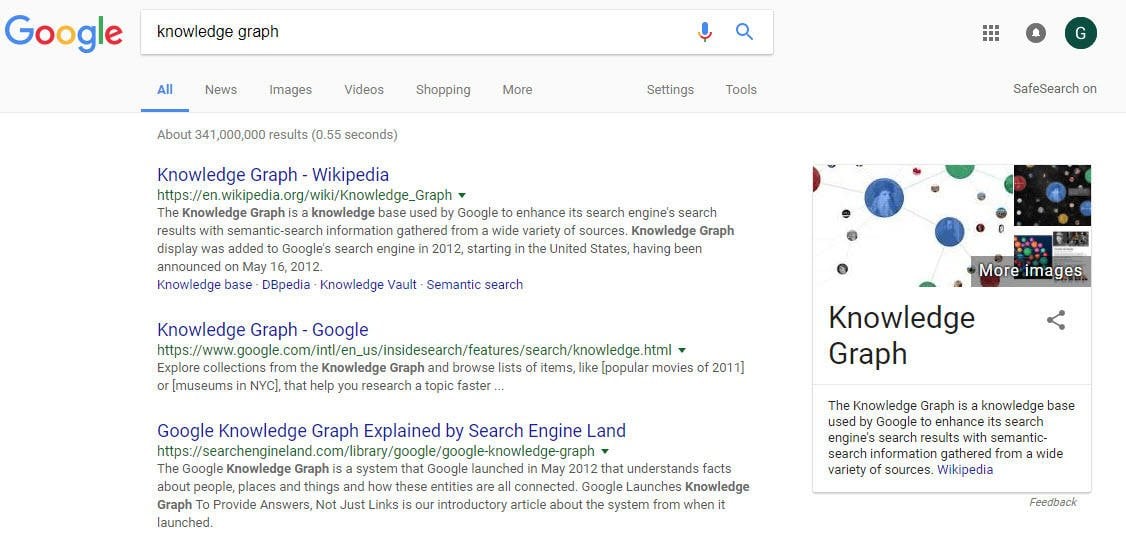
May 2012 witnessed the launch of Google introduces the Knowledge Graph. Google’s objective was to make information discovery faster and easier for users. The Knowledge Graph presented information in panels to the right of search results. According to Google, the Knowledge Graph could understand real-world entities and their relationships, processing information more like humans. At launch, it contained over 500 million objects and more than 3.5 billion facts about their interrelationships.
Google Penguin – April 2012
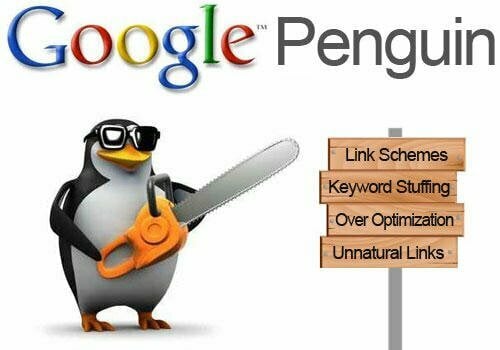
April 2012 saw the arrival of Google announces Penguin , announced through a blog post titled, “Another step to reward high-quality sites.” The main aim of Penguin was to penalize websites that violated Google’s quality guidelines. Websites employing black-hat SEO tactics like keyword stuffing and link schemes experienced a drop in organic traffic. Unlike targeting specific pages, this update imposed penalties at the website level. Google clearly distinguished ethical “white hat SEO” from unethical “black hat webspam,” urging webmasters to focus on building high-quality websites that provide a positive user experience.
Google Panda – February 2011
Image via Search Engine Land Initially called “Farmer” for its crackdown on content farms, Panda gets its name was eventually named after one of its key developers, an engineer named Panda. This update addressed the growing concern within the search community about low-quality content farms outranking websites that offered valuable content and a positive user experience. Panda primarily targeted websites with thin content, outsourced content from content farms, and a disproportionately high ratio of ads to content.
Google Caffeine – June 2010
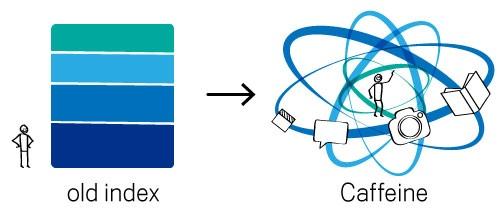
Image via Google’s Official Blog Announced in 2009, Caffeine was rolled out in June 2010. This wasn’t just an update but a complete overhaul of Google’s web indexing system. It resulted in search results that were 50% fresher and encompassed a larger collection of web content than ever before. Before Caffeine, Google’s index comprised layers, with varying refresh rates. Caffeine introduced continuous and global web analysis, enabling users to find the most up-to-date information. Google’s Carrie Grimes described the vastness of this new index, stating, “If this were a pile of paper, it would grow three miles taller every second.”
Google Suggest – August 2008
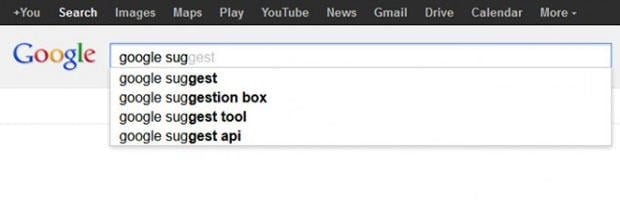
Following almost four years of testing, Google introduced Suggest in August 2008. Suggest analyzes aggregate search data to identify popular searches related to a user’s query, then displays these suggestions in a dropdown panel as the user types. This innovation paved the way for Google Instant (launched in 2010), which displayed search results in real-time as users typed their queries. While Google Instant was discontinued in 2017 due to complications with mobile usability, Suggest remains a core feature.
Google Universal Search – May 2007
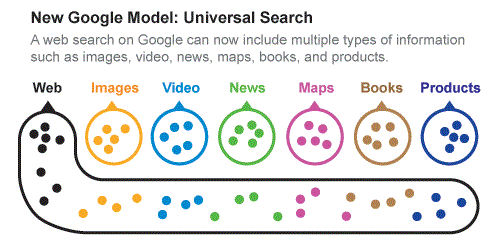
In 2003, Danny Sullivan coined the term “tab blindness” in a blog post for Search Engine Watch. He described the tendency of Google users to overlook tabs like News, Images, and Videos when searching. Google addressed this issue with the launch of Universal Search in May 2007. This update integrated results from all of Google’s verticals into a single search results page, creating a richer and more diverse SERP and replacing the traditional 10-link results page.
Google Personalized Search – June 2005
Introduced in 2005, Personalized Search aimed to deliver more tailored search results based on a user’s search history. While previous personalization attempts relied on user settings and profiles, this marked the first instance of Google directly utilizing users’ search histories to personalize results.
Google Florida Update – November 2003
Thanks to Roberto Sotelo for this gem of an image. To grasp the magnitude of the Florida update, look no further than Danny Sullivan’s article, “What Happened to My Site on Google?” This Q&A style blog post featured the question, “How can Google be allowed to hurt my business in this way?” The Florida update emerged before algorithm updates were commonplace. The idea that Google’s algorithm was a constantly changing landscape webmasters had to navigate to maintain organic rankings—and that this could be a profession (SEO)—was entirely new. The Florida update targeted late 90s black hat SEO techniques like keyword stuffing, leaving many webmasters baffled and marking the rise of SEO as a necessity.
Google Boston Update – February 2003
Announced at SES Boston, an engineering science conference organized by Northeastern University, the Boston update was Google’s first official algorithm update. Initially, Google aimed to update its algorithm monthly, but this plan was quickly abandoned in favor of daily changes. The unpredictable nature of these updates left SEOs and webmasters bewildered.
That’s all, folks.
For a deeper understanding of how search engines have developed, check out our History of Search Engines! If you’re interested in a complete list of every Google algorithm update since 2000, both major and minor, Moz provides a comprehensive list here. Have an algorithm update you think we should include? Let us know in the comments below!