For both agencies and advertisers, online advertising budgets have likely been impacted by the ongoing COVID-19 pandemic. While April saw widespread budget cuts, May brought promising signs of recovery: Facebook’s user base reached 2.6 billion, and Google Ads conversions neared pre-pandemic levels.
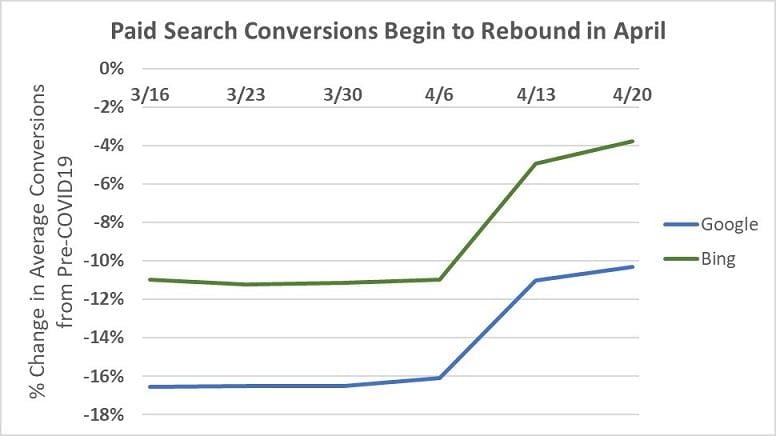
Predicting the pandemic’s end or the economy’s trajectory remains impossible, but we can equip our Google Ads accounts for the present and future. This guide outlines how to:
- Maximize Google Ads ROI today
- Assess your Google Ads account’s foundation
- Prepare your Google Ads account for scaling up
- Initiate and manage the scaling process
Let’s dive in.
Maximizing Google Ads ROI in the Present
Given the uncertainties, we must focus on what we can control: ensuring our Google Ads accounts are stable and cost-effective.
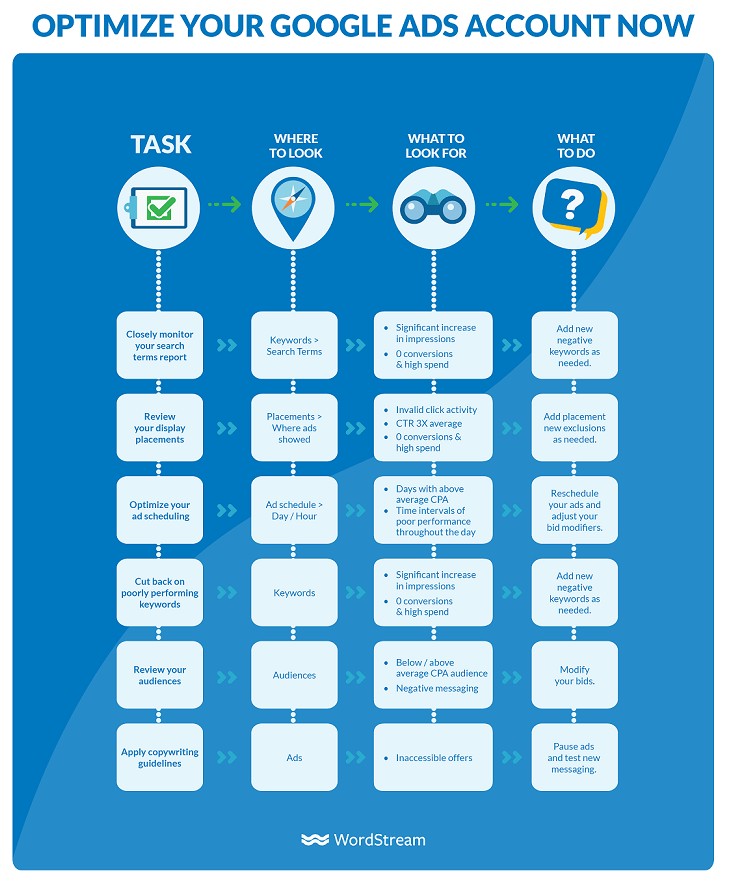
During budget pullbacks, prioritize optimizations that eliminate inefficiencies and stretch your budget. This checklist guides you through optimizing search terms, ad scheduling, and ad copy for optimal results: Click to view larger image
Pro tip: Use labels diligently when adjusting your account.
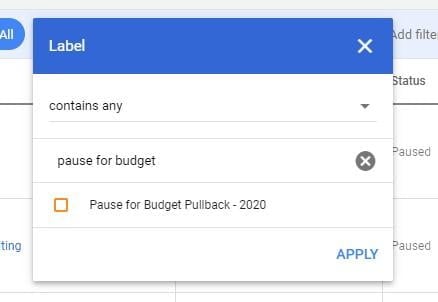
Labels let you easily filter and identify elements paused or modified during this phase, simplifying things when you reach the final section of this guide.
With your checklist addressed and budget maximized, shift your focus to rebuilding, starting with your foundation.
Evaluating Your Google Ads Foundation
Imagine expanding your house. Would you demolish it and start over, or build upon the existing structure? While both are valid, the latter is more cost-effective and allows you to remain housed during the process.
This analogy applies to your Google Ads account structure. When scaling back up, leverage your current foundation rather than starting fresh. This utilizes historical data, current performance, and maintains delivery during the ramp-up.
Your Google Ads foundation comprises:
- Account structure
- Conversion tracking
- Campaign settings
Account Structure
This is the backbone of your Google Ads account. While a deep dive on account structure warrants its own discussion, let’s cover key aspects.
Firstly, audit your current structure against best practices. Click to view larger image
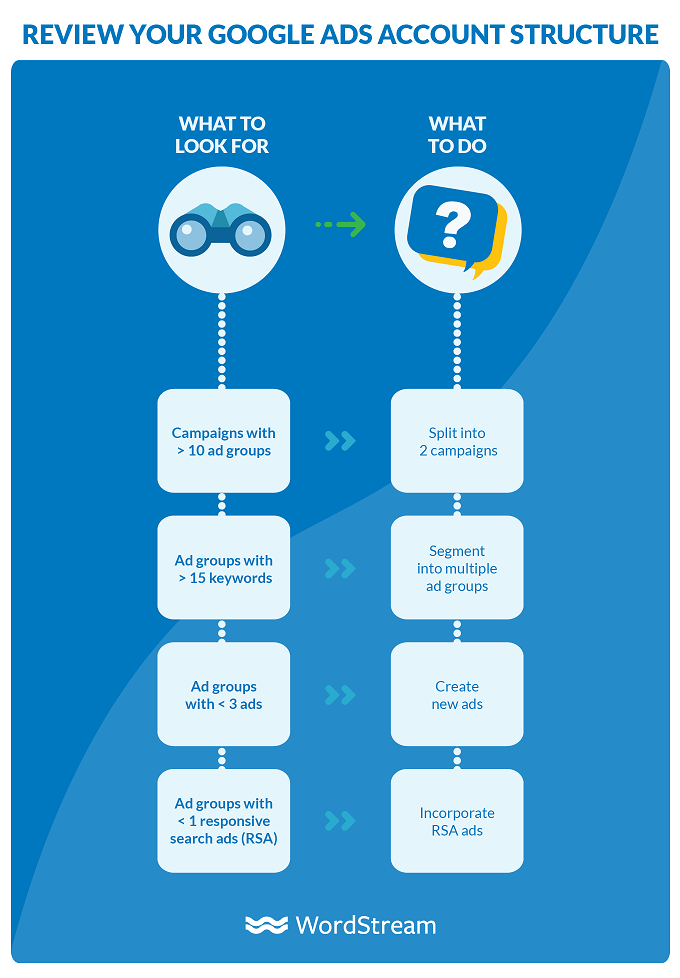
Next, analyze performance indicators to glean insights about your account structure. Click to view larger image
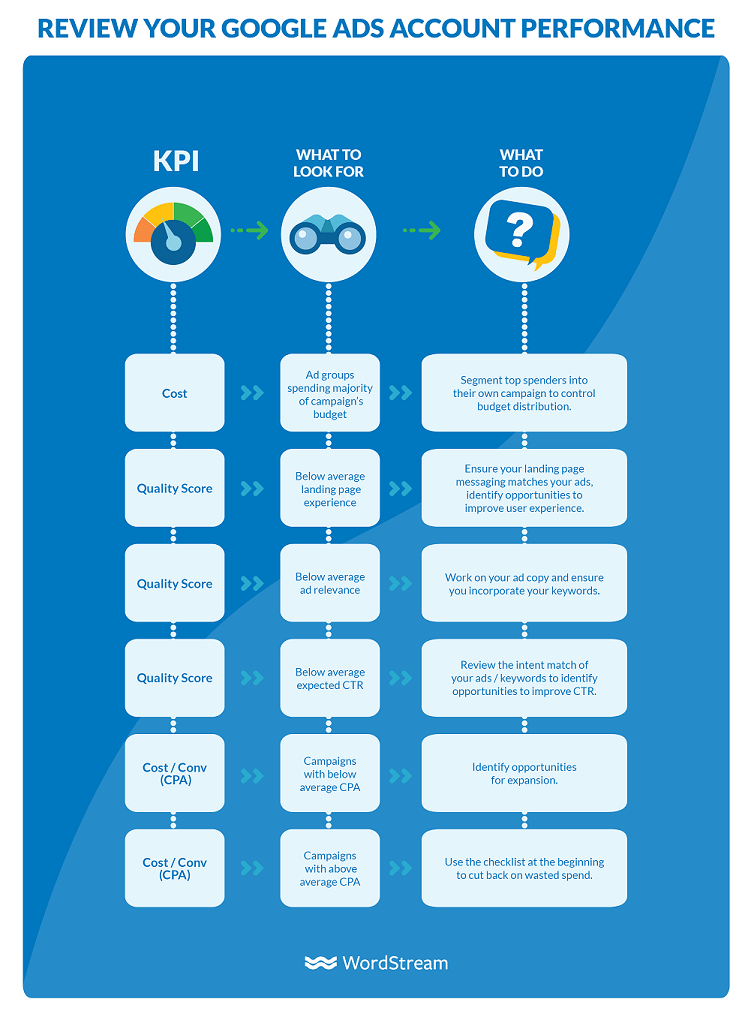
With indicators reviewed, you’re ready to plan account structure optimizations. For further guidance, explore these resources:
- The Last Guide to Google Ads Account Structure You’ll Ever Need
- 6 Steps to Building a Brilliant Paid Search Account Structure
Conversion Tracking
While account structure forms the core, conversion tracking is paramount. It guides the algorithm towards what constitutes success in your account. Even a perfect structure can’t achieve business goals without appropriate conversion actions and settings. This pullback period presents an opportunity to audit and refine your conversion actions.
Use this template for your conversion action audit. Click to view larger image
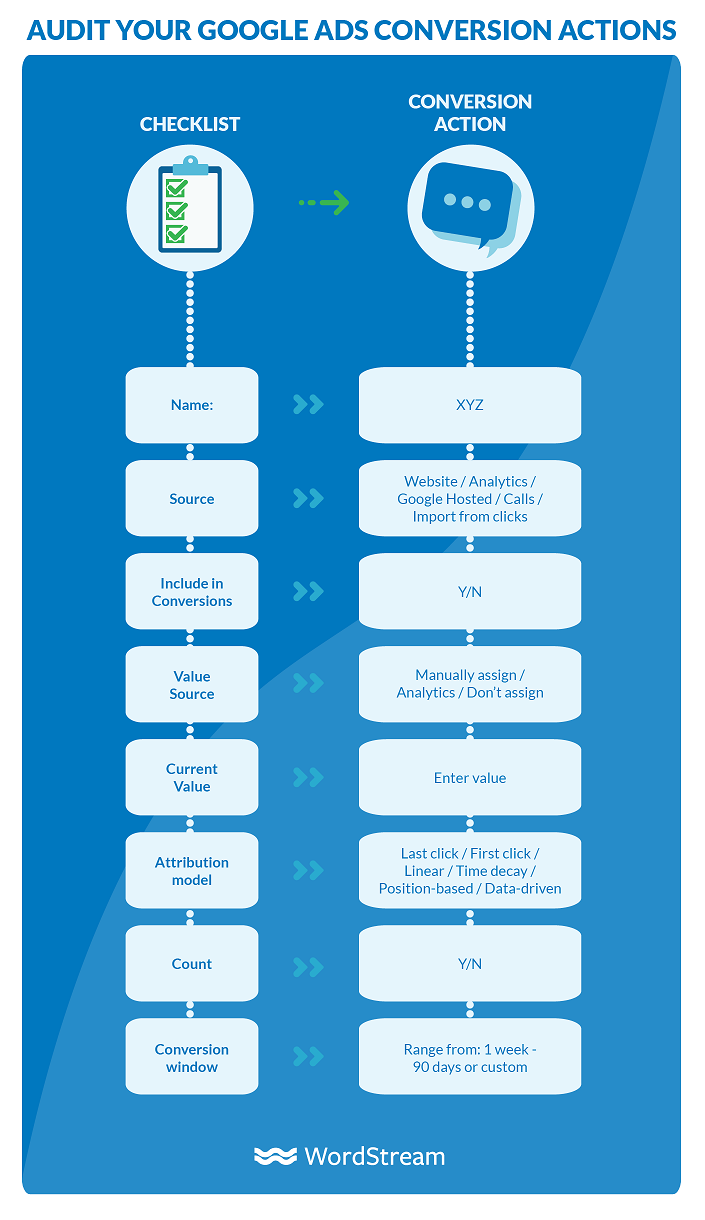
With current conversion actions laid out, ask yourself:
- Are any tracked conversions actually insignificant?
- Do settings align with the action’s business value?
- Do settings reflect a suitable attribution/conversion window?
- Are any crucial conversion events not being tracked?
Be meticulous and cautious when adjusting conversion tracking to minimize account risk. For further insights, refer to these resources:
- Google Conversion Tracking: Complete Guide to Conversion Tracking in Google Ads
- Why Tracking Conversions for Your PPC Efforts Is a No-Brainer!
Campaign Settings
If conversion tracking provides signals, campaign settings dictate how the algorithm uses them. It’s time to compare your campaign-level settings to best practices.
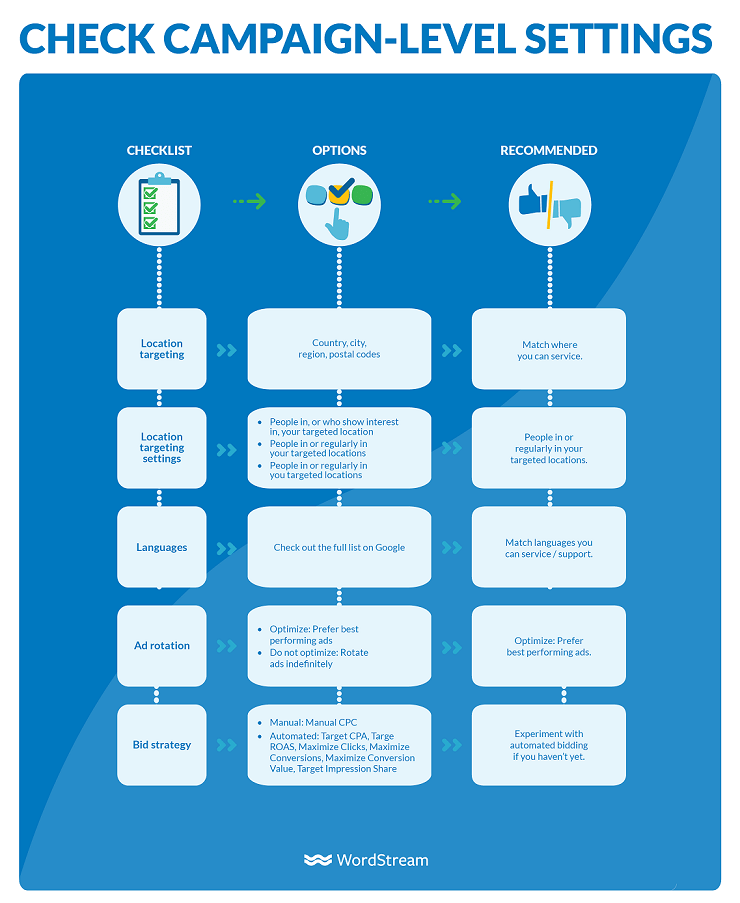
With present actions and foundational checks covered, let’s prepare for the ramp-up phase.
Gearing Up Your Google Ads Account
Scaling ad spend isn’t as straightforward as flipping a switch. It involves managing stakeholder expectations by presenting current performance, forecasting the impact of increased spending, clearly communicating variables, and more.
Let’s break down the preparation process:
Analyze Current Performance
Report on your Google Ads account’s current state and its pandemic-induced evolution, regardless of whether you’re increasing spending. While countless metrics exist, prioritize and categorize core PPC metrics as follows:
Spend Evolution:
- Average daily spend
Prospect Engagement:
- Average click-through rate (CTR)
- Average conversion rate (CVR)
Cost Evolution (Based on New Trends):
- Average cost per click (CPC)
- Average cost per action (CPA)
By grouping and comparing these KPIs over time, you can narrate your account’s evolution. To delve deeper into analyzing results, utilize these resources:
- Updated Google Ads Benchmarks for Your Industry During COVID-19
- nexus-security’s Resources for Businesses Navigating COVID-19
- The Free Google Ads Performance Grader
Understand Consumer Behavior
Performance shifts are influenced by both the competitive landscape and, more importantly, evolving consumer behavior. While some pandemic-induced shifts are temporary, new consumer norms are likely emerging. To understand how these shifts impact your business, explore:
- Review your search terms reports for emerging queries.
- Use Google Analytics to identify changes in website behavior.
- Google Trends: for evolving coronavirus search trends. Click to view larger image
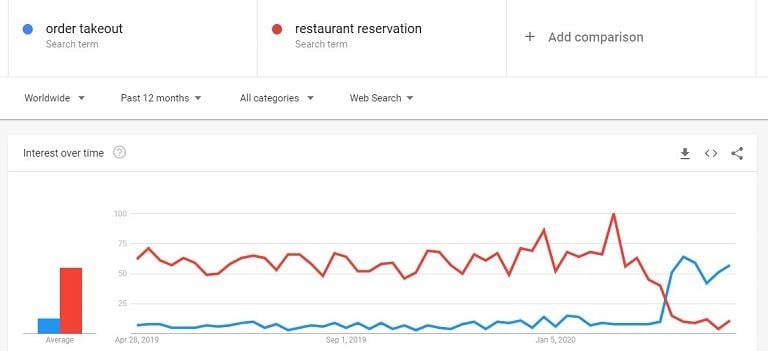
Case in point: Restaurant engagement and purchasing patterns have dramatically transformed during this period.
Now, let’s discuss scaling your Google Ads account. The emphasis on a careful and methodical approach is crucial to maximize your return on ad spend during scaling.
Scaling Your Google Ads Account
Begin by reviewing significant changes implemented during the down period using this checklist: Click to view larger image
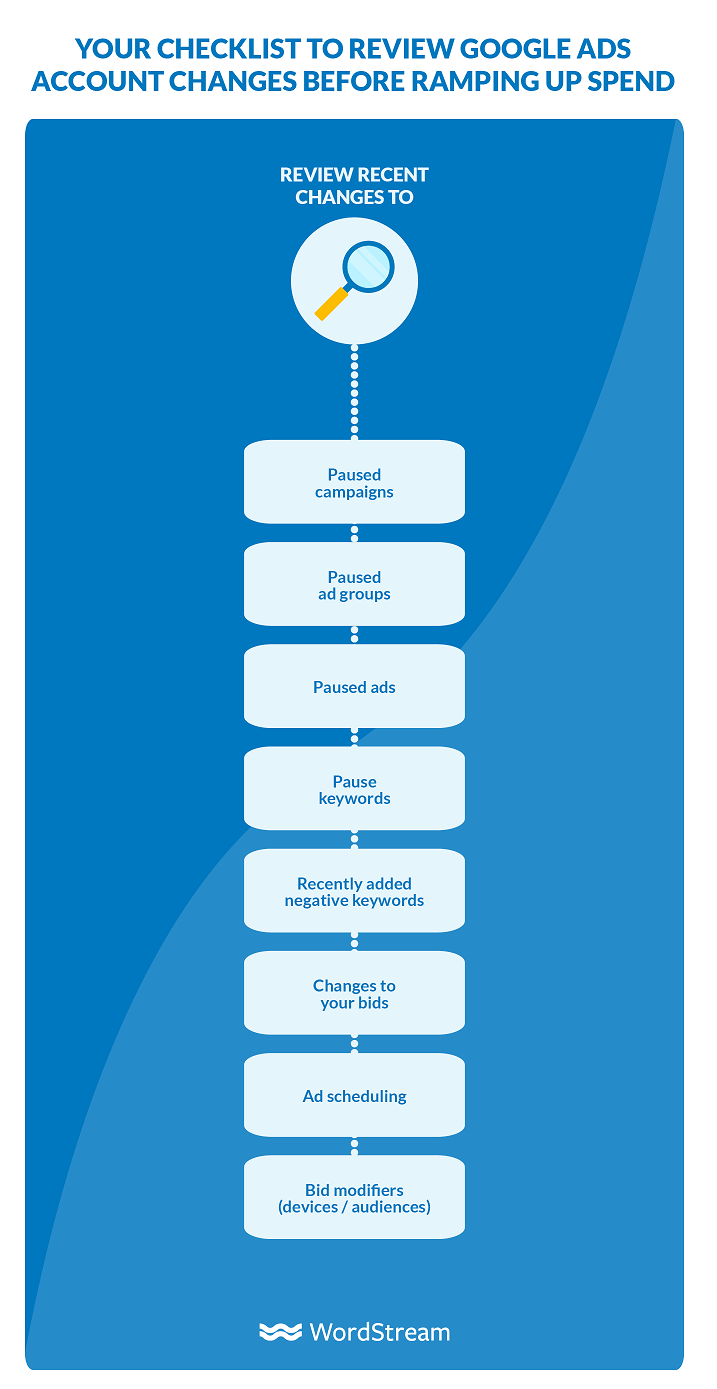
Next, determine if these changes should be reverted. Consider the following questions:
Was this change due to budget constraints?
- If so, reverting the change might be beneficial to allow greater flexibility in ad delivery as your budget increases.
- For instance, re-enable a campaign paused due to budget limitations but performing well against CPA targets.
Was this change due to outlier performance?
- If so, categorize these changes based on their deviation from your average KPI.
- For example, re-enable a keyword with a 5% higher CPA than your average while keeping a keyword with a 40% higher CPA paused.
At this stage, you’ve:
- Optimized your foundation.
- Analyzed performance.
- Reverted relevant changes.
The next steps for scaling your Google Ads account are:
Comprehend budget spend growth: If your monthly budget was $10,000 and you aim for $50,000, your average daily spend needs to scale from $322 to $1,612. This scale determines your subsequent steps.
Increase campaign budgets: Based on budget growth and account allocation, strategically increase your campaign-level budgets.
Adjust bids to spend more: With Google authorized to spend your new budget, adjust bids for increased competitiveness—prioritize bid increases based on current impression share and cost/conversion.
Expand keyword match types: During budget restrictions, you likely focused on exact/phrase match over broad match. Review the differences and how they impact your eligibility for various ad auctions.
These steps, along with reverting appropriate changes, will prompt Google to accelerate your daily spending. However, anticipate potential hurdles during the ramp-up.
Anticipating Ramp-Up Challenges
Clear communication and expectation setting are vital during the ramp-up, especially as performance fluctuations occur. Keep these points in mind:
Expect a learning curve: Your account needs time to re-learn and scale back to optimal delivery at the new spend level. Learn more about navigating this learning period.
Monitor results closely: Regularly track and report on performance throughout the ramp-up.
Evaluate search demand: As consumer and search trends evolve, your search demand might not revert to previous levels. If you hit a ceiling in Google Ads, consider expanding into other channels like Facebook Ads or Microsoft Bing Ads.
Key Steps for Scaling Your Google Ads Account
Scaling your Google Ads account involves numerous considerations, and jumping straight into budget increases is ill-advised. Follow these steps:
- Optimize for the present.
- Review your account’s foundation.
- Analyze current performance and trends.
- Revisit your change history.
- Implement measures to increase spending.
As trends shift, we’re here to provide strategic guidance and resources for navigating online advertising during this time and beyond. For more information, visit our COVID-19 resource page and stay updated with our blog for fresh content daily. Our Goal Talk podcast episode on marketing during COVID-19 is also worth checking out!