In recent times, Facebook reached an unprecedented 2.6 billion monthly users. Studies also indicate that 47% of consumers have been increasingly active on social media during the ongoing global health crisis. With this surge in online activity and data revealing a resurgence in PPC accounts after the initial shock of COVID-19, it’s crucial to start strategizing the reactivation of your Facebook advertising.
While the future trajectory of the pandemic and economic recovery remains uncertain, what we can control is how we equip our online advertising accounts to adapt to the present situation and prepare for a robust comeback when the time is right. This article will focus on Facebook advertising, covering the following:
- Optimizing your ad spend for maximum ROI in the current climate
- Essential tips for auditing your existing Facebook Ads account
- Effective steps to scale your account back up
- Important considerations during the scaling process
If you’ve read my previous article about Google Ads recovery, you’ll notice a similar approach to Facebook Ads recovery. However, don’t be fooled by the apparent similarities in the steps involved. As experienced advertisers know, these are two distinct platforms with their unique nuances.
Let’s delve into the specifics of Facebook account recovery.
Maximizing ROI from your Facebook Ad Spend Today
The pandemic has led to a surge in social media usage, resulting in record-breaking active user counts on Facebook, as evident in their Q1 earnings report.
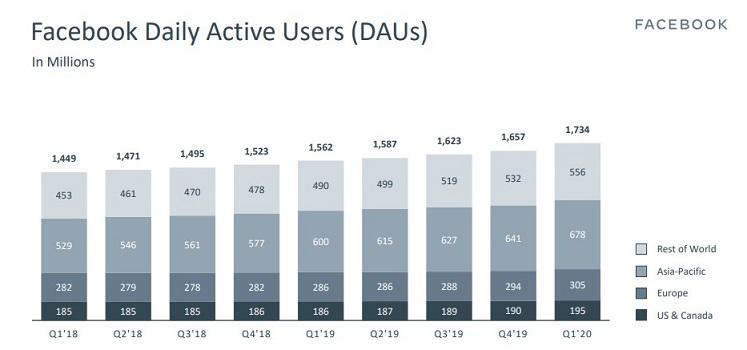
Image source Interestingly, while user engagement has increased, advertising revenue has taken a dip.
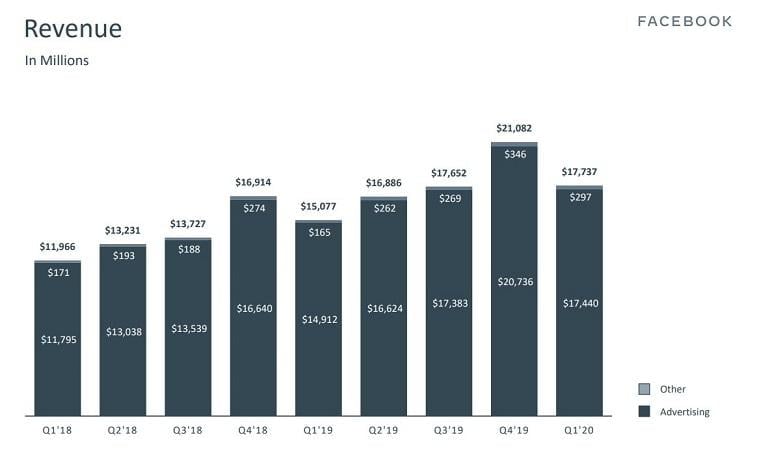
Image source This contrasting trend suggests that advertisers are cautiously scaling back their Facebook advertising investments as they navigate the current landscape – a common trend across advertising platforms.
Despite reduced ad spending and increased user activity, advertisers are observing a decline in their cost KPIs. This trend starts with a decrease in CPM (cost per thousand impressions) – we’ve observed a 35% reduction within our client base. Alongside CPM, CPA (cost per acquisition) is also decreasing for advertisers; we’ve seen a 23% drop.
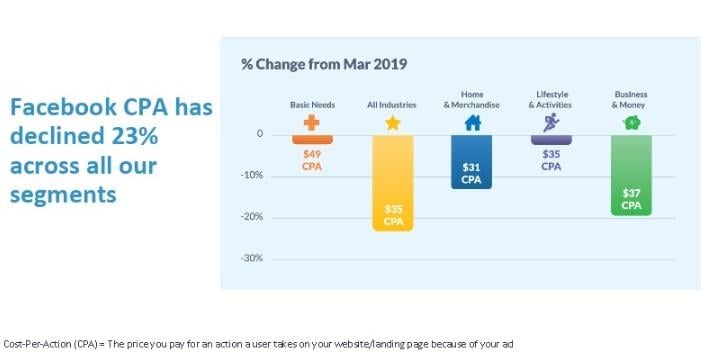
What does this signify? Essentially, if you’re in a position to maintain your advertising presence on Facebook during this time, your investment can yield greater returns today.
While external factors like market trends and uncertainties are beyond our control, let’s shift our focus to what advertisers can control – actions within your account to maximize ROI from your ad spend.
Utilize this checklist to identify quick wins within your account:
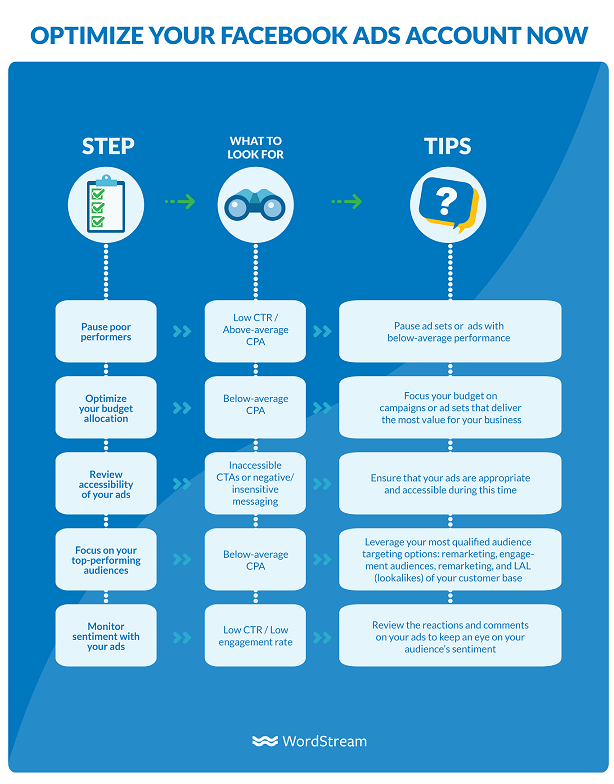
Once you’ve ensured your account is in optimal health under the current circumstances, it’s time to shift gears towards scaling it back up.
To emphasize the significance of these next steps, let’s consider a marathon analogy.
Imagine you completed a marathon six months ago and have since reduced your weekly mileage by 70%. Now, you’re ready to conquer another marathon. Could you achieve the same or better finishing time if you attempted it tomorrow?
Highly unlikely. You’d need to assess your current fitness level and devise a plan to gradually increase your mileage in preparation for the marathon.

The same principle applies to scaling back up your Facebook advertising spend – a thorough assessment of your current state and a methodical plan are crucial. The following steps will guide you through the essential stages of scaling up your Facebook advertising while maintaining or even improving your account benchmarks and KPI performance.
Evaluating Your Facebook Ads Foundation
The first step involves auditing your account’s foundation to ensure alignment with current best practices.
Key areas to focus on during this phase include:
- Accurate conversion tracking
- Campaign objectives
- Conversion event and optimization settings
- Ad creative excellence
- Adherence to best practices
Let’s explore each component in detail.
1. Conversion Tracking
Conversion tracking is paramount to your success with Facebook Ads, primarily because it informs the algorithm about what success entails within your account. Accurate conversion tracking provides the signals Facebook needs to optimize ad delivery for your chosen objective and goals.
Begin by confirming your pixel is firing correctly. Navigate to the Events Manager to review its status.
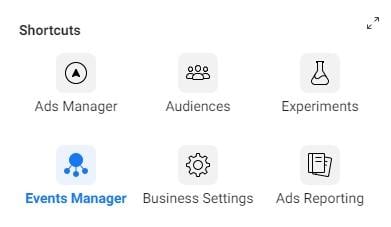
Within the data sources section, look for an active signal like this (highlighted in yellow):

Once you’ve verified your pixel’s functionality, go to “Custom Conversions” and audit your existing conversion actions.
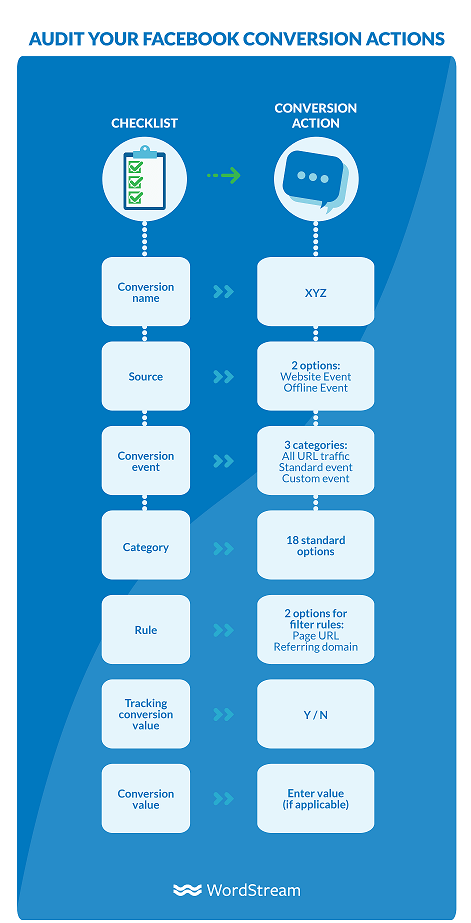
With a clear view of your current conversion actions, ask yourself these questions:
- Are there any conversion actions being counted that aren’t truly valuable?
- Does the current setup accurately reflect the business value of each action?
- Are there any missing conversion events that should be tracked?
Use your audit findings to prioritize necessary changes to your conversion tracking moving forward.
2. Campaign Objectives
While conversion tracking defines success for Facebook, your campaign objectives tell Facebook what you aim to achieve. The algorithm is remarkably adept at delivering on your chosen objective, making the selection process all the more critical.
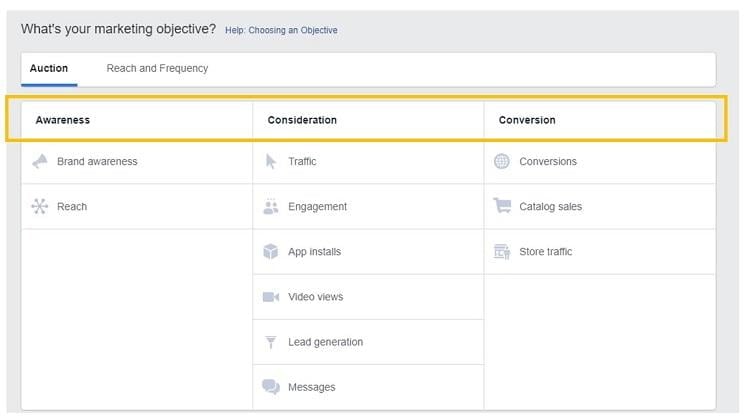
Facebook’s range of objectives for campaign setup As illustrated above, Facebook provides a variety of objectives to align with advertisers’ specific goals. When reviewing your existing campaign objectives, ensure they align with your marketing funnel and overall business objectives.
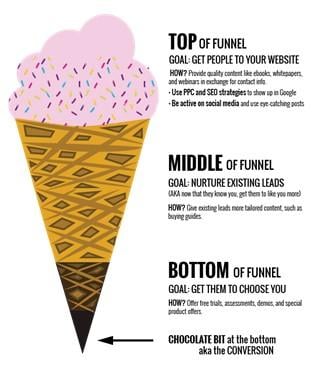
Beyond aligning with your marketing journey, your objective should also correspond to your business goal at each stage. Here are some examples of objective pairings to get you started.
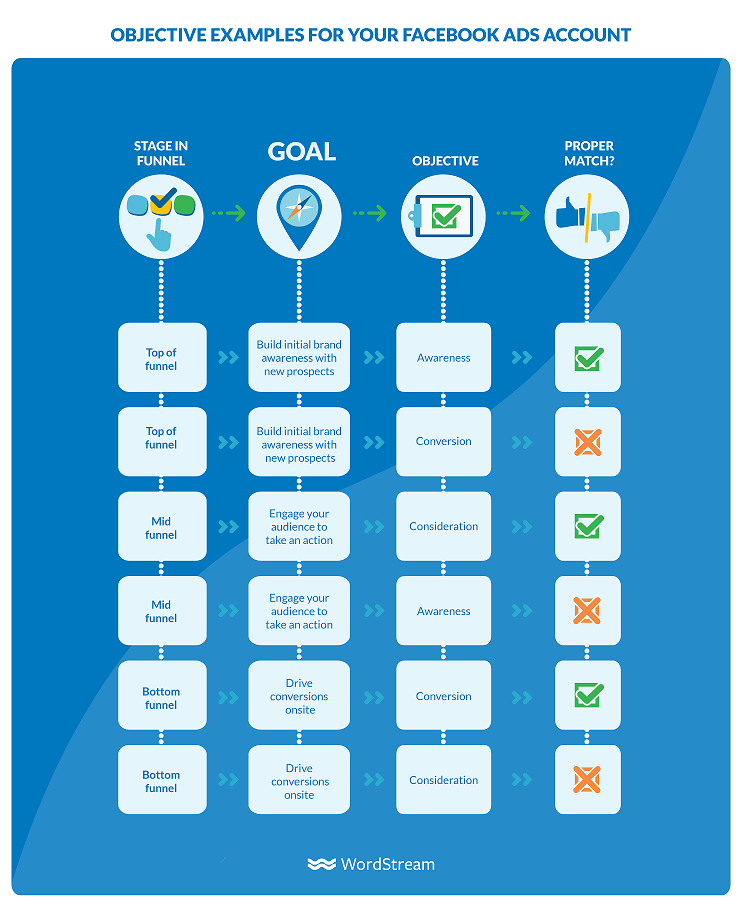
While every business has unique objectives and goals, this should serve as a guide as you evaluate the effectiveness of your current objective selections.
3. Conversion Event and Optimization Settings
The final piece of the puzzle in providing the algorithm with the information it needs are your conversion event and optimization for ad delivery selections.
Building on the foundation laid by conversion tracking, the conversion event pinpoints the key success indicator for your ad set. Meanwhile, the optimization for ad delivery setting instructs the algorithm on how to optimize ad delivery based on these signals and objectives.
Just as you did with objectives, utilize this opportunity to audit your existing settings and ensure they align with your goals.
For more information on objectives and settings, refer to our article on Facebook Campaign Objectives.
4. Ad Creative Excellence
Your ad creative can make or break your Facebook advertising campaign. If your creative isn’t eye-catching, you’ll struggle to engage your target audience and drive action.
Take this time to critically evaluate your current ad creative and identify areas for improvement to achieve creative excellence. Here’s a starting point:
- Minimize text in your ad creative: Images with less than 20% text tend to perform better and are preferred by Facebook. Use Facebook’s text overlay tool to review your ads.
- Incorporate video/animation: Videos have proven to drive higher engagement compared to static ads. Learn four ways to turn still images into video here.
- Optimize your creative for different placements and devices: User behavior and content consumption patterns differ across placements and devices. Review Facebook’s documentation on asset customization.
- Optimize your video creative for sound-off viewing: Studies indicate that 85% of Facebook videos are watched without sound. Include captions to cater to users watching with sound on or off.
For further insights into ad creative best practices and examples, explore these resources:
- I’ve Designed 100+ Display Ads: Here’s What I Learned
- 11 Ways to Improve Your Facebook Video Ad with a Killer Hook
- The 5 Best Ad Campaigns the Internet Has Ever Seen
5. Current Best Practices
While we’ve covered the fundamental best practices in the previous steps, this stage is about refining your Facebook account further.
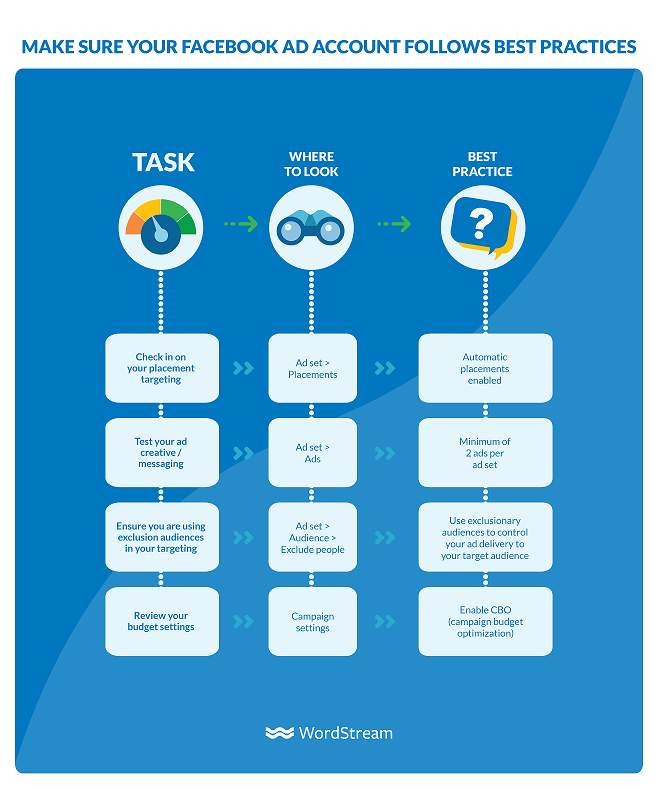
With a solid understanding of optimizing for present ROI and ensuring a strong account foundation, let’s prepare for the ramp-up phase.
Preparing Your Facebook Advertising Account for a Comeback
Once you’re confident in your account structure and its alignment with current best practices, there are three key steps to prepare for scaling up your campaigns:
- Performance Review
- Competitive Landscape Assessment
- Recent Changes Review
Let’s break down the importance of each step and how to prep your account effectively.
1. Performance Review
Whether or not you’re gearing up to increase ad spend, reporting on your Facebook Ads account’s current state and its evolution throughout the pandemic is crucial. While it’s tempting to get lost in the weeds of every possible metric and trend, prioritize clarity and focus on the core platform metrics:
Spend Evolution:
- Average daily spend Prospect Engagement:
- Average click-through rate (CTR)
- Average engagement rate
- Average conversion rate (CVR) Cost Evolution based on new trends:
- Average cost per click (CPC)
- Average cost per action (CPA)
By grouping and comparing these KPIs over time, you can paint a clear picture of your account’s evolution. For deeper insights into analyzing your Facebook advertising results, explore these resources:
- Facebook Ads Benchmarks by Industry
- nexus-security’s Resources for Businesses Navigating COVID-19
- The Free Facebook Ads Performance Grader
2. Competitive Landscape Assessment
As you analyze performance changes and adjustments made, factor in the potential impact of your competitive landscape on ad delivery. Utilize the Facebook ad library to research your competitors, understand their offers, and review their recent ad activity.
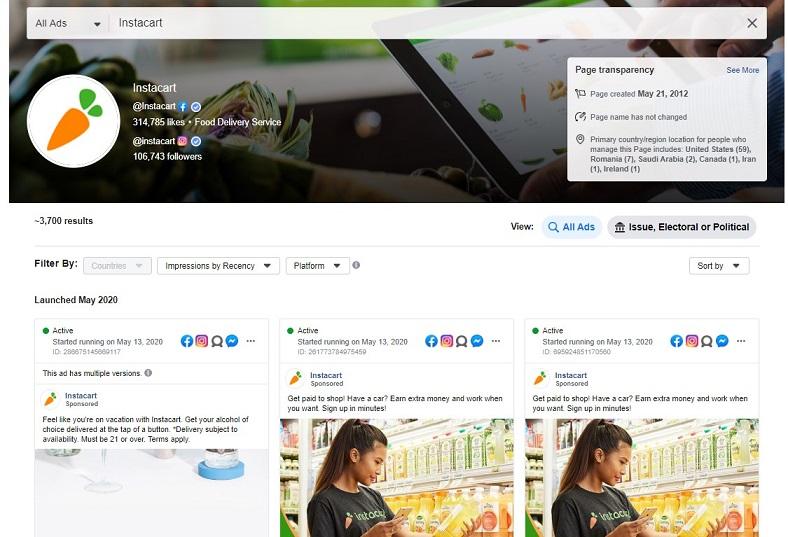
Example: Search results for Instacart While your direct competitors’ strategies directly influence your performance, remember that you’re competing for ad slots with all advertisers targeting similar audiences. As other advertisers ramp up their spending, competition in the auction will likely intensify. This means the observed drop in CPM is likely to reverse, making it even more critical to follow the right account recovery steps to maximize ROI.
3. Recent Changes Review
Google Ads simplifies this stage with labels and a change history, allowing for quick review of recent and significant account changes. While a dedicated change history isn’t available on Facebook, you can still analyze how your account composition has evolved. Start by adjusting your date range to enable comparisons.

Look for newly paused campaigns or ad sets and significant spend fluctuations. When you identify major changes, ask yourself these questions:
Was this change driven by budget limitations?
- If so, consider reverting the change as your budget increases to allow for greater flexibility in ad delivery.
- For instance, you might re-enable an ad set that was performing well against your CPA goals but was paused due to budget constraints. Was this change implemented because of outlier performance?
- If so, categorize these changes based on their deviation from your average KPI.
- For example, you might reactivate an ad set with a 5% higher CPA than your account average, while keeping an ad set with a 40% higher CPA paused.
Recap of Account Recovery Steps So Far:
- Optimizing your account for ROI in the current climate
- Reviewing your account’s foundation
- Preparing your account for increased ad spending
With these steps covered, we’ve arrived at the final phase: actually scaling up your ad spend.
Scaling Up Your Facebook Ads Account
While this is the final step, it’s not as simple as arbitrarily boosting your spend and reverting to old habits. Here’s a breakdown of how to approach ramping up spend effectively:
- Understand your budget’s growth trajectory: For instance, if your previous monthly budget was $10,000, and you’re aiming for $50,000, your average daily spend needs to increase from $322 to $1,612. The magnitude of this scaling will determine your next steps.
- Review and revert relevant account changes: As highlighted earlier, review recent changes as you scale spending and determine which ones should be reversed or reintroduced.
- Initiate by increasing your campaign/ad set budget: Depending on your use of CBO (campaign budget optimization), budget allocation occurs at either the campaign or ad set level. Based on your budget growth and account allocation, strategically plan where and how you’ll increase budgets.
- Set yourself up for successful scaling: Increasing spending requires more than just adjusting budgets. You need to ensure your account is primed for scale.
Here’s how to prepare your account for effective scaling:
- Automatic placements: Allow the Facebook delivery system to make the most of your budget.
- Scalable audience size: Restricting your audience size will hinder your ability to increase spend and sustain performance as you scale. Aim for a balance between specific and broad targeting, avoiding scenarios like this:
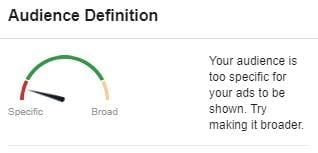
- Optimization events: The Facebook algorithm requires 50 optimization events within a 7-day period for effective learning and optimal delivery. Before scaling spend, quickly assess your ad sets:
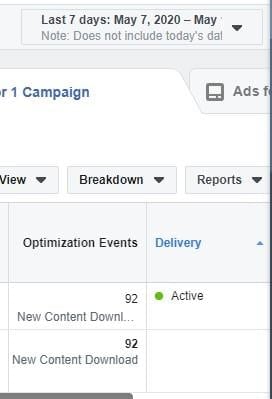
- CBO (campaign budget optimization): Facebook recommends CBO for efficient ad budget allocation. Consider testing CBO if you haven’t already.
Managing Expectations During the Ramp-Up Period
Clear communication and setting realistic expectations are paramount as you navigate the ramp-up period, particularly as you encounter potential performance fluctuations. Keep these points in mind when setting expectations:
- Anticipate a learning curve: Your account will require time to adapt and scale back up to optimal delivery at the new spend level. Learn more about navigating the learning period here.
- Monitor results closely: Regularly track and report on performance throughout the ramp-up process.
- Watch for saturation: If your spend outpaces your audience size, you’ll likely observe an increase in ad frequency. Keep a close eye on ad performance to mitigate ad fatigue as you scale.
Key Steps for a Successful Facebook Ads Account Ramp-Up
Revitalizing your Facebook Ads account takes time, but it shouldn’t be overly complicated. Follow these steps for a smooth ramp-up when your account is ready:
- Prioritize Spend for ROI Today
- Audit Facebook Ads Account Foundation
- Review Recent Performance and Changes
- Implement Measures to Increase Spend
As trends continue to shift, stay tuned for strategic guidance and resources for navigating online advertising in the present climate and beyond. For more information, explore our COVID-19 resource page and stay updated with our blog and podcast, featuring new content daily.