The launch of full-screen, vertical story ads on Instagram in March announced was met with enthusiasm from advertisers. This new ad format provided a welcome change from News Feed ads, which had become somewhat stale and increasingly competitive.
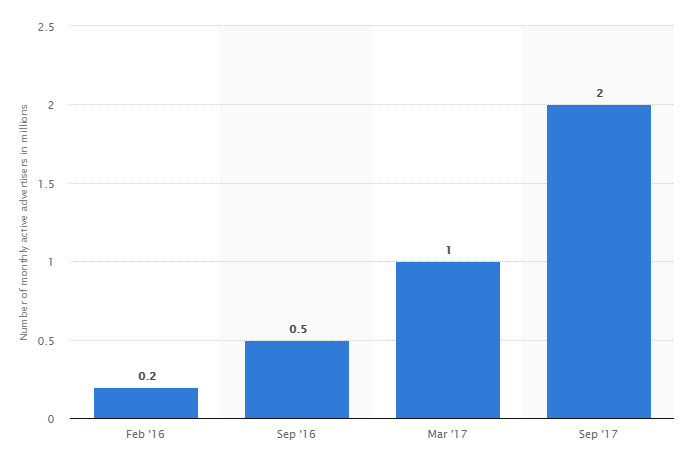
Image via Statista Back in September of the previous year, all 2 million active advertisers on Instagram—a significant increase from 1 million in March ‘17 and a mere 0.2 million in February ‘16—were confined to the News Feed. The introduction of Story ads not only brought a fresh placement option but a captivating one. Advertisers gained entry to a highly immersive format, mirroring what’s anticipated for Instagram TV advertising once monetized: Full-screen. Vertical. Immersive. 400 million Instagram accounts—both businesses and individuals are using Stories to share their experiences with their audience. This makes Story ads a valuable way for advertisers to tap into this engaged audience pool. Early results, which we’ll delve into, have been positive and indicate a promising outlook for the upcoming Facebook Story ads. This article will provide a comprehensive overview of Instagram Stories, including how they operate, how to set them up, and how to integrate them with existing News Feed ads to maximize return on ad spend.
What Exactly are Instagram Story Ads?
You’ll find Instagram Story Ads within Instagram Stories, located above your News Feed. Like regular Stories, these ads are full-screen and vertical, covering your entire mobile screen with content. When a Story ends, either naturally or with a swipe, the next one begins, providing a seamless stream of full-screen content. Positioned between regular Stories, Story ads blend in seamlessly, much like their News Feed counterparts, making it hard to distinguish them from organic content:
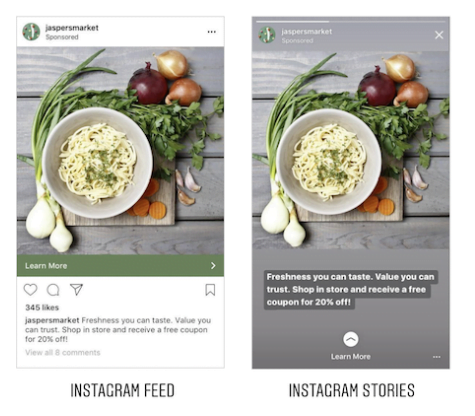
Apart from the “Sponsored” tag and potentially higher production quality, they resemble regular posts. As shown in the image above, Story ads, unlike most organic posts, allow you to embed a link—a feature typically reserved for verified accounts or those with over 10,000 followers. Users can access your link with a simple upward swipe on the CTA arrow, leading them to your landing page. If this feature—directing potential customers to your website, blog, or a lead capture form—aligns with your goals, you should know that previously only four out of six marketing objectives supported this. Now, there are seven objectives compatible with CTA links in Instagram Story ads (with the recent addition of Brand Awareness):
- Brand Awareness: Expand your brand’s reach by connecting with users who are more likely to be interested.
- Reach: Maximize the visibility of your ad to the widest audience possible.
- Video views: Increase the viewership of your video content.
- Conversions: Drive valuable actions, such as purchases or sign-ups, on your app or website.
- App installs: Encourage more people to download and install your app.
- Lead Generation: Capture valuable leads, including email addresses and phone numbers, for your business.
- Traffic: Direct a larger volume of users to a specific page on your website. Creating Instagram Story ads is possible through Creative Hub or Ads Manager. Let’s illustrate the process using Ads Manager.
Creating an Instagram Story Ad
Start by choosing your marketing objective within a new or existing campaign. After naming your ad set, you’ll refine your audience, targeting, and budget, just like you would for a Facebook ad. Next, disable Automatic Placements, go to Edit Placements, and select Instagram Stories:
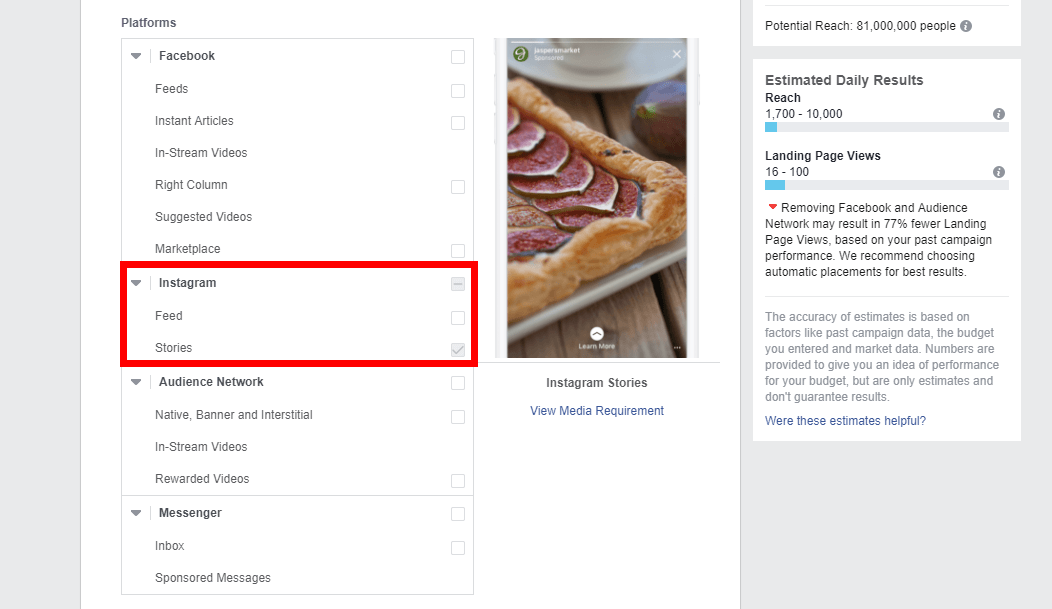
Important: While Instagram Story ads can run alongside other placements, remember that Story ads require unique creative elements due to their distinct format. For instance, a single image ad might necessitate separate uploads for Facebook News Feed and Instagram Stories. Luckily, Facebook will alert you if this is necessary:
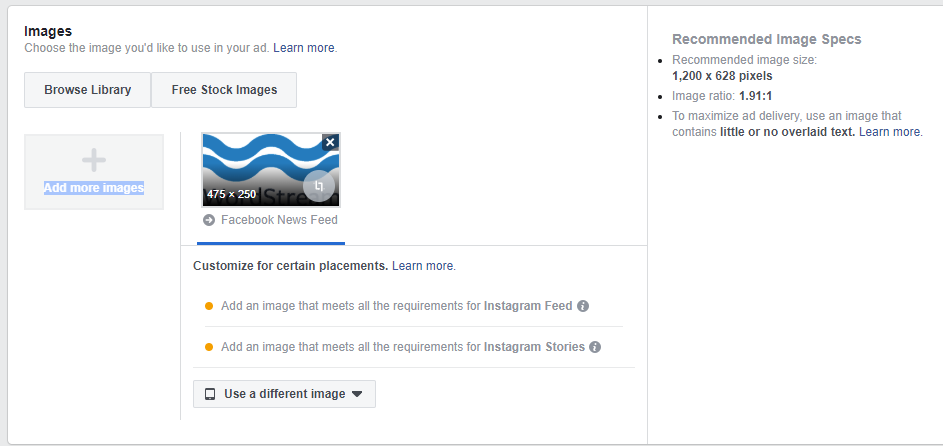
However, your focus shouldn’t be on simply adapting the same ad for multiple placements. Embrace the unique aspects of Story ads—the new format and creative possibilities—by dedicating time to create tailored ads for this platform. We’ll delve into successful creative strategies for this format shortly. For now, let’s cover the essential sizing and specification requirements:
Size and Spec Guidelines for Instagram Story Ads
You have three size options for your Story ad: Square (1:1), Landscape (1.91:1), and Vertical (4:5). The recommended resolution is 1080 x 1920 pixels, but you can scale down to 600 x 1067 if needed. Our Instagram Story templates are already set to these dimensions for your convenience. Additional specifications to note:
Image Ad Details
- File type: .jpg or .png
- File size: 30MB maximum
- Length: Images are displayed for 5 seconds by default
Video Ad Details
- File type: .mp4 or .mov
- File size: 4GB maximum
- Length: Up to 15 seconds
- Supported codecs: H.264, VP8 By adhering to these guidelines, you’ll have a functional Story ad. Now, let’s add a touch of creativity.
How to Combat Swipe-Through
Advertisers venturing into Story ads often face a common challenge: How do you craft an ad that captures attention without being disruptive? As mentioned earlier, the line between organic and paid posts is blurry, whether on Stories or News Feed. Advertisers on both platforms strive to stand out while aligning with user expectations, as users primarily engage with content from friends, family, and familiar brands. With that in mind, let’s explore tips for creating captivating Instagram Story ads that users will actually watch.
Utilize Custom or Lookalike Audiences
Avoid showing your ads to unfamiliar audiences altogether! Leverage Facebook Custom Audiences to retarget users already acquainted with your brand. You can target Instagram users based on these five segments using Custom Audiences:
- Customer File: Utilize email addresses, phone numbers, or any data collected through lead generation efforts.
- Website Traffic: Target individuals who have visited your website, blog, or specific landing pages.
- App Activity: Reach users based on their interactions within your app.
- Offline Activity: Target individuals based on their offline interactions with your business, whether in-store visits or phone calls.
- Engagement: Focus on users who have engaged with your content on either Facebook or Instagram. For example, Michael Kors successfully used Carousel ads (more on this shortly) to create this ad. While the visual appeal of the creative is evident, the key takeaway is the targeting strategy. By using a lookalike audience that mirrored the characteristics of their current customer base, In a campaign, Michael Kors saw a 20% increase in return on ad spend. This campaign also achieved a 3% higher click-through rate. You, too, can achieve similar results by leveraging custom and lookalike audiences to ensure your Story ads reach the right people.
Experiment with Carousel Ads
Just as they are effective on Facebook, Carousel ads are equally impactful in Instagram Story campaigns. One important note: Carousel ads designed for Instagram Stories cannot be displayed on other placements and require dedicated campaigns. However, don’t let this deter you. In a format where attention is precious, Carousels offer a distinct advantage. Each Carousel can hold up to three panels, with each panel capable of displaying up to 15 seconds of video content. In the fast-paced world of Instagram Stories, inherently quick-hitters, Carousel ads give you the opportunity to provide viewers with a more comprehensive and engaging look at your brand—or three unique and captivating glimpses, to be precise. This translates into valuable exposure time that shouldn’t be underestimated. Similar to Facebook Carousels, Instagram Story Carousels allow you to link each card to a different landing page. They also offer card-specific performance metrics. This means you can easily track which cards resonate with your audience, how long they engage with each card, and where they’re clicking within Ads Manager.
Make the First Few Seconds Count
Given users’ tendency to swipe quickly through content (thanks, Tinder!), captivating your audience within the first few seconds of your video is crucial. To achieve this, ensure you check these boxes:
- Utilize sound effectively. Did you know that 60% of Stories are often played with the sound on? Grab your audience’s attention right from the start with a compelling audio element that sets you apart from silent boomerangs and endless brunch pictures.
- Establish your brand presence early on. While your brand name and icon appear at the top left of the ad, a quick swipe can render them unseen. To counteract this, prominently feature your brand name or logo within your creative during the first few seconds of your Story.
- Clearly communicate your offering. Even if your brand story requires a 45-second Carousel ad to unfold, avoid saving your product reveal for the very end. Beats By Dre discovered that their product-centric Story ads, which featured more direct calls to action and showcased their products more effectively, outperformed their lifestyle-focused Stories. For additional inspiration and creative ideas, explore these 73 cool Instagram Story ideas.
The Future of Storytelling for Brands
The introduction of Instagram TV, the impending arrival of Facebook Story ads, and the rise of Instagram Story Ads paint a clear picture: people are increasingly engaging with brands on their mobile devices, favoring a format that’s effortless, convenient, and immersive. Vertical, full-screen video perfectly caters to this consumption style. It’s predicted that the shift from News Feed ads to Story ads will be even more significant than the transition from desktop to mobile, already seeing takes. In essence: join the movement early, as Stories will soon be filled with ads.