Facebook advertising is an incredibly effective way to boost website traffic and attract new users, and anyone can do it. Despite the wealth of information available, many common beliefs about Facebook ads are actually myths. Having spent over $3M on Facebook ads on Facebook ads for various businesses, I’ve debunked some of these myths through my own campaign results.
Here are eight prevalent myths about Facebook advertising that you should reconsider:
Myth #1: Laser-Targeted Audiences Are a Must
Many articles and videos emphasize the importance of laser-targeting your audience on Facebook. While it seems logical to leverage Facebook’s detailed targeting options to reach the most interested audience, this approach doesn’t always yield the best results.
Laser targeting can help you connect with potentially interested individuals, but it doesn’t guarantee those most likely to engage with your ad and convert. Facebook’s algorithm is designed to optimize your ad sets for you. However, an overly narrow audience can hinder the algorithm’s effectiveness by limiting its ability to identify the ideal audience.
For optimal conversions, leads, or website traffic, it’s recommended to use broader ad sets (300K or more, depending on your budget and goals) and let Facebook’s algorithm handle the optimization. We’ve found that broader ad sets targeting 300K+ people consistently deliver the best results.
To illustrate, we tested two ad sets:
- Ad set 1: Broad targeting based on interests, reaching 390K people.
- Ad set 2: Laser-targeted, reaching 89K people considered more likely to be interested in our website analytics product.
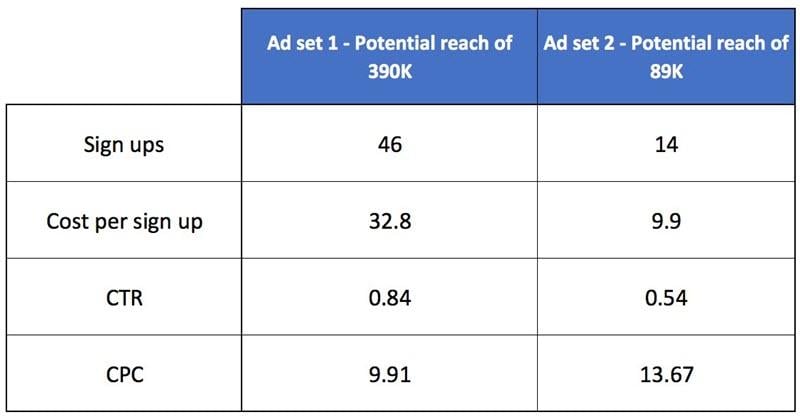
The broader ad set significantly outperformed the narrowly targeted one. This highlights that while the laser-targeted ad reached a potentially interested audience, the broad ad set effectively reached those more likely to click and convert.
Myth #2: Facebook Ads Don’t Work for B2B
This myth is particularly detrimental to B2B companies. Many B2B marketers dismiss Facebook ads as a lead generation tool, assuming professionals aren’t engaged on social media platforms.
However, professionals spend more time on Facebook than any other social media platform. Reaching professionals and businesses on Facebook is not only easier compared to other digital marketing channels but often the most effective when executed correctly.
Moreover, Facebook offers superior targeting and optimization capabilities, even for B2B. It allows targeting by demographics, employer, industry, job title, income, and more. The platform’s lookalike audience feature is especially powerful, automatically identifying individuals similar to your existing clients.
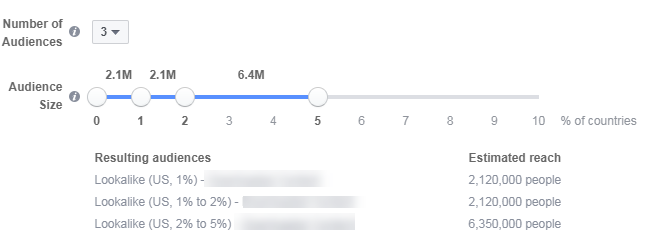
For instance, you can create a custom audience using your clients’ email addresses and let Facebook find similar profiles to target. This leverages Facebook’s user data to optimize your targeting.
Combined with the powerful Facebook algorithm, you have a highly effective B2B lead generation tool at your disposal.
Myth #3: Smiling People Are a Must in Ad Images
You may have heard that incorporating smiling people in your ads is crucial because people respond positively to happiness. While this holds some truth, it’s not the only path to success.
While using smiling people in ads can yield good results, it’s not always the most effective strategy.

Instead of relying solely on smiling faces, consider what motivates you to click on an ad. Most likely, it’s an image that piques your interest and promises value. Generic stock photos of smiling people are unlikely to achieve this.
Focus on creating ads that instantly communicate the value proposition to your audience. When scrolling through their Facebook feeds, people aren’t actively searching for something specific. Your ad image needs to stand out and immediately capture their attention.
A prime example is this ad by Fundbox, targeting small business owners. It offers cash advances on outstanding invoices.
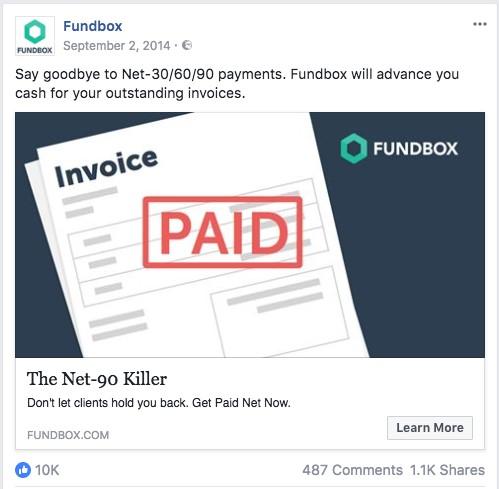
This ad is simple yet effective. The image clearly conveys the benefit of using Fundbox (faster payments) alongside attention-grabbing text. This approach proved highly cost-effective, attracting thousands of paying customers, 10K likes, and over a thousand shares (generating valuable organic impressions).
Myth #4: Invest Heavily in Page Likes
This is a pervasive myth. Many companies prioritize gaining page likes, mistakenly believing it will eventually translate to increased customer acquisition. This is flawed for two reasons:
- A page like doesn’t equate to a potential customer.
- Facebook’s organic reach is declining. Even your existing followers might not see your page posts unless they are boosted.
Instead, prioritize using Facebook ads to achieve your core business objectives. Select campaign objectives aligned with your goals, such as conversions, app installs, lead generation, or traffic.
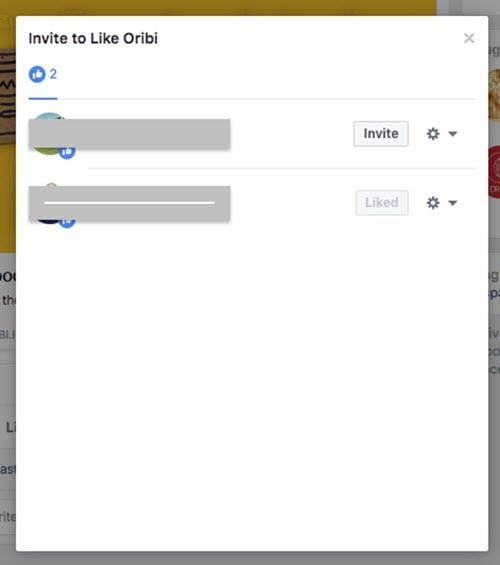
This approach ensures efficient budget allocation and organically generates page likes as a byproduct. Some users might click your page link within the ad or like your page afterward. You can also invite users who like your ad to like your page, often resulting in additional likes.
Myth #5: Retarget All Website Visitors
Retargeting website visitors is generally a good practice, but lumping them all into a single ad set is not.
Different visitors arrive at your site through various channels, explore different sections, and are at different stages of the sales funnel. They require tailored retargeting with specific ads, budgets, and bids.
For instance, we retarget users who signed up for Oribi but haven’t installed our script with a customized ad encouraging them to log back in.
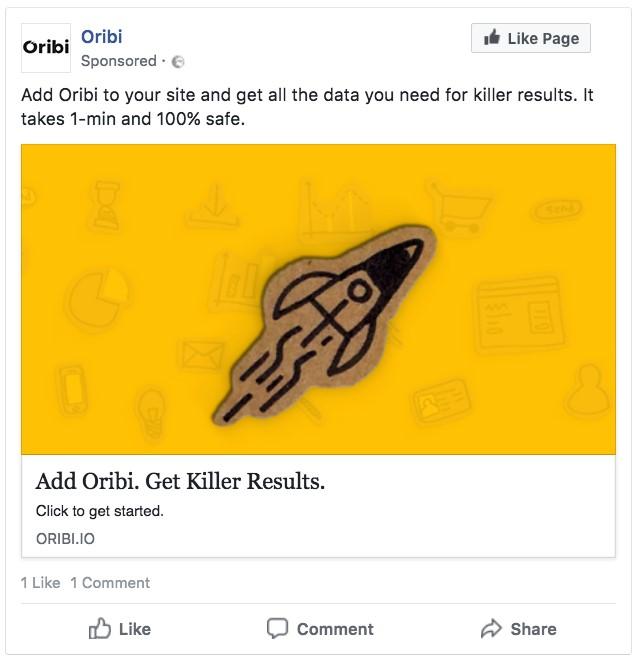
Segmenting your website visitors into distinct custom audiences for targeted retargeting is essential. For example, create a custom audience of visitors who landed on specific landing pages after clicking an ad. These individuals have already expressed interest in your offering and are more likely to convert.
Another valuable segment comprises visitors who viewed your pricing page. These visitors are closer to making a purchase compared to casual browsers. Retargeting them with an enticing offer to nudge them towards conversion is worthwhile, justifying a higher bid and budget.
Creating these segments is straightforward. Here’s how we built our pricing page audience:
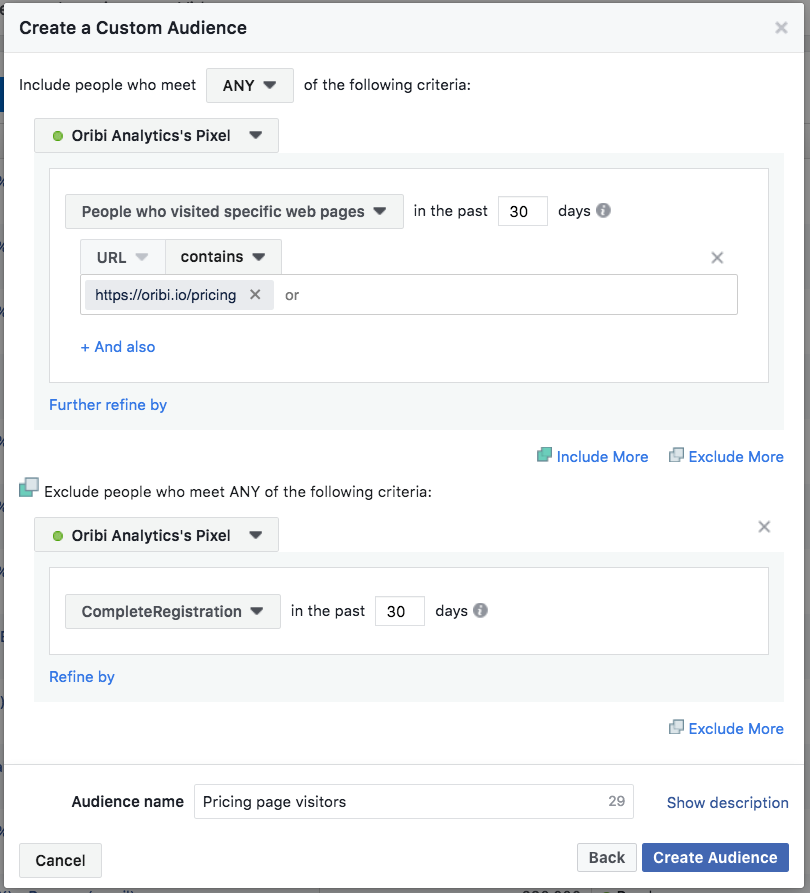
We simply included the pricing page URL and excluded existing sign-ups.
Targeting all website visitors indiscriminately wastes your budget on irrelevant individuals. For instance, retargeting individuals who visited your careers page with sales-focused ads is ineffective. They were likely exploring job opportunities, not looking to become customers.
Myth #6: Right-Side Ads Are Ineffective
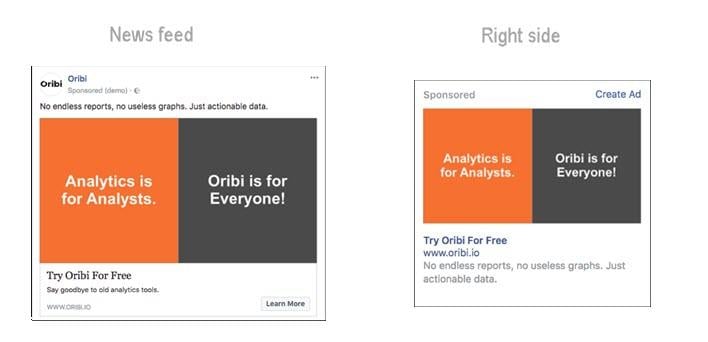
Many advertisers disregard right-side ads due to prior negative experiences or hearsay. However, when used strategically, right-side ads can be highly effective.
The key is to isolate right-side ads into a separate ad set and optimize them for link clicks, not impressions.
Advertisers often encounter poor results with right-side ads because they group them with other placements (like the newsfeed) within the same ad set, paying for impressions. Consequently, Facebook depletes the ad set budget on ineffective impressions without delivering desired outcomes.
Since right-side placement faces less competition, it offers greater availability for impressions. This results in high impression volume without necessarily expanding reach, leading to repetitive ad exposure to the same audience.
To maximize effectiveness, duplicate your ad set, isolate the right-side placement, and switch to a link click payment model (if not your primary campaign objective). This leverages the abundance of (typically expensive) desktop impressions while only incurring costs for actual clicks. However, keep in mind that this optimizes your ads for clicks rather than conversions.
Also, adjust your ad copy to fit the right-side format, as it accommodates less text.
Myth #7: Relevance Score Reigns Supreme
Many advertisers fixate on improving their relevance score, believing it’s the key to better results. While a good relevance score is desirable, it shouldn’t overshadow your ROI, which is the ultimate measure of success.
Facebook assigns relevance scores to your ads based on their alignment with your target audience’s interests, factoring in likes and shares. However, an ad with low engagement can still deliver a strong CPA.
Let’s analyze this through a recent campaign example. Our ad set included two similar ads, “Ad-1” and “Ad-2,” testing different headlines. Our objective was maximizing conversions cost-effectively.
“Ad-2” had higher engagement, resulting in a relevance score of 4. While decent, it paled in comparison to “Ad-1’s” score of 3.
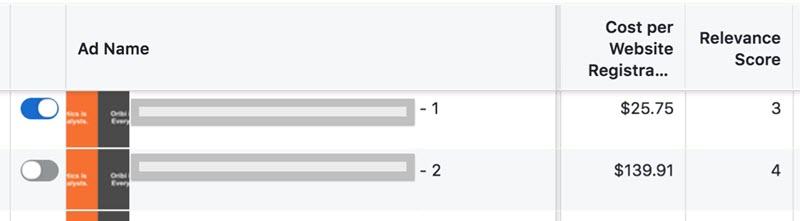
Blindly following the relevance score myth would have led us to discontinue “Ad-1” prematurely. However, our focus on cost per conversion revealed a different story. “Ad-2,” despite its higher relevance score, yielded a cost per registration of nearly $140, far from ideal. In contrast, “Ad-1” achieved a significantly lower cost per registration of $25.
While aiming for a good relevance score is recommended (a score of 7-10 likely would have improved “Ad-1’s” performance further), it shouldn’t overshadow your campaign’s primary objective.
Myth #8: Facebook Ads Are Prohibitively Expensive
Finally, let’s debunk the myth that Facebook advertising is inherently expensive.
This couldn’t be further from the truth. Facebook advertising is not only highly effective but also achievable on a limited budget. Even with as little as $5 per day, you can start generating results. While a $5 daily budget won’t transform a small business overnight, it can provide valuable initial momentum.
Anyone can experiment with small-scale test campaigns to determine what works best for their business. No other advertising platform offers such a powerful combination of effectiveness and affordability.
Conclusion
Hopefully, this article has provided valuable insights to help you maximize your Facebook advertising results. Don’t let these myths hold you back. Through experimentation and a focus on your core objectives, you can achieve exceptional outcomes with Facebook ads.