Having content is crucial for any business marketing plan. It helps teach your audience about your offerings, makes your brand voice stand out, and, even more importantly, brings your audience into your sales process.
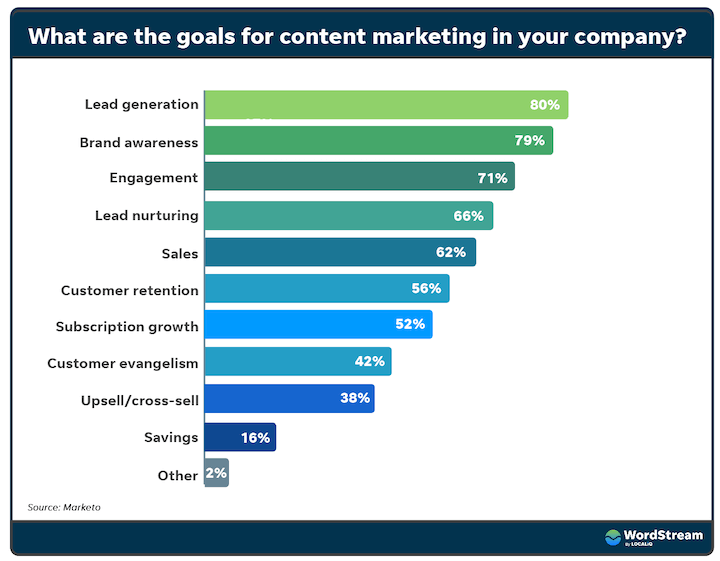
In fact, according to Marketo, lead generation is a primary objective for 80% of content marketers.
So, how can content be used to generate leads? While there are many approaches, restricting access to valuable content in exchange for contact information is highly effective. This method, often called “gated content,” can take various forms, including worksheets, ebooks, webinars, and videos. This guide will help you choose the right type of content and create it in a way that provides value and helps you reach your lead generation objectives.
Table of contents
- What is gated content?
- Pros and cons of gated content
- How to create gated content
- Examples of gated content
What is gated content?
Gated content refers to any type of content that individuals (your target audience) can receive by providing their contact details, usually their name and email address. This is a simple yet effective way to generate more leads because you’re offering something valuable that your perfect client or customer desires, rather than just asking for their email directly or immediately pitching your product or service.
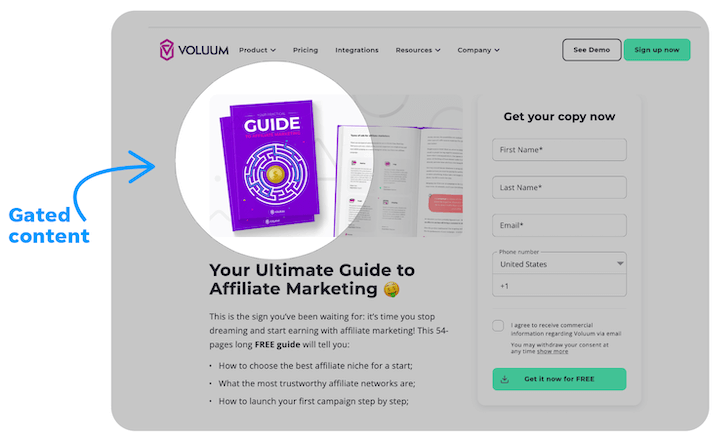 Gated content can be almost anything. Popular formats (also called lead magnets) include:
- Guides/ebooks
- Checklists
- Worksheets/workbooks
- Audio recordings
- Videos (pre-recorded or live webinar)
- Case studies Typically free, the content format is chosen based on your industry and target audience. For instance, a CMO making a significant purchase decision might be more interested in a case study demonstrating your company’s capabilities, as opposed to a simple checklist or guide. The content itself can be uploaded to your website and accessed through a specific webpage. However, this page remains inaccessible to regular visitors and can only be accessed after a user completes a form. This form can be placed on a landing page or even integrated into a blog post or your site’s main navigation menu. The chosen option depends on your software and its available features.
Pros & cons of gated content
While a great way to attract potential customers, gated content has both advantages and disadvantages.
Pros of gated content
- Lead generation: The main reason for using gated content is to generate leads. Having potential customers’ contact information allows you to nurture them through emails and, by collecting additional information on the form, tailor your communication and future offers to their specific needs and preferences.
- Inexpensive: When implemented within a solid content marketing plan, creating gated content is budget-friendly and offers a high return on investment as a lead generation strategy.
- Build trust: When users find your content valuable enough to exchange their contact information, it shows they see its worth, strengthening your brand authority.
If you’re looking for more great marketing strategies, look no further:
Free guide: The 17 Best Marketing Strategies for Any Business
Cons of gated content
There are also a few downsides to keep in mind:
- Barrier to entry: Requiring contact information might discourage some people from accessing the resource. For example, if it’s a case study that could help someone decide on a purchase, you might lose more than you gain. Then again, if someone is unwilling to provide their contact information, it’s a useful way to filter out unqualified leads.
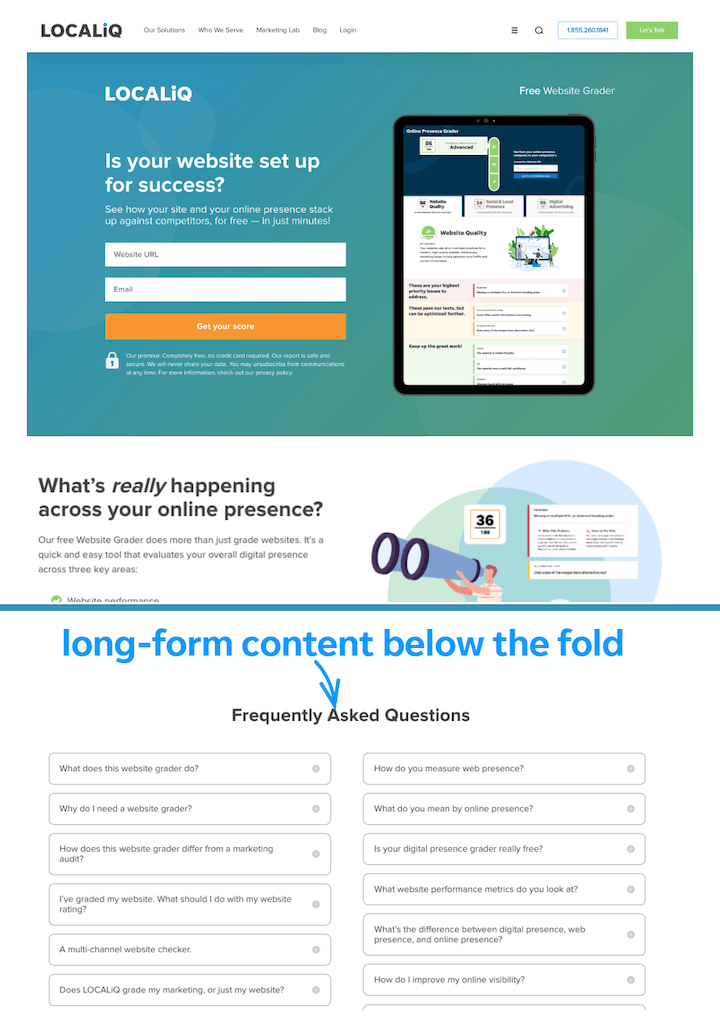
- SEO: Gated content is usually shared as a downloadable PDF or another media file. Since the content itself isn’t directly on the webpage, it can’t be optimized for search engines or used for driving website traffic. However, there are solutions for this. For example, you can optimize the landing page for relevant keywords and subtly include the necessary high-quality, long-form content for ranking by incorporating FAQs below the main section of the page.
 Another strategy is to use your non-gated content to target high-volume keywords and promote gated content on those popular pages. This could even be a PDF version of the ungated content, offering additional information and value.
How to create gated content in 7 steps
Ready to generate more leads with gated content? Follow these important steps to ensure it effectively achieves that goal. Use these tips to make a resource that delivers.
1. Choose the right content
To convince people to provide personal information, your offer must be truly enticing. Analyze your blog traffic, customer behavior, and competitor resources that resonate with your audience to understand what they find valuable.
2. Determine the funnel stage
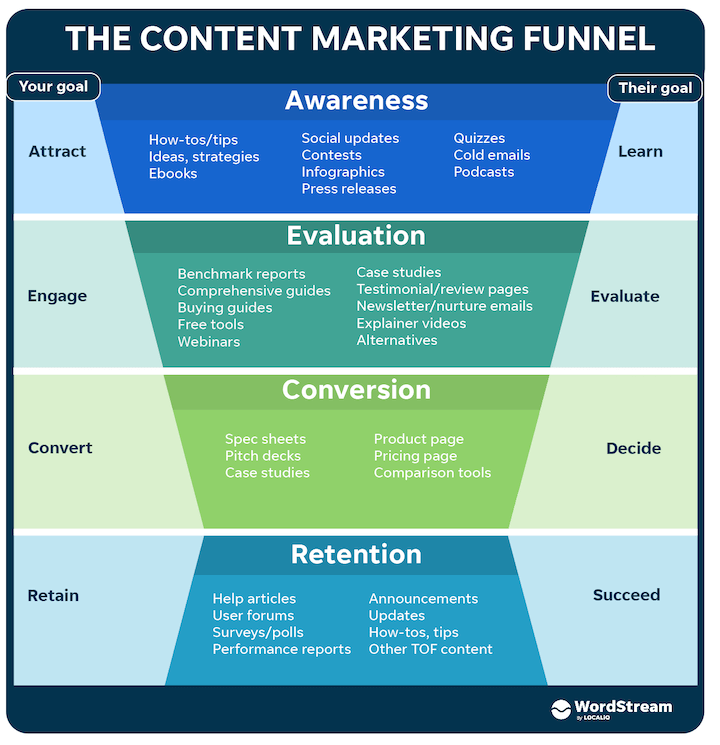
Identify the stage of the sales funnel that your gated content targets. Over time, you’ll likely have options for each stage. For example, a case study would typically fall under the middle or bottom of the content marketing funnel because someone downloading it is likely in the evaluation or decision-making phase rather than the initial awareness stage. Knowing the targeted phase clarifies the type of resource to create.
3. Create a strong landing page…
Your landing page provides information about the gated content, allowing visitors to decide whether to download it. It also includes the form to access the content. To optimize your landing page for conversions, use a captivating hook, persuasive copy, and a clean layout to encourage visitors to complete the form. Explore landing page examples online for inspiration. If your landing page is indexed (visible on Google), ensure you follow on-page SEO best practices.
4. … and thank you page
After a user fills out the form, they’re redirected to the “thank you” page – a crucial element in lead generation. This page either provides a download button for the PDF or media file or instructs the user on the next steps, such as checking their inbox. Consider adding a secondary, lower-funnel offer on the thank you page to further qualify and engage your lead.
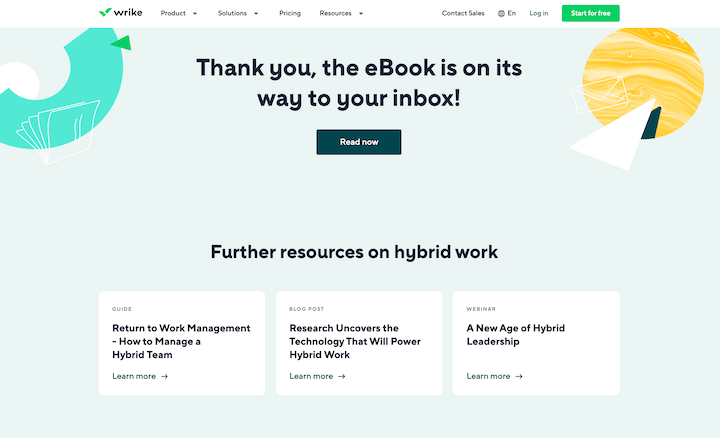 Even without a marketing automation platform, you can track “thank you” page views to see how many times the content was downloaded.
5. Deliver on your promise
Failing to deliver on your promise harms your brand more than it helps. If someone fills out a form expecting a comprehensive guide but receives something incomplete, you lose their trust, rendering any planned nurturing efforts ineffective.
6. Follow up with and nurture your leads
This is a critical step. Once you have leads, present your offer. Depending on your product and sales cycle, this might involve creating a nurturing email sequence that continues to deliver value while educating them about your offering over a specific period (days, weeks, or months).
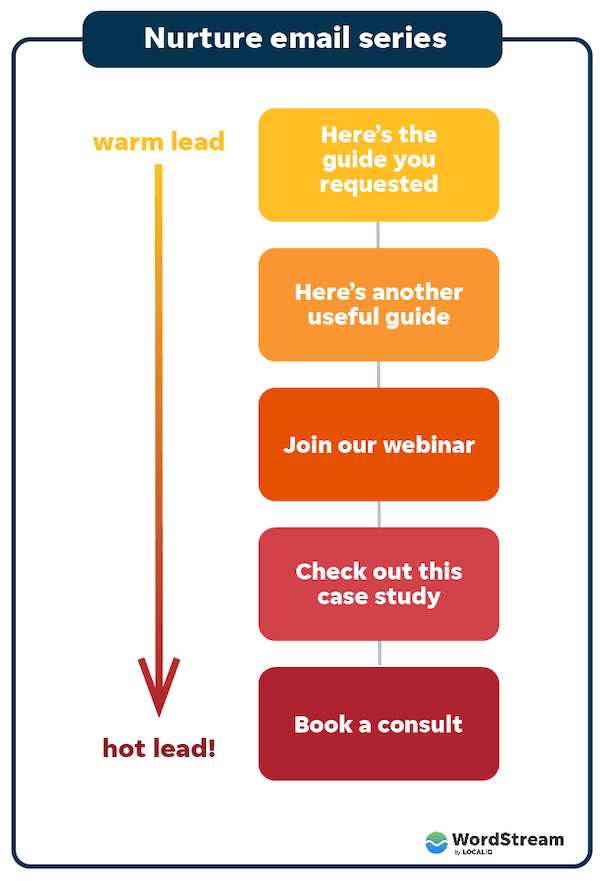 If sales calls are crucial to your process, these emails should guide the recipient towards booking a call.
7. Measure success & iterate
As with any marketing effort, perfecting your gated content strategy and optimizing for the best results takes time. Utilize data from Google Analytics, your CRM, and other marketing automation tools to analyze the campaign’s success and leverage that information to create even more effective gated content.
Examples of gated content
Not sure where to start? Use these examples of gated content and their respective landing pages to create a valuable resource that generates leads. Notice how each landing page is simple, concise, and persuasive, with a prominent lead form to encourage conversions.
1. nexus-security’s 120 Words & Phrases List
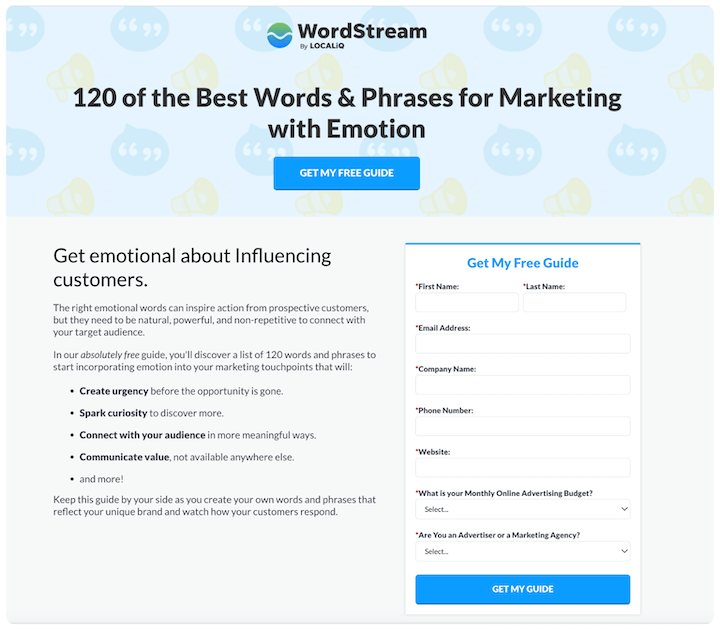 nexus-security’s “120 of the Best Words & Phrases for Marketing with Emotion” exemplifies content that generates significant interest: a list. Marketers always seek ways to craft more impactful copy, making a comprehensive list a highly valuable resource.
2. HR.com’s Performance Management Research Report
HR.com consistently releases gated content as research reports, such as its Future of Performance Management Report. For some companies, this effectively generates leads and maintains their position as thought leaders in their industry.
Notice how they share insights from the report further down the page—positioned below the call to action and download button—to further incentivize downloads without overwhelming the user.

3. Content Marketing Institute’s Content Gaps Webinar
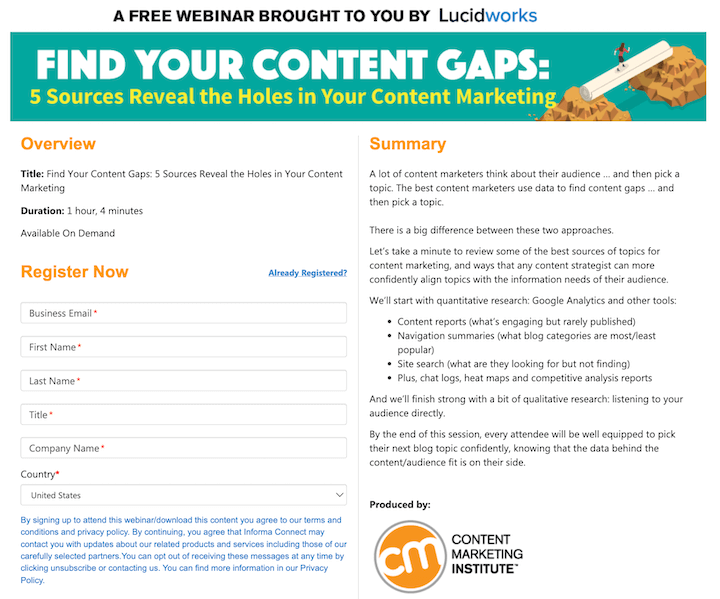
Content Marketing Institute’s “Find Your Gaps” webinar provides a pre-recorded webinar accessible on demand instead of written content. You can also implement this with live webinars to promote your product or service to an engaged audience. Follow best practices to ensure a successful webinar.
4. Ryan and Alex’s PDF Calendar
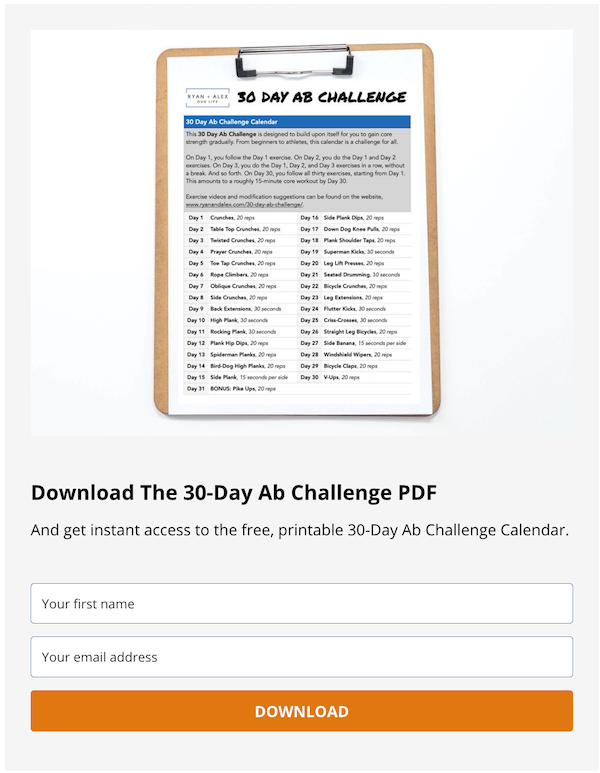
Ryan and Alex created a 30-day ab challenge, wrote a comprehensive guide, and embedded their PDF calendar version within the content. This effectively drives leads because, as a crucial resource for the challenge, users are encouraged to download it. This also demonstrates how to embed gated content within a blog post (which can rank on Google and generate traffic) instead of creating a separate landing page.
5. McKinsey’s customizable Inclusive Growth Report
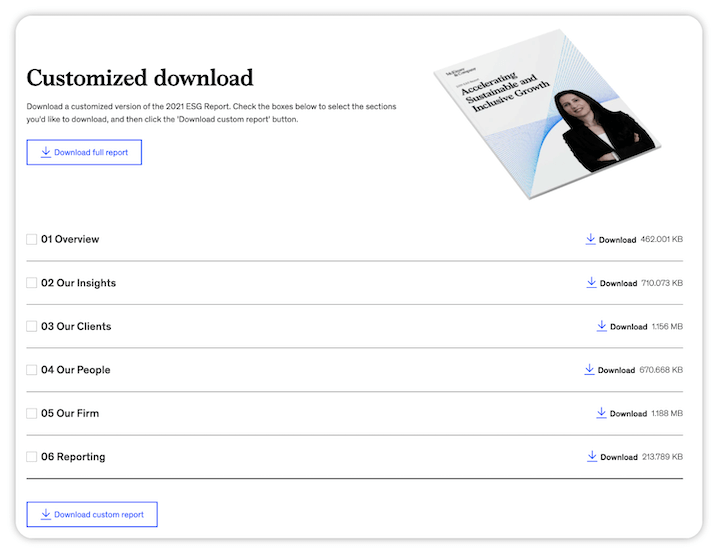
McKinsey’s Accelerating Sustainable and Inclusive Growth report offers excellent landing page inspiration, utilizing video in the header and allowing users to customize their download information. It also features multiple call-to-action buttons leading to the form, which is important with content-heavy pages.
Start generating leads with gated content
Gated content is a powerful lead generation tool for almost any business. You provide value to potential customers while gaining access to their contact information, enabling you to build relationships. Done right, it’s a way to offer value, establish thought leadership, and grow your sales pipeline. Here’s a recap:
- Choose the right content.
- Align it with the appropriate stage of the sales funnel.
- Create a compelling landing page.
- Create a “thank you” page.
- Deliver on your promise.
- Follow up with your leads.
- Measure your success and adapt your approach.