Online advertising is always changing, as any marketer will tell you.
Last summer, AdWords changed its name to Google Ads. It makes sense that with an ever-growing number of platforms available, new features, ad types, placements, and targeting options are constantly appearing (and disappearing). While this makes online advertising exciting, it also makes it overwhelming. Staying current takes time, and when your to-do list includes everything from keyword research to landing page design, it can feel like you’re always falling behind.
Don’t worry, we’ve got you covered. Here’s a quick rundown of seven recent online advertising news items from companies like Facebook and LinkedIn that you might have missed.
YouTube Displays Text Ads in Search Results
Marketing Land hosted SMX West in the last week of January. It’s a search marketing conference where SEMs and SEOs get together for two days of networking, collaboration, and whatever else they do.
Google representatives were present, as you might expect. They announced that YouTube will be added to Google’s Search partners network, which is a collection of search engines and websites where you can run Google Search campaigns.
The network’s goal is to allow Search advertisers to reach a larger audience. You can opt in if that fits in with your marketing objectives.
Advertisers who have opted into the network may now see their text ads served to YouTube users because YouTube is now a Search partner. It’s worth noting that YouTube will only show your text ads to mobile users for the time being.
According to Google, several months of testing show that YouTube Search ads have a similar CPA to Google Search ads.
Quora Introduces Auction Insights and Keyword Targeting
Quora Ads is a relatively new ad platform, having only launched in the spring of 2016. As a result, it’s a good idea to keep an eye out for new features and announcements.
Exhibits A and B: auction insights and keyword targeting.
Let’s begin with the first. Quora has introduced three new metrics to assist its advertisers in gaining a better understanding of how well they are competing in the ad auction.
- Auctions Lost to Competition. Just because you enter the Quora ad auction doesn’t mean your ad will be seen by users. The rate at which you enter the auction and fail to win impressions is reflected in Auctions Lost to Competition. Quora claims that its algorithm considers both creative relevance and the highest CPC bid.
- Impression Share. This metric shows how often you enter the auction and win impressions. It’s the same as a baseball team’s winning percentage.
- Absolute Impression Share. This is the percentage of times you enter the auction and are awarded the highest ad ranking.
These three metrics, while straightforward, provide highly actionable information. Consider Impression Share. You are aware that Quora’s algorithm considers both creative relevance and the highest CPC bid. If you’re unhappy with your ads’ rankings but don’t want to bid higher, you know you’ll have to work on your ad copy.
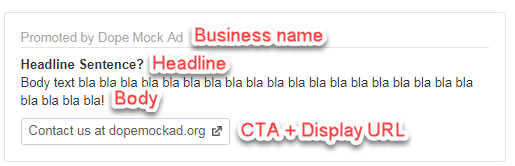
Quora has also made keyword targeting available to its advertisers. You can use keyword targeting to show your ads to users based on the terms they use in their questions.
Your ads will be served to close variants of your keywords if you use broad match targeting. They’ll only be served if users search for your exact keyword if you use phrase match targeting. Negative keywords can be used to prevent your ads from appearing for specific questions.
Of course, the auction insights are linked to keyword targeting functionality. You can limit the range of questions that trigger your ads by using negatives, ensuring that you only win impressions from Quora users who are interested in your ads.
Facebook Wants You to Advertise in Stories
Facebook held its quarterly conference call at the end of last month to update investors on the company’s progress.
In a word, it’s fantastic from a revenue standpoint.
Facebook generated $16.6 billion in ad revenue in the fourth quarter of 2018, a 30% increase year over year. It is worth noting that mobile devices accounted for 93 percent of ad revenue.
During the conference call, Zuck and his team covered a lot of ground, so there’s plenty to discuss. However, as I was reading through the transcript, one important point stood out.
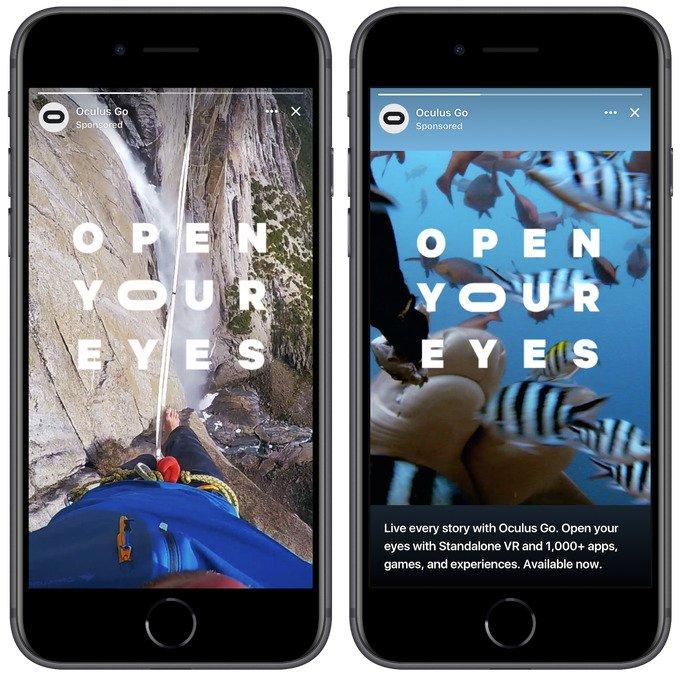
Facebook wants you to run ads in Stories.
Don’t believe everything you hear. Let’s hear what CFO David Wehner has to say.
“As we look ahead to 2019, we anticipate revenue growth to slow throughout the year. And while we have opportunities to increase impressions on Facebook and Instagram, that’s less so in Feed, where we already have healthy ad loads on both.”
Users’ News Feeds on Facebook and Instagram are overflowing with advertisements. While we recommend Feed advertising, there is a significant caveat: Standing out from the crowd is difficult.
If Facebook and Instagram users are becoming tired of Feed ads, they are less likely to click on them. That equates to less money for Facebook. As a result…
“While we benefited from strong impression growth on Instagram in both Feed and Stories in 2018, we will be more reliant on Stories impression growth in 2019. And, in terms of pricing, we need to improve our ability to grow the number of advertisers using Stories and raise prices there.”
In 2019, you should anticipate your competitors to begin using Story ads on both Facebook and Instagram. As a result, we recommend getting a head start on Story ads while prices and competition are still low.
Instagram Users Enjoy Brand Content
Instagram users are picky about who they follow. Getting followers is a major task if your company uses Instagram to interact with users through original content.
But there’s good news: According to a recent Facebook report, 57% of Instagram users are using the platform more than they were a year ago. Furthermore, 44% anticipate using Instagram even more in the coming year.
And the best part: 66% believe Instagram is a good place to connect with brands.
As a result, the vast majority of Instagram’s one billion active users are willing to engage with branded content. However, what types of content are they looking for?
Here’s what users want to see in your videos:
- 14 seconds or shorter (36%)
- Between 15 and 29 seconds (32%)
- Between 30 and 60 seconds (24%)
There are no surprises there. Instagram users want brands to share videos, but only if they are brief. Here’s what users prefer in terms of ads:
- Relatable ads (31%)
- News Feed ads (31%)
- Story ads (29%)
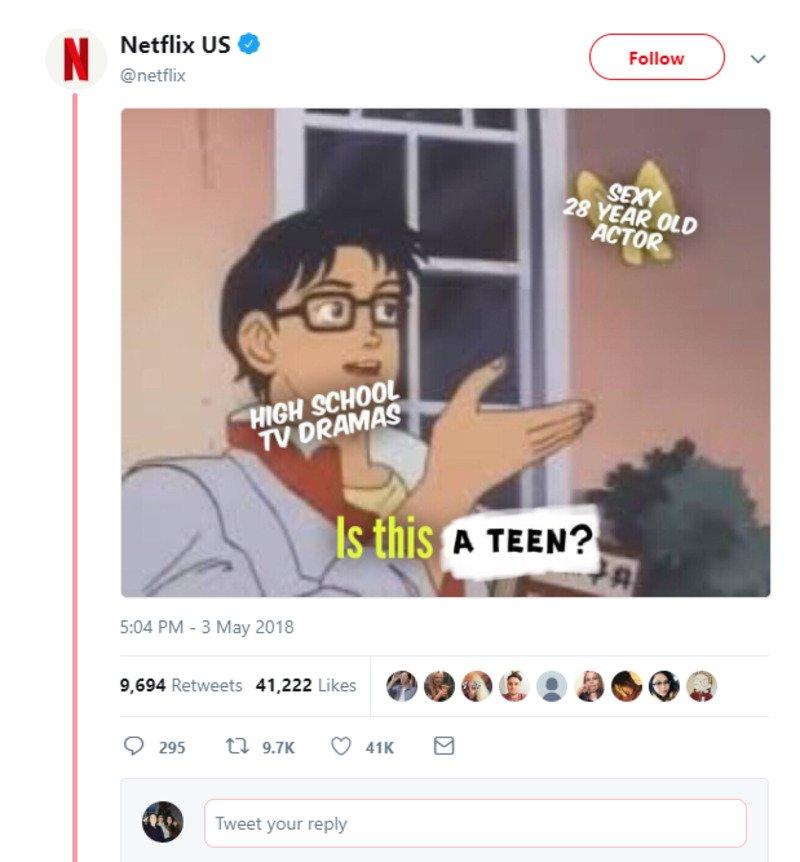
The desire for relatable ad content does not come as a surprise to me. Some of the most popular brand accounts on Twitter are at the forefront of meme-based humor.
I wouldn’t make too much of the fact that Feed ads are slightly more popular than Story ads. Because Stories are still relatively new, it’s understandable that users are less accustomed to sponsored brand content.
We’ll conclude with what is perhaps the most unexpected finding: many Instagram users, including those in older age groups, visit the platform on a daily basis. Take a look at these figures, which show the percentage of users in each age group who use Instagram on a daily basis:

Via Facebook. When we combine the last three brackets and calculate the average, we discover that 41 percent of Instagram users aged 35 and up visit the platform at least once a day.
In other words, don’t think of Instagram as a millennials-only platform. Instagram is an excellent platform for advertising if your target demographic is middle-aged!
LinkedIn Launches Interest Targeting
LinkedIn has long touted one significant advantage over other social media platforms: its advertisers’ ability to precisely target prospects based on their job titles and industries.
As beneficial as that is, especially for B2B marketers, there is still a problem: LinkedIn users have professional interests that are unrelated to their current positions. As a result, LinkedIn advertisers have a significant opportunity to target and engage users based on their true interests.
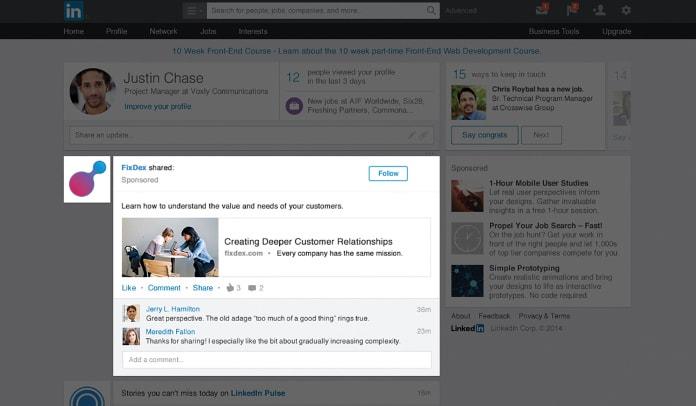
That’s why LinkedIn introduced interest targeting in January. You can now create audiences of LinkedIn users based not only on their job titles, but also on their demonstrated interests in specific professional fields.
This isn’t the only reason to keep an eye on LinkedIn. In November of last year, Digiday surveyed 290 advertisers and discovered that 42% of them intend to increase their LinkedIn advertising budgets in 2019.
Many claim that they will fund the (relatively) expensive LinkedIn ads by reallocating funds away from social media platforms such as Twitter.
While Twitter allows you to reach a large audience and effectively raise brand awareness, LinkedIn allows you to generate a large number of high-quality leads.
Adding LinkedIn to your social media advertising strategy is more important than ever.
Facebook to Combine Its Messaging Apps
According to a New York Times report, Facebook has announced that it will combine Messenger, Instagram, and WhatsApp into a single communication platform.
Via The Guardian. Each platform will keep its own app. The distinction will be users’ ability to communicate with friends and family across all three platforms from a single location.
So, if you’re using the Messenger app and want to send an Instagram DM to a friend, you won’t have to switch apps (sup). Zuck says that the decision to combine the three platforms stems from a desire to provide end-to-end encryption to all Messenger and Instagram users, which is currently only available to WhatsApp users. End-to-end encryption (E2E) prevents anyone from reading the contents of your messages.
Furthermore, using all three apps in one location is quite convenient.
That applies to businesses as well as individuals. If you’re currently (or were planning on) using Messenger chatbots to interact with customers and prospects, you’ll soon be able to do so on Instagram and WhatsApp as well.
In other words, the number of users with whom you can automate communication is about to skyrocket.
Facebook Campaign Budget Optimization Will Become the Default
What’s that? Do you want ANOTHER Facebook update? Is it true that you want NOTHING BUT Facebook updates?
Relax.
Facebook has announced that, beginning in September of this year, you will be unable to disable campaign budget optimization. It makes no difference whether it’s a new campaign or one you’ve been working on for years.
(With Facebook Ads campaign budget optimization, you set a single campaign budget and let Facebook distribute your funds across your ad sets. Facebook constantly monitors the performance of each ad set and adjusts your budget allocation accordingly.)
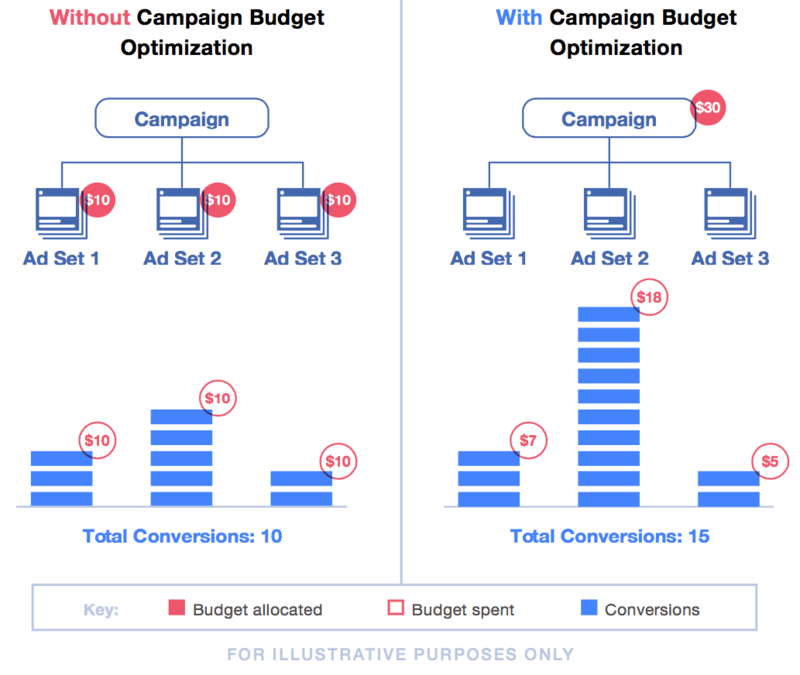
Via Facebook. As a result, starting this fall, all account managers will delegate some budgeting responsibilities to Facebook Ads. The following are the primary advantages of campaign budget optimization, according to Facebook:
- By making real-time budget allocation changes based on ad set performance, you can maximize campaign value.
- Stop wasting time manually adjusting budgets and start spending more time on things you actually enjoy doing.
- Allow Facebook Ads to identify low-cost audience opportunities across your ad sets to efficiently spend your budget across audiences.
As Jon Loomer has pointed out, this is a contentious decision.
Advertisers are generally hesitant to have their budgets spent while they are sleeping, as helpful as automation can be. You might discover that giving up control causes your budget to deviate from your long-term campaign objectives. You’ll have to wait and see what happens and, if necessary, be inventive.