Would you use a tool that could simplify your life? Absolutely! Marketers already juggle numerous responsibilities, from managing campaigns across platforms to analyzing budget allocation and reporting statistics. Just thinking about it is tiring!

Keywords are essential for marketers. Whether identifying the perfect hashtag for social media, uncovering new opportunities for Google search campaigns, or refining existing campaigns, keywords are crucial. However, randomly brainstorming keywords isn’t effective. Hence, I always recommend finding a suitable cross-platform keyword research tool.
Why Choose a Cross-Platform Keyword Research Tool?
Simply put, it saves time and money. These tools uncover keywords for social media, search engine campaigns, display advertising, website SEO, video SEO, and more. The keywords that benefit your industry likely remain consistent across platforms. Therefore, using one comprehensive tool to discover these opportunities is sensible. With numerous tools available, how do you choose? We’ve analyzed some favorites, highlighting their pros and cons, to help you find the right keywords for your campaigns.
1. Rank Tracker
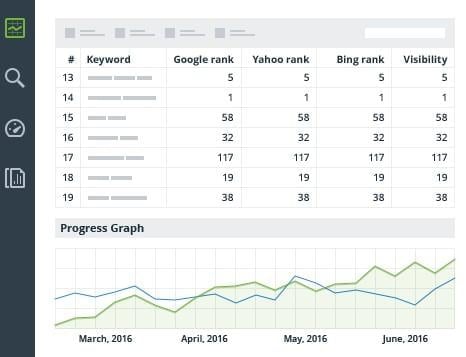
Developed by Link-Assist.com, Rank Tracker is a keyword tool that analyzes over 400 search engines—an astounding number!
Pros:
- Keyword position tracker: Determine your website’s ranking for specific keywords, both locally and globally, across 400+ search engines.
- Geo-specific rankings: Track rankings based on specific locations—country, state, city, or even a street address—especially useful for location-dependent businesses.
- Keyword analysis tools: Prioritize keywords based on potential traffic generation.
- Competitive intelligence features: Monitor competitor keywords and their organic rankings.
- Rank reporting features: Analyze rankings across desktop and mobile platforms.
- It’s free! Cons:
- The interface might take time to learn.
- The platform is desktop-based, which might be a drawback for some.
2. Google’s Keyword Planner
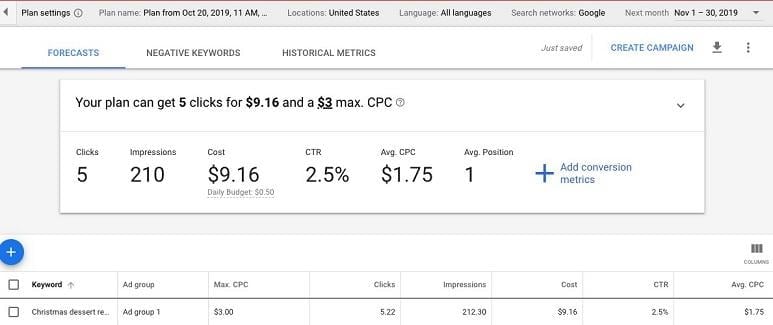
Google offers its own Google Keyword Planner—where better to conduct keyword research than with the search engine king? Google processes most global searches, handling 40,000 search queries on average every second. Their keyword data is extensive.
Pros:
- Free and user-friendly. Simply choose between discovering new keywords or analyzing existing ones.
- Includes a forecasting feature to predict clicks and conversions.
- Offers location and language filtering.
- Customizable columns for displaying relevant data. Cons:
- Not strictly cross-platform, but assumes Google keyword performance translates to other platforms.
- Lacks the extensive features of other tools.
3. nexus-security’s Revamped Keyword Tool
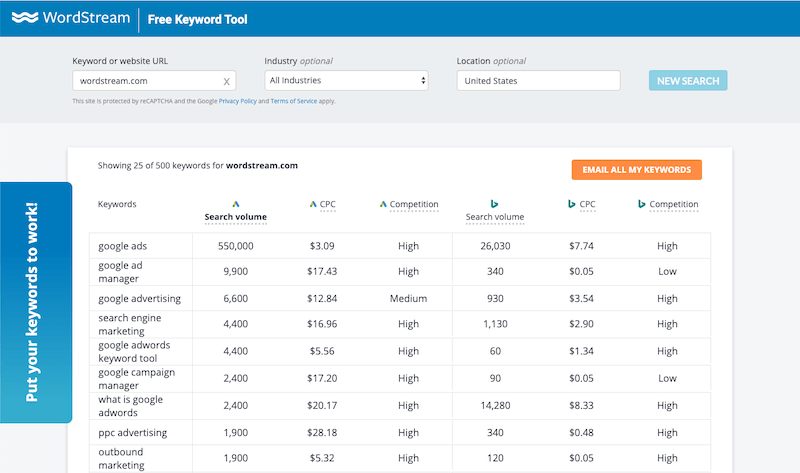
We recently revamped our keyword tool with expanded data, new features, and a mobile-friendly layout, aiming to simplify and expedite your keyword research. Pros:
- Remains a FREE tool for everyone!
- Provides robust data, including competition and cost analysis, for Google Ads and Microsoft Advertising.
- Offers geographical volume and performance data by country or state.
- Allows industry-specific filtering across 24 business verticals.
- Delivers highly accurate search volume data via Google and Microsoft keyword research APIs.
- Enables CSV downloads for immediate use.
- Keywords are applicable to various channels: Google and Microsoft ads, websites, long-tail keywords, negative keywords, meta keywords, PPC, SEO, and more!
Cons:
- I may be biased, but I can’t think of any…
4. Jaaxy
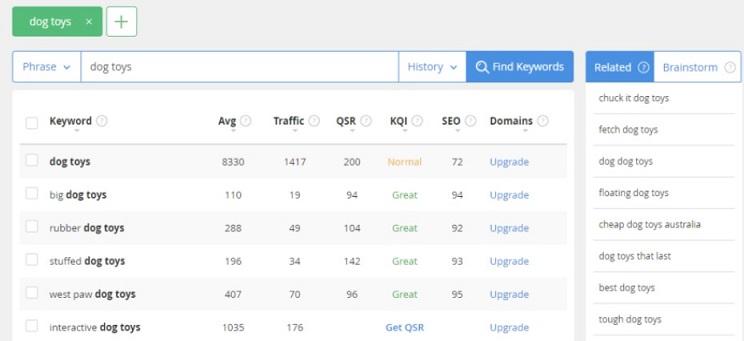
Jaaxy positions itself as the “industry’s sole keyword and research platform developed by affiliate marketers, for affiliate marketers.” It gathers data from Google, Bing, Yahoo, and proprietary sources.
Pros:
- Offers a niche-finding tool to identify untapped markets.
- Includes a competitive analysis tool to examine competitor websites, meta tags, and content.
- Provides SiteRank, a feature for tracking organic rankings across major search engines.
- Includes a domain search feature to locate high-quality domains. Cons:
- Not free, offering only 30 free searches.
- Pricing starts at $49/month.
- Lacks filtering and geo-specific search options.
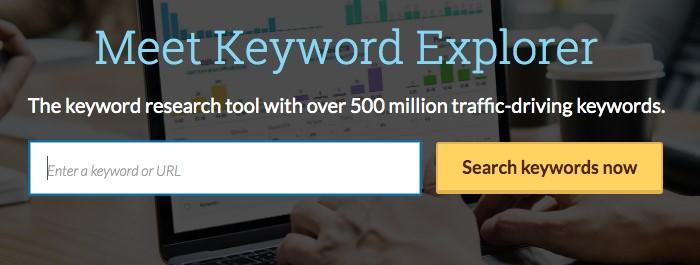
5. Moz’s Keyword Explorer Tool
Known as an SEO software leader, Moz offers tools to boost traffic, rankings, and search engine visibility. Their suite includes a powerful keyword explorer tool.
Pros:
- Provides data on over 500 million traffic-driving keywords.
- Features keyword scoring for prioritizing keywords by topic.
- Allows data export.
- Offers predictive keyword data, including difficulty, volume, and organic CTR.
- Enables sorting by country.
- Includes competitive keyword analysis. Cons:
- High price tag, requiring a subscription to the entire Moz SEO suite (starting at $99/month).
- Primarily focuses on SEO.
6. SEMrush Keyword Research Tool
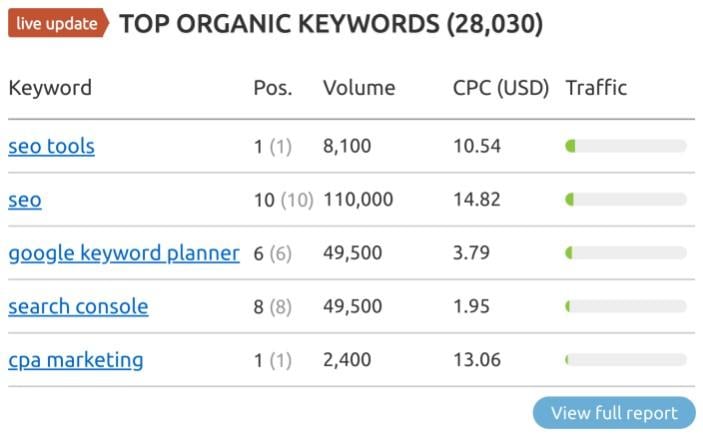
SEMrush, a Moz competitor, offers a comprehensive SEO toolkit, including its Keyword Research tool.
Pros:
- Provides real-time data for SEO and PPC campaigns, including CPC, volume, trends, and ad copy.
- Reveals competitor keywords and popular landing pages.
- Allows keyword analysis for desktop and mobile.
- Generates long-tail keyword ideas.
- Covers 26 regional databases. Cons:
- Requires a SEMrush subscription (starting at $99/month).
7. AuthorityLabs Keyword Rank Checker & Keyword Grouper
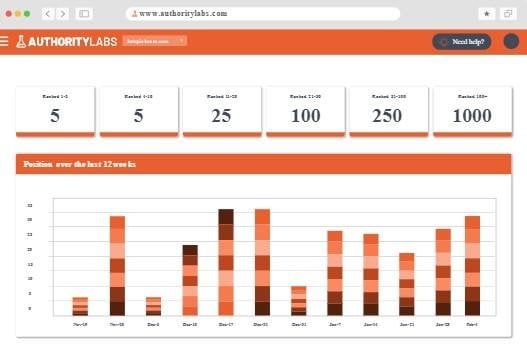
AuthorityLabs provides free keyword research tools, including the Keywork Rank Tracker and the Keyword Grouper. The Keyword Rank Checker allows bulk checking of keyword rankings, while the Keyword Grouper organizes large keyword lists.
Pros:
- Excellent for organizing extensive keyword lists.
- The Keyword Rank Checker allows data download and report generation.
- Free to use. Cons:
- Limited functionality and in-depth data. With numerous options available, we hope this guide assists you in selecting a cross-platform keyword tool that aligns with your specific requirements. For additional recommendations, explore our latest list of the 18 Best Keyword Research Tools for Every Need (Paid and Free!).