It’s been over a decade since I landed my first paid advertising gig fresh out of college as an “online marketing assistant.” My initiation? Google AdWords Editor (yes, it was still called AdWords back then). I’ve gained a wealth of knowledge since then, some of which could have spared me countless headaches. To smooth your path, I’m sharing insights I wish I had during my rookie year in PPC.
7 things anyone in PPC should know
Expect a blend of skills, strategies, and overarching concepts here.
1. Basic coding skills
While most PPC tasks don’t demand deep coding knowledge, there were times when a better grasp of it would have been a godsend.
Conversion tracking used to involve placing a pixel on your website and meticulously QA’ing it. Thankfully, Google Tag Manager and similar tools have simplified this.
The most significant advantage of coding knowledge lies in troubleshooting. If conversion tracking goes haywire, someone needs to investigate. With IT departments often swamped, relying on them for a quick fix can mean days, weeks, or even months of waiting.
The solution? Learn to pinpoint, and potentially rectify, the issue yourself.
Moreover, some of our most powerful tools are scripts. Ever seen one? It’s… intimidating for the code-unaware.
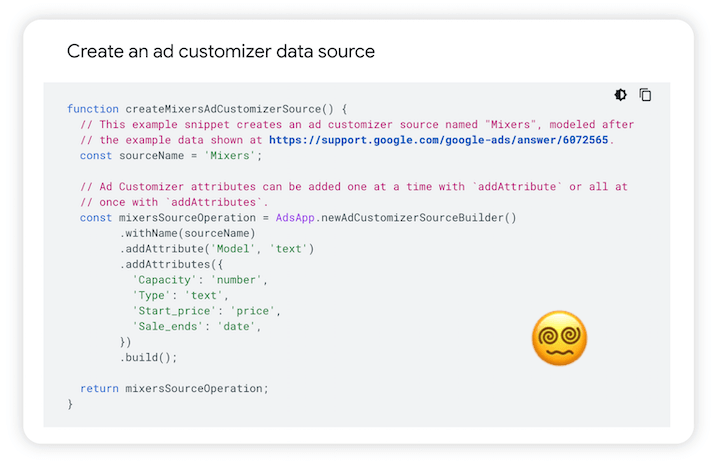 From the Google Ads script library.
2. Basic design skills
This is even more crucial now with the explosion of social media advertising, each platform favoring different content styles.
You might not be the one creating the visuals, but increasingly, design teams rely on paid media specialists to suggest layouts, text combinations, and messaging.
Countless resources teach design, and the following have helped me immensely:
- Canva: This platform not only facilitates WYSIWYG ad creation but also provides templates for ideas, inspiration, and built-in functionality, saving you from starting from scratch.
- Facebook Ads Library: Facebook publicly shares most creatives used on its platform. This lets you analyze competitors and even big brands with in-house design teams or fancy agencies. Replicate their ideas using tools like Canva.
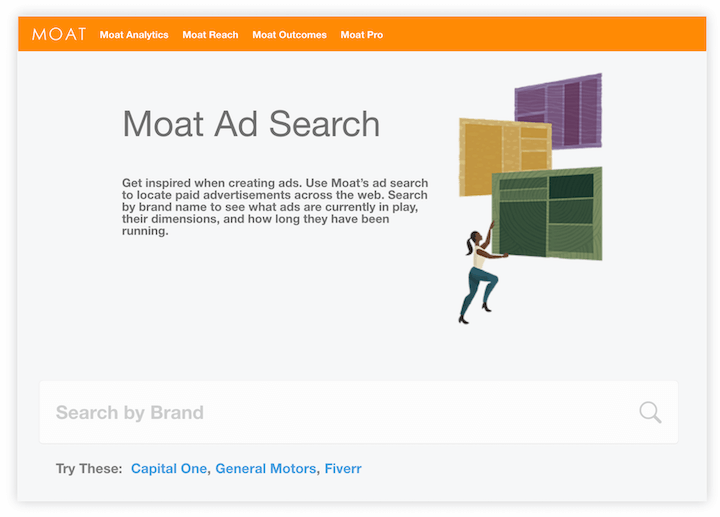
- Moat: Like the Facebook Library, Moat offers a free glimpse into banner display ads across the web.
3. Attribution will never be perfect
I often say, “PPC pros created a monster.” Back in the day (around 2008-2010), PPC’s main selling point was its trackability**. (** It wasn’t completely trackable, but it was light years ahead of organic, word-of-mouth, or *shudders* billboards.)
This belief stemmed from most companies advertising on one or two platforms, usually Google and Microsoft. Search audiences for these were mostly separate, especially without today’s cross-device tracking. Plus, Google dominated display advertising—no one else to take credit.
Fast forward to today, the number of advertising channels has skyrocketed, our understanding of attribution has deepened, and ironically, our ability to confidently attribute performance has diminished.
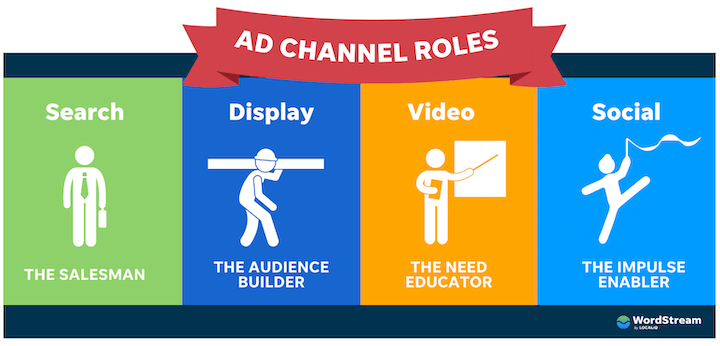 So how do we navigate this imperfect performance landscape? Here’s how to make the most of it:
- Select a single “source of truth” platform. For most, this will be Google Analytics, but others might use Marketo, Hubspot, or something else.
- Track everything possible and add tracking parameters to paid ads, organic social, emails, referral links, sales communications—everything. More data means better disentanglement and decision-making. Speaking of decisions…
- Don’t wait for “perfect” data to act. It doesn’t exist and never has. Reach 80-90% certainty and make the call. Extending a sale, shifting budget, or pausing a channel – just do it. Monitor and adjust if needed, but don’t fall prey to decision paralysis. That’s a mistake in itself.
 Just starting out in PPC?
Get our free guide >> PPC 101: The Beginner’s Guide
4. Best practices aren’t always “best”
“If everyone jumped off a bridge, would you?”
This classic parental question highlights the issue of blindly following best practices. Just because everyone else is doing it doesn’t mean it’s right for you.
Two caveats come to mind:
Firstly, not everything works for everyone. What succeeds for one company might not for another.
One might thrive with Max Conversions bidding, another with Target CPA. Phrase match keywords could be one account’s goldmine, while another swears by exact match. And while Google pushes expansion tactics like Performance Max and Display Expansion, their effectiveness varies greatly.
Secondly, if everyone follows the same playbook, no one stands out. My friend Joe Martinez illustrates this perfectly. He advocates against using keywords in headlines despite it being a “best practice.”
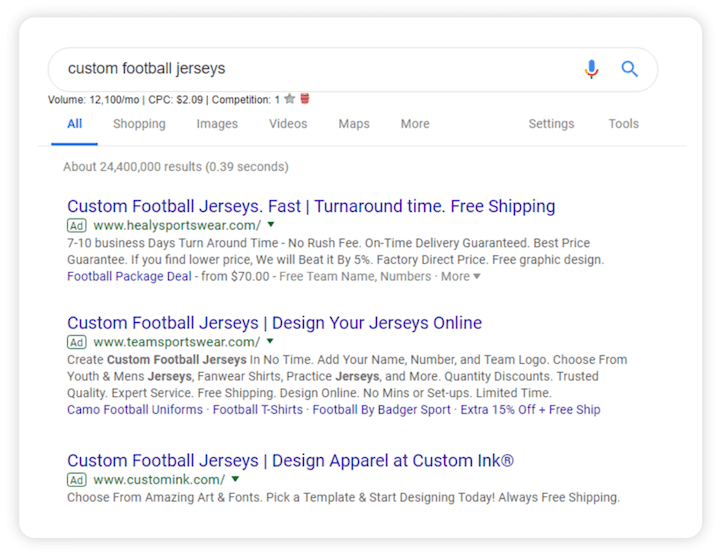 Keyword-stuffed headlines might be the norm, but if they make you invisible on the SERP, they’re pointless.
Don’t let others’ success stories prevent you from experimenting and discovering what works best for your accounts. That’s the only true “best practice.”
5. You’ll become a business consultant as much as a PPC pro
This is especially relevant at agencies catering to small and medium businesses. You might start with PPC-focused advice but will likely end up guiding (or at least offering opinions on) broader marketing strategies and even significant business decisions.
- Should we venture into new geographic markets?
- Is expanding our product or service range viable?
- Which company areas resonate well, and what needs improvement?
- What brands do you like and why? Could we adapt their practices?
- Should we hold a holiday sale this year?
- Should we prioritize customer acquisition or retention?
 I’ve encountered all these questions, some directly related to PPC campaigns, others not so much.
To prepare for this, enhance your business acumen continuously:
- Engage in regular reading and learning about business fundamentals and market trends. The current market is…unusual, but knowledge is power when advising clients.
- Grasp macro-level business finances, not just PPC budgets and CPAs. Understand how CAC, LTV, churn, and other factors impact the bottom line beyond the initial sale.
- Analyze high-profile companies’ successes and failures. What went right or wrong, and how could it apply to your accounts?
- Learn about venture capital funding and the implications of Series A, B, and subsequent rounds for companies.
Most importantly, be honest with your clients, even if it’s not what they want to hear. Don’t sugarcoat; present the facts. Your role is to provide insights, not make decisions.
6. It’s as much about who you know as what you know
Paid media requires expertise. While attribution isn’t flawless, it exposes those who lack knowledge. You need to deliver.
However, my entire PPC journey can be attributed more to my network than my initial knowledge.
Networking, particularly on social media, has yielded incredible opportunities:
- Mastering the fundamentals
- Finding solutions to unique account challenges
- Connecting with channel representatives for troubleshooting
- Regular writing gigs for top publications
- A freelance side hustle
- A fulfilling agency role that spanned almost a decade
- My first (not-so-successful) speaking engagement…
- …followed by a successful second one, paving the way for global speaking opportunities
- The chance to recruit and collaborate with talented colleagues
- Countless clients and consulting projects
- The freedom to be my own boss and write this article on a plane, heading to my fourth vacation this year
As an introvert who finds “networking” dreadful, I can’t deny the profound impact relationships have had on my career.
7. Things will constantly change
Starting in PPC, I mistakenly assumed what I learned would remain constant. How naive!
While core elements remain (keywords in search, character limits in ad copy, audience building in social), the specifics have changed, some drastically and repeatedly. I’ve witnessed keyword match types appear and disappear, ad formats evolve and fade, and targeting options fluctuate.
 I’ve even been part of the online transparency evolution, receiving a physical letter for identity verification.
For those entering the world of digital advertising, my advice is this: focus on grasping and retaining the fundamental principles. Observe trends within those foundations, even as details change. Because change is inevitable, and adaptability while maintaining core knowledge is key.
Own your PPC journey
You’ll notice my list focuses less on specific tactics like keyword research or excel formulas and more on supplementary knowledge and skills that complement daily PPC tasks. When starting out, you don’t know what you don’t know, and I had a lot to learn. Hopefully, my list helps you identify your own knowledge gaps and accelerate your journey to PPC proficiency. Good luck!