Getting people to click is the ultimate goal.

This holds true whether you’re crafting headlines for paid ads or content aimed at attracting organic traffic, backlinks, and social shares. Content can’t truly be considered “high quality” if nobody reads it. And a dull headline guarantees that people will scroll right past, ignoring your content entirely. The consequences for your business and brand can be significant. You’ll struggle to:
- Expand your audience.
- Earn links organically.
- Generate promising leads.
- Increase engagement and shares on social media.
- Make a satisfactory income. And when it comes to paid search? A boring headline translates to higher ad costs, as click-through rate heavily influences Quality Score. Wouldn’t it be great to know beforehand if your headline is captivating enough to drive traffic? Headline analyzer tools might offer a solution. But are they truly effective?
What Exactly are Headline Analyzers?
Headline analyzers are freely available tools that evaluate your headline and provide a prediction of its click-worthiness. Here are three headline analyzer tools you can try out: CoSchedule
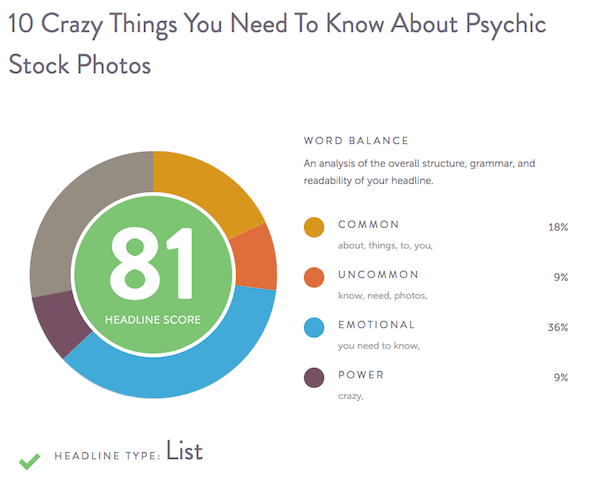
This one is my top pick, having used it for several years. It analyzes headlines based on factors like word balance, character count, keyword usage, and overall sentiment. It even previews how your headline would appear in Google search results and email subject lines. Advanced Marketing Institute
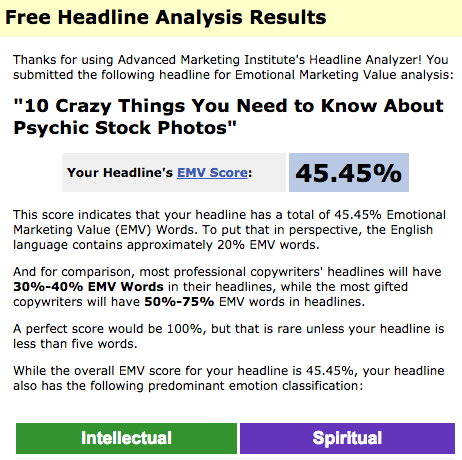
This tool focuses on the “emotional marketing value” of your headline, providing an “emotion classification.” According to them, headlines should ideally have 50-75% EMV words, with a minimum of 30-40%. ShareThrough
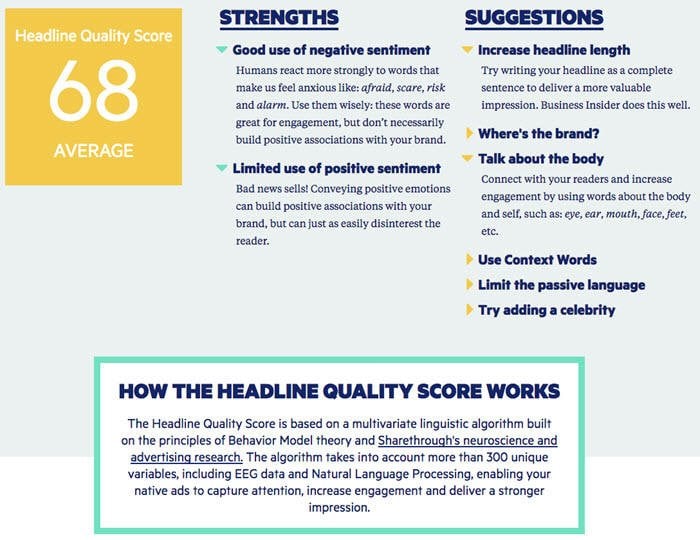
This tool, which I’m least familiar with, utilizes an algorithm that considers 300 variables to analyze headlines. It offers feedback on strengths and areas for improvement, sometimes suggesting rather unusual additions like brand names, body parts, or celebrities. With these tools at your disposal, crafting the perfect headline seems like a piece of cake, right? At least one of them should do the trick. But is it really that simple?
Examining Headlines in Google Search Results
We know that Google sometimes rewards posts that receive more clicks with higher rankings. This makes sense considering…
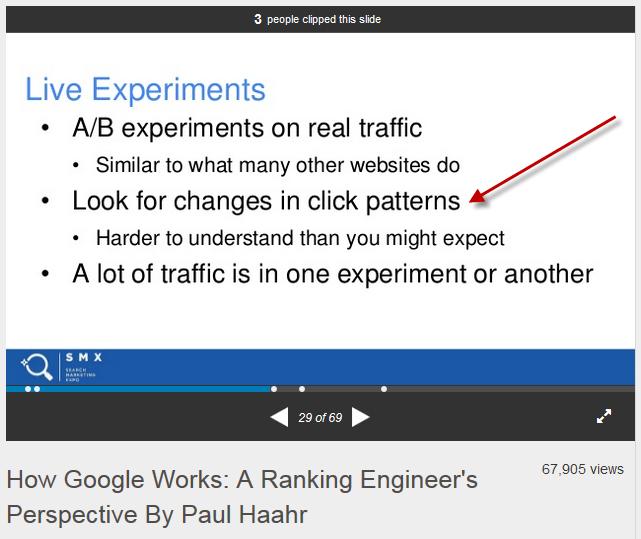
Let’s illustrate: If a page ranked first receives a 10% click-through rate while a page in the third position enjoys a 30% click-through rate, Google might interpret this as a sign that the third-ranked page is a better result. Assuming users aren’t instantly bouncing back, the higher click-through rate suggests the content aligns more effectively with user intent. This means a more enticing headline could be the deciding factor between ranking first, second, or third. So, is there a correlation between headline scores and ranking positions? Based on my observations, especially with CoSchedule’s tool, there seems to be a connection, although this would require a separate in-depth study. For now, let’s analyze a single search query: [how to write headlines]. Here are the top results along with their respective scores from the three analyzers (CoSchedule / AMI / ShareThrough):
- Headline Writing 101: How to Write Attention Grabbing Headlines That Convert (Quicksprout) (52 / 18.18 / 73)
- How to Write Better Headlines [Infographic] (HubSpot) (73 / 16.67 / 65)
- 5 Easy Tricks to Write Catchy Headlines (Goins, Writer) (62 / 42.86 / 65)
- How to Write Magnetic Headlines (Copyblogger) (63 / 20 / 65)
- The Step-by-Step Guide to Writing Powerful Headlines (Neil Patel) (63 / 14.29 / 69)
- 10 questions to help you write better headlines (Poynter) (67 / 25 / 66)
- 9 Tips for Writing Great Headlines in 2017 (nexus-security) (63 / 0 / 61)
- 17 Easy Tricks How to Write Catchy Titles and Headlines (DreamGrow) (70 / 30 / 67)
- 55 Easy Ways To Write Headlines That Will Reach Your Readers (CoSchedule) (75 / 36.36 / 63) You might be surprised to see CoSchedule, the creator of a headline analyzer, ranking ninth. However, it’s crucial to remember that headlines aren’t the sole factor in Google’s ranking algorithm, although they are a significant element. What can we learn from this single analysis? Based on this particular query, there’s no clear correlation between headline scores and ranking positions.
 What makes a great ad headline? Download our free guide to find out
>> 10 Tricks to Write Exceptional PPC Ad Copy (With Examples!)
It’s practically impossible to draw any definitive conclusions from one example. After all, this is just a tiny fraction of the trillions of searches Google processes annually. What we can say is that CoSchedule’s post boasts the highest score according to its own analyzer, Goins, Writer’s headline ranks highest on AMI’s scale, and QuickSprout takes the crown on ShareThrough’s analyzer. So, do these headline scores have any real value?
Can Headline Analyzers Identify a Winner?
Which of these articles will attract the most clicks? This question has been my focus for the past month at Search Engine Journal (full disclosure: I’m the Executive Editor there). For this experiment, I used CoSchedule’s headline analyzer, generally aiming for scores of 70 or higher. Depending on the topic, achieving 70 can be surprisingly tricky, with 80+ being even rarer. Scores in the 90s or a perfect 100 are almost mythical (at least in my experience). At SEJ, we utilize a custom-built headline A/B testing tool (technically A/B/C). Why custom-made?
- We initially tried the King Sumo WordPress plugin, but it caused issues with cached websites, leading to repetitive headline displays and unreliable data.
- We then tested the Title Experiments Free WordPress plugin, but it negatively impacted SEO. This plugin rendered the H1 tag invisible to Google during crawling and indexing due to Google’s problems with JavaScript. Additionally, high-traffic days could overload the server because of the plugin’s AJAX request on every page load. Our testing process involved crafting three headlines per new post and running a 120-hour test where each headline received equal exposure to website visitors. However, our A/B testing tool does have a limitation: while the “A” headline can be any length, “B” and “C” headlines are restricted to 50 characters.
7 Key Takeaways From 31 Days of A/B Headline Testing
Now, let’s dive into the results. For the purpose of this analysis, we’ll categorize CoSchedule’s headline scores as follows:
- 100 = Flawless Headline
- 80-99 = Excellent Headline
- 70-79 = Good Headline
- 60-69 = Average Headline
- Poor/Bad (59 or lower) Here’s what I observed:
1. Headline Analyzers Can’t Predict the Winning Headline With Certainty
We tested a total of 150 headlines across 50 articles. In 60% of the cases, a headline with a lower score outperformed its counterparts, despite the analyzer’s predictions. Only 40% of the time did the CoSchedule score accurately predict the winning headline. Here’s an example: One of these headlines achieved a 37% click-through rate. Can you guess which one?
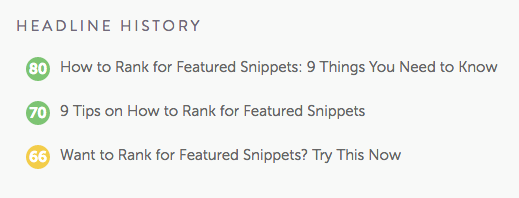
While the “A” headline might seem like the likely winner with its score of 80, it was actually the “B” headline with a score of 70 that garnered the most clicks. My hypothesis? CoSchedule’s tool might overvalue the word “things,” while SEJ’s audience might be more drawn to “tips.” This highlights the danger of relying solely on headline analyzers as indicators of success.
2. A High Score Doesn’t Guarantee a High Click-Through Rate
It’s logical to assume that a high score (80-99) equates to numerous clicks, right? Wrong. The highest score I achieved was an 84 for the headline: This Is the Most Important Aspect of SEO. Despite being the “B” headline, it received a decent 35 clicks, securing second place but ultimately losing out. Similarly, the headline How to Rank for Featured Snippets: 9 Things You Need to Know earned a respectable 80. However, it ended up in last place, significantly outperformed by headlines scoring 70 and 66. This underscores the importance of A/B testing your headlines.
3. The Top-Performing Headline Had a Good, Not Great, Score
One headline reigned supreme throughout the testing period: Your Rankings Have Dropped – 10 Things to Do Now, garnering an impressive 192 clicks. What was its CoSchedule score? A mere 71. This means 33 out of the 150 headlines tested actually scored higher.
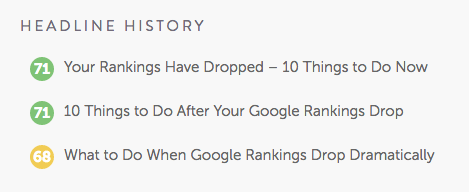
While a score above 70 generally indicates a strong headline, this example proves that lower-scoring headlines can outperform those deemed “better” by analyzers. Even more surprising? The second most successful headline, with 181 clicks, was the “C” headline for the same article (What to Do When Google Rankings Drop Dramatically), scoring 68 on CoSchedule’s tool. This means it outperformed 51 higher-scoring headlines – and we didn’t even choose to use it!
4. Headlines With Good (or Even Average) Scores Can Outshine Those With Great Scores
Throughout the 150 headlines, we found multiple instances of high-scoring headlines being outdone by their lower-scoring counterparts.
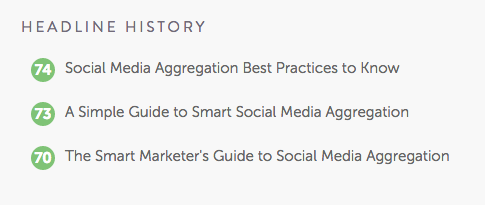
For instance:
- A Simple Guide to Smart Social Media Aggregation scored 73 but received only 36 clicks.
- Misrepresentative Content: What You Need to Know scored a decent 79 but only garnered 20 clicks.
- How to Filter Referral Spam in Google Analytics achieved a 72 but resulted in 29 clicks. Conversely, numerous average and good headlines surpassed those with excellent scores:
- 3 Ways SEO & Content Work Better Together scored a mere 54 but attracted 110 clicks.
- 8 SEO Tips to Optimize Your URL Structure received a below-average score of 59 but surprisingly gained 139 clicks.
- Hiring an SEO? Don’t Ask These 13 Dumb Questions scored a moderate 64 but impressed with 131 clicks. The takeaway: While some “how-to” guides oversimplify the process of writing captivating headlines, the reality is that you can never be absolutely certain how a headline will resonate with your audience.
5. A Boring Headline Can Render Your Content Useless
Spending countless hours crafting what you believe to be exceptional content is futile if your headline is uninspiring. Don’t dedicate hours to writing and then slap on a lazy headline as an afterthought. You’re essentially sabotaging your own efforts. While some might suggest brainstorming dozens or even hundreds of headlines per article, that’s simply unrealistic. If you can’t come up with at least a decent headline within 30 minutes, there might be underlying issues with the content itself.
6. Even the Best Headline Can’t Salvage Irrelevant Content
Even the most brilliantly crafted headline is useless if it leads to content your audience doesn’t care about. A highly relevant topic with an average headline will almost always outperform a fantastic headline attached to irrelevant or niche content. The content research and ideation phase often leads to overthinking. The key is simple: Identify your audience’s interests and explore engaging ways to address those topics.
7. Headline Analyzers Can Improve Your Headline Writing Skills
Despite their limitations, testing your headlines with an analyzer can help you become a better headline writer. Like any skill, practice is key to improvement. For instance, these tests confirmed my suspicion that question headlines are becoming less effective. In fact, I believe that question headlines can sabotage your content.
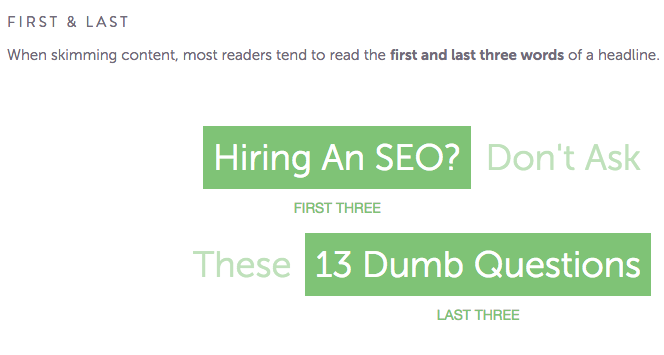
We experimented with nine question headlines on SEJ, and only one generated substantial engagement (Hiring an SEO? Don’t Ask These 13 Dumb Questions). This particular headline stands out because it can’t be answered with a simple “yes” or “no” (also known as Betteridge’s Law).
Data-Driven Decisions vs. Creative Intuition

Sometimes you have a gut feeling about a headline – it’s catchy, attention-grabbing, and destined to convert. However, without A/B testing, how can you be sure it’s the best possible option? The only way to uncover the “perfect” headline is through continuous testing. Your creativity, coupled with the willingness to challenge your own biases, is the only limiting factor in crafting compelling headlines. Embrace creativity, conduct SEO tests, but ultimately, let data be your guide. Data-driven decisions are always the most effective.
In a Nutshell
Can you blindly trust free headline analyzers to predict the most clickable headline? No. They’re inaccurate more than half of the time. Does that mean headline analyzers are a waste of time? Absolutely not. Although you’re essentially catering to an algorithm, the process forces you to carefully consider each word choice. The more you write and test, the closer you’ll get to discovering the perfect headline. Skipping this step could mean missing out on traffic, better rankings, potential leads, social shares, and ultimately, revenue. The data you gather will reveal what resonates with YOUR audience. And that’s precisely why A/B testing your headlines is crucial. For a treasure trove of inspiration, check out our extensive collection of 88 headline examples – all designed to attract clicks.