It’s incredible to consider that, as per IBM, we generate more than 2.5 million terabytes of data is generated every single day every single day. Let’s break down just how much data that is: one terabyte alone equates to 17,000 hours of music, 310,000 photographs, over 132,000 sizable novels, or nearly 86 million full Microsoft Word documents.
Now, imagine 2.5 million times that amount of data. If we were talking about images, that would be approximately 775 billion images. To give you some context, Facebook, in its entirety, houses roughly 250 billion images. This means we generate over three times the entire image database of Facebook daily. No wonder so many businesses find Big Data overwhelming! One key challenge with this daily data deluge is that we, as humans, struggle to grasp such enormous figures. They just don’t register meaningfully in our minds because we aren’t wired to handle all this information. This is precisely where the magic of data visualization comes in. This post will explore seven data visualization tools that can help you unlock the stories within your data. Whether you need to demonstrate results to clients or improve internal processes, these tools are here to help. To stay true to the spirit of open access to information (free as in beer), I’ve prioritized free, open-source data visualization tools in this list. It’s important to clarify that we’re focusing on tools built specifically for data visualization, rather than infographic creation programs, for example. Let’s begin by briefly defining data visualization and examining the various visual formats you can use.
Data Visualization: A Definition
Simply put, data visualization is the art and science of transforming raw data into a visual format that is easy to understand. Also known as data viz, it encompasses everything from basic bar graphs created in Excel to intricate, interactive multimedia experiences. The hallmark of effective data visualization is a blend of beauty, clarity, and responsiveness.

Publications such as The New York Times and the Chicago Tribune have long embraced “data journalism” to enhance their storytelling. Today, newsrooms worldwide employ teams of data scientists and developers who collaborate to create stunning data visualizations that amplify the impact of news stories. A shining example of data visualization’s power in journalism is The New York Times’ coverage of Facebook’s IPO in 2012.
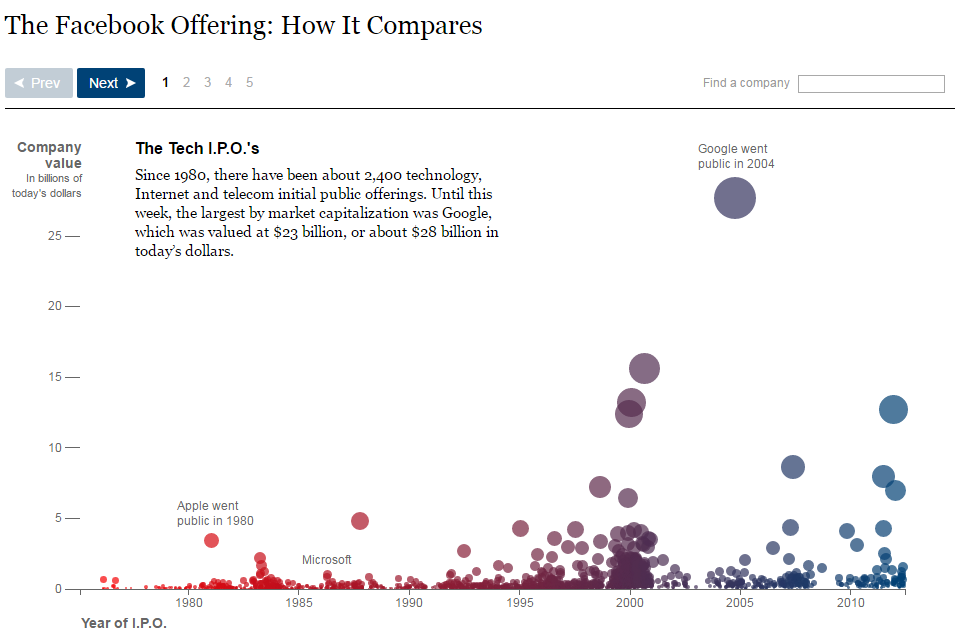
The New York Times sought to visually convey the magnitude of Facebook’s IPO, and they achieved this brilliantly through a fully interactive data visualization. Readers could hover their mouse over individual companies within the visualization to reveal each company’s valuation at their IPO, first-day stock fluctuations, and their stock value three years post-IPO. This interactive timeline allowed readers to trace the trajectory of tech IPOs over time, providing valuable historical context. Most importantly, this visualization transcended its supporting role in news coverage; it served as a powerful demonstration of how a complex subject can be made accessible and even captivating through interactive content. This holds valuable lessons for marketers in niche sectors hoping to leverage data persuasively.
The Importance of Data Set Quality
Almost all data visualization tools accept data imports in .CSV (comma-separated value) format, typically exported from spreadsheets like Microsoft Excel or Google Sheets. However, the quality and integrity of your data are crucial for successful visualization. In fact, data quality can significantly impact the time needed to create a visualization.
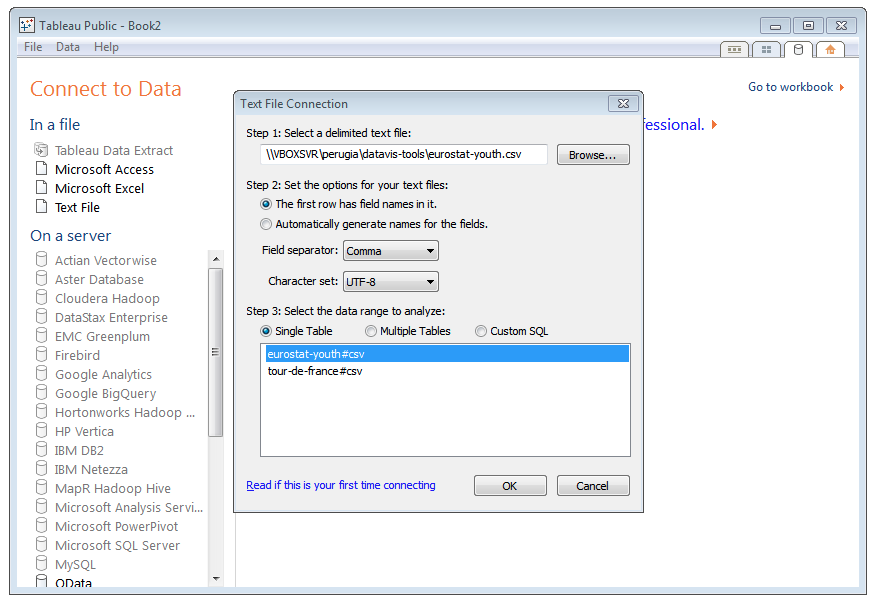
Connecting to a data set in Tableau Public highlights the critical importance of data quality. The cleaner your data, the smoother your workflow. A .CSV file riddled with formatting errors, missing entries, or other inconsistencies can make achieving your desired visualization difficult or even impossible. Beginners might misinterpret such errors as limitations of the tool, when in reality, the imported data is the culprit. While a deep dive into data set quality and .CSV cleanup is beyond the scope of this post, I recommend checking out this excellent tutorial from the University of California, Berkeley’s Advanced Media Institute for a comprehensive guide. Now, let’s explore seven powerful data visualization tools:
- Tableau
- TimelineJS
- Google Charts
- Plotly
- RAW
- Charted
- Leaflet Let’s take a closer look at each tool.
Data Visualization Tool #1: Tableau
Tableau reigns supreme as one of the most widely adopted data visualization tools available. With five versions to choose from (including Desktop, Server, Online, Mobile and the free-to-use Tableau Public), Tableau stands out for its user-friendly interface and intuitive design. For this example, we’ll focus on Tableau Public.
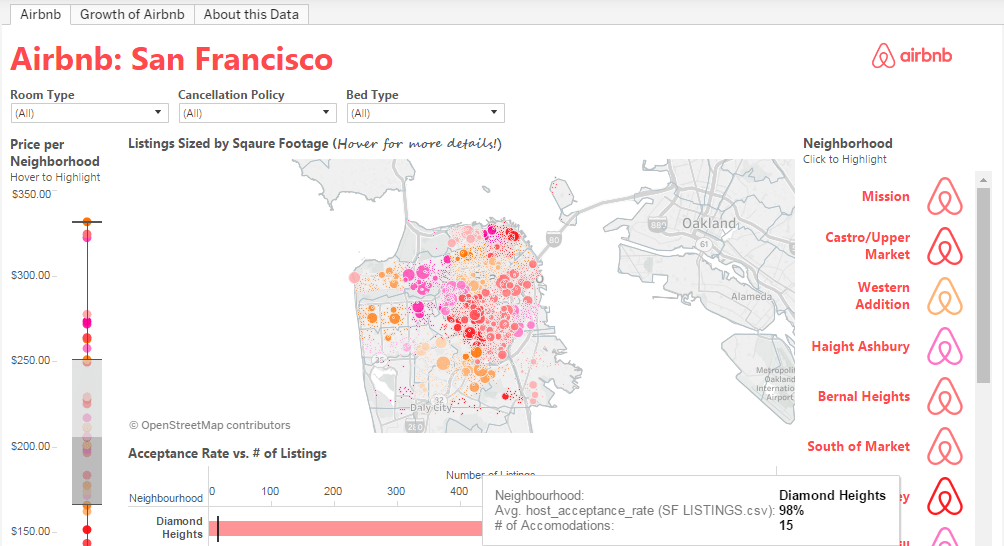
Image courtesy of Tableau Public Tableau’s strength lies in its remarkable toolkit diversity. Even the free Public version offers a wealth of options and settings. From scatter plots and heat maps to bubble maps and candlestick charts, you can create a vast array of visualizations. The image above showcases an interactive visualization created by Brit Cava, a real-time visualization of Airbnb pricing and availability across San Francisco. It also provides insights into acceptance rates, neighborhood price ranges, and other valuable data points. While Tableau Public is relatively easy to grasp, there is a learning curve. Thankfully, their official supporting documentation is exceptional. It addresses virtually every question imaginable and offers downloadable sample data sets to help you get started.
Data Visualization Tool #2: TimelineJS
When it comes to revealing connections, tracking progress, or illustrating patterns, visualizing a sequence of events on a timeline is an incredibly effective method. TimelineJS, a free and powerful tool developed by Northwestern University’s Knight Lab, empowers you to create engaging, timeline-based visuals that bring your data to life.
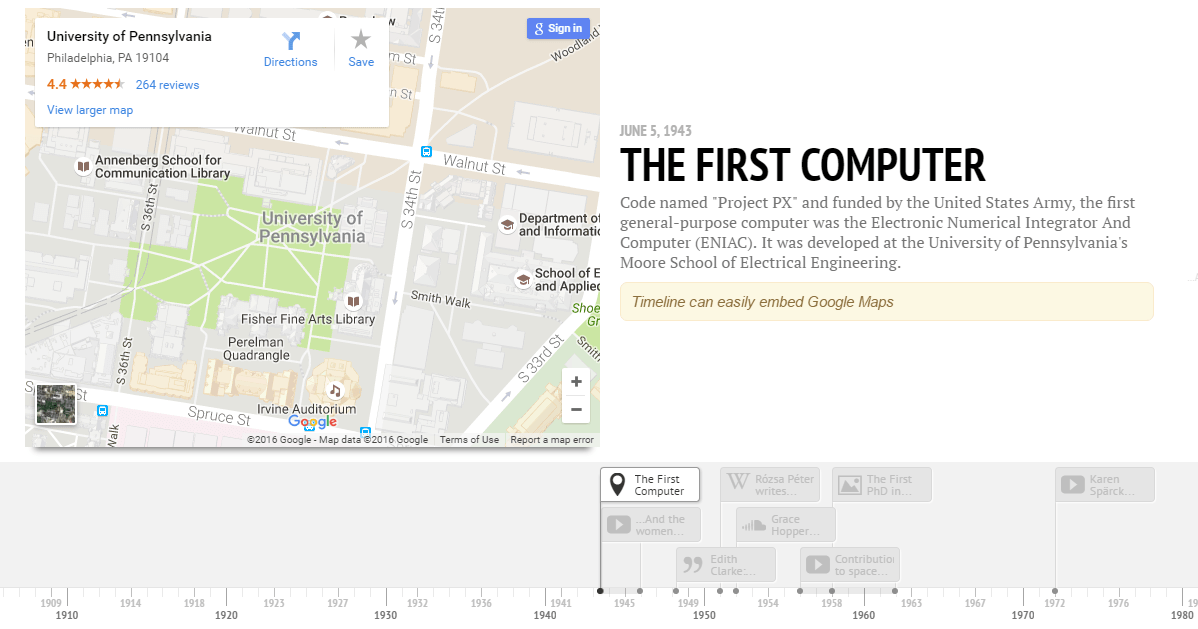
A TimelineJS visualization example from timeline.knightlab.com TimelineJS seamlessly integrates various media formats, including YouTube URLs, Google Map data, SoundCloud embeds, and Wikipedia articles, resulting in stunning visuals. Every on-screen element is interactive, allowing users to navigate the timeline at their own pace and engage with media elements like YouTube videos or SoundCloud audio files. In the example above, the timeline chronicles the milestones of women in the field of computer science, creating a captivating interactive journey enriched by diverse media. Overall, TimelineJS is a fantastic tool, particularly for beginners, as it allows you to create beautiful timelines without any coding knowledge.
Data Visualization Tool #3: Google Charts
Google Charts is a comprehensive suite of data visualization tools compatible with a wide range of data formats and output options.
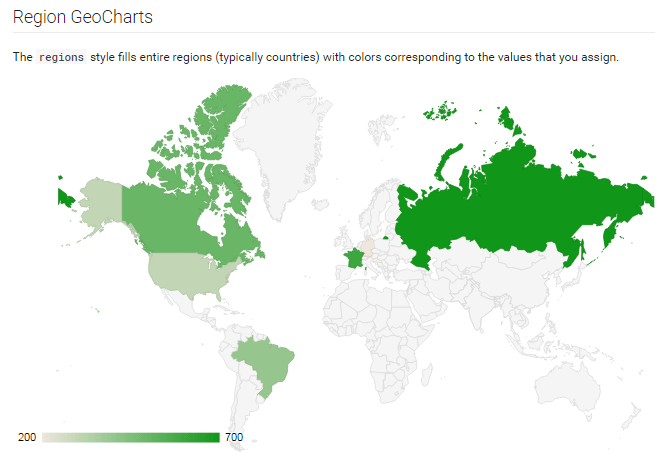
While Google Charts excels at handling geolocation data, it offers diverse output formats, including histograms, Sankey diagrams, trend lines, and waterfall charts. Despite its power, Google Charts is not ideal for complete novices. While the comprehensive documentation is helpful, some coding knowledge, particularly in JavaScript, is necessary to harness its full potential. I recommend Google Charts for those comfortable working with data, possessing basic JavaScript skills, and seeking a robust set of tools.
Data Visualization Tool #4: Plotly
Earlier, we touched upon data journalism and how some of the most sophisticated visualizations often involve collaborative efforts of numerous individuals. This collaboration aspect presents a significant hurdle in effective data visualization work, and Plotly aims to break down these barriers.
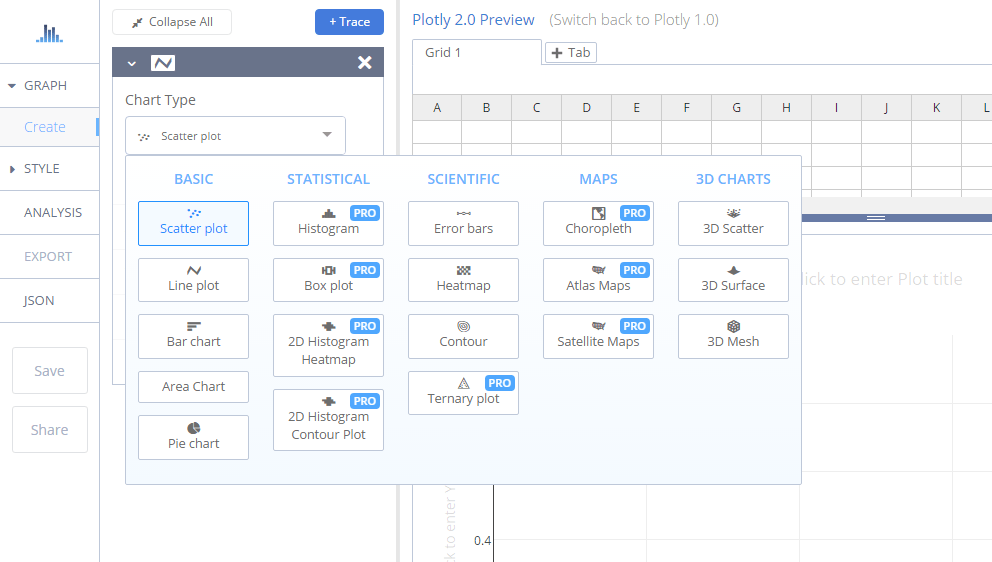
The interface of Plotly’s free, web-based charting tool Plotly is a web-based data visualization platform that enables users to create everything from basic charts to sophisticated graphs directly in their web browser. The interface of the free tool (shown above) is clean, intuitive, and surprisingly feature-rich for a free web application. Note that some chart types, such as box plots, histograms, and satellite maps, are exclusively available to subscribers.
Data Visualization Tool #5: RAW
RAW positions itself as the “missing link between spreadsheets and vector graphics.” Available for free under the LGPL license license, RAW is an open web app built on the D3.js JavaScript library and developed by the Italian research lab DensityDesign. It empowers users to create visually appealing data visualizations with ease, requiring no coding or technical expertise.
To begin using RAW, simply copy data directly from your spreadsheet program, paste it into RAW, select your desired visualization type, and customize parameters using the intuitive drag-and-drop interface. With the ability to adjust individual parameters and visual metrics effortlessly, RAW’s clean and user-friendly interface makes it an ideal choice for beginners.
Data Visualization Tool #6: Charted
Charted, developed by the team at the Product Science team at Medium, is another tool that makes creating stunning visualizations remarkably simple.
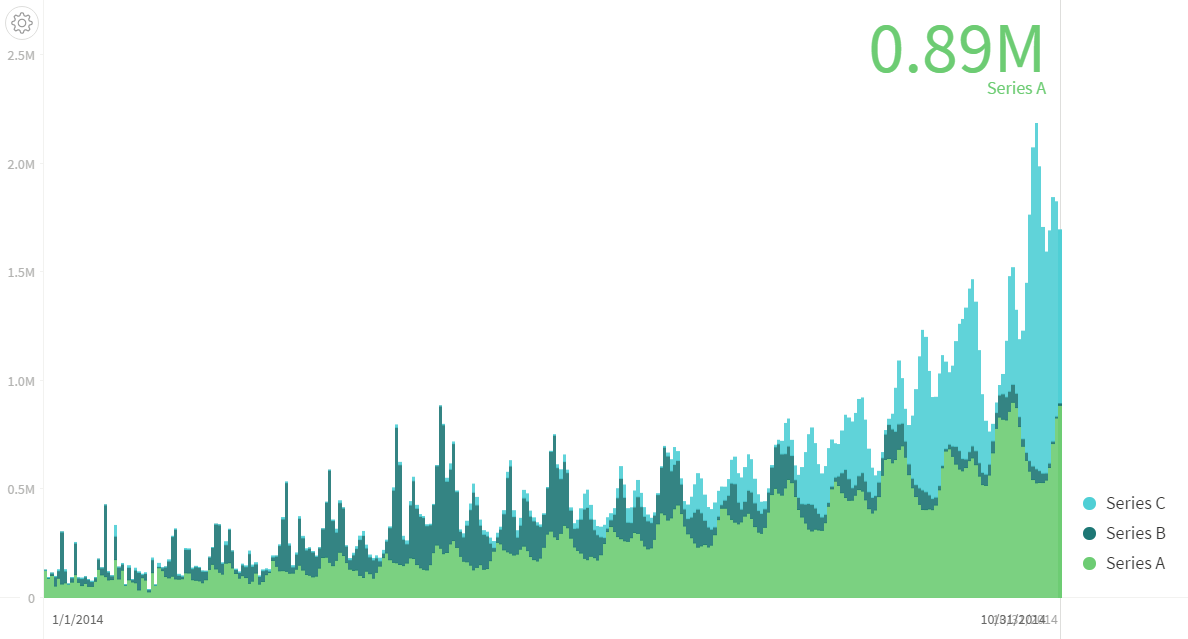
Charted’s strength lies in its simplicity. Simply provide the URL of an online spreadsheet or upload your .CSV data manually, and Charted takes care of the rest. Don’t let Charted’s visual minimalism fool you; it’s a robust tool capable of handling large datasets. While it’s undoubtedly one of the most accessible and lightweight data visualization tools available, don’t hesitate to push its boundaries. Charted is fast, user-friendly, aesthetically pleasing, and best of all, completely free and open-source under the the MIT license license. If you need quick results, Charted is an excellent option.
Data Visualization Tool #7: Leaflet
While several tools we’ve discussed offer excellent built-in support for creating interactive map visualizations, we haven’t yet explored the plethora of dedicated map-building data viz tools. Leaflet, developed by Vladimir Agafonkin, stands out as a top contender in this domain.
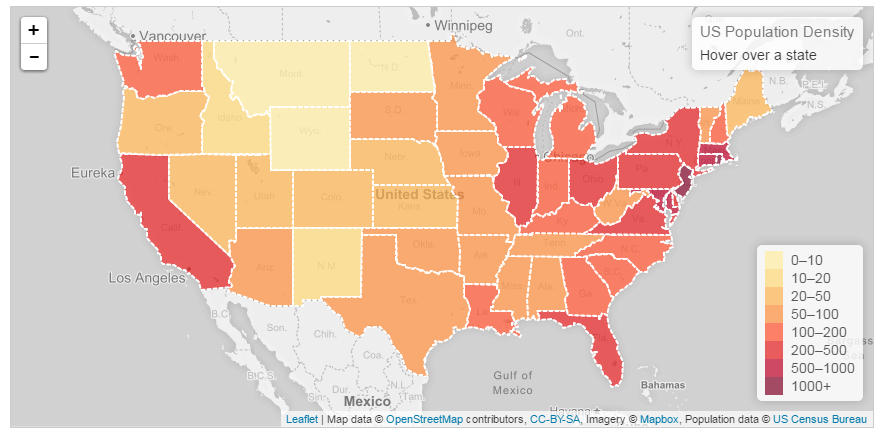
An example of Leaflet’s capabilities: an interactive choropleth map of U.S. population density, created using publicly available data from the U.S. Census Bureau and GeoJSON data. Leaflet is an incredibly lightweight JavaScript library (a mere 33 kilobytes!) designed for building beautiful, interactive maps. It boasts an impressive array of features, including support for tile and vector layers, image overlays, GeoJSON data integration, CSS3-powered popups and controls for effortless visual customization, smart polygonal rendering, and even built-in hardware acceleration for seamless performance on mobile devices. Being an open-source project, Leaflet’s source code is readily available on GitHub for anyone to modify and enhance. It works seamlessly across all major desktop and mobile operating systems and browsers. The project developers meticulously maintain the API documentation, and numerous third-party plugins extend its functionality even further.
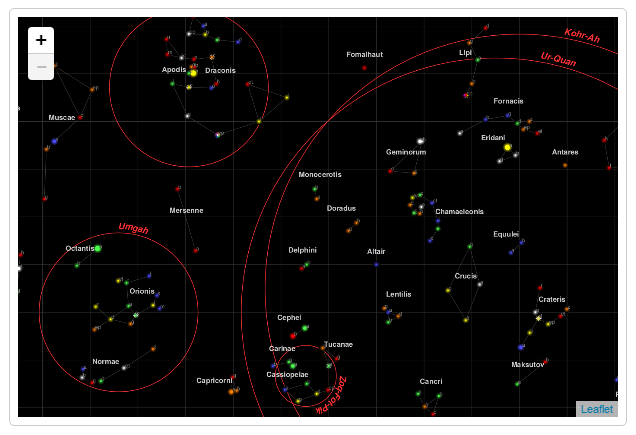
A Leaflet-generated star map based on data from the open-source game Star Control 2, utilizing coordinate reference system (CRS) data It’s worth noting that while Leaflet’s tutorials and documentation are excellent, a working knowledge of JavaScript libraries is recommended. However, its simplicity (no external dependencies required) and the supportive Leaflet community make it a pleasure to work with. If you’re looking to incorporate a lightweight interactive map into your next visualization, Leaflet is definitely worth exploring.
Data: The Foundation of Informed Decisions
Marketers rely heavily on data to guide crucial campaign decisions, secure stakeholder buy-in, and track project progress and effectiveness over time. Data visualization tools empower you to bring your data to life, transforming it into a more persuasive, compelling, and engaging narrative. Whether you’re a content marketer or a PPC specialist, I trust you’ll find these tools valuable in uncovering new and insightful ways to present your data.