Google takes its ranking algorithm seriously, consistently updating it to ensure top-notch search experiences. This means penalties for sites breaching Google’s Webmaster Guidelines. Such penalties can arise from deliberate black hat SEO, unintentional poor site maintenance, or algorithm changes. Regardless, they harm search rankings, potentially removing pages or entire websites from results.
This post explores what NOT to do (and what to do instead) to avoid penalties and safeguard your website traffic. We’ll cover:
- Algorithmic vs. manual penalties and their implications.
- Identifying and rectifying manual penalties.
- Seven frequent penalties and avoidance strategies. You’ll gain the knowledge to maintain rankings and boost website traffic.
What constitutes a Google penalty?
A penalty happens when Google detects a website infringing its Webmaster Guidelines. Two types exist, both causing ranking and traffic drops.
Algorithmic penalties
Google tweaks its algorithm annually for optimal search results. Notable updates include Panda, Penguin, Pigeon, and Hummingbird. Some, like Panda (targeting keyword stuffing, grammar issues, and low-quality content) and Penguin (addressing black hat linking), lower violating pages’ rankings. Others, like Pigeon (favoring strong local signals) and Hummingbird (prioritizing mobile responsiveness), reward pages aligning with new ranking factors.
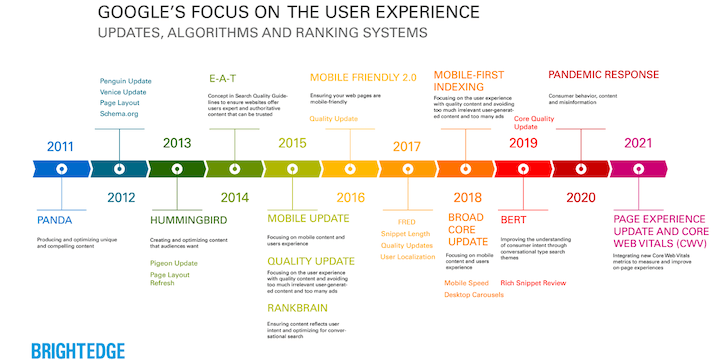
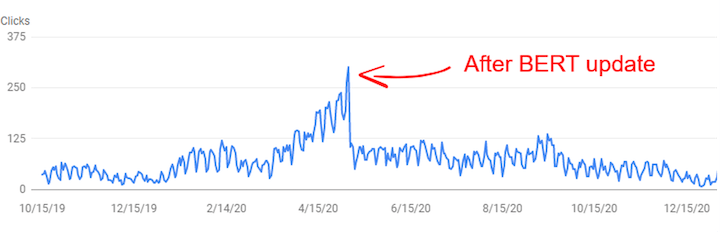
Image source Speaking of which, are you familiar with the page experience and mobile-first indexing updates? After an update, websites might experience ranking drops for guideline violations or because others better match ranking factors. Here’s an example showing a site’s traffic data after the BERT update.
Addressing algorithmic penalties
These aren’t explicitly stated, so checking for them directly is impossible. The optimal approach is checking if traffic drops coincide with algorithm updates. Understand the update to identify necessary adjustments or content fixes. Fixes may not always restore rankings and traffic, depending on the update and your website’s alignment. Despite frequent algorithm updates, consistently focusing on EAT and technical excellence is crucial, as these are always rewarded.
Manual penalties
These are issued by Google staff for potential issues like content quality and security, or deliberate algorithm manipulation via black hat SEO. Unlike algorithmic ones, identifying and fixing them is easier.
Addressing manual penalties
Several penalty checker tools exist, but Google Search Console suffices. In your dashboard, find the Security & Manual Actions tab and click on Manual actions.
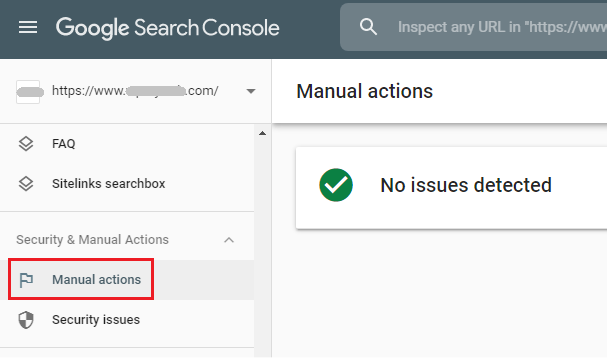
This shows the violated policy, affected pages, and rectification steps. After fixing, submit for review. Google staff will assess and, if resolved, approve, reindexing your page.
Google penalty consequences
All penalties cause ranking drops, but severity varies:
- Keyword-level: Ranking for a specific keyword drops.
- URL or directory-level: Ranking for a specific URL drops.
- Domain-wide or sitewide: Rankings for multiple URLs and keywords sitewide drop.
- Delisting or de-indexing: The harshest, removing your domain from Google’s index, making your website invisible on Google.
Google penalty duration
Penalties persist until fixed. Unfixed penalties eventually disappear from Search Console, but their impact remains. Essentially, you lose your chance to rectify with Google. However, even after lifting, traffic and ranking recovery isn’t guaranteed. For further details, consult this post on Google penalty recovery timelines.
Seven common Google penalties and prevention
Every business aims for Google’s first page to drive traffic and gain customers. Achieving this through SEO takes time and effort. This tempts many, especially those who just started a blog or website, to use shortcuts, leading to penalties. Here are seven common penalties and their prevention/resolution:
1. Thin content and doorway pages
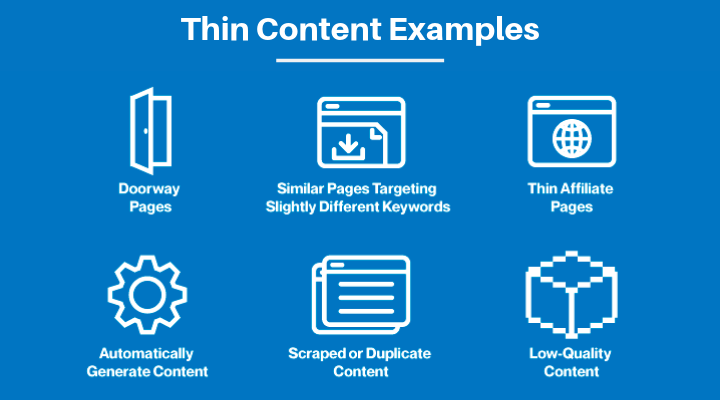
This involves prioritizing quantity over quality, assuming more content equals more traffic. It includes using content generators, publishing short articles, or scraping content. These practices are detectable by Google and reflect poorly on your business. The 2016 Panda 4.0 update aimed to reduce low-quality content and doorway pages visibility in search results. This is why eBay lost 80% of its organic rankings!
Preventing the thin content penalty:
- Avoid complete content outsourcing or mass production, as it compromises quality and brand consistency.
- For quality content scaling, hire specialized freelancers for collaborative, valuable content creation.
- Conduct thorough keyword research for appropriate targeting and content relevance.
- Prioritize pillar pages or cornerstone content over doorway pages.
- Merge similar-keyword short pages into longer, comprehensive ones.
2. Concealed text and links
Hiding text or links for SEO, rather than user benefit, violates Google’s guidelines. This can be done by:
- Zero font size
- White text or background linking
- Hiding text behind images
- Off-screen text placement using CSS
- Background-matching link colors
Preventing the hidden content penalty
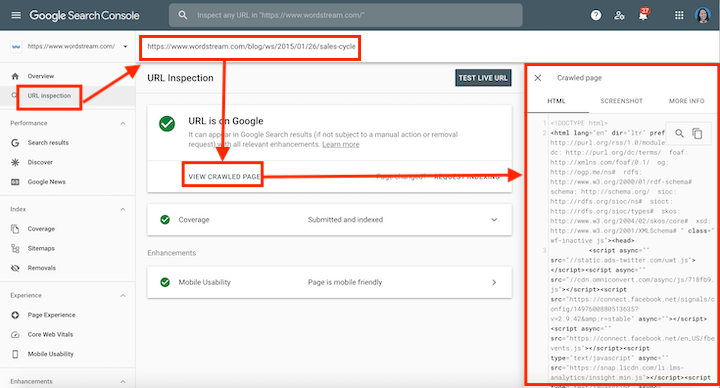
Avoid intentional hiding. If you must hide something, it likely shouldn’t be there. For unintentional hiding, use Search Console’s URL inspection tab. Enter affected pages and “view crawled page” to check for hidden links or CSS.
3. Spam from users
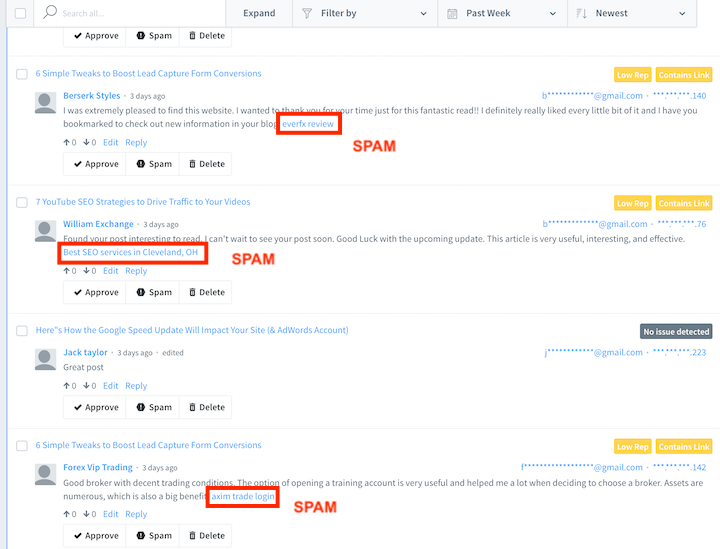
Forums, guest posts, or blog comments can attract spam bots or malicious users. Spam links might lead to low-quality or inappropriate pages, harming EAT. Alternatively, real users might leave irrelevant comments with backlinks to boost their domain authority.
Preventing the user-generated spam penalty
Here’s how to prevent user-generated spam on websites and forums: Comment moderation tools We use Disqus for filtering, deleting, and banning spam comments. It also allows pre-publishing review. If moderation becomes overwhelming, even with tools, disable commenting.
Anti-spam tools Spammers use automated scripts to flood comment sections. Integrate Google reCAPTCHA for spam prevention. Nofollow and UGC attributes For appropriate but unwanted links from guest posters or commenters, use tags to make them no-follow, preventing Google from passing link juice. These include rel=“nofollow” and rel=“ugc” attributes. For example:
Original link: <a href=“http://www.website.com/”>My Website No-follow version: <a href=“http://www.website.com/” rel=”nofollow”>My Website UGC version: <a href=“http://www.website.com/” rel=”ugc”>My Website Noindex meta tag For user-posted articles, add a noindex meta tag to make them accessible on your site but excluded from search results and Google’s algorithm. Add after the
tag
4. Unnatural or low-quality backlinks
Google’s 2016 Penguin update targets unnatural link building. While effective for boosting page authority, backlinks must be organic and from reputable websites.
Preventing the unnatural link penalty
Use appropriate link-building strategies, avoiding:
- Link buying or selling
- Link exchanges
- Forum profile/signature links
- Blog comment links
- Article directory links
- Rapid link building
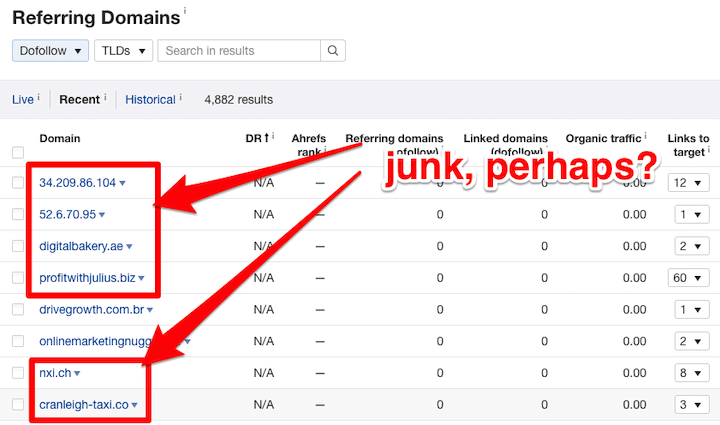
- PBN links Regular backlink audits Spammy backlinks can occur unintentionally. Analyze your backlink profile using Google Analytics, Search Console, or SEO tools like SEMrush or ahrefs to disavow harmful links. Here’s a snippet of a backlink profile from an ahrefs backlinking report..
5. Keyword stuffing
On-page SEO, like adding keywords to titles, headings, body text, meta descriptions, and alt text, helps Google understand your page. However, intentional keyword stuffing is a black hat SEO tactic leading to penalties. You know about keyword stuffing in body text, but it also applies to alt text.
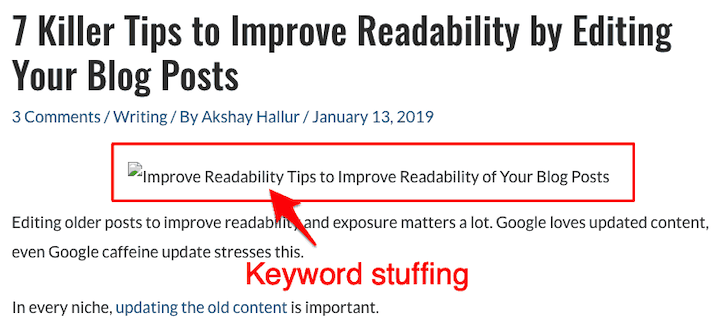
Preventing the keyword stuffing penalty
- Use keywords naturally in your content, as you would in conversation.
- Instead of fixating on one keyword, utilize long-tail or LSI keywords, leveraging keyword research tools.
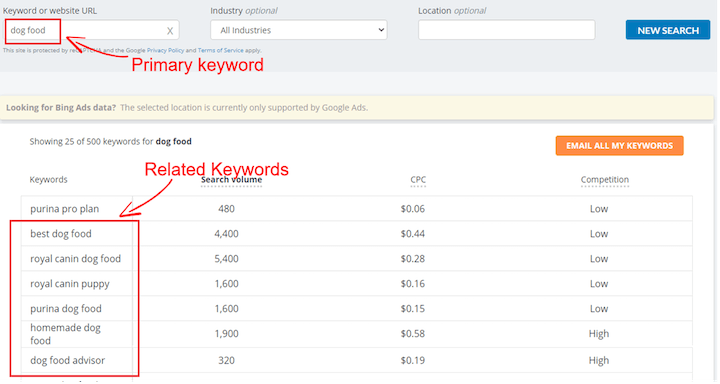
nexus-security’s Free Keyword Tool
6. Website hacking
Hackers can compromise confidentiality, inject malicious code, add irrelevant content, or redirect your site to harmful pages. This leads to severe ranking drops across all queries, potentially resulting in delisting.
Preventing the hacked website penalty
Enhance website security by:
- Updating your CMS
- Using strong, regularly changed passwords
- Implementing SSL certificates
- Investing in quality hosting
- Utilizing malware scanners
- Regularly backing up your website
- Hiding login URLs and limiting login attempts to prevent brute force attacks
7. Misusing structured data markup
Structured data markup is code enabling attractive Google search result displays, like showing star ratings and review counts. For example, here is event schema markup:

…and here is recipe schema markup:

However, using irrelevant structured data can lead to manual penalties.
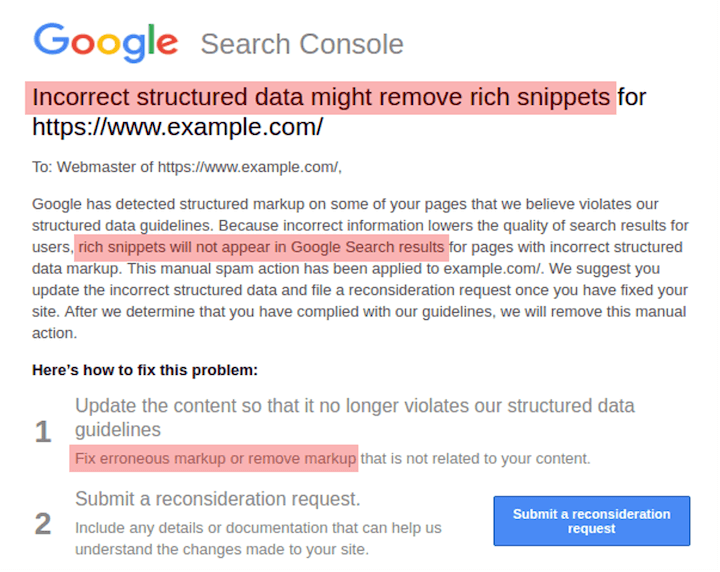
Preventing the structured data penalty
This again relates to black hat SEO. Here’s what to do:
- Don’t use fake reviews for CTR boosts. Employ ethical ways to acquire genuine Google reviews.
- Use structured data relevant to your content.
- Ensure marked-up content is visible to readers.
- Avoid schema markup related to illegal activities, violence, or prohibited content.
Stay ahead of Google penalties to avoid ranking drops
Both algorithmic and manual penalties hurt rankings and traffic. While fixes exist, recovering fully isn’t guaranteed. Hence, prevention is key. We discussed seven preventable penalties:
- User-generated spam
- Thin content
- Keyword stuffing
- Hidden text
- Unnatural backlinks
- Website hacking
- Structured data misuse By stopping black hat SEO, implementing site security and moderation tools, and prioritizing quality content, you can avoid penalties, improve rankings, and protect your website.