Facebook just revealed its new dynamic Product Ads, a mobile-first ad format letting retailers connect their catalogs to their Facebook advertising. Accessible now via Facebook’s Marketing Partners, it’s heading to the self-serve platform shortly. We know Google Shopping ads pack a punch – showing very relevant product ads to shoppers with high purchase intent can skyrocket conversions. How will Facebook’s attempt to tap into that intent for retailers impact advertisers?
What you need to know about marketing with Facebook Product Ads right now:
1. Facebook Product Ads Offer Single or Multi-Product Formats
Product Ads can showcase one product or a group of three, each having its own picture, description, click target, and performance data.
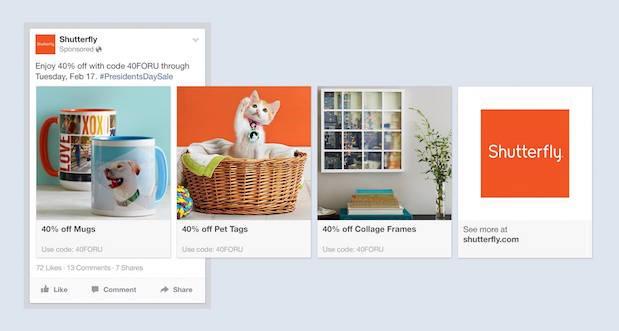
In Facebook’s example above, each of the three products would scroll sideways in a dynamic carousel. There are two ways to create multi-product ads:
- Create an unpublished Page post, then build an ad creative around it,
- Or, make an unpublished Page post directly within the ad creative creation process. Learn more about creating multi-product ads here.
2. Templates Streamline Creative and Enhance Scalability
Facebook’s dynamic templates for Product Ads eliminate the need to manually configure each ad creative. These templates work for both single- and multi-product campaigns, pulling visuals, product names, prices, and more from your catalog based on your keywords. This catalog integration also lets Facebook automatically stop ads for out-of-stock products.
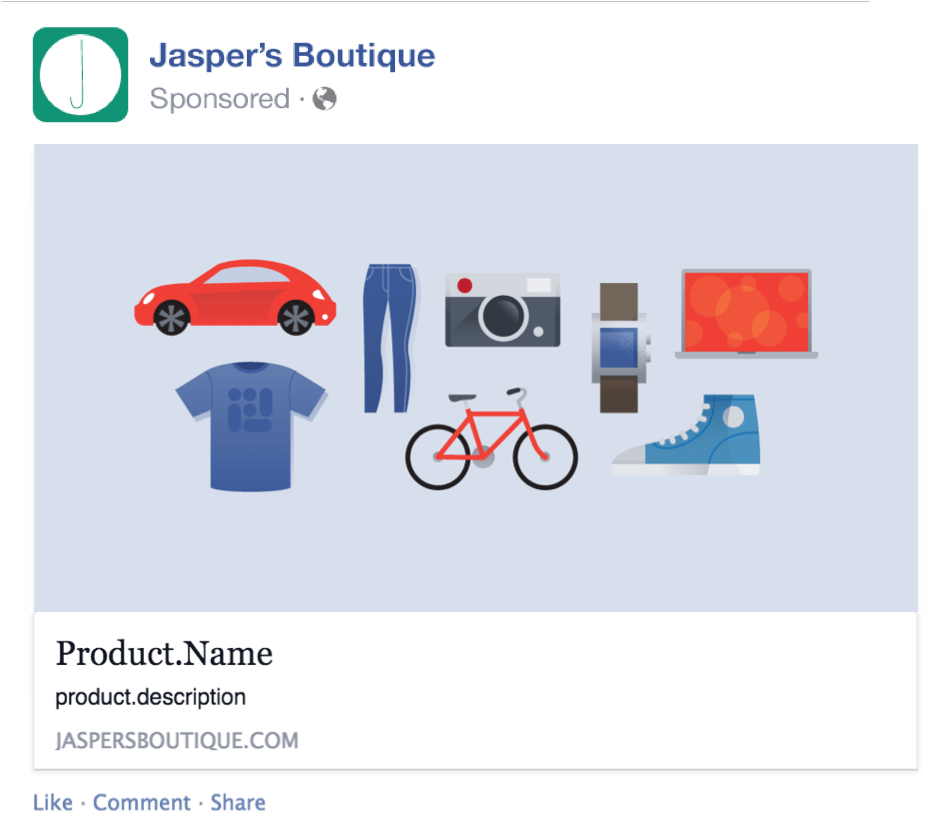
Image: Facebook Dynamic templates function with Newsfeed and sidebar ads and optimize for all devices, so one template covers desktop, mobile, and tablet displays. Using the same multi-product ad example from point #1, this image shows how Facebook uses data from various fields to populate Product Ads:
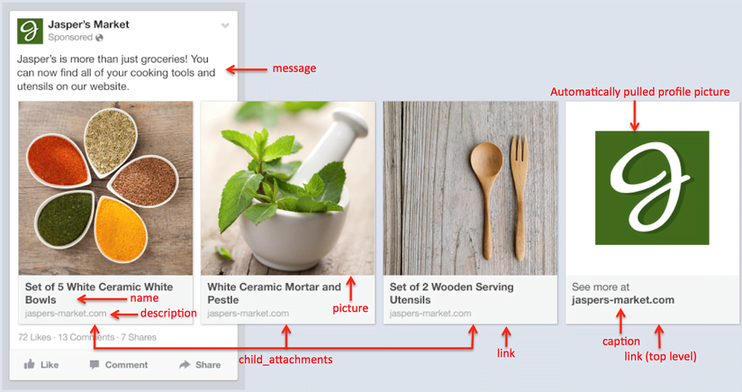
Image: Facebook
3. Facebook PAs Are Not Google PLAs
You might think that if you’re already running Google PLAs, Facebook Product Ads will be similar, just within a social context instead of search. Think again. Facebook Product Ads resemble Google’s remarketing display ads much more closely. They don’t present a range of products from different advertisers based on a keyword search for comparison shopping. Instead, they target consumers based on their activity on the advertiser’s website or app, or through Facebook’s targeting parameters. Unlike Google, Facebook isn’t constrained by ad space. While Google Shopping ads only appear for specific search terms (limiting reach despite high intent), people are constantly on Facebook. This means there’s much more room for ad targeting within the Newsfeed. Furthermore, Newsfeed ads look better on mobile and feel more native than search ads.
4. Facebook Product Ads Aren’t Facebook Exchange Either
Facebook’s announcement noted that advertisers could already run dynamic ads on Facebook through DSPs and retargeting partners with Facebook Exchange access. However, these solutions were limited to desktop, and third parties couldn’t accurately track or attribute cross-device conversions. And naturally, Facebook possesses a wealth of DATA. As Michelle Alfano highlighted on the RKG Blog: “Advertisers can now leverage Facebook’s unique user data to target the right audiences, something DSPs could never do with dynamic creative.”
5. Product Ads Bring Enhanced Custom Audiences
Facebook is raising the bar for Product Ads targeting with refined Custom Audiences, allowing retailers to connect with more relevant audiences. A new feature in Ads Manager and Power Editor allows you to create audiences based on factors like “People who haven’t visited in a specific timeframe” and “People visiting certain web pages but not others.”
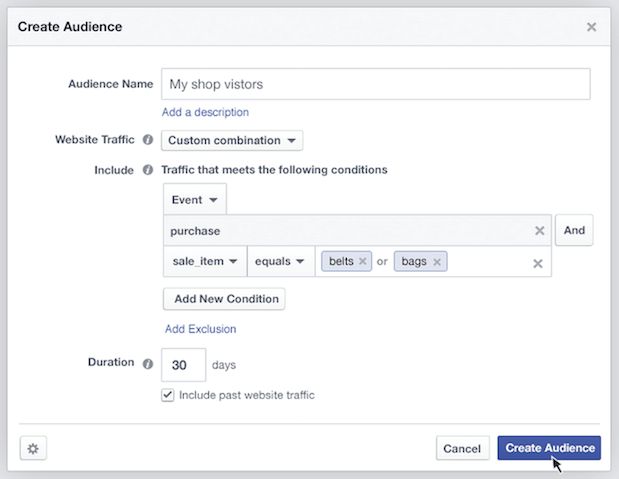
You can even build audiences for specific products within your catalog.
6. Product Catalogs and Feeds Live in Facebook Business Manager
You’ll need a Business Manager account to begin. You’re likely already using it, but if not, you can sign up here. The rollout starts with Facebook Marketing Partners via the API, then moves to the Power Editor (within weeks). Finally, Facebook plans to integrate multi-product ads into other ad interfaces later this year. This approach contrasts with Google, where significant updates typically launch on their platforms, leaving tools and software vendors to adapt. Facebook’s method seems more partner-focused. If you use self-serve ads, this provides ample time to explore Product Ads and prepare for their eventual launch.
7. Your Custom Audience Pixel for Facebook PAs is Your Pixel for Website Custom Audiences
Great news! You don’t need to learn a whole new system to provide Facebook with optimal targeting data. The pixel delivering user behavior data for your existing Custom Audiences simply needs a small adjustment for use with Product Ads.
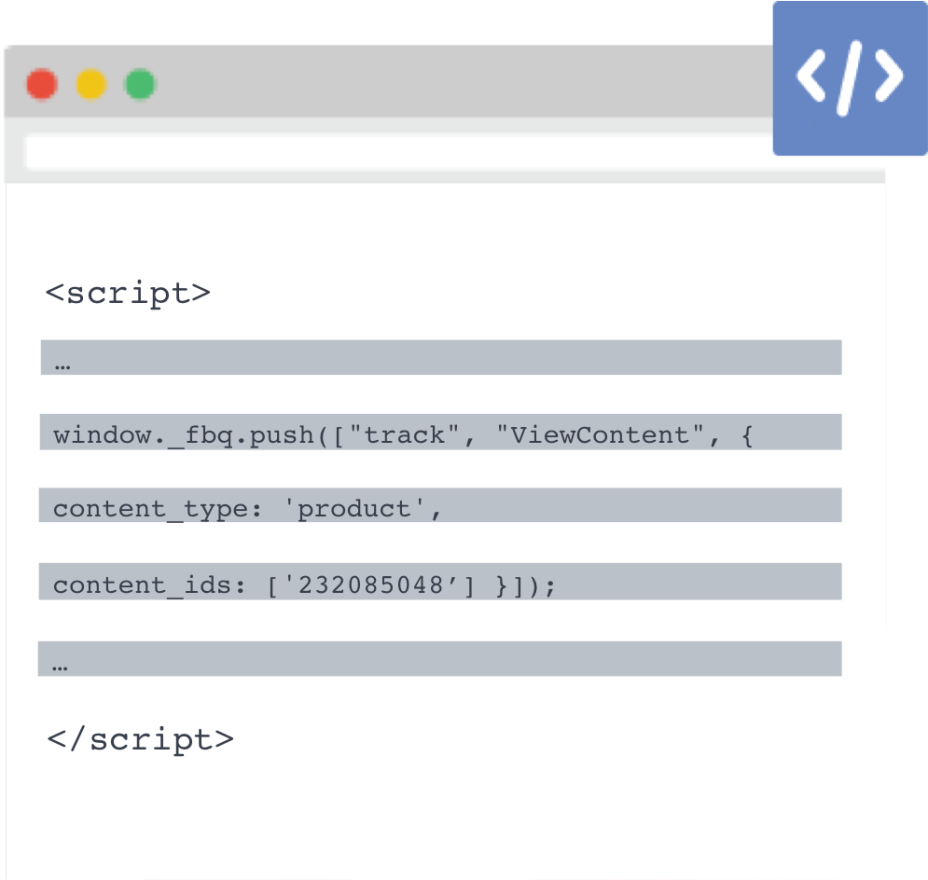
Image: Facebook Once your product catalog, product feeds, and product sets are set up, this pixel enables tracking external events on your product pages. A standard Custom Audience pixel requires tracking three events: content views, cart additions, and purchases. To use this pixel with Product Ads, you’ll need to connect it with your product catalog. You can see a step-by-step guide on how to do that here. Facebook also offers a downloadable Pixel Helper troubleshooting tool (for Chrome) to help marketers verify their conversion tracking and Custom Audience pixels.
Facebook Product Ads: Brace Yourself for Social PLAs with Immense Commercial Potential
With its Atlas acquisition and offline purchase data partnerships, Facebook is excelling at ad targeting. Advertisers can target Facebook users based on expressed interests and likes, but also website behavior, app usage, brand interactions, and even offline purchase history. Facebook has even introduced an ad relevance score similar to Google’s Quality Score. Adding a commercial layer to these insights through Product Ads is a brilliant move by Facebook and should significantly increase their ads’ value to retailers. Fortunately, SMBs can observe how larger advertisers perform with Facebook Product Ads before they’re available on the self-serve platform. We’ll provide more tips and tricks based on their experiences in the coming months. What are your thoughts on Facebook Product Ads? RELATED: Complete Guide to Creating Effective Facebook Ads for Lead Generation