Advertising costs can really add up, and it’s easy to get overwhelmed with all the things to think about. Are you reaching the right people? Is your ad engaging? And most importantly, is this campaign the right fit for your business?
It’s a tougher battle for small businesses who often find themselves up against larger companies with deeper pockets.
Or insanely large budgets. If you’re feeling lost in the world of advertising, you’ve come to the right place. Digital media offers a way to create impactful campaigns without breaking the bank. In this guide, we’ll walk you through seven budget-friendly ad types perfect for small businesses. We’ll break down how each one works, why it’s effective for smaller companies, and even showcase examples of businesses that have found success with them.
But first, let’s understand why we’re focusing on digital ads and the advantages they offer.
Why Go Digital?
While traditional marketing still holds value for many small businesses, the seven ad types we’ll cover are all digital. Here’s why:
- Wider, Targeted Reach Online. A significant portion of the US population – 292.89 million people – uses the internet, and this number is projected to climb to 310.1 million in 2022.
- Cost-Effectiveness of Digital Advertising. You can connect with the same audience size online for less than through traditional methods.
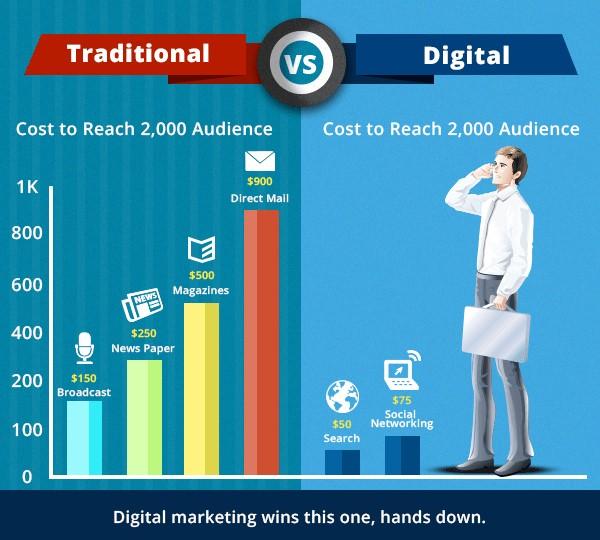
Image Source 3. Quick to Launch and Pause. Traditional ad campaigns require weeks or even months of planning and typically run for a set period. Digital campaigns offer more flexibility; you can launch a last-minute sale ad and easily take it down when your stock runs out. You have more control and options with digital. 4. Trackable Results. Digital ads come with a wealth of data. You can monitor key metrics like cost-per-click, website traffic, bounce rate, impressions, conversions, and even cost-per-conversion. This data allows you to understand what’s working and adjust your strategy for better results. 5. Instant Updates. Unlike traditional campaigns, updating a digital ad is a breeze. For instance, if you need to change your Google Ad, simply log in, make the change, refresh, and your update is live. Ready to explore those cost-effective ad types?
Oh, one more thing! Did you know you can gather all your cost data (even from platforms other than Google) within Google Analytics? Click here to learn how.
1. Google Search Ads
Google offers a variety of advertising avenues, but the one we’re focusing on here looks like this:
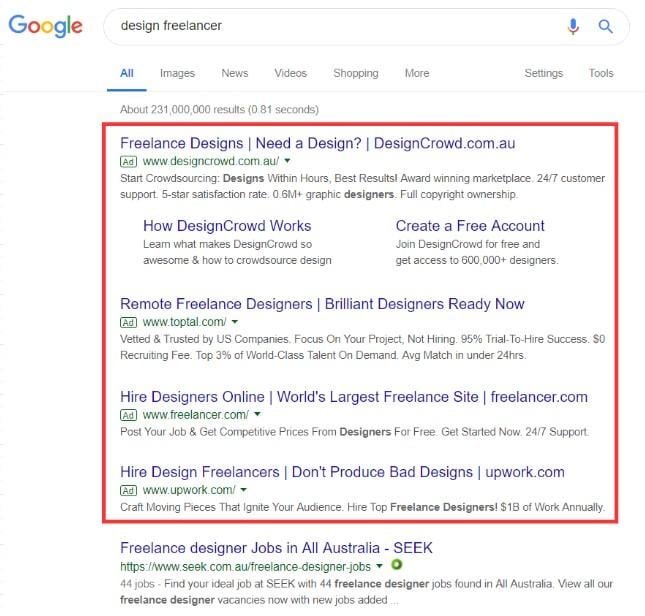
These are search ads, one of the most common types of pay-per-click (PPC) advertising. You’re only charged when someone actually clicks on your ad. These ads appear within Google search results. They help you secure a top spot for specific keywords, even without complex SEO strategies.
Why Google Ads Work
- Connect with High-Intent Users. People on Google are actively searching for information, solutions, or products to buy. Advertising on Google puts you directly in front of these potential customers at the perfect moment.
- Target Specific Locations. Google Ads lets you focus on particular geographic areas. This is especially powerful for local businesses looking to attract customers in their community.
- Reach Diverse Audiences with a Single Product. Many businesses offer products or services that appeal to different customer groups. Google’s PPC Ads help you connect with these diverse audiences by targeting various relevant keywords.
The Cost of Google Search Ads
Google Ads operates on an auction-based system. This auction determines whether your ad is displayed and its position on the search results page. How does the auction work?
- When a user searches, Google identifies all matching keywords.
- Ineligible searches are filtered out (e.g., searches from different countries or those violating Google’s advertising policies).
- The remaining ads are ranked, with higher-ranking ads appearing more prominently. This ranking considers factors like your bid, ad quality, ad rank thresholds, the search context, and the impact of ad extensions and formats. The good news is Google Ads rewards high-quality ad campaigns with lower click-through costs and better ad placements.
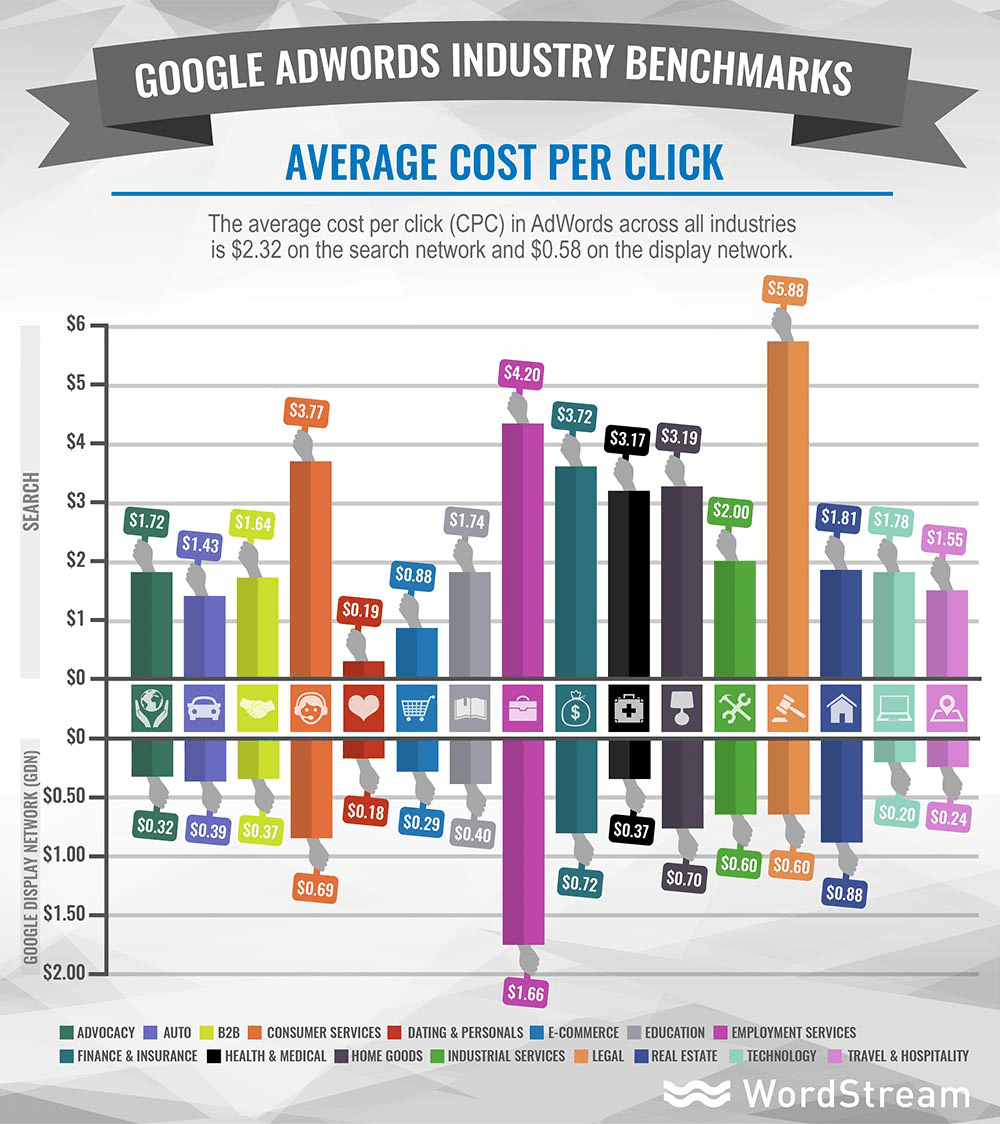
While the typical cost-per-click (CPC) on Google Ads falls between $1 and $2, this can fluctuate based on your location, industry, and chosen keywords.
A Google Ads Success Story
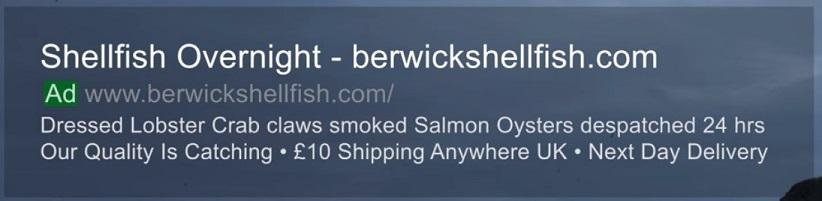
Berwick Shellfish, a family-run fresh seafood business, wanted to boost direct sales through their website. By using Google Ads, they generated over 250,000 page impressions in revenue in a single year, a 12% increase in mailing list sign-ups increase, and gained 70-80% of his online sales in new customers.
 Free guide >> PPC 101: The Beginner’s Guide to PPC
2. Facebook Ads
Facebook, as the world’s most popular social network with over two billion monthly active users users, is an advertising powerhouse for small businesses. What makes it even more appealing is that each of these active users spends an average of eight times per day on the platform.
The best part? Facebook allows you to laser-focus your ads, reaching precisely the audience you want.

While Facebook offers a variety of ad formats, the Mahabis example above cleverly incorporates video. Speaking of video, we highly recommend exploring it on Facebook. Social video content is shared 1200% more than images and text combined!
Advantages of Facebook Ads
- Affordable Reach. Facebook empowers small businesses to connect with their target audience without overspending. Compared to other online and traditional channels, Facebook ads are incredibly cost-effective. For example, Boba Guys, a bubble tea company, wanted to generate buzz for a new storefront. Their local awareness campaigns resulted in 103 ad clicks at a cost of $0.20 per click, $1 per new customer, and an impressive 9x return on ad spend.
- Precise Targeting. Few platforms can match Facebook’s targeting precision. You can reach people based on their location, age, education, relationship status, interests, behaviors, and more. If you have a clear picture of your ideal customer, finding them on Facebook is easy.
- Re-engage Website Visitors. Turning a visitor into a lead can take time – anywhere from six to eight marketing touchpoints. Remarketing on Facebook lets you re-engage with past visitors, providing those crucial extra touchpoints that can lead to more leads and sales.
How Much Do Facebook Ads Cost?
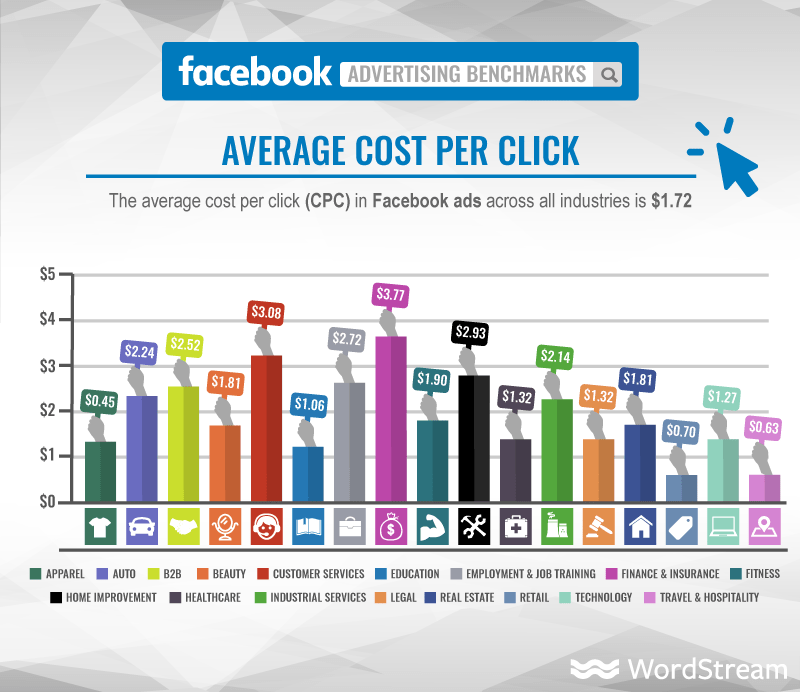
Similar to Google, Facebook Ads uses an auction-based system. The average CPC on Facebook is $1.72, but this can change depending on your industry.
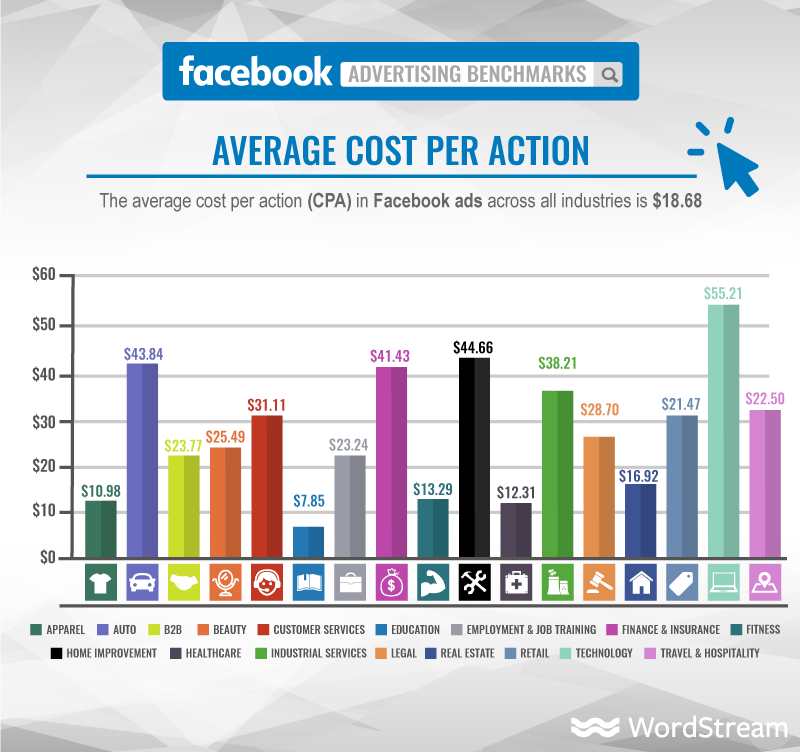
The average cost-per-action (CPA) is $18.68, again with variations across industries.
A Facebook Ads Success Story
Broccoli Pizza & Pasta, a rapidly growing Italian restaurant chain with over 135 stores across six countries, launched a dynamic three-day Facebook campaign for National Pizza Day in 2019.
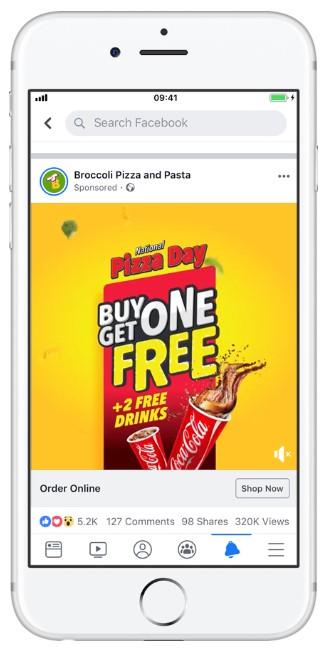
This campaign reached an impressive 9.26 million people in three countries, resulting in a 31% sales boost. By incorporating video and immersive full-screen ads, they also achieved a 2x higher return on ad spend than their previous campaigns.
3. Amazon Sponsored Products
Amazon, like Google, offers a suite of advertising options. We’ll zero in on Sponsored Products. Sponsored Product ads are powered by both manual keywords (terms users type into the search bar) and automatic keyword targeting (where Amazon’s algorithms identify relevant keywords for your campaign).
Amazon is now the third largest seller of ads in the US, trailing closely behind Google and Facebook.
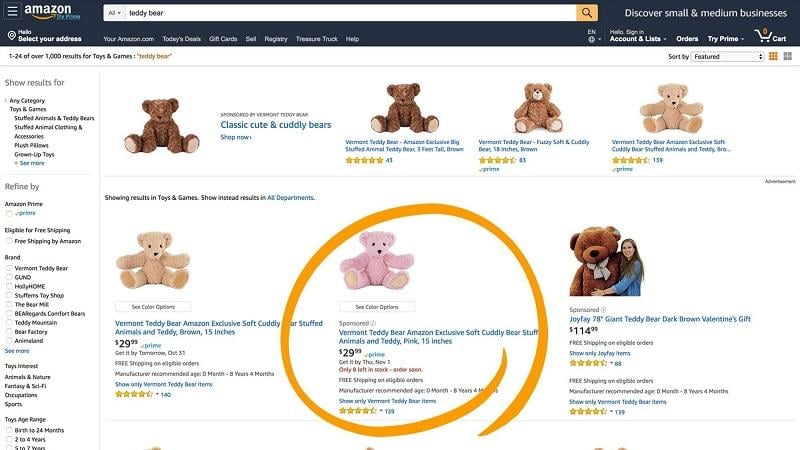
For businesses selling products, advertising on Amazon is a no-brainer. It’s a chance to put your offerings in front of over 100 million Amazon Prime members potential buyers. However, if you’re a local service-based business, it’s best to skip ahead to the next ad type.
The Power of Amazon Ads
- Connect with Buyers, Not Just Viewers. People come to Amazon to buy. Compared to platforms like Facebook and Google, Amazon users are more likely to make a purchase.
- Drive Sales. Sponsored ads give your products prime real estate, showcasing them to millions of potential customers. Increased visibility directly translates to a higher likelihood of making sales.
The Cost of Amazon Ads
According to Rob Sieracki from Practical Commerce, the average CPC on Amazon Sponsored Products is Amazon rarely exceeds $0.35.
This makes advertising on Amazon even more budget-friendly than Google Ads and puts it on par with some of the lowest CPCs on Facebook Ads.
An Amazon Ad Success Story
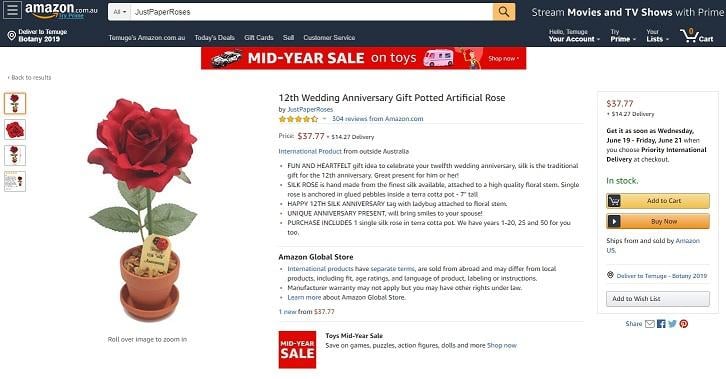
Image Source Just Paper Roses, a small business specializing in handcrafted paper flowers for all occasions, saw remarkable growth after leveraging Amazon advertising. Within 30 days, they doubled their units sold. They also achieved greater product visibility, which led to increased sales of their higher-margin orchids – more than offsetting their ad spend.
4. LinkedIn Sponsored InMail
LinkedIn boasts a professional network of over 610 million business professionals users. If you’re a local business targeting busy professionals, other companies, or enterprises, LinkedIn ads are your secret weapon.
While LinkedIn offers various ad formats, we’re going to focus on Sponsored InMail.
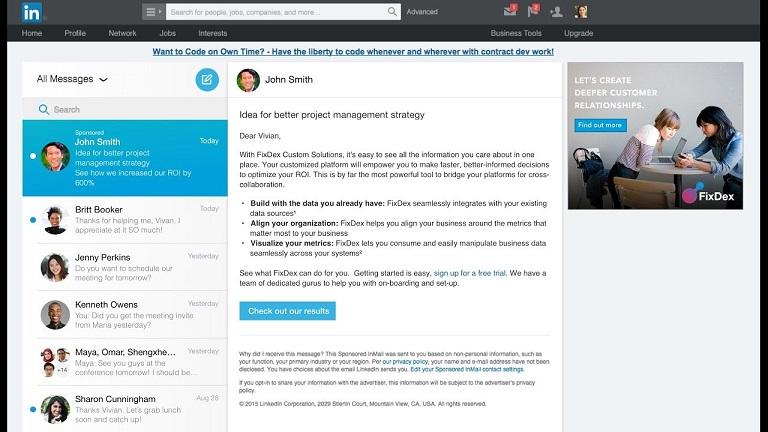
Image Source Sponsored InMail ads differ from the Google, Facebook, and Amazon ads we’ve discussed. They allow you to initiate direct conversations with key decision-makers and promote valuable content like webinars, ebooks, and other resources. This is incredibly powerful for nurturing relationships, especially when dealing with high-ticket or recurring purchases.
Why Choose LinkedIn Sponsored InMail?
- Personalized Outreach. LinkedIn Messenger lets you send targeted, relevant messages to your ideal prospects. You also have access to personalization features similar to those found in email marketing campaigns.
- Engaged User Base. Sponsored InMail messages are only delivered to active LinkedIn users. Plus, these ads are sent out at a maximum frequency of once every 60 days, ensuring your message lands in an uncluttered inbox.
LinkedIn Ads: Understanding the Costs
Like other platforms, Sponsored InMail campaigns use a bidding system to determine reach. You pay for Sponsored InMail on a cost-per-send basis (meaning you’re charged for each message delivered). There’s a minimum total spend of campaign budget of $25.00.
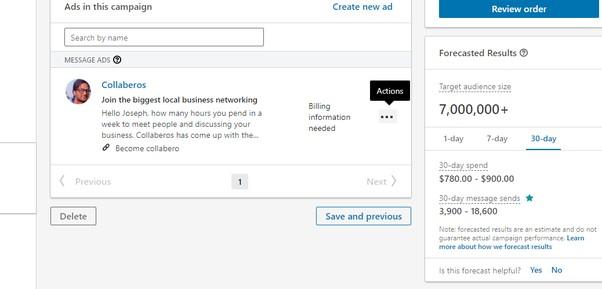
Image Source To illustrate, based on the example above, it would cost between cost you from $780 to $900 to send 3,900 to 18,600 messages to your target audience over a 30-day period. According to AltaVista’s current Sponsored InMail campaign boasts the following:
- Open rate: 44%
- Cost per send: $0.75 to $0.80
- Cost per open: $1.70
A LinkedIn Ad Success Story
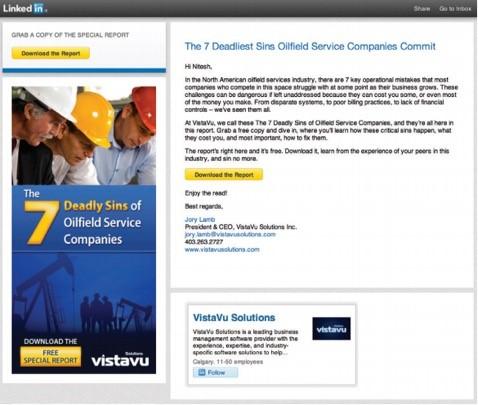
Image Source VistaVu Solutions, a business management software company targeting oilfield services, saw remarkable results with LinkedIn. Within a single week, their InMail campaign achieved a conversion rate of 23.8% conversion rate. By combining Display Ads and InMail, they generated outstanding results. Out of the 20 leads captured in the first week alone, 19 qualified and entered their sales funnel. Even more impressive, their cost-per-lead was one-fifth of their usual benchmark.
VistaVu not only gained more leads but also witnessed exceptional lead quality.
5. Google Maps PPC Ads
If your business relies on foot traffic or local customers, Google Maps marketing could be your perfect match. Google Maps marketing uses the platform to guide more customers to your doorstep. Desktop View
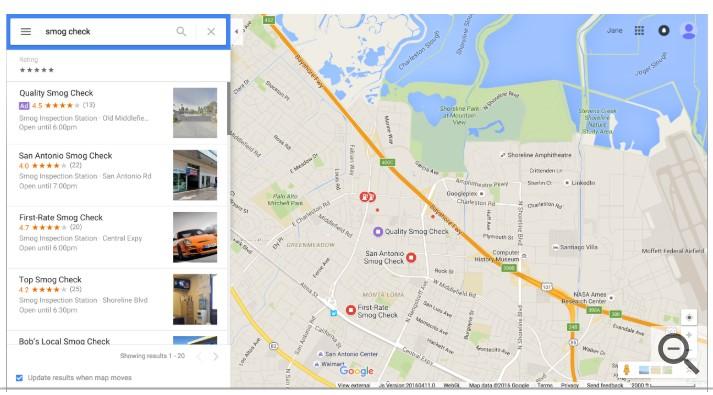
Image Source Mobile View
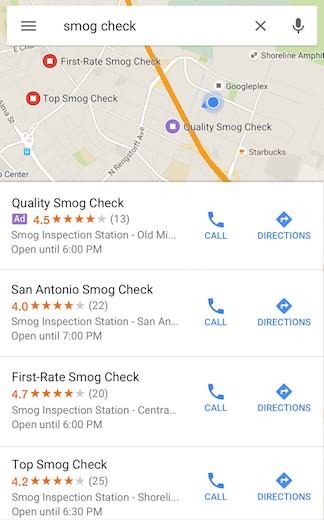
Image Source With over one billion people using Google Maps people using Google Maps, there’s a high probability your customers are among them.
But here’s the real kicker: 84% of consumers of all searches on Google are local. 75% of users who search of those searching for a nearby product, service, or location will visit a store within 24 hours. And 28% of these searches of those local searches convert into purchases.
Why Google Maps Ads Are Effective
- Increased Store Visits and Calls. Local search ads give your business prime placement at the top of local results. This ensures you capture the attention of potential customers in your area who are ready to visit. Adding a phone number to your ad can also lead to more inquiries and orders.
- Showcase Your Business. Local search ads link to your Google My Business page. This page provides valuable details like your address, customer reviews, photos, and store hours, giving potential customers a comprehensive overview.
The Cost of Google Map Ads
Google charges for these ads on a pay-per-click basis. Chargeable actions include:
- Viewing location details
- Getting directions
- Clicking to call While costs vary by industry, they can range from $25 to $150 to rank at the top at the top of the Google Maps search results.
A Google Maps Ad Example
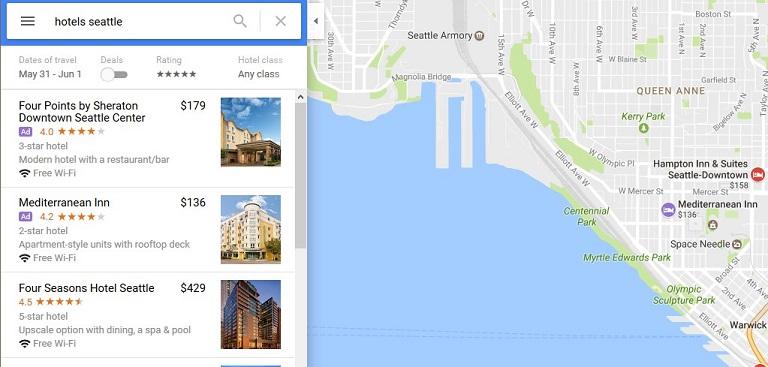
Image Source If you’re looking for hotels in Seattle, Four Points by Sheraton, a well-known hotel chain, appears at the top of the Google Map results with a purple ad pin. Their ad prominently displays their price deal, rating, a brief description, and their Wi-Fi availability – all within the Google Map search listing.
6. Google Display or Banner Ads
These are the visual ads you see across websites that display advertising. You’ve likely encountered them countless times.
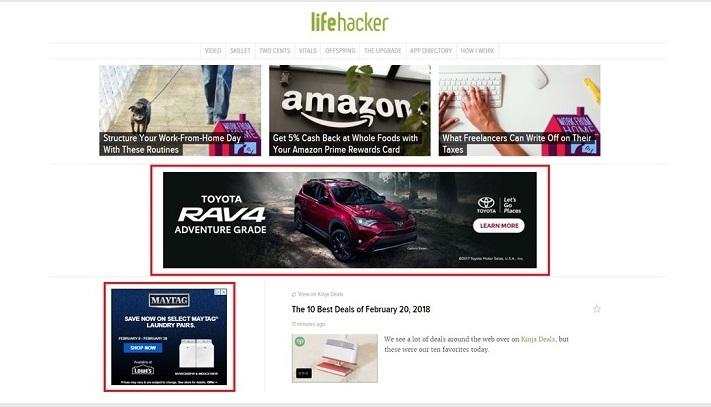
Image Source Display ads share similarities with paid search ads, featuring a headline, body text, and a URL. However, they also leverage eye-catching designs – graphics, videos, or even audio – to stand out on the page.
Unlike search ads that appear on search engine results pages, display ads are strategically placed on websites related to your product or service.
Why Choose Google Display Ads?
- Re-engage Your Audience. Google Display Ads excel at remarketing to users who’ve shown prior interest in your business. This can significantly increase their engagement with your brand.
- Visual Storytelling. Unlike text-heavy Google search ads, the Google Display Network allows for visually rich and engaging ad formats, including images, videos, and even sound elements.
- Expanded Reach. The Google Display Network spans over over two million websites websites. While Google Search Ads rely on users actively searching for keywords, Display Ads reach a broader audience, including those who don’t primarily use Google Search.
Google Display Ad Costs
Google Display Ads give you pricing flexibility. Similar to Google Search and Facebook Ads, they utilize an auction-based model. You can choose to pay by:
- Cost per click (CPC)
- Cost per thousand impressions (CPM)
- Cost per acquisition (CPA) Keep in mind that ads on the Google Display Network typically have lower click-through rates.
On average, the cost per click for a Google Display ad is less than $0.58.
A Google Display Ad Example
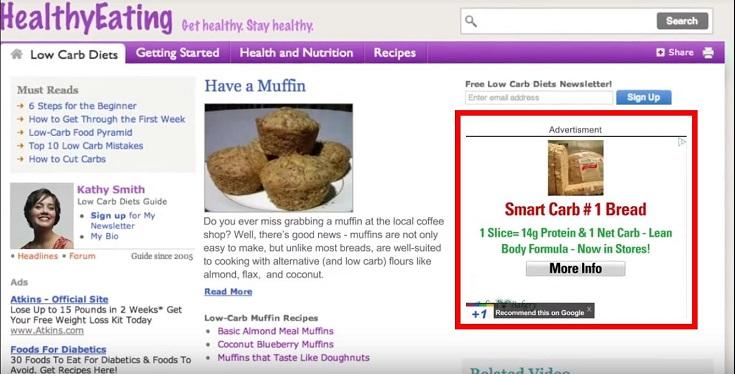
Image Source Julian Bakery, a family-owned business specializing in artisan bread in La Jolla, California, found success with the Google Display Network. Their campaign resulted in a increased their conversions by 35% increase in conversions and a 330% surge in impressions. In the three years they’ve been advertising on Google, they’ve grown from 10 to 35 employees and doubled their revenue from the previous year.
7. Google Shopping Ads
These ads are essentially product listings that prominently feature your brand, product image, name, and price.
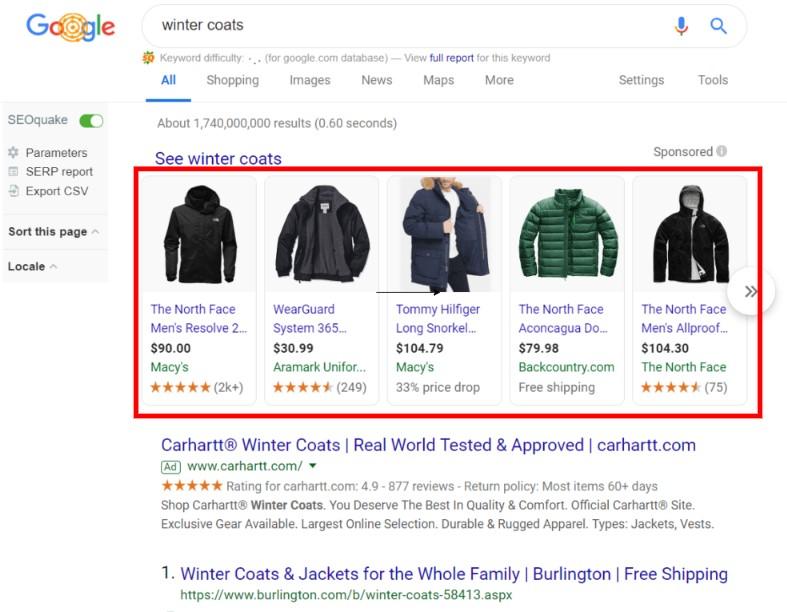
As you can see, Google Shopping ads appear above both paid and organic search results.
Benefits of Google Shopping Ads
- Sell More, Spend Less. Google Shopping Ads boast a 26% higher conversion rate higher conversion rate and a 23% lower CPC compared to text-based search ads. This translates to a potentially stronger return on investment (ROI) for your business.
- Attract High-Quality Leads. These ads provide shoppers with essential information upfront (brand, image, name, reviews, promotions), allowing them to make informed decisions. Shoppers who click on these ads are less likely to leave your site without making a purchase because they already have a clear understanding of what to expect.
Google Shopping Ad Costs: What to Expect
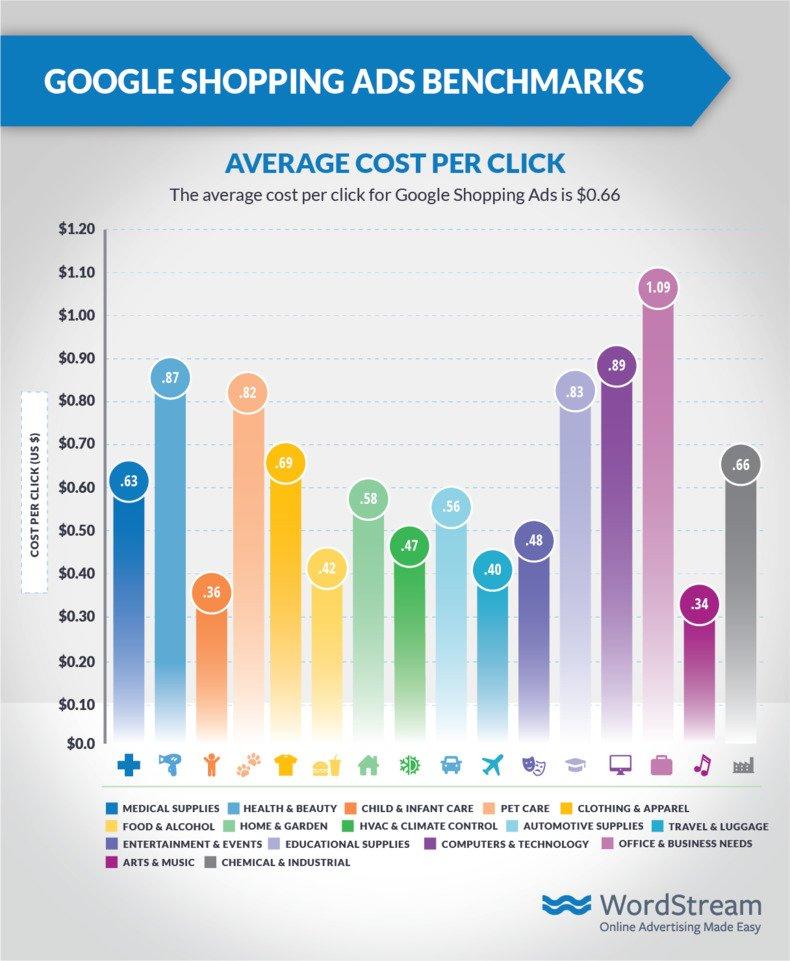
The cost of Google Shopping Ads depends on how visible you want your products to be. You control your daily budget and your PPC bids.
For competitive bidding insights, check out nexus-security’s shopping ads benchmarks.
A Google Shopping Ad Success Story
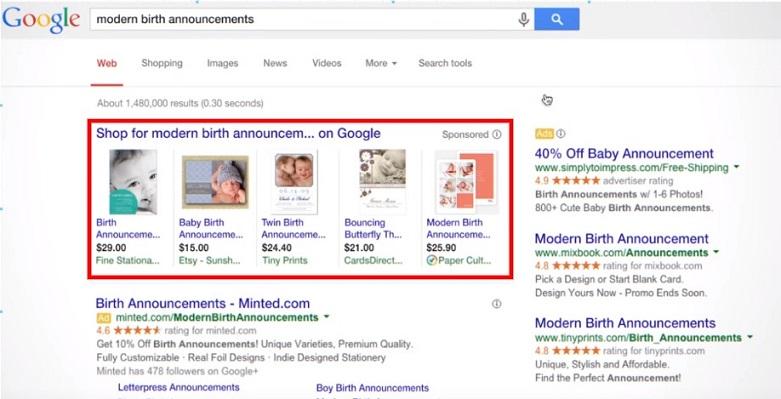
Image Source Paper Culture, a stationery company known for its 100% post-consumer recycled products, decided to enhance their Google Ad campaigns with Google Shopping Ads.
As you can see in the example, Paper Culture’s ad is the fifth item on the right. They leveraged the visual nature of Google Shopping Ads to their advantage. The results? They achieved a increase their ROI 3x lower cost per acquisition compared to other channels and reduced their cost-per-lead by up to 50%.
Explore and Test These Cost-Effective Ad Types
Online advertising, especially with the ability to set daily budgets, can be incredibly budget-friendly for small businesses. Platforms like Google, Facebook, LinkedIn, and Amazon give you the power to promote your products and services to a vast audience.
Even better, these platforms empower you to target your niche audience with laser focus.
If you’re a small business owner ready to boost sales, experiment with one, two, or even more of these seven cost-effective ad types. Discover what delivers the best results for your unique business!