If automated bidding strategies are handling my bids for me, do I even need to pay attention to bidding? Many people are asking this question, especially with the increasing popularity of automated bidding strategies (and automation in Google Ads overall). The quick and definitive answer is YES.
 The more detailed answer is also YES, but it’s important to understand why and how you should monitor your bidding strategies and check in on them regularly.
Here are some suggestions for effectively managing your bidding strategies in this age of automated bidding.
The more detailed answer is also YES, but it’s important to understand why and how you should monitor your bidding strategies and check in on them regularly.
Here are some suggestions for effectively managing your bidding strategies in this age of automated bidding.
6 bid management tips for automated bidding
Let’s start with a quick overview of bidding for those who need it: When you run Google Ads (or really any PPC campaign), there are multiple approaches to setting your bids. Your approach – your “bidding strategy” – can be based on factors such as your budget, how quickly you want to spend that budget, what you’re aiming to achieve, the campaign’s performance, and more. The following tips will help you understand your role in setting, modifying, and managing your bids in a world where automated bidding is the norm.
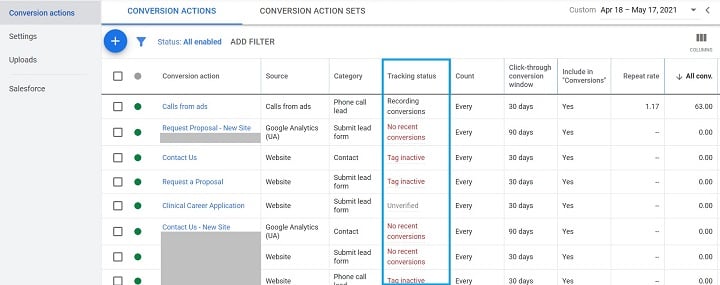
1. Ensure proper tracking is in place
This is critical: automated bidding strategies will not deliver the results you want without proper tracking. If you’re optimizing for any goal other than traffic, you must have conversion tracking set up on your site (and, in some cases, revenue tracking). You should also ensure that all of your primary goals are focused on those outcomes. Now that we’ve got that covered…
2. Choose the right strategy
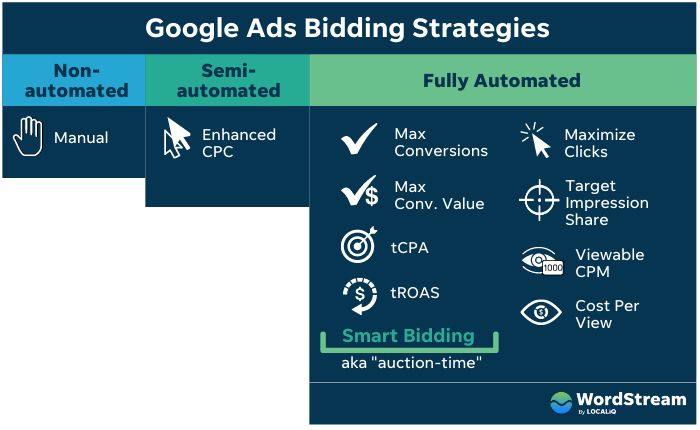
Once your conversions are tracked accurately, the next crucial step is selecting a bid strategy that aligns with your goals. The right bidding strategy can vary depending on what you are trying to achieve with your campaigns. For instance, if you’re selling products online, you could leverage various options, from Manual CPC and Enhanced CPC to Target CPA or even Target ROAS. However, if lead generation is your objective, you might find success with the first three options, but Target ROAS bidding might not be beneficial unless you have reliable CRM data.
 Some helpful tips:
- Conduct thorough research. Numerous help articles, blog posts, and videos can help you understand the functions of each bidding strategy so you can choose the most appropriate one.
- Make sure you have sufficient data to support your chosen strategy. While Google might suggest otherwise, I recommend having at least SOME conversion data in your account before using strategies that prioritize conversions or cost per conversion. This gives the bidding algorithm some initial insights and prevents it from starting from zero. If you lack initial traction, starting with Manual or Enhanced CPC, or even Maximize Clicks, and transitioning to another strategy later might be best. (We’ll delve into changing strategies further down in this post.)
3. Utilize available levers
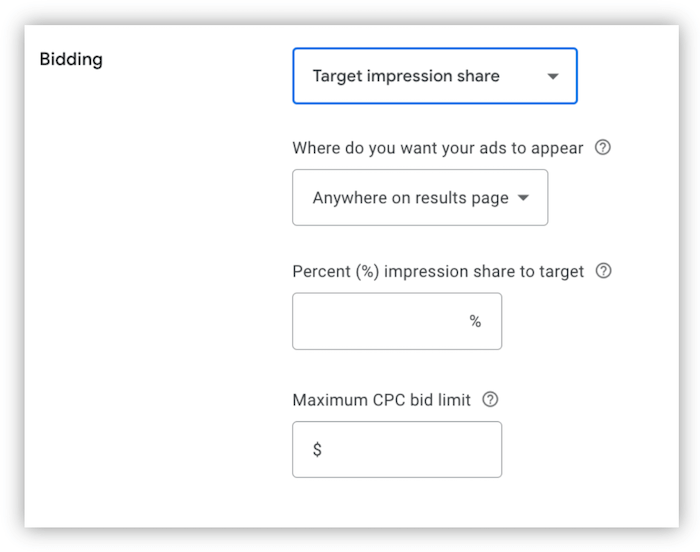
Google provides a reasonable degree of control to fine-tune your campaigns’ performance, depending on the bid strategies you employ. For Impression Share bidding, you can choose to target all Impressions, Top of Page, or Absolute Top of Page and then specify your desired percentage.
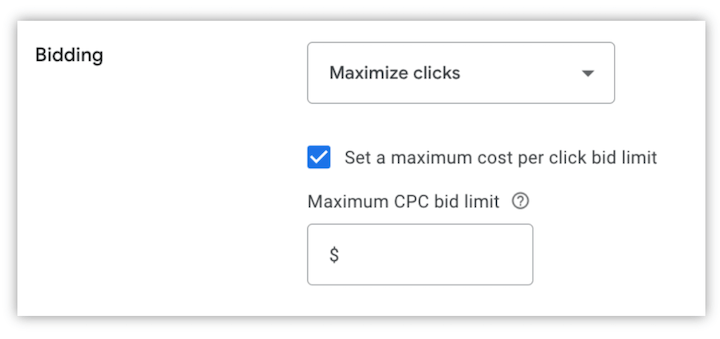
 The Maximize Clicks strategy can effectively boost volume, but if you’re aiming to keep your CPCs in check, you can set a Max CPC bid limit in the settings section.
 Similarly, you can define your desired targets within the Maximize Conversions and Maximize Revenue bidding strategies using Target CPA and Target ROAS. You’re not limited to Google’s defaults and can set your own goals. However, this brings up another important point… which we’ll discuss after a quick look at the levers you might NOT have.
4. Be mindful of the levers you lack
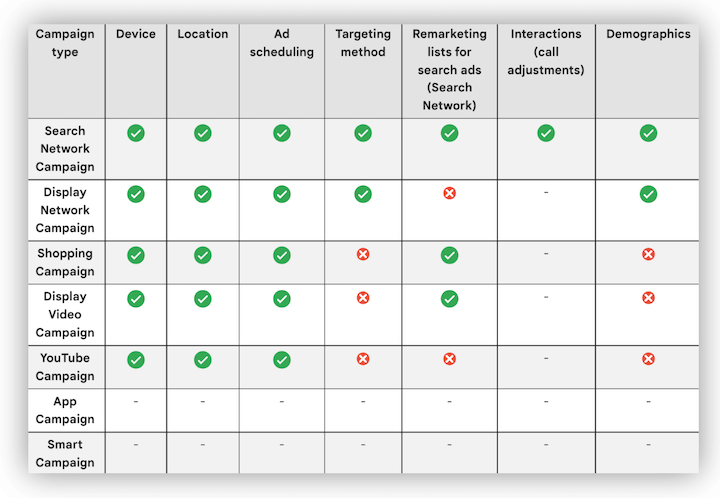
One of the things I appreciate about Manual or Enhanced CPC bidding is the extensive control you have over bid adjustments. Honestly, manual campaigns offer numerous bid modifiers:
- Time of day
- Day of week
- Audiences
- Location
- Device
- Demographics You can use each of these to increase or decrease bids by a specific percentage, allowing you to be more or less competitive for particular segments of your audience. However, automated bid strategies eliminate the majority of these controls. The algorithms handle all those decisions in real-time. For those who disagree, I understand that Google still allows you to manually enter a number in the bid modifier field for audiences within a Target CPA campaign. However, the algorithm disregards this input. This is the only set of bid modifiers compatible with different bidding strategies. So when you’re deciding which strategies are best suited for you, consider the levers you want/need to optimize your campaigns and how your bidding strategy choice will impact your control.
5. Grasp the impact of your limits on performance
Using a Target CPA (cost per action) is an effective method for managing expenses in Google Ads. I personally use this strategy in the majority of my lead generation accounts because we know our profitability threshold for lead acquisition costs. With this level of machine learning, many advertisers are eager to reduce CPA targets regularly to lower costs. However, setting overly restrictive Target CPA goals can be counterproductive. If your CPA goals are too ambitious, Google will face challenges in achieving the desired performance levels and will begin limiting ad impressions. This, in turn, reduces your overall impressions, clicks, and ultimately, conversions. In my experience, when this restriction becomes excessive, your CPA tends to surge, producing the opposite of what you intended.
 Free guide
On the other hand, relaxing or raising your CPA target to a higher level often prompts Google to become more assertive. It may display your ad more frequently, potentially resulting in increased volume and costs. While that might sound concerning, I’ve encountered numerous instances where increasing the Target CPA provided Google with more data to process, leading to an actual decrease in our CPA. Now, I’m not advocating for blindly increasing your Target CPA goals and spending more. The key takeaway is to avoid excessive restrictions. Experiment by making gradual adjustments – increasing or decreasing your target – and observe the effects on your performance and volume goals. You might be surprised to find that the actual impact contradicts your initial assumptions.
6. Recognize when to adjust or experiment with strategies
Just as choosing the right strategy initially is important, it’s equally crucial to recognize when a change might be beneficial.
- Are your performance expectations not being met even after adjusting the controls?
- Has the overall marketing objective for that campaign shifted?
- Have you reached a new data threshold that allows you to upgrade from Maximize Conversions to Target ROAS?
- Or has your data flow slowed down enough to warrant a downgrade? Regularly evaluating your bidding strategies doesn’t have to be complicated or time-consuming to determine if a change is necessary. Additionally, you don’t need to immediately switch at the first hint of trouble or opportunity. Consider setting up a Google Ads Campaign Experiment to compare the performance of different strategies (here’s a helpful tutorial video on campaign experiments!).
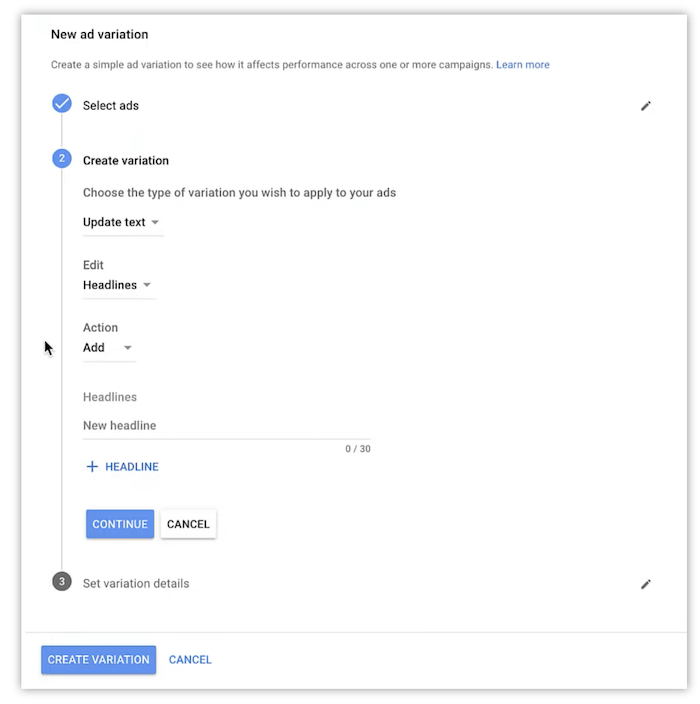 You can even apply this approach to fine-tune aspects within a single bid strategy. For instance, you might be curious if a higher ROAS target could improve efficiency without sacrificing volume. Why not test it? Duplicate the campaign, configure it to synchronize changes from the original, and modify the ROAS target in the experiment to see how it performs.
Maintain control over your Google Ads bids
Automated bidding strategies might have taken over many of the optimization tasks advertisers used to handle, but that doesn’t mean we can completely disengage. From choosing the right starting point and utilizing the available controls to recognizing when to test or modify strategies, you can still exert significant influence to ensure you’re maximizing your account’s potential.