The success of websites depends heavily on their conversion rates. High conversion rates translate to increased sales and revenue, while low conversion rates can threaten a business’s survival.
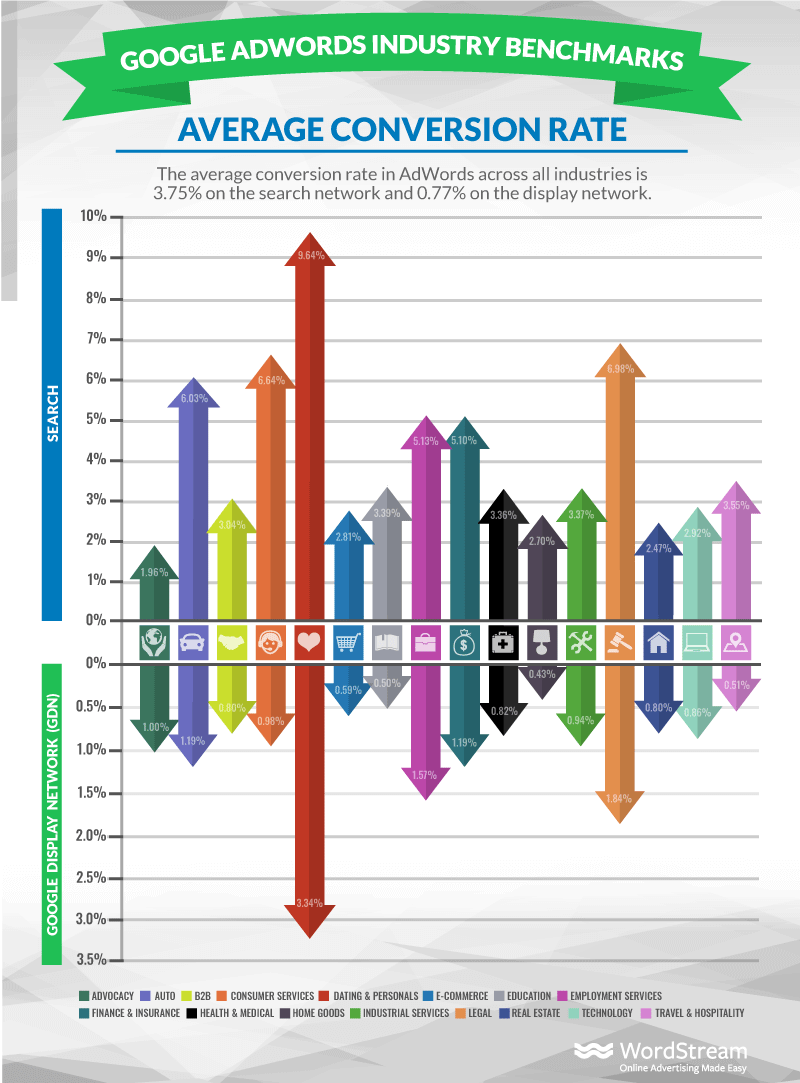
Given the critical role of maintaining healthy conversion rates in online business success, it’s crucial to understand and optimize one of the most influential factors: user experience (UX). UX encompasses everything your prospects, visitors, or customers encounter while navigating your site, from individual pages to specific elements. It determines how easily they can find what they’re looking for without encountering obstacles that might deter them. Let’s delve into six key ways your site’s UX can influence your conversion rates.
1. The Power of Video on Landing Pages
Landing pages often present a significant amount of text, aiming to persuade visitors to click the call to action or proceed to the main purchase page. These pages can become lengthy, especially when conveying a detailed value proposition. From a UX perspective, this text overload can be overwhelming for visitors who may lack the time or inclination to read extensively. This is where video comes in. Studies indicate that incorporating videos on landing pages can substantially boost conversion rates. Improved conversions typically signify enhanced UX, as the page effectively communicates its value proposition and encourages users to fulfill the intended action.

Image via EyeView Consider the example of TutorVista, an online tutoring platform. When EyeView, a video solutions company, incorporated video into TutorVista’s landing page to enhance subscription signups, conversions skyrocketed by 86% simply by adding video. The key takeaway? Leads are visually oriented and respond more favorably to video content compared to text. This aligns with the increasing prevalence of video on the internet. Cisco’s 2017 Visual Networking Index Forecast predicts that a substantial 82% of all IP traffic will consist of video by 2020.
2. Strategic Call to Action Button Placement
The placement of your calls to action (CTAs) significantly impacts your customers’ UX. CTAs that are difficult to locate, read, or click negatively affect UX and consequently, conversions. Many web pages aim to drive sales, whether it’s products, subscriptions, or signups, making CTAs and their placement vital. The UX concept of “the fold” refers to the imaginary line on websites that separates content visible without scrolling from content that requires scrolling. Larger screen sizes naturally accommodate more content above the fold. According to UX specialists at the NN Group, 84% is the average difference of how users treat content above versus below the fold. In essence, content above the fold receives 84% more views than content below the fold. This conclusion stems from their own research and an analysis of a Google study on display advertising across various websites. This strongly suggests that important content, like CTAs, should be positioned above the fold for maximum visibility. A company’s experiment confirmed this principle.
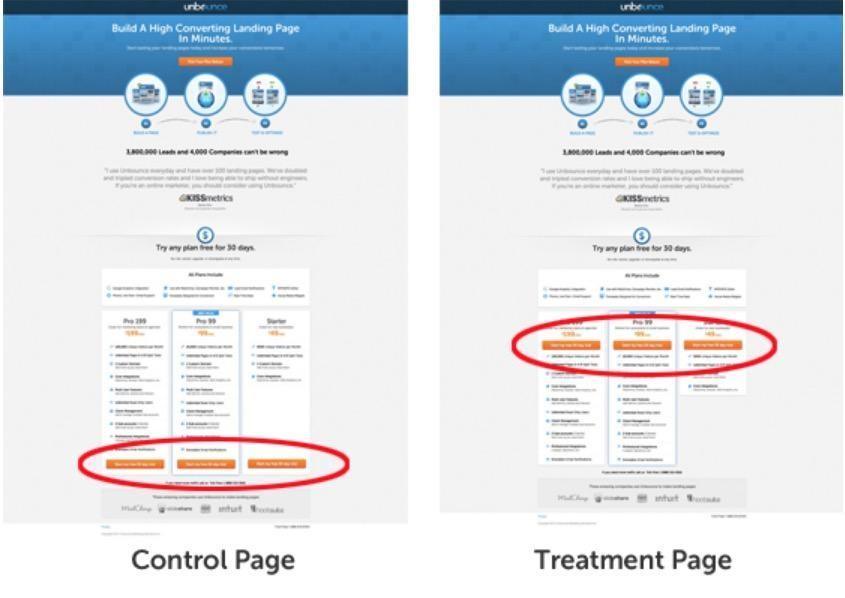
Image via Unbounce Unbounce tested their PPC landing page, initially featuring the CTA below the fold, by introducing a secondary CTA above the fold that directed leads to the pricing grid below. This adjustment in CTA placement resulted in a conversion spike of 41%.. The lesson? Avoid hindering user behavior by placing CTAs in obscure locations. Opt for above-the-fold placement to enhance conversions.
3. Prioritizing Website Speed
Site speed is more critical than ever in determining the quality of your UX. Slow-loading websites experience decreased conversions compared to their faster counterparts. (It can even impact your organic search rankings.) But what constitutes a sufficiently fast website? A landmark 2009 study by Akamai, a content delivery network provider, and Forrester revealed that 40% of consumers refuse to wait longer than three seconds for a page to load before abandoning it. Delays of three-and-a-half or four seconds lead to lost leads and conversions. A more recent 2016 study by DoubleClick by Google corroborated these findings. In the mobile realm, pages taking longer than three seconds to load result in 53% of mobile site visits are abandoned.
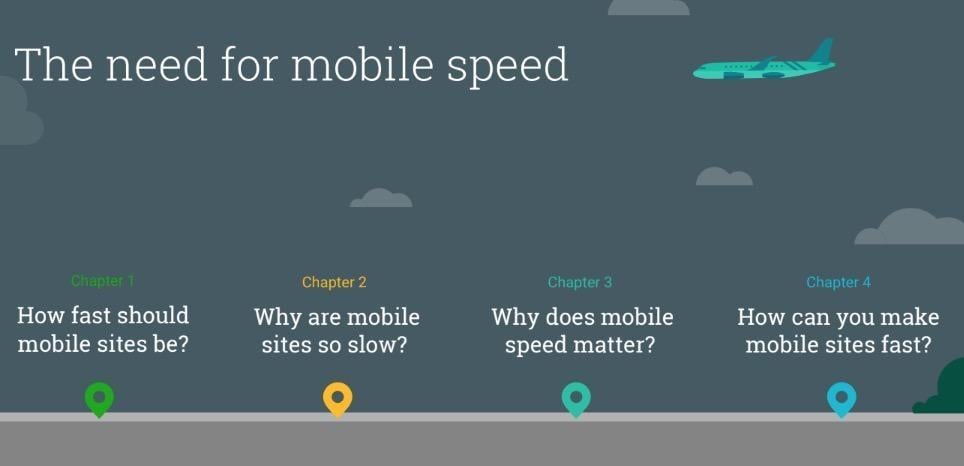
Image via DoubleClick Therefore, the magic number is three seconds or less. This is the threshold for page loading speed if you want to avoid giving users the impression of poor UX due to slowness. Here are some helpful site speed tools:
- Google’s PageSpeed Insights
- Pingdom’s Website Speed Test
- GTmetrix’s Website Speed and Performance Optimization
4. Website Readability: Size Matters
An often overlooked aspect of UX is website readability. When content is difficult to decipher, users struggle to understand their expected actions, leading to poor UX. Should they read reviews? Watch a video? Or proceed directly to the CTA? Unreadable copy creates confusion. Consider that users typically skim through website content. According to UX Myths, people usually just skim site content. With such short attention spans, ensuring the readability of the limited content users do engage with is crucial. For instance, a report titled The Effect of Font Size and Line Spacing on Online Readability by UX researchers at Carnegie Mellon University and Spain’s Universitat Pompeu Fabra found that 18-point font sizes optimize readability and comprehension in body text.

Image via Pielot Smaller fonts hinder readability and comprehension. When users struggle to grasp the intended actions on your site, conversions suffer. Given the limited attention spans of users, making content easily digestible is paramount. Larger fonts are always preferable. In short, avoid using font sizes below 18 points in your body text.
5. The Allure of Free Shipping
Sometimes, incorporating specific page elements to incentivize conversions is all it takes to boost those numbers. Think of it as a gentle nudge to encourage more shoppers to complete a purchase. Ecommerce sites, in particular, can significantly increase conversions by offering a free shipping threshold, as one retailer discovered. NuFace, a company specializing in anti-aging devices, realized that offering a small incentive during checkout to customers already familiar with their brand and products led to a surge in conversions. They conducted an A/B test with a treatment page displaying a message offering free shipping on orders over $75. The results were impressive: Not only did the average order value increase by 7.32%, but the number of orders almost doubled, jumping by 90% also occurred.
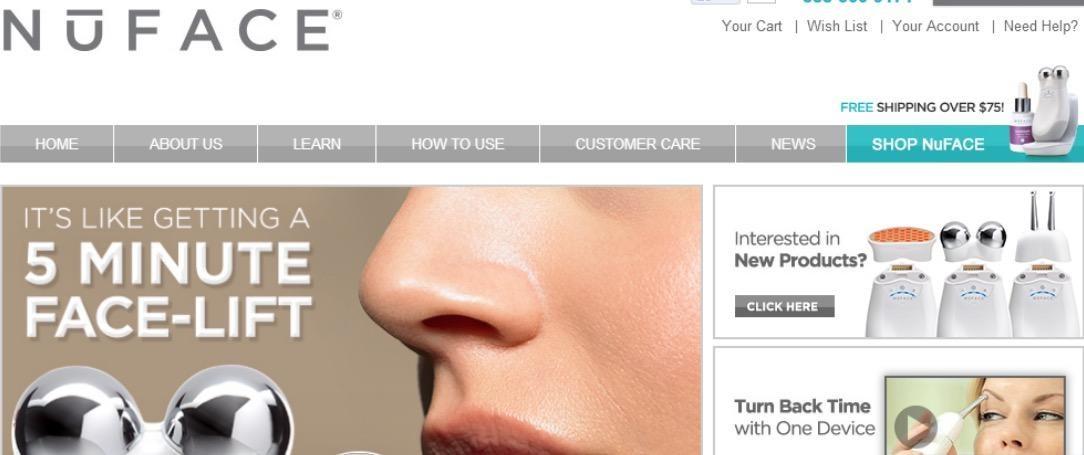
Image via VMO This case study highlights other aspects of ecommerce UX psychology that explain the appeal of free shipping. According to the 2016 Walker Sands Future of Retail Report, a significant majority of respondents identified free shipping as their primary motivator for online shopping, with 90% indicating that they would shop more online if free shipping were more prevalent. The lesson? When customers express a strong desire for incentives like free shipping, it’s wise to provide them, especially when it leads to increased order volume and average order value.
6. Eliminating Friction by Simplifying Navigation
Most web pages, particularly landing pages, share a common goal: to drive conversions. One major obstacle that can hinder conversions is excessive clutter in the form of navigational links that distract visitors from the page’s objective. These links act as diversions, undermining the page’s purpose. The solution? Decluttering, of course! A case study from AmeriFirst Home Mortgage exemplifies this principle. AmeriFirst employs “naked” landing pages, meaning landing pages devoid of navigation. This prevents visitors from clicking away from the sole offer on the page, allowing them to concentrate on the offer, complete the form, and convert.
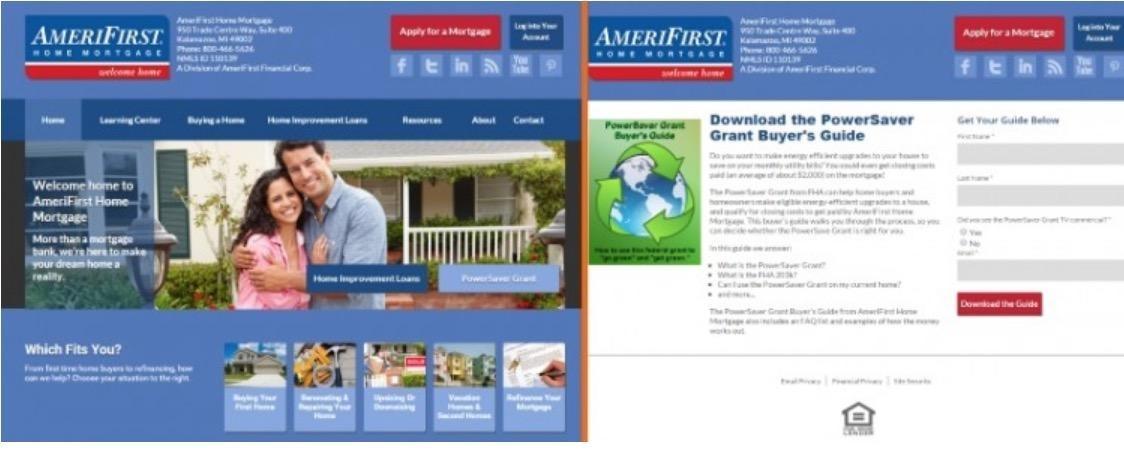
Image via Relevance This practice of removing navigation from landing pages has resulted in an impressive 30 to 40% conversion rate increase for AmeriFirst. From a UX perspective, it’s a logical approach: Removing distractions from a page reduces the number of decisions users have to make, enabling them to focus solely on the page’s objective. The takeaway? Embrace “naked” landing pages and reap the rewards of higher conversion rates.
Enhanced UX Leads to Increased Conversions
These case studies underscore a fundamental principle of digital marketing: Exceptional UX leads to more conversions. When your site provides a seamless user experience, visitors are more likely to convert. Consider it from a user’s standpoint: Landing on a page—even if initially interested in the offer from a Google Ads (AdWords) ad or organic search result—only to be met with confusing content leads to a poor user experience. Frustration mounts, patience dwindles, and users are likely to exit the page quickly, resulting in a missed conversion. However, when UX is prioritized, clarity and well-defined page goals ensure that visitors can easily navigate the site and complete desired actions, leading to increased conversions.