On December 23, 1985, Raymond Belknap and James Vance spent the day in Sparks, Nevada, indulging in beer, marijuana, and heavy metal music.

One of the albums they reportedly listened to was Stained Class by Judas Priest. As the day ended, the young men, aged 18 and 20, headed to a playground. Tragically, they shot themselves there with a shotgun. Belknap died instantly from a headshot, while Vance suffered severe facial injuries and succumbed to complications three years later. Their families sued CBS Records, Judas Priest’s label, for $6.2 million, alleging that a subliminal message in the song “Better By You, Better Than Me” incited the suicide. They claimed the hidden message, “Do it,” urged listeners to take their lives. Although the lawsuit was dismissed, it sparked nationwide concern about subliminal messaging’s dangers. Other musicians like Ozzy Osbourne and 2 Live Crew faced similar accusations, highlighting the public’s fear. Interestingly, it’s not just musicians who have been accused of employing subliminal techniques. The judge in the Belknap/Vance vs. Judas Priest case called them “subliminals,” while the media used the term “backward masking.” Many advertising campaigns have also been suspected of using this controversial method to enhance persuasion. Let’s explore seven examples of such subliminal advertising. First, let’s understand what subliminal messages entail.
Unmasking Subliminal Advertising
Subliminal messages are hidden visual or auditory cues that the conscious mind can’t perceive. They are often embedded in media like commercials or songs. These messages can either subtly enhance an advertisement’s effectiveness or convey entirely different meanings. Genuine subliminal messages remain undetectable to the conscious mind, even if actively sought out. This is because everyday stimuli we encounter are above our conscious perception threshold, while subliminal messages operate below it.
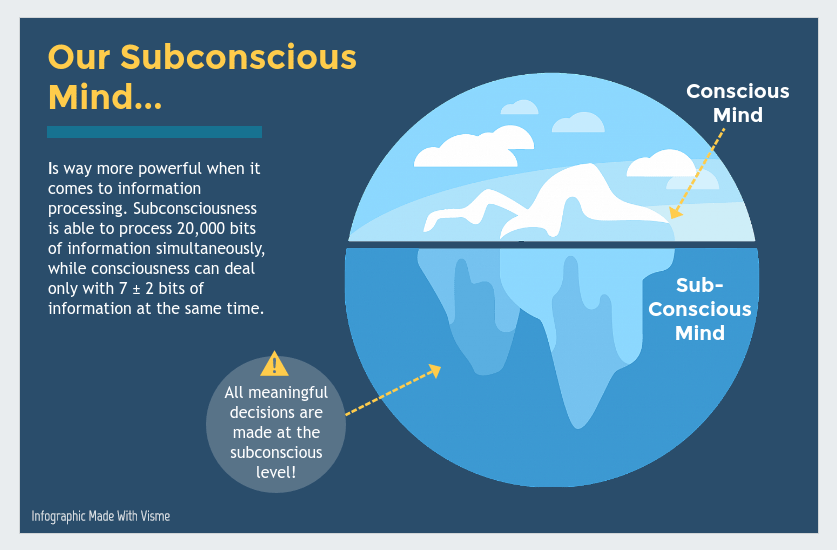
Image via Visme The unsettling aspect of subliminal messaging is that even though we remain oblivious to these concealed cues, our subconscious mind instinctively reacts to them without our knowledge or consent.
The Role of Subliminal Messages in Advertising
Although the term “subliminal” has been around for a while, it gained mainstream recognition in 1957 with Vance Packard’s book, The Hidden Persuaders. The book discussed a 1950s study claiming that Coca-Cola used subliminal advertising in cinemas to boost concession stand sales. The study alleged that inserting single frames with messages like “Buy Coca-Cola” and “Buy popcorn” into movies increased their sales by 57% and 18%, respectively.

Unfortunately for Packard, the study was completely bogus. Its disgraced author, James Vicary, later admitted to fabricating the entire study to deceive advertisers. Despite its dubious origins, The Hidden Persuaders successfully popularized subliminal messaging and its potential applications. Although Coca-Cola may not have been manipulating moviegoers, this example highlights one of subliminal advertising’s primary aims: influencing the subconscious to boost sales. Subliminal messaging has also been allegedly used to further certain political agendas. During the heated 2000 US presidential race between George W. Bush and Al Gore, Gore accused the Republican campaign of including a subliminal message in an attack ad targeting Gore’s healthcare proposals. Gore alleged that the video briefly flashed the word “RATS” before displaying a visual with the word “Bureaucrats.” The word seems pretty noticeable, particularly if you’re looking for it:
Today, many countries have banned subliminal messaging. The United States, however, has not explicitly prohibited it in advertisements, though its use does fall under federal law enforcement. Let’s now delve into some real-world examples of subliminal advertising.
1. Playing Games with Husker Du
Husker Du, the board game from which the rock band derives its name, was released in the early 1970s and promoted as a family game by its manufacturer, Premium Corporation of America. The company produced TV advertisements containing single frames that flashed the message “Get it.” A Premium Corp. executive later confessed to including those frames, leading to an FCC investigation following viewer complaints.
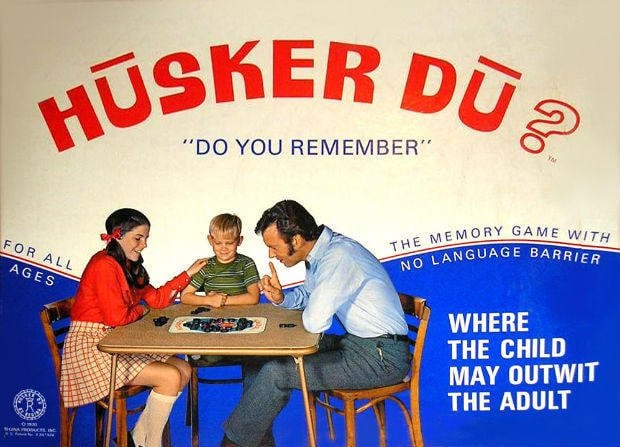
The FCC subsequently declared subliminal messaging in TV ads as “against public interest” and prohibited the practice. While the board game might be forgotten, this incident is considered the first documented instance of subliminal messaging in TV ads, earning it an odd yet significant place in advertising history.
2. Marlboro’s Subliminal Barcode
Despite global efforts to curb cigarette advertising, Marlboro maintains its position as a globally recognized brand. Although we may no longer see the “Marlboro Man” on television, and tourism to Flavor Country has decreased, the brand remains iconic, a status it aimed to uphold through subliminal advertising.
In the late 1990s and early 2000s, many sporting organizations and regulatory bodies raised concerns about the widespread cigarette advertising in Formula 1 racing. With most top drivers racing in cars adorned with cigarette brand logos, a European ban on tobacco sponsorship prompted many cigarette companies to withdraw from the sport. Marlboro’s marketing team devised a clever workaround: they would use subliminal visuals to convey their brand without resorting to their logo. They achieved this by incorporating a barcode-like design that was easily recognizable at high speeds, almost as effective as their logo.

Marlboro’s ingenious tactic proved short-lived. Facing pressure from the European Public Health Commission, European lawmakers ruled that the design too closely resembled the banned Marlboro logo.

Image via Campaign Amusingly, Marlboro told The Wall Street Journal in 2010 claiming, “The barcode was never meant to be anything other than a neutral design unrelated to tobacco product sales. It was never intended to reference the Marlboro brand.” Right.
3. Seriously Suggestive Ads
Warning: The next three ad examples contain suggestive content that some may deem NSFW. Although the most explicit ads are not shown, reader discretion is advised.
Benson & Hedges
Marlboro’s barcode strategy may have raised eyebrows, but it wasn’t the first instance of a cigarette company using subliminal visuals for marketing. In the late 1970s, Benson & Hedges, a British tobacco brand, launched a US advertising campaign to promote their new hard card cigarette packaging, a novelty at the time. This is how the ad appeared in print:
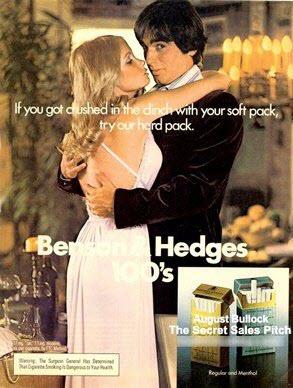
This one could be considered genuinely subliminal; the “hidden message” is barely noticeable until highlighted. For a side-by-side comparison with the concealed visuals highlighted, you can see it here. (You were warned!) The ad leaves little to the imagination once you spot it.
Gilbey’s Gin
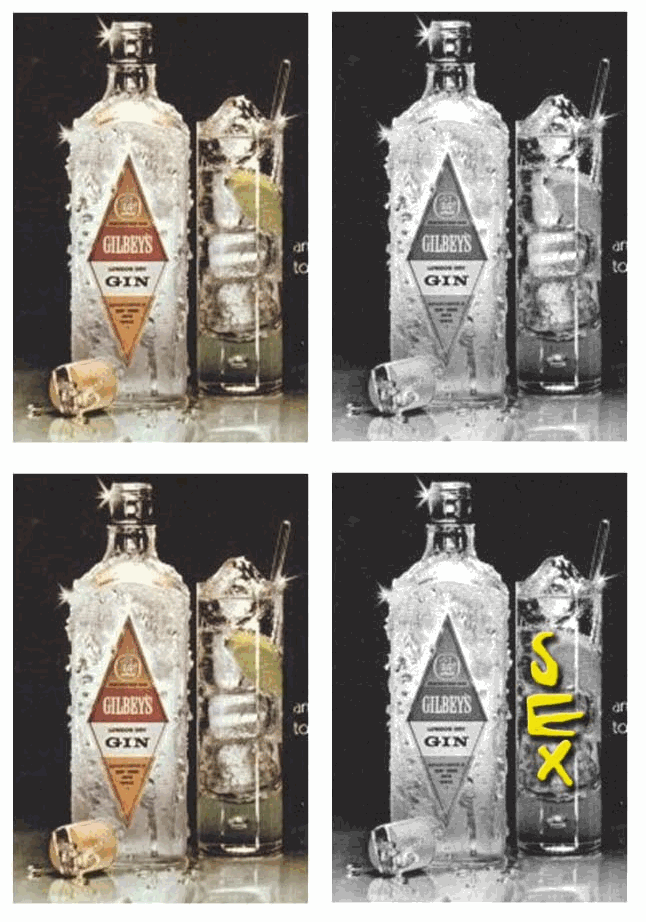
Although not as renowned as brands like Beefeater or Gordon’s, Gilbey’s gin has been around since 1857. While the distillery itself might not be the most famous, their signature gin certainly made an impact in the late 1970s with their controversial ad campaign. Like many on this list, Gilbey’s experimented with subliminal advertising to boost sales. And, like others, it’s surprisingly obvious – once pointed out.
Coca-Cola
Coca-Cola also faced accusations of using suggestive imagery in their ads during the mid-1980s when someone spotted a suggestive image on the back of a truck. To avoid offending readers, we have chosen not to display the ad here. If you’re curious, you can you can see it here. Rumor has it that the artist responsible included the image as a prank and that Coca-Cola was unaware of it until the initial complaint. This incident led to Coca-Cola firing the artist and pursuing legal action. The company was also forced to recall countless promotional materials. Today, this particular ad is a sought-after collector’s item among vintage advertising enthusiasts.
4. Food Network’s Fast-Food Fracas
In 2007, during an episode of Food Network’s popular show, Iron Chef America, the McDonald’s logo was flashed on-screen for a split second - brief enough to go unnoticed by most viewers but long enough for some eagle-eyed cooking show fans.
Both Food Network and McDonald’s denied the accusation that they had colluded on a secretive subliminal ad campaign. Food Network representative Mark O’Connor stated that, “It was a technical glitch, not a subliminal message as implied by a website that played it in slow motion.” McDonald’s was even more direct in their denial, stating, “We don’t engage in subliminal advertising.”
5. Wendy’s Family Values
Speaking of fast-food giants, our next example comes from Wendy’s. When Wendy’s revamped their classic, albeit slightly unsettling, logo a few years ago, observers noticed a subtle detail—the word “Mom” seemingly incorporated into the design. Like the Amazon A-to-Z or the FedEx arrow, it becomes obvious once pointed out:
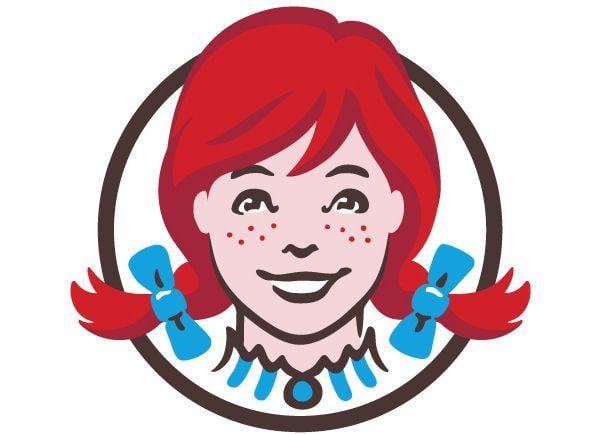
This instance differs from the previous examples. It doesn’t directly use a slogan or tagline. Instead, it aims to exploit word association to evoke a positive feeling in the viewer’s mind. However, the lack of a hard sell doesn’t make it any less unsettling. It’s difficult to associate a nationwide fast-food chain with wholesome family meals or genuine family connections.
6. KFC’s 12th Secret Ingredient
Sticking with the theme of strangely familiar fast-food mascots, our final example involves The Colonel and his KFC franchise. In 2008, a sharp-eyed viewer noticed something peculiar in a visual of KFC’s new Snacker sandwich:
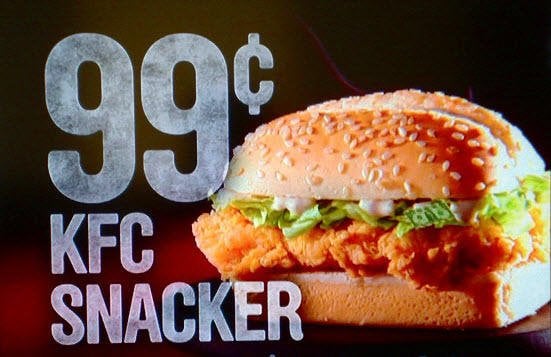
Yes, that’s a dollar bill nestled among the lettuce. This example was particularly controversial. For starters, the person claiming to have first spotted the hidden dollar bill was suspected of fabricating the whole thing to drum up business for his market research company - a shining example of American entrepreneurial spirit. Moreover, this wasn’t KFC’s first attempt at such a tactic, having run a similar campaign in 2006 for their Buffalo Snacker sandwich. Whether KFC has employed such strategies since then remains unknown. Since the effectiveness of subliminal advertising has been repeatedly questioned, it’s debatable whether it would even be worthwhile. However, KFC certainly has a sense of humor when it comes to their branding. Our attention was recently drawn to KFC’s Twitter profile, specifically who they follow.
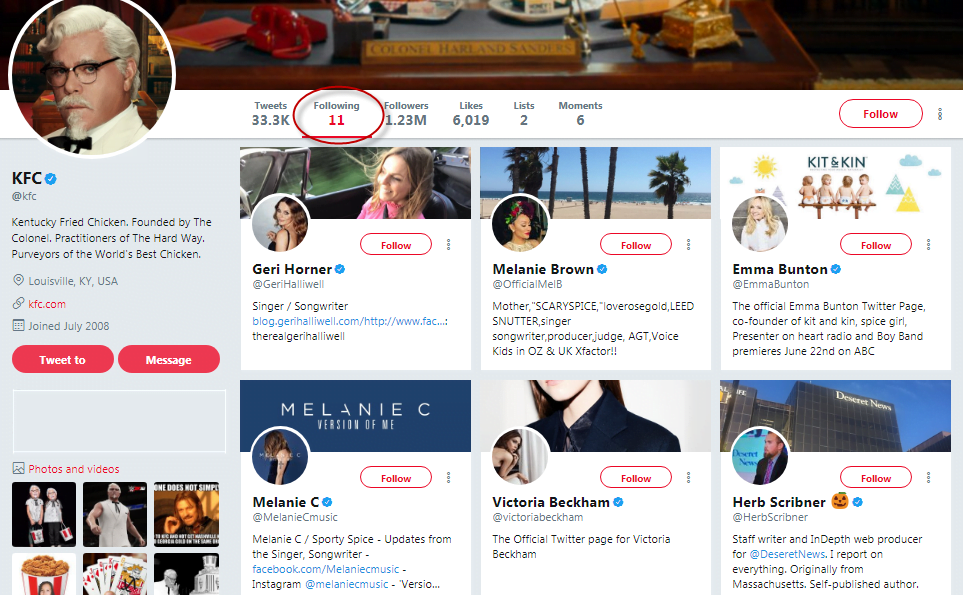
KFC follows only 11 accounts: all five Spice Girls and six individuals named Herb. Get it? 11 Herbs and spices? What other instances of subliminal messaging have you encountered? Do you believe this type of messaging is effective?