Regardless of your industry or budget, certain principles consistently prove valuable when managing campaigns on the Google Ads Display Network. While each account performs uniquely, and strategies should be tailored to specific objectives, some common pitfalls repeatedly emerge. Fortunately, these errors are avoidable. Here are six prevalent Google Display Network mistakes and how to prevent them:
- Merging display and search campaigns
- Integrating remarketing audiences into awareness campaigns
- Neglecting appropriate exclusions
- Overlooking placement reports
- Becoming complacent with targeting options
- Ignoring column customization in Google Ads
1. Merging display and search campaigns
Initiating display campaigns concurrently with search campaigns in your Google Ads account reflects a proactive top-of-funnel marketing approach. However, maintaining complete separation between display and search campaigns is crucial. While Google Ads automatically opts search campaigns into the Display Network to enhance reach, this option primarily serves smaller businesses lacking time for extensive campaign management or marketers unfamiliar with best practices.
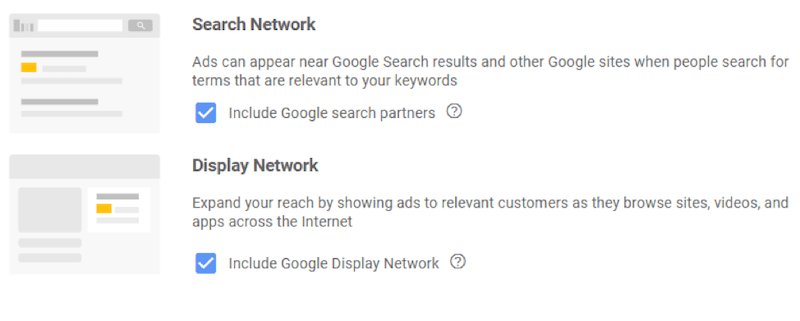
This default inclusion often benefits those less experienced or lacking time. However, consider user intent. Individuals using Google.com for specific searches exhibit higher intent compared to those encountering ads on random websites. Consequently, significant disparities in CTRs, CPCs, conversions, conversion rates, and CPAs are observed across these networks. Therefore, consistent separation is recommended. Although users on both networks might be new to your brand, their intent differs. Capitalizing on lower-funnel users necessitates distinct strategies from those employed to reach new audiences, and maintaining this distinction is vital.
2. Integrating remarketing audiences into awareness campaigns
Messaging for individuals who have interacted with your brand should differ from that presented to new users. Remarketing allows for more direct sales messaging to encourage specific actions. Conversely, top-of-funnel display campaigns necessitate a less aggressive approach. Therefore, segmenting audiences into separate campaigns is advisable.
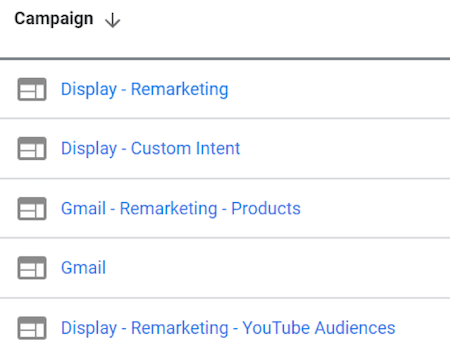
New user audiences often perform differently than those already acquainted with a brand. Utilizing separate campaigns with distinct budgets allows for better performance control. To maximize user segmentation, implementing various remarketing audiences as exclusions in pure awareness campaigns is recommended. If remarketing campaign ad groups target user actions, YouTube engagements, or page visits, excluding these users from new user campaigns is crucial. In addition to remarketing audiences, incorporating customer lists and audiences from specific conversion actions further enhances segmentation. This approach facilitates better control over creatives, landing pages, and budgets, ultimately contributing to clients achieving their business goals. RELATED: 4 Settings in Video Ad Campaigns That Could Be Wasting Your Budget
3. Neglecting appropriate exclusions
While excluding remarketing audiences from top-of-funnel awareness campaigns is essential, exploring exclusions in greater depth is crucial. When setting up or modifying display campaigns, content exclusions are available. These default content category options help align display ads with content appropriate for the brand and target audience.
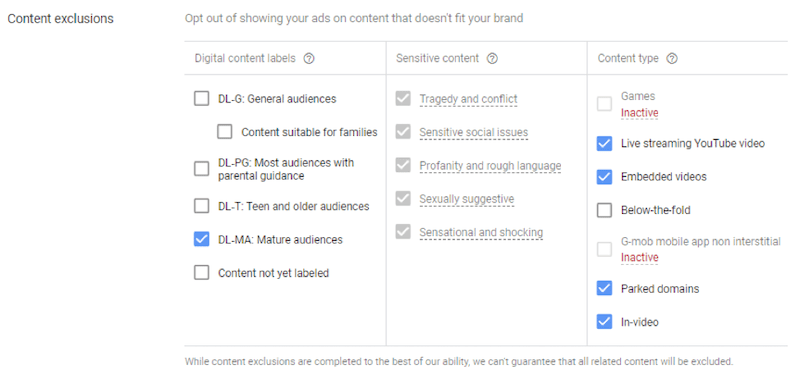
Excluding ads from websites, YouTube videos, or apps related to specific content types is possible. The sensitive content options, although selected by default, appear grayed out, indicating their exclusion at the account level. To modify these settings, navigate to “All Campaigns,” then “Settings,” and choose “Account Settings.” Proactively excluding sensitive content from display campaigns before launch is recommended to save costs and potentially avert PR issues. Moreover, leveraging Google Ads dynamic exclusion lists streamlines placement management, saving valuable time.
4. Overlooking placement reports
Proactively utilizing category exclusions at the campaign level helps ensure ads appear on suitable placements. However, this does not negate the need for continuous placement report monitoring. Establishing a consistent schedule to review ad placements is vital, particularly when not utilizing managed placement targeting.
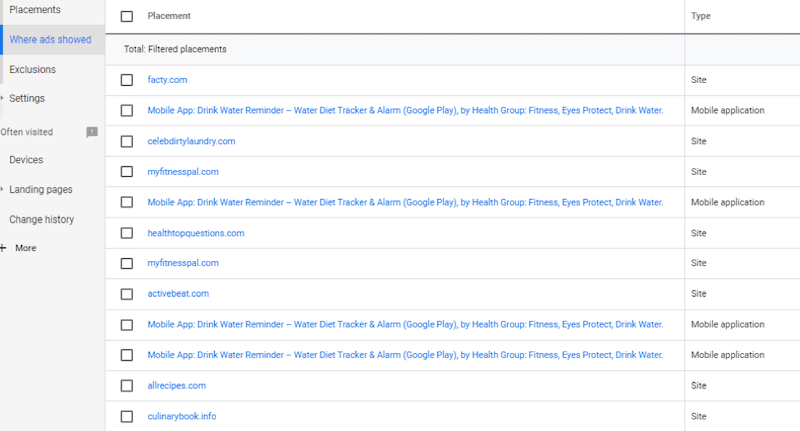
The Placement Report’s “Where Ads Showed” section provides insights into ad placements. Neglecting higher-level category exclusions might result in broader, potentially underperforming placements appearing frequently. Options include excluding individual placements or identifying underperforming placement themes to justify adding higher-level category exclusions. Since diligent PPC marketers continually test new targeting options (discussed further below), revisiting Placement reports regularly is crucial to assess placement performance changes following optimizations.
5. Becoming complacent with targeting options
Utilizing the same targeting options without experimentation is another pitfall. Even with consistently effective basic targeting options, striving for improvement remains essential. While Display Planner is no longer available, creating Custom Audiences within the Audience Manager tool provides numerous testing opportunities. Custom intent audiences are particularly effective for video and display awareness campaigns. Furthermore, Google provides advertisers creating custom intent audiences for display with a list of recommended keywords, a feature absent when creating them for YouTube.
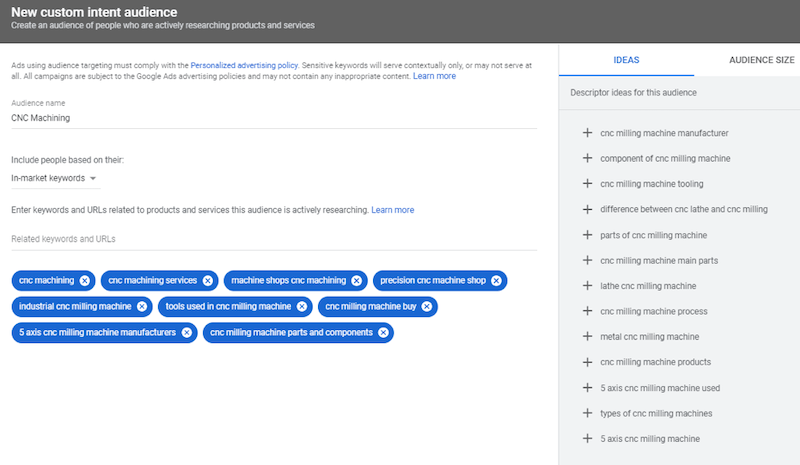
If you find yourself short of custom intent audience ideas or unsure where to begin, Google offers additional options. During audience research, auto-created custom intent audiences based on remarketing lists, Search Network campaigns, website content, user behavior, and more are suggested. These have proven effective when fresh ideas are scarce.
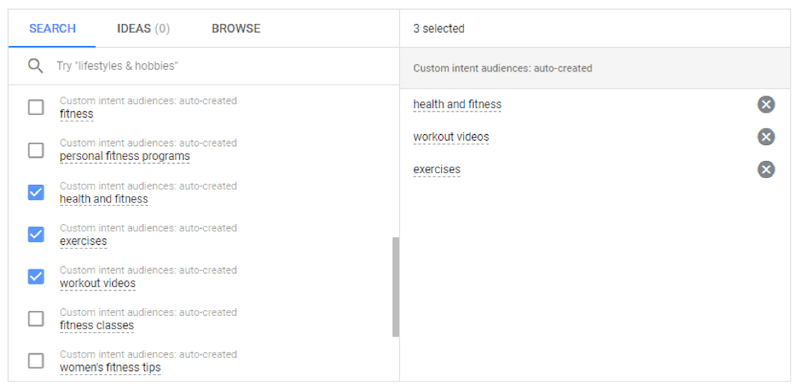
Testing new options from broader categories like Topics or Affinity Audiences remains beneficial. Starting with specific audiences before expanding reach is always recommended. While finding successful targeting options is excellent, complacency should be avoided. Continuous testing of new audiences to reach your target customer is key, and custom audiences provide an easy avenue for ongoing display experimentation.
6. Ignoring column customization in Google Ads
Given the differences in user intent between Search and Display Networks, performance evaluation should also differ. While direct conversions from display campaigns are achievable with the right targeting and creatives, many industries may not experience this due to long sales cycles or high-priced items. However, a lack of immediate conversions after viewing display ads does not signify their ineffectiveness.
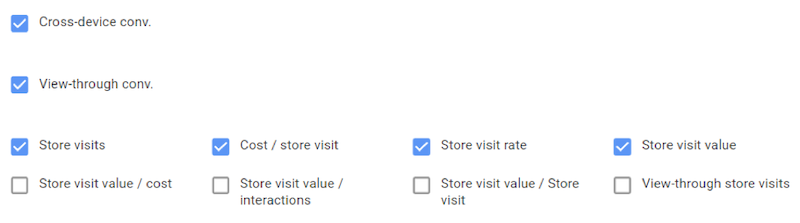
Adjusting Google Ads columns can reveal eventual conversions influenced by display ads. View-through conversions and Cross-device conversions are particularly insightful. View-through conversions occur when a user converts later on despite not interacting with a display ad impression. Conversely, cross-device conversions happen when a user interacts with an ad on one device but converts later on a different device or browser. These metrics highlight the potentially substantial impact of display ads beyond direct conversions. Relying solely on direct conversions for success measurement might provide an incomplete picture. Since most users won’t convert after a single ad interaction, understanding the role of display ads in nurturing users towards eventual conversion necessitates a reevaluation of performance assessment.
Don’t make these Google Display Network mistakes!
Recognizing the uniqueness of each account and the potential inapplicability of all recommendations to every situation is crucial. However, these recommendations offer a solid foundation for Google Display Network campaigns. Utilizing these principles and analyzing the resulting data empowers marketers to implement optimizations aligned with specific account goals. For more insights on avoidable errors, explore common pitfalls related to fine-print settings in video ad campaigns!