Following the 2008 economic crisis, as the Marketing Manager for a 250-store buying and marketing group of independent car electronics and accessories retailers, we learned a vital lesson: consistent business promotion is key. This remains true even when resources are limited.

Limited marketing budgets necessitate strategic prioritization. Here are some insights I’ve gained to maximize small marketing budgets for small businesses.
Tip #1: Establish a Marketing Budget
A non-existent marketing budget cannot be stretched. I’ve encountered small businesses that previously allocated no resources to marketing, and unsurprisingly, these retailers weren’t reaching their full potential.

During the recession, many small businesses, including retailers in our sector, drastically reduced or eliminated their promotional budgets. It’s understandable – with consumers tightening their belts and purchasing less, why pour money into what appears to be a bottomless pit of marketing materials? The reason is simple: people eventually found new jobs, regained disposable income, and, crucially, resumed spending. As the economy rebounded (in most markets), retailers who maintained consistent messaging and promotional efforts, even during tough times, gained a significant edge over competitors who had waited for better conditions. In certain instances, our post-recession promotional retailers surpassed their quieter, non-promotional counterparts by simply being the sole voice for consumers in their market. Integrating marketing into your small business budget is essential. So, open up Excel and start budgeting!
Tip #2: Focus on One Social Media Platform and Excel
I recall the widespread panic among small business owners I collaborated with when Google+ emerged. The same panic resurfaced with the rise of Instagram and Pinterest, and now with SnapChat. How can an already overwhelmed small business owner or marketer find the time and resources to manage countless social media business pages while struggling to maintain just one?

Take a deep breath and calm down. Assess your resources honestly. Can you realistically achieve your desired social media results by spreading yourself thin across multiple platforms? If your answer is no, I have encouraging news. My tested and proven recommendation is to select one or two platforms and become highly proficient on them. By concentrating your time and resources on a streamlined social strategy, you can consolidate your efforts from various scattered platforms into a more focused and manageable approach. I can’t dictate which social media network to choose, as that depends on your business. However, most B2C businesses I’ve advised opt for Facebook, Instagram, or both, while B2B businesses typically lean towards Twitter, Facebook, or LinkedIn. When facing pressure to advertise on every new platform like SnapChat, remember it’s okay to decline – your sanity will thank you.
Tip #3: Embrace Paid Social Media Strategies (Organic Reach Alone Isn’t Enough)
Let’s assume that, after considering tip #2, you chose Facebook as your primary social media focus. It’s a solid choice, being the most popular social network in the US. However, the era of effective free advertising through Facebook business page posts is long gone. The silver lining is that Facebook advertising and boosted posts are both highly effective and budget-friendly.
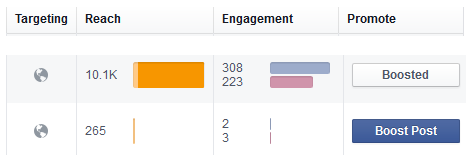
Insights from a boosted Facebook post by Columbus Car Audio, a specialty retailer with approximately 5,000 likes_ The screenshot above clearly demonstrates the performance difference between a boosted post and an unpaid one. This $30 boosted post, promoting car remote start systems, ran during a sudden snowstorm. To be absolutely clear, that’s only thirty dollars. It achieved a reach of 10,000 people, received 531 clicks, and garnered 55 comments. Talk about making the most of a snowstorm! You might have also noticed the subsequent post, which, without boosting, only garnered 265 views and 5 engagements. While the boosted post cost 30 times more than the organic one, it reached 38 times more people and generated a staggering 106 times more engagement. Boosting posts isn’t the only avenue for paid promotion on Facebook. Columbus Car Audio invests roughly $300-$500 per Facebook ad campaign, generating an average of 57 leads per campaign with an 8% conversion rate. Given that the average transaction value for a 12-volt retailer is around $1500 (often higher!), their ROI from Facebook ads is quite impressive. Now, let’s supplement these “statistics” and “charts” with some good old-fashioned anecdotal evidence. When asked about their thoughts on paid versus organic social media content, Columbus Car Audio shared, “Paid content undoubtedly outperforms organic posts. We consider Facebook ads one of our most successful advertising endeavors and have significantly increased our campaign budget in 2016.” A big thank you to Columbus Car Audio for sharing their insights and successes!
Tip #4: Prioritize Email Marketing over Direct Mail

We often stick to familiar practices simply because they’re comfortable and ingrained in our routines. I’ve encountered businesses still advertising in printed phone books (apparently, those still exist) and others clinging to direct mail instead of embracing email marketing. In this great article, Harvard Business Review conducted a comparative analysis of direct mail and email marketing. Their case study concluded that direct mail is approximately 100 times more expensive than email marketing, while email marketing campaigns yielded an ROI about 95 times higher. The most common barrier I hear regarding email marketing is either “I don’t have a list” or “my list is too small, and I don’t know how to expand it.” Building a list is achievable, and it can be done affordably.
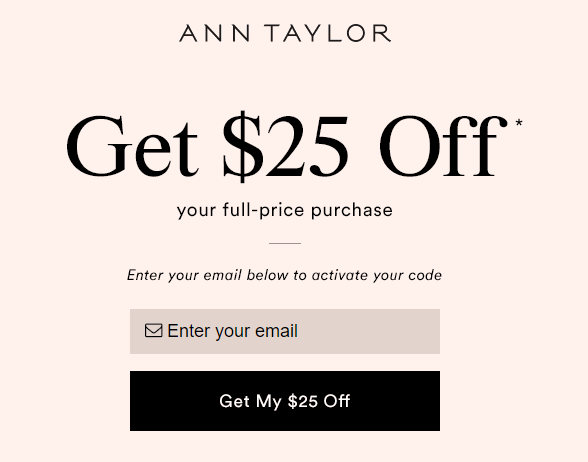
Gather email leads on your website or during checkout by clearly communicating the value proposition of subscribing to your newsletters (ensuring there is actual value). In-person point-of-sale email acquisition is inexpensive and merely requires training your staff to collect this information. Whether offering product discounts, valuable content, or other exclusive offers to subscribers, be transparent and specific. Don’t resort to tricking customers into sharing their email addresses or purchasing dubious lists. Your aim is to attract and retain genuine customers, not to win an award for the largest email list or have your IP address blacklisted. Technical Tip: With According to HubSpot indicating that 80.8% of users read emails on mobile devices, ensure your email blasts utilize or are built with a mobile-optimized template once you’ve gained subscribers.
Tip #5: Embrace Creative Visual Content (and Produce It Cost-Effectively)
Incorporate promotional content creation into your daily operations—things you’re already doing—to save both time and money. Encourage everyone in your business to participate in generating visual promotional content.
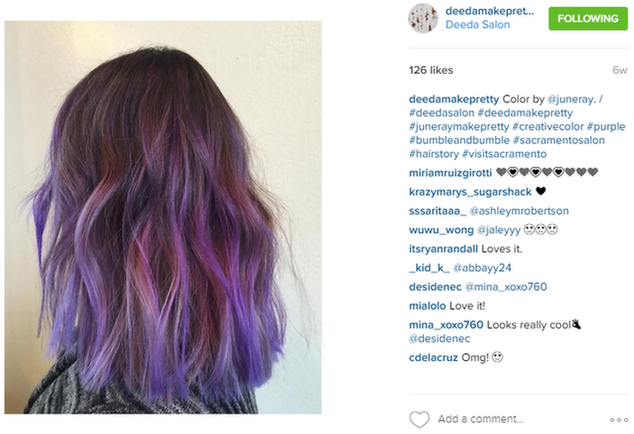
A shout out to the amazing team at Deeda Salon in Sacramento, CA Take a hair salon as an illustration: Encourage stylists to photograph their work and share it on Instagram using relevant hashtags to make your content discoverable, even to those not following your account. Utilizing a tool like Sprout Social or Hootsuite allows a manager to oversee content approval. This approach often results in a surplus of content, all generated without incurring additional costs. And why limit yourself to still images when video is also an option? While I appreciate professional film crews and agency actors, not all (or realistically, any) of your video content needs to be a Hollywood-scale production. You own a phone with a camera, right? Of course! Use it to film (consenting) customer testimonials, create photo showcases of your work, provide behind-the-scenes glimpses into your business, or simply talk about your expertise on camera for a few minutes. Utilize photo and video editing apps directly on your phone (I recommend iMovie for iPhone and Snapseed photo editor for Android or iPhone) and start promoting! If your smartphone falls short for specific projects, consider investing in a DSLR camera—they offer excellent affordability and produce exceptional image and video quality.
Bonus Tip: Invest in Paid Search Strategies Too
I’ve witnessed retailers solely relying on SEO strategies jump from page 2 to page 1 and secure the top position after allocating resources to paid search. Whether you’re new to search and display ads or aiming to refine your existing strategy, exploring resources like PPC University can provide valuable tips for getting started and maximizing your AdWords budget.