Over the past few years, Google has consistently introduced major updates during the spring season, primarily focusing on mobile. A notable example was the 2013 announcement of Enhanced Campaigns, which replaced the previous practice of separate desktop and mobile campaigns. Since then, each year has brought a wave of new mobile ad formats and features, and this year is no exception. Google remains committed to a mobile-first approach, reflected in the evolving Search Engine Results Page (SERP) design that prioritizes the mobile user experience. Consequently, paid advertisements must also adapt to this mobile-centric environment. Today, Google announced exciting new changes to Google Ads (formerly AdWords), to be implemented in the coming months, that demand the attention of PPC marketers. Yesterday, I had the opportunity to attend the Google Performance Summit and receive an exclusive preview of the latest ad formats and features coming to Google advertising. Here’s a comprehensive overview of these significant upcoming changes to Google Ads. Check out: Industry Reactions to the Big News from #GoogleSummit
1. New Local Search Ads to Appear on Google Maps
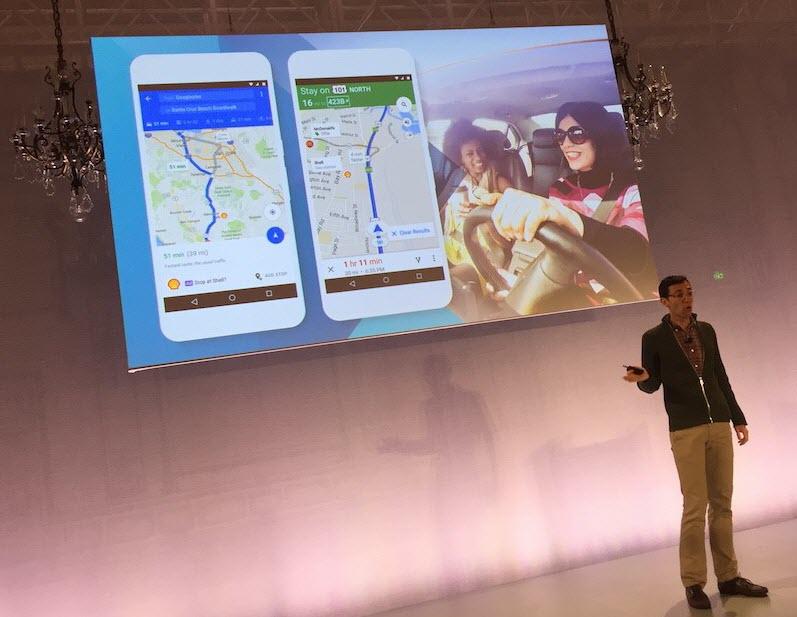
Last month, my colleague Erin Sagin discussed Google’s announcement about integrating Maps into the Search Network, predicting a significant increase in ads displayed on the platform. Her prediction proved accurate. Google has unveiled what it refers to as the “next generation” of local search ads. These new ads will be featured within Google Maps (on both the app and the desktop and mobile website versions), as well as across Google.com. Unlike the previous placement alongside the map, the new ads will showcase brand logos and offers directly on the map’s surface. For instance, searching for [electronics store] on Google Maps could yield the following:
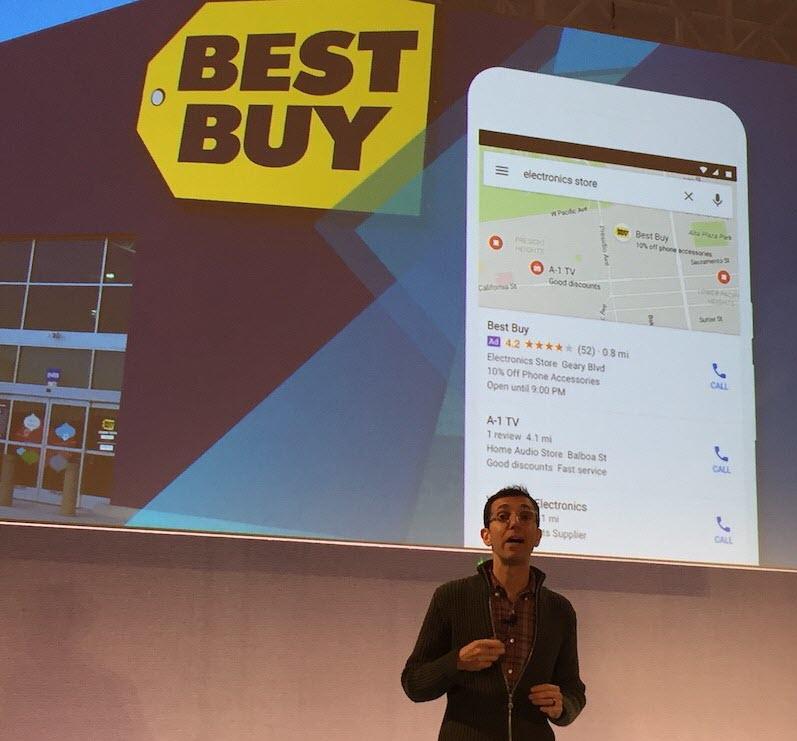
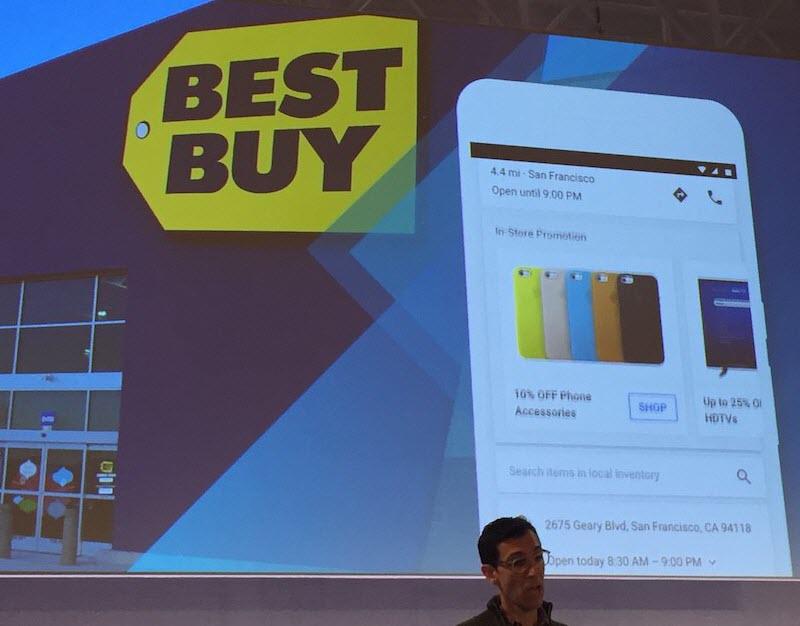
Notice Best Buy’s logo prominently displayed on the map. Clicking on it leads to this mobile local inventory ad format:
Why the Focus on Google Maps?
Google Maps boasts over a billion users, with 1.5 billion destinations visited based on Google searches. As Google highlighted, location-based searches constitute:
- Almost a third of all mobile searches.
- A growth rate 50 percent faster than overall mobile searches in the past year. To further drive online traffic from Maps to local businesses, Google is developing additional ad formats, such as promotion pins. Here’s an example of a promotion from Walgreens:
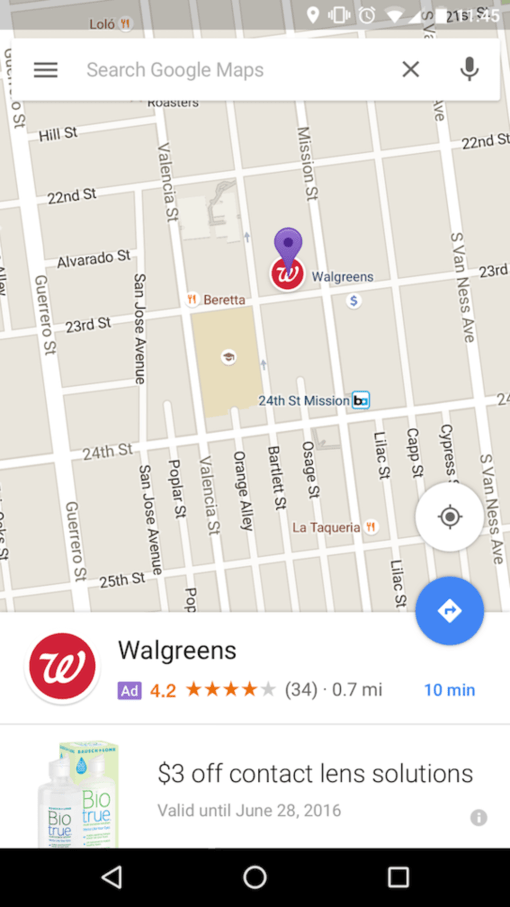
An offer for $3 off contact lens solution is prominently displayed below the map and local store information. Furthermore, Google is revamping local business pages. Two noteworthy changes include the ability for advertisers to highlight in-store promotions and for users to search local inventory. Take a look:
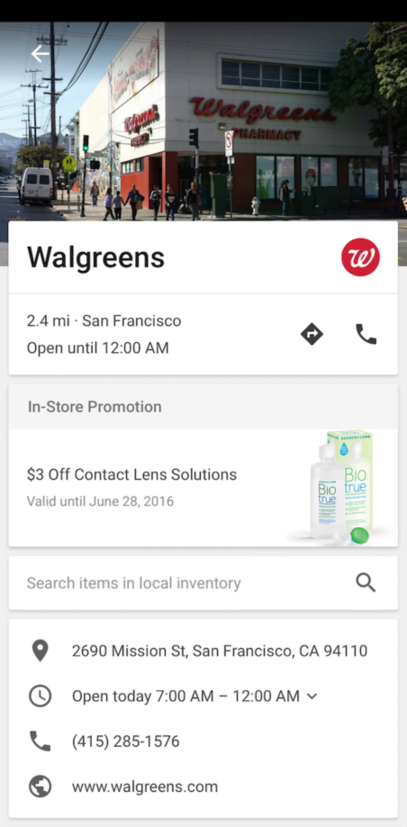
This seamless integration allows advertisers to incorporate logos and offers effectively. However, ad targeting in this context is somewhat intricate. While ads are displayed based on search queries, Google is also considering several other contextual signals (similar to display advertising), including personal browsing history, similar user behavior, time of day, interests, and overall online activity. This strategy is expected to generate a substantial amount of local ad inventory. I personally use Google Maps frequently – while not as much as search, it’s equally likely I’ll turn to Maps or Search when seeking local businesses. For more comprehensive coverage of Google Maps Search Ads: 10 Things You Need to Know About the New Google Maps Local Search Ads
2. Expanded Text Ads Get Double Headlines & More Characters
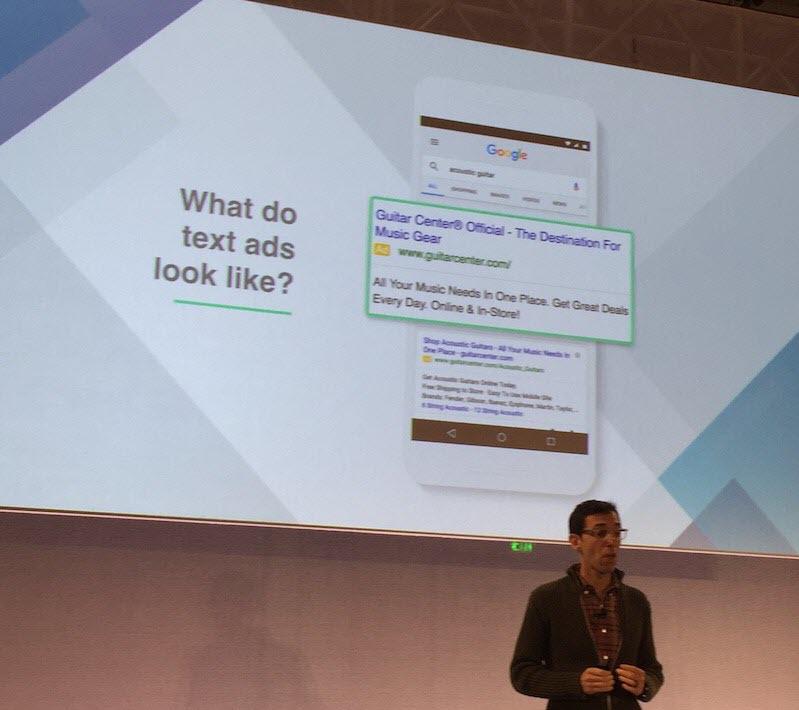
In February, Google removed right-side ads from the desktop SERP to create a more consistent user experience across devices. Now, text ads are about to undergo a significant transformation.
 ETAs are no longer!
Download our free guide to responsive search ads: 10 Tricks to Get the Click
- RSA best practices cheat sheet
- RSA copywriting template
- 10 tricks to improve your click-through rate (with examples!)
Prepare for larger headlines with the introduction of new, expanded text ads. Advertisers will soon have the option to utilize two 30-character headlines, a substantial increase from the previous single 25-character headline. Early tests conducted by Google revealed a remarkable increase in CTR – reaching up to 25 percent. Here’s a visual comparison between the old ads and the new expanded text ads on both mobile and desktop:
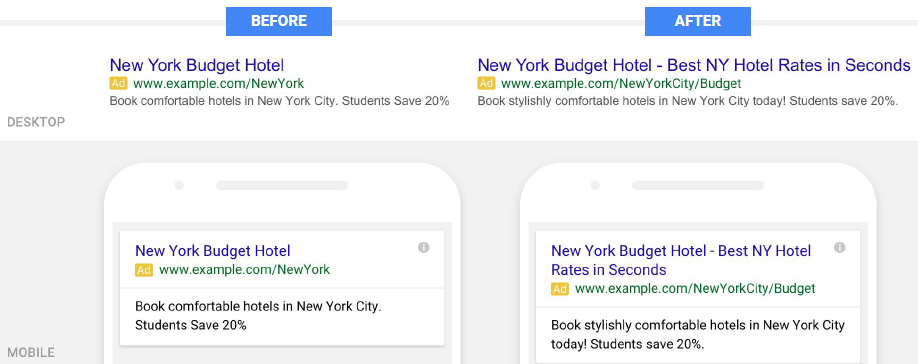
At nexus-security, we’ve observed that incorporating ad extensions or call extensions into mobile text ads typically results in a CTR increase of around 12 percent. Therefore, it’s logical to expect even higher CTRs with double headlines. In addition to increased clicks, Google anticipates that these longer headlines will be more beneficial for advertisers, ultimately leading to better-qualified traffic. This change is monumental – both figuratively and literally. Considering the limited screen real estate on smartphones, this headline expansion is fantastic news for advertisers (though perhaps less so for those relying on organic results). Moreover, Google is expanding the character limit for the description line. Advertisers will soon be able to craft a single 80-character description line, a 5-character increase from the current two 35-character description lines. Additionally, the display URL will be automatically extracted from the final URL, eliminating the need for manual input. Advertisers can then enhance the display URL by adding one or two paths. It’s crucial to note that these larger ads are being rolled out for both mobile AND desktop platforms. Capitalize on this opportunity swiftly to stay ahead of the competition. For a more detailed understanding of the new ads, refer to this post: 10 Things You Need to Know About Expanded Text Ads.
3. Better Measurement of In-Store Conversions
While you may be aware that clicks on your AdWords ads are driving traffic to your local business, accurately quantifying this impact is crucial. Google Ads is now enhancing its capabilities to bridge the gap between the digital and physical realms by measuring in-store conversions. Although not entirely new (Google reports over a billion store visits measured in the past two years), this development remains significant. In-store conversions will soon become accessible to a wider range of businesses, which is critical considering that 90 percent of sales are projected to occur in physical stores, as opposed to online. Impressively, Google leverages phone location history to determine if a user who searched and clicked on your ad subsequently visited your store. As a testament to its effectiveness, Google cited Nissan UK, which discovered that 6 percent of users who clicked on their ads visited a dealership, resulting in a 25x ROI.
4. New Responsive Display Ads
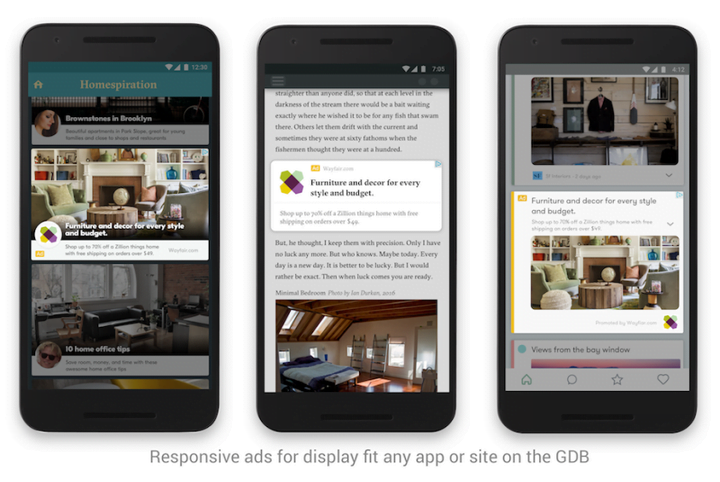
Prepare for the arrival of Responsive Display Ads. Soon, you’ll only need to provide Google with a URL, headline, description, and image, and Google will handle the creation of responsive display ads for you. These ads will dynamically adapt to the content of websites and apps within the Google Display Network (GDN), including native ad inventory. This is an incredibly convenient feature, eliminating the tedious task of designing ads for various formats (skyscraper, leaderboard, square, rectangle, etc.). Google simplifies the process with Responsive Display Ads, automatically determining the optimal format for your ad based on its placement. Expect these changes to be gradually implemented throughout the year.
5. Changes to Device Bidding
Finally, Google Ads is introducing adjustments to the bidding process. Currently, advertisers set a base desktop bid and then apply mobile bids as a multiplier to this base bid. This system was introduced with Enhanced Campaigns. (Tablet bidding is currently tied to desktop bidding, a point of contention among many PPC professionals, despite tablet searches only accounting for approximately 5% of traffic and showing minimal growth.) Moving forward, these elements will be decoupled. Advertisers will have the flexibility to set mobile, desktop, and tablet bids independently or interdependently. This change empowers advertisers with greater control and further reinforces Google’s mobile-first philosophy (why prioritize desktop bids when the landscape is shifting towards mobile?).
A Note on the Updated Google Ads Interface
At the Performance Summit, Google also provided a sneak peek of the redesigned Google Ads interface, scheduled for release in 2017. You can find a more comprehensive analysis of the new design and features in this post.
Get More Info in My Webinar
We live in an undeniably mobile world. Over 50 percent of the trillions of searches conducted on Google annually originate from mobile devices. Consequently, Google consistently innovates in the mobile realm to deliver a compelling user experience and ensure advertisers can effectively reach consumers at crucial moments. At a minimum, leveraging mobile ad formats and adapting to these forthcoming formats is essential to attract and convert mobile searchers actively using commercial search queries and seeking immediate business solutions.