As the world recovers from the COVID-19 pandemic, businesses are reopening, and online advertising is picking up again. For digital marketing agencies, this means your clients, who may have paused or reduced their advertising, should start thinking about increasing their spending. This document outlines how to effectively increase spending on Google Ads and, more importantly, how to communicate the benefits of doing so to your clients. Many businesses are naturally hesitant to spend money on advertising right now due to the economic impact of COVID-19, so sensitive and transparent communication is crucial.

Whether you’re seeking advice for client conversations or guidance on reactivating their accounts, this information can help. Here are five data-driven talking points that we’ve found effective when guiding clients through COVID-19.
1. Analyze paid search conversion data
While this point is brief, it’s a good starting point for conversations with your clients. Although keyword searches and conversion rates dropped significantly in late March and early April, there was a substantial rebound starting in late April. In fact, by the second half of April, Google search conversions had recovered to nearly 90% of their pre-COVID levels.
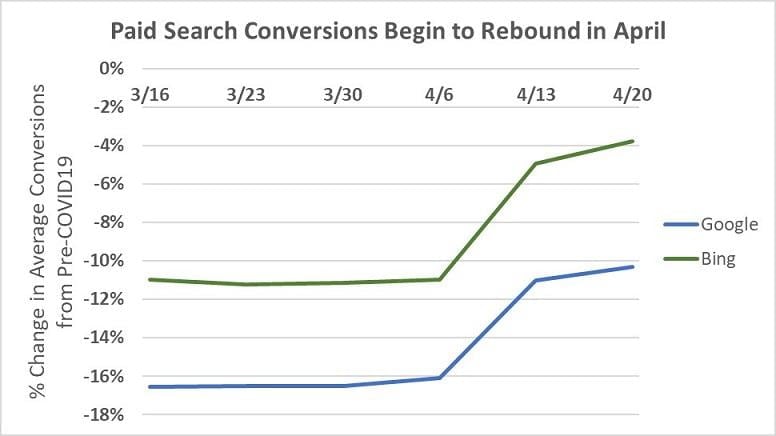
This presents a valuable opportunity for your clients, particularly because many competitors may not be advertising as actively as they were before the pandemic. This leads to the next point.
2. Utilize Auction Insights for competitive analysis
While general trends are informative, clients are primarily concerned with their specific situation. Google’s Auction Insights have always been valuable for competitive analysis, but they’re even more useful now because they can demonstrate opportunities created by competitors who have reduced or paused their advertising. Begin by presenting your clients with their Auction Insights data from a pre-COVID timeframe. Here’s an example illustrating an account’s impression share compared to its competitors in February and early March:
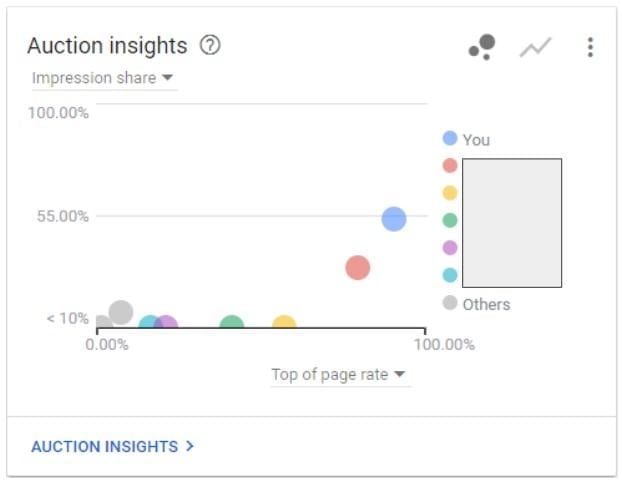
Next, compare this to recent data that shows the impact of COVID-19. Here’s the same account’s impression share compared to its competitors from April 1 to May 18:
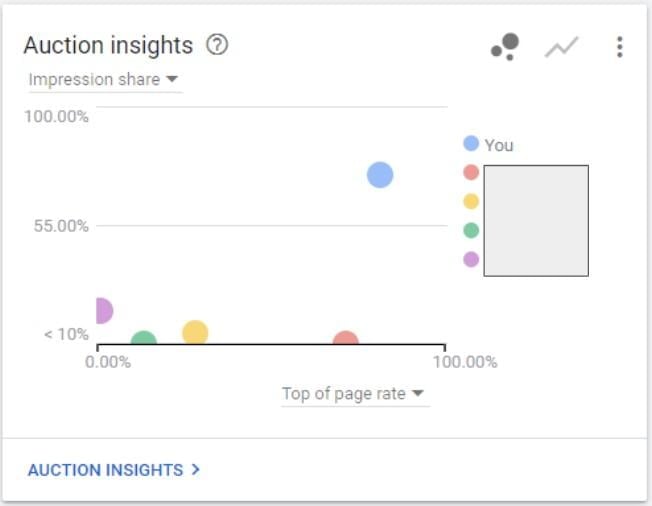
In this example, the account’s main competitor has practically vanished, causing the account’s impression share to skyrocket even with a considerably lower ad spend. If you can find a similar scenario in your client’s account, it clearly demonstrates the benefits of increasing their spending or reactivating certain campaigns.
3. Discuss strategy adjustments for account reactivation
The world of online advertising has always been dynamic, and keeping pace with changes is an ongoing challenge. In recent months, changes in online behavior have accelerated alongside other large-scale changes. For many clients, keeping up with these changes can feel impossible, especially during a pandemic. They may see pausing advertising as a simpler, less risky option. This is where you come in. As an agency, you can guide your clients through these changes and help them use effective advertising strategies to grow their business. Since this will likely be the most complex and detailed conversation, here are key strategies to demonstrate that you’re up-to-date and capable of keeping their account current. Here are also some ways to understand your clients’ post-pandemic customers, who have undoubtedly changed.
Leverage Google Trends to analyze search term shifts
For many industries, search terms related to their products or services may have changed significantly due to the pandemic. Google Trends can provide these insights, allowing you to examine the volume of your clients’ main keywords and compare them against terms that have become more popular. Here are two examples illustrating significant shifts in search terms related to the restaurant and fitness industries.
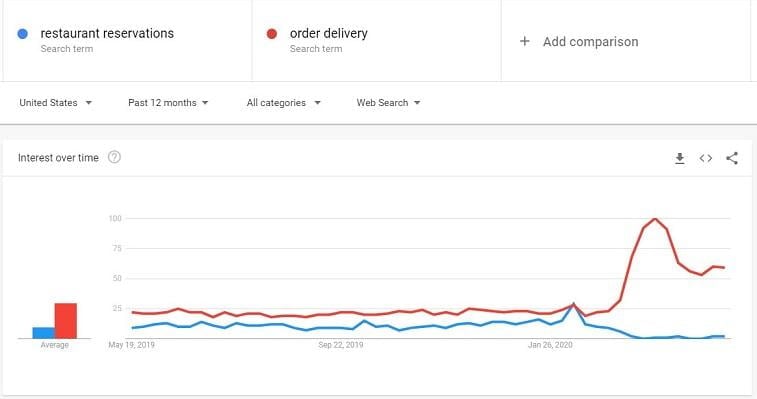
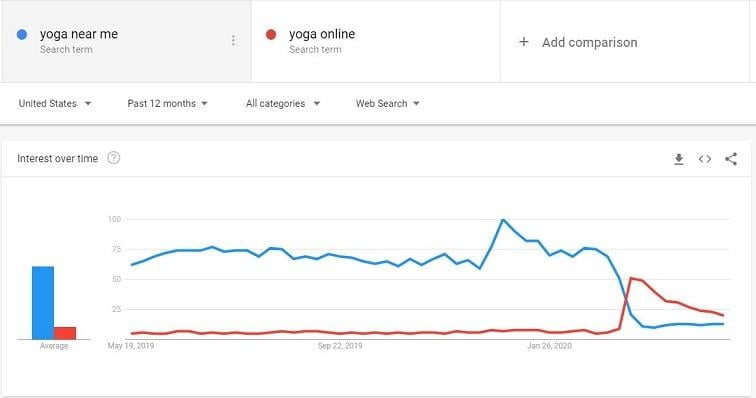
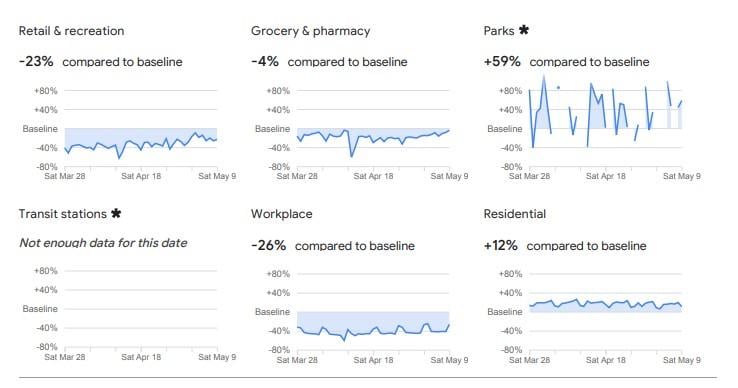
This tool can also filter by state, so you can analyze trends in your clients’ target geographic areas. By comparing their core keywords with new relevant search terms, you can demonstrate that you understand the traffic shifts and are prepared to adapt. For national advertisers, analyzing these trends at a regional level is crucial because different segments of their target market will experience increased search volume at different times. Google’s Community Mobility Reports provides detailed data on regional movement trends, showing when people in different areas are returning to more typical activity levels, and when reactivating advertising in those locations makes sense.
Prioritize social, display, and other top-of-funnel campaign types
Search ads aren’t the only way for clients to connect with their target customers online. Recent trends suggest this might be a good time to explore other ad types. Facebook’s Q1 2020 report shows that more people are using social media during COVID-19 than ever before, resulting in a new record high for monthly active users. Additionally, the cost of Facebook advertising has decreased during this time. Similarly, ad traffic on Google Display, YouTube, and Shopping increased substantially in April, even as Google search traffic remained lower.
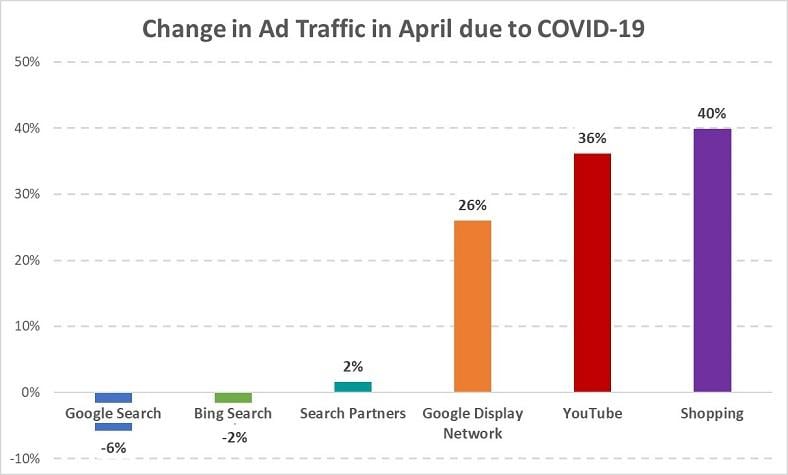
Even if clients aren’t experiencing their usual traffic or conversions from Google Search, maintaining their online presence through these visual, top-of-funnel campaigns is a great way to stay visible to their target audience, who are spending more time online than ever.
Reassess ad copy (and extensions) for relevancy
Before reactivating a client’s campaigns, thoroughly review their ad copy and extensions. While ads can’t explicitly mention COVID-19 (this violates Google’s guidelines), they should emphasize any value propositions offered during the pandemic (such as shifting from in-person to virtual services). Ensure all ad messaging is still accurate and relevant. Callout extensions are excellent for highlighting important details that show clients are adapting to the current situation. Think along the lines of “High Sanitation Standards” for home services businesses requiring employees to enter customers’ homes. Clickable sitelink extensions can also lead to pages on the client’s website that explain their safety measures or operational changes due to COVID-19.
Ensure client websites address COVID-19
When directing traffic to a client’s landing pages through paid ads, ensure their website acknowledges the COVID-19 situation. Some businesses have dedicated pages explaining their operations during the pandemic, while others use banners or blurbs on their homepages. The key is to simply acknowledge the situation and communicate any operational changes or safety protocols. A website without any information about the pandemic’s impact can make a business seem out-of-touch, outdated, or even closed.
Implement the 80/20 rule
The famous 80/20 rule applies to many business situations, and now is a good time to remember it. Analyze the past performance of your client accounts, focusing on the campaigns, ad groups, and keywords that delivered the best results. Prioritize reactivating the top 20% and disregard the rest. This targeted approach reassures clients and positions them for better results by focusing on their account’s strongest elements.
Stay informed about reopening schedules in relevant areas
As countries and states reopen different businesses at varying paces, staying current on each client’s industry and location is essential for determining when to recommend ramping up their advertising. This interactive map from The New York Times not only shows which states have reopened but also provides specifics on permissible business operations. Again, use Google Trends to strengthen your recommendations with data. A search for certain businesses, like those in the beauty and personal care industry, might show only a small increase nationwide.
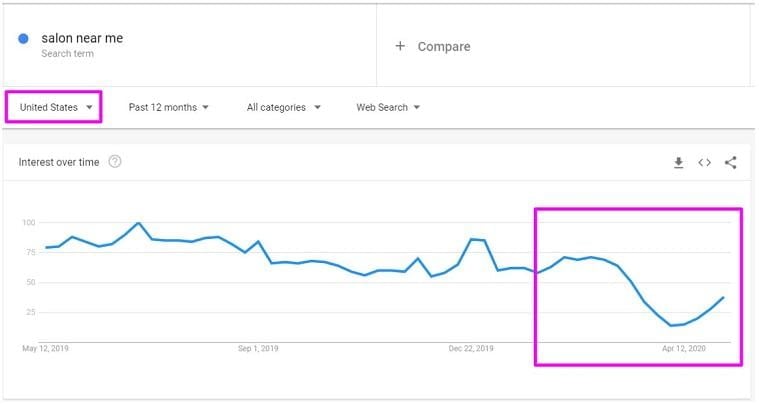
However, viewing the same search at the state-level in a state where those businesses have been allowed to reopen might reveal a much stronger resurgence.
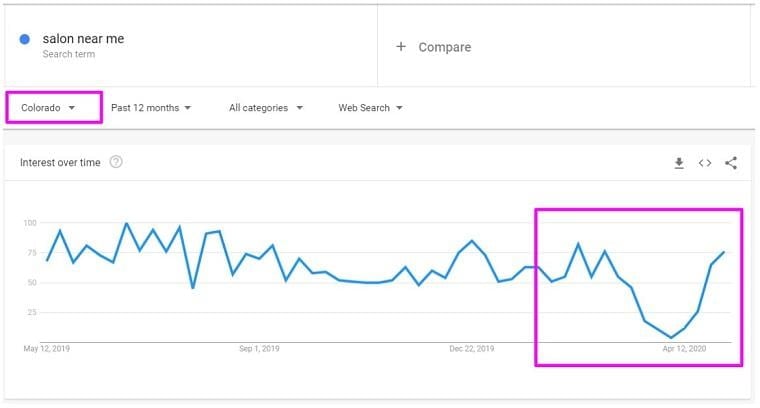
Understanding any restrictions your client businesses face, and when those restrictions are lifted, allows you to recommend a reactivation strategy at the optimal time.
4. Investigate credit eligibility for your client
While offering expert advice and maximizing ROI are essential, nothing beats free advertising. Some ad platforms are providing this to help businesses during COVID-19, and securing these offers for your clients will be highly valuable.
- Google Ads credits for SMBs: Google is offering $340 million in ad credits for SMBs. Eligible advertisers who ran ads for at least 10 months in 2019 and January and/or February 2020 will automatically receive this credit in their account in late May or the following months. For eligibility requirements and more information, visit Google’s FAQ page.
- Free shopping listings on Google: Google is also offering free Shopping listings to help e-commerce businesses benefit from the surge in online shopping during the pandemic. Our blog post on this announcement provides details about this offer and guidance on launching and optimizing Google Shopping listings.
- Facebook small business grants: Facebook announced its small business grant program in late March, and the application period for the United States has ended. However, their page states they’re “still working through eligibility details” for other countries, so this is worth monitoring. The page also mentions upcoming resources for businesses that didn’t receive a grant in the first round.
5. Establish realistic expectations for the reactivation phase
As clients prepare to reactivate their advertising, it’s important to communicate that performance won’t immediately return to previous levels. Their online advertising landscape has likely changed, requiring their accounts to adapt. Emphasize that there will be a learning period. Whenever an account undergoes significant changes, it takes time for the ad platform’s algorithms to adjust to modifications, such as bidding strategies and campaign structures. Here are three additional ways to set expectations for your clients:
Analyze current search volume and compare it to pre-COVID levels
Use Google Trends to compare the current search volume for your client’s primary keywords to the same period last year, and manage expectations accordingly. There may be less available traffic, or the nature of those searches may have shifted (as mentioned earlier). Align client expectations with these developments.
Highlight current metrics using nexus-security’s New Business Center
While primarily used for creating proposals for potential clients, nexus-security’s New Business Center can also estimate traffic and conversion volume for existing accounts. The New Business Center utilizes real-time data for its impression, click, and CPC estimates, as well as its industry benchmarks. This means it reflects the current climate and can help you provide clients with insights into how traffic volume and click prices have changed in their specific industry and location.

Reassure clients that you will closely monitor their accounts during reactivation
Clients might be understandably hesitant about reinvesting in advertising after the uncertainty of recent months. Let them know that you’ll monitor their accounts daily (along with relevant industry, location, and overall advertising trends) to ease their concerns.
Communication with your clients is essential
Now more than ever, it’s crucial for agencies to position themselves as trusted advisors, helping clients invest their advertising budgets wisely and grow their businesses. By following these strategies and keeping clients informed, you can build their confidence in your ability to guide them through uncertainty, effectively reactivate their accounts, and capitalize on new opportunities. Let’s work together! For more advice on marketing during COVID-19, listen to Goal Talk Podcast Episode 15: Updates on Marketing During COVID-19—Data, Reactivation, & More.