For generations, marketers have pondered the driving force behind people’s purchases. You’ve developed a product or service that effectively addresses a clear issue, and you’ve even identified your perfect customer. However, the puzzle remains: what compels a potential customer to transition from contemplation to a firm commitment to buy? And how can you tailor your messaging to resonate with that inner drive?
Today, we’ll delve into the answer. At the heart of every potential buyer lie five core motives. As a marketer or business owner, your task is to craft messaging that powerfully appeals to these hidden motivations, ultimately leading your customer to make the purchase.
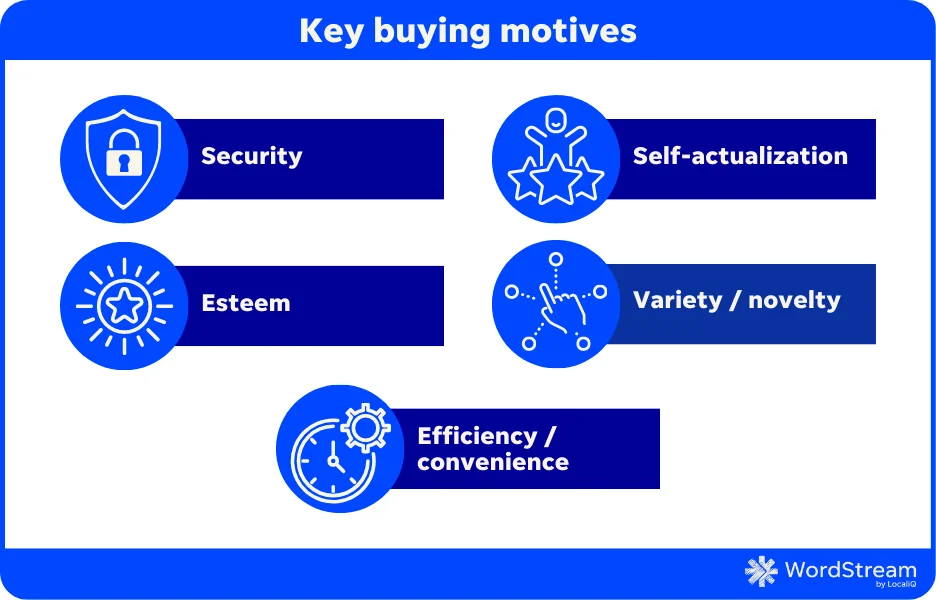 The five key buying motives we’ll explore, in a specific order, are:
- Seeking Security
- Yearning for Esteem
- Striving for Self-Actualization
- Desiring Variety and Novelty
- Prioritizing Efficiency and Convenience Let’s explore each of these.
1. Seeking Security
Chance the Rapper aptly captured a universal truth: everyone craves security in some form. Even the most daring risk-takers and fiercely independent individuals harbor a need for security, a fundamental motive shaping consumer behavior.
This need stems from the innate human desire for safety and protection. It can be triggered by various factors, ranging from physical dangers to financial instability, and even emotional vulnerabilities–the possibilities are vast.
How does this translate to consumer choices? Consumers driven by security prioritize products and services promising reliability, predictability, and stability. They are generally risk-averse, hesitant to embrace novelty or take chances that could jeopardize their safety or well-being.
It’s important to note that this risk aversion might only apply to the aspect of them seeking security.
This doesn’t mean slapping a 30-day money-back guarantee on everything you offer. But, to resonate with the need for security, prioritize building trust with your customers above all else.
Testimonials, reviews, and case studies become incredibly powerful tools to instill a sense of security in your customers. Showcase this invaluable marketing material on your website, product pages, email campaigns, sales calls–seize every opportunity. For B2B businesses, consider offering free trials or demos, allowing customers to experience your product firsthand before committing.
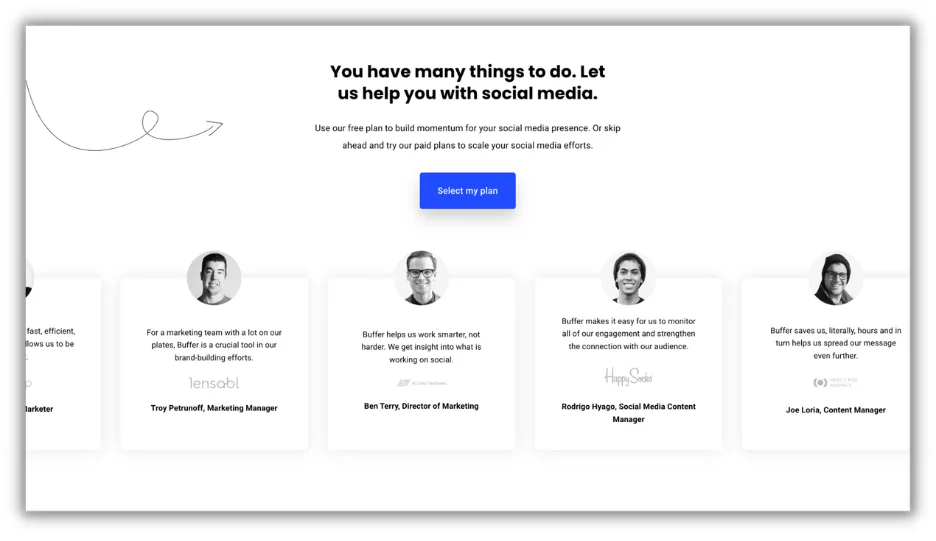 Testimonials, case studies, and reviews are potent tools for addressing your prospects’ need for security.
We’ve all experienced buyer’s remorse, purchasing something only to be riddled with regret, or worse, facing tangible or financial harm.
Testimonials, case studies, and reviews are potent tools for addressing your prospects’ need for security.
We’ve all experienced buyer’s remorse, purchasing something only to be riddled with regret, or worse, facing tangible or financial harm.
Emphasizing safety and trust, maintaining transparency, and highlighting your track record of integrity and credibility go a long way in easing those concerns for buyers.

2. Yearning for Esteem
The desire for recognition, respect, and status fuels the powerful buying motive of esteem. Individuals driven by esteem seek validation and respect from others, often drawn to products and services that elevate their image and social standing.
Consider that acquaintance with a G-Wagon parked in their garage. The need for esteem undoubtedly played a significant role in their purchase, and Mercedes strategically taps into this need with its messaging.
 While Mercedes often emphasizes safety and strength in G-Wagon ads (appealing to security), the yearning for esteem shines through in this particular example.
Messaging: My Car Is My Castle.
Implication: Owning a G-Wagon is akin to possessing a grand, imposing fortress that commands universal admiration.
Successfully appealing to the need for esteem requires you, as a marketer, to cultivate a strong brand identity that conveys prestige, quality, and exclusivity.
While Mercedes often emphasizes safety and strength in G-Wagon ads (appealing to security), the yearning for esteem shines through in this particular example.
Messaging: My Car Is My Castle.
Implication: Owning a G-Wagon is akin to possessing a grand, imposing fortress that commands universal admiration.
Successfully appealing to the need for esteem requires you, as a marketer, to cultivate a strong brand identity that conveys prestige, quality, and exclusivity.
Here are some proven strategies to achieve this:
- Emphasize exclusivity. Those motivated by esteem are more likely to invest in your product if it’s a limited edition, boasts “premium” quality, or elevates their status among peers.
- Curate personalized experiences. Imagine a luxury shirt company welcoming a customer with a glass of whiskey and a distinguished tailor for a personalized fitting. By offering such tailored experiences, you appeal to the desire for esteem.
- Leverage social media influencers and celebrities. Social proof is a marketing cornerstone. Partnering with respected influencers or celebrities effectively demonstrates to your customer that they’re in esteemed company. Position your product as elite, and you’ll capture the attention of customers who value esteem.
3. Striving for Self-Actualization
We all know someone restless in every job or career, never quite finding satisfaction. The need for self-actualization burns brightly within them.
This need stems from the desire to unlock one’s full potential, pursuing personal growth and fulfillment. Individuals with this buying motive seek products and services that empower skill development, fuel passions, and enable goal achievement.
While not every business is a non-profit, emphasize how your product empowers customers to improve their lives, situations, or the lives of those around them.
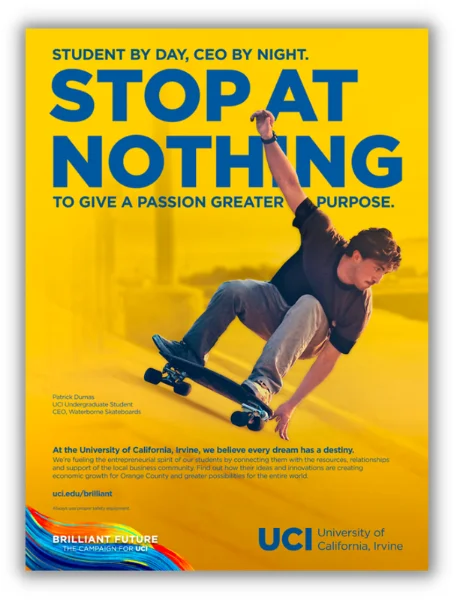 Attend UV Irvine and transform passion into purpose, reaching your full potential.
Here are some examples of self-actualization in action:
Attend UV Irvine and transform passion into purpose, reaching your full potential.
Here are some examples of self-actualization in action:
- Your software saves business owners valuable time and money, resources they can then invest in pursuing passions or growing their businesses.
- Your ecommerce brand donates a portion of sales to charity, enhancing the buyer’s sense of purpose.
- Your online class equips customers with valuable skills for increased earning potential or meaningful creation.
Remember, appealing to self-actualization doesn’t require running a non-profit. Especially for small or local businesses, customers often feel inherently good about supporting you over a large corporation. However, taking it further by highlighting how your product contributes to their personal growth can significantly boost sales.

4. Desiring Variety and Novelty
The need for variety and novelty resonates deeply. This drive compels individuals to seek fresh, exciting experiences, breaking free from boredom and monotony. Influenced by this motive, they gravitate towards products and services offering unique experiences or avenues for expressing individuality.
Your industry naturally influences your ability to tap into this motive. For instance, the travel industry thrives on the desire for variety, with marketing messages often centered around it. Offering people the opportunity to explore new destinations provides an escape from routine, promising fresh experiences and a renewed sense of self.
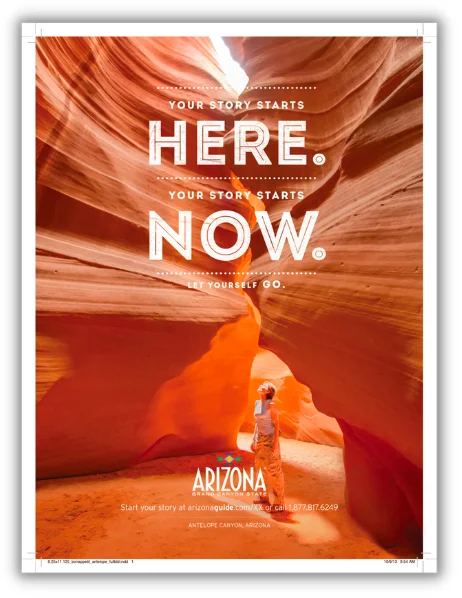 The slogan “Let yourself go” deeply resonates with the desire for variety.
However, like other buying motives, your capacity to appeal to variety isn’t confined by your industry.
The slogan “Let yourself go” deeply resonates with the desire for variety.
However, like other buying motives, your capacity to appeal to variety isn’t confined by your industry.
Imagine you own a clothing store like True Classic, known for its basic t-shirts. While customers love the staples, introducing new products and lines maintains engagement and encourages purchases, even among existing customers.
Or consider a fast food giant aiming to boost sales during a critical fall holiday.
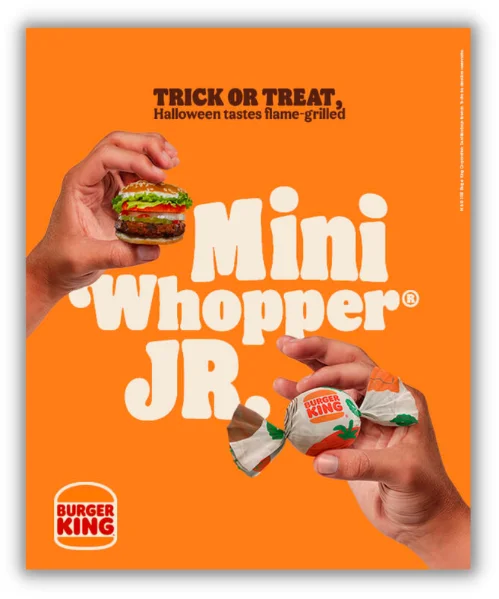 Even presenting the same product in fresh, engaging ways (like creative packaging) can effectively appeal to the desire for variety.
Keep your customers and prospects intrigued, and you’ll successfully drive sales among those driven by this powerful motive.
5. Prioritizing Efficiency and Convenience
We’re bombarded with statistics about shrinking attention spans: the average human attention span is now just 8.25 seconds 8.25 seconds. You have less time than it takes to open and close the refrigerator to capture attention with your marketing.
This makes the need for efficiency and convenience a force to be reckoned with. This motive drives individuals towards products and services that simplify lives, save time and effort, and streamline daily routines.
Take this banner ad from Shell as an example:
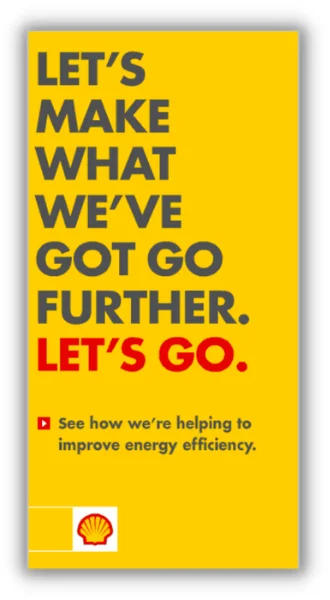 This ad not only explicitly promotes efficiency but also features a universally appealing call to action for those seeking convenience. Let’s go. Most people are constantly on the move, juggling multiple tasks. This call to action assures them that they can engage with your product without interrupting their flow.
The message, Let’s make what we’ve got go further, epitomizes the essence of efficiency: achieving more with less. This applies not only to a seamless purchase process but also to the product itself. It should make life easier, freeing up valuable time for customers to pursue what truly matters to them.
Tap into a Buyer Motive, Make the Sale
It’s as simple as that: identify and address a motive, and the sale follows. Analyze what drives your customers to choose your product or service, categorize it into one of these five buckets, and draw inspiration from the marketing campaigns highlighted here. Craft messaging that directly resonates with that specific buyer motive. By doing so, you’ll likely witness increased sales and revenue.