It’s no secret that highly effective landing pages are essential for any successful paid search campaign. But even the most well-designed landing pages can’t achieve a 100% conversion rate. Why? Because human behavior is unpredictable, and sometimes, consumer decisions seem to defy logic. This often boils down to cognitive biases.
This article delves into the world of cognitive biases, exploring what they are, how they show up in consumer behavior, and, most importantly, how you can work with (or around) them to optimize your landing pages for better conversion rates.

Decoding Cognitive Bias
Cognitive biases are essentially mental shortcuts, ways of thinking about and understanding the world that might not always align with reality. We like to believe we see the world objectively, but that’s rarely the case. Our individual perspectives, shaped by our past experiences, preconceived notions, and social and environmental influences, color how we see things. This subjective lens doesn’t necessarily reflect the truth.
In simple terms, cognitive biases are the filters through which we see a distorted view of reality.
Landing Pages and the Battle Against Bias
Now that we’ve acknowledged our collective irrationality, let’s examine some common cognitive biases in action and discuss strategies for minimizing their influence on your paid search campaigns. Keep in mind that there’s no single, definitive list of cognitive biases. Since their introduction in the 1970s by Daniel Kahneman and Amos Tversky, psychologists have identified over 100 distinct biases, and the exploration of new ones continues. This poses a constant challenge for marketers trying to understand consumer behavior.
Covering every single cognitive bias and its implications for landing page optimization is beyond the scope of this article. However, we will focus on some of the most prevalent biases and explore practical ways to address them through well-crafted landing pages.
1. Confirmation Bias: Seeking Validation, Resisting Contradiction
One of the most common cognitive biases is confirmation bias.

Confirmation bias is the tendency to favor information that confirms existing beliefs, while disregarding or downplaying information that contradicts them. This applies to various forms of information, including news, statistics, and opinions. For example, someone who firmly believes that gender bias doesn’t exist is more likely to dismiss concrete evidence to the contrary than to reconsider their stance.
Key Indicators of Confirmation Bias:
- Resistance to accepting evidence that challenges pre-existing beliefs
- Giving more weight to “facts” that align with existing assumptions, while ignoring contradictory evidence
- Actively seeking out information that reinforces one’s point of view
- Selective (and often inaccurate) recall of events, facts, or statistics
Mainstream news outlets often exploit viewers’ confirmation bias (Fox News being a an excellent example example). This explains why people tend to stick to news channels that align with their existing views, prioritizing confirmation over impartiality or journalistic integrity.
Countering Confirmation Bias on Your Landing Page
To address confirmation bias in a sales context, you need to make your audience question their firmly held beliefs. One effective approach is showcasing testimonials from customers who were initially skeptical.
Reach out to your current customer base and identify those who were hesitant about your product or service. Ask them to share their journey – what were their initial concerns (pricing, competitor offers, etc.), and how did they eventually become convinced? Include specific details that resonate with your target audience’s potential biases.
Avoid directly criticizing your competitors. This tactic can backfire, making you appear negative and potentially reinforcing the very bias you’re trying to overcome. Instead, focus on authentic customer experiences, using language your prospects use and understand.
Another strategy is to offer a risk-free guarantee, such as a no-questions-asked money-back guarantee. LifeLock, the online identity theft prevention service, does this exceptionally well with its $1 million guarantee.
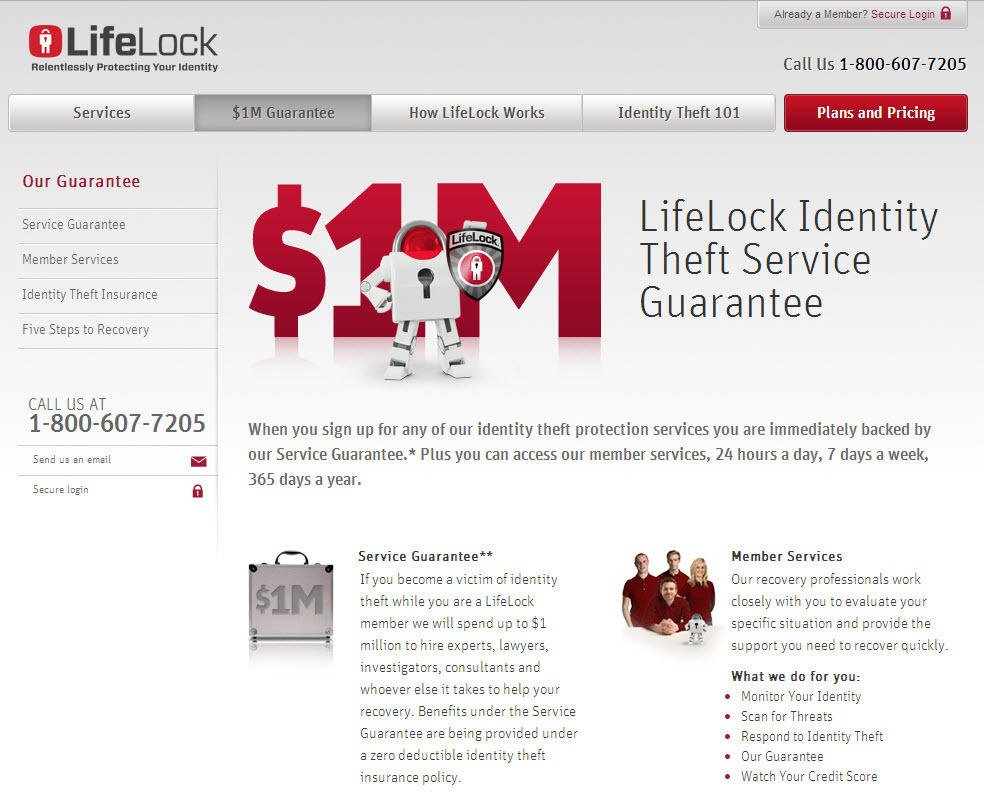
Understanding that some potential customers might be skeptical about identity theft prevention services, LifeLock goes a step further. They offer up to $1 million in legal aid, private investigation, and other necessary services if a customer’s identity is compromised while subscribed. This not only provides a substantial safety net but also conveys LifeLock’s confidence in its services.
2. Anchoring Effect: Fixating on a Single Point of Reference
The anchoring effect, also known as “relativity trap” or “focalism,” describes the tendency to focus disproportionately on a single aspect of a product or service while neglecting other important factors. Price is a common anchor, particularly for budget-conscious consumers.
Signs of the Anchoring Effect:
- Prioritizing price over potential product/service benefits
- Extensive comparison shopping
- Actively seeking out discounts, sales, coupons, and other cost-saving incentives
- Positive response to flexible pricing models

Businesses, particularly in the restaurant industry, often exploit the anchoring effect. By offering a menu with a wide price range (from very expensive to very affordable), they nudge customers toward the mid-priced options. Consumers tend to fixate on the relative savings (the price difference between options) rather than the absolute prices themselves.
While the anchoring effect presents a challenge for marketers, it can also be an advantage. Since prospects influenced by this bias are focused on a single aspect, it becomes easier to address their primary concern.
Mitigating the Anchoring Effect on Your Landing Page
Let’s assume, for this example, that your prospects are primarily focused on price. Now that we’ve identified the challenge, let’s explore how your landing page can address it.
First and foremost, be completely transparent about your pricing. Don’t just mention it somewhere on your site – feature it prominently on your landing pages. Don’t make prospects search for pricing details; the longer it takes, the more likely they are to distrust your brand. Be upfront and clear about your prices.
Furthermore, be completely honest about your pricing. Include all potential additional costs, such as surcharges, fees, and taxes. We’ve all experienced the frustration of hidden costs that inflate the final price.
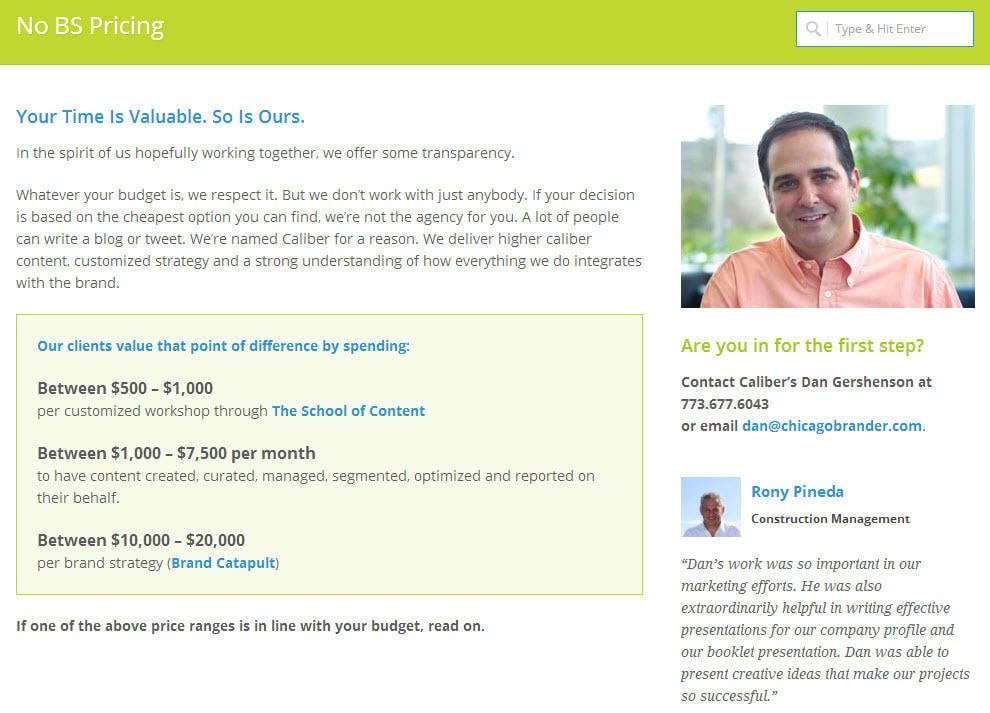
Caliber, a branding agency based in Chicago, embodies these principles effectively. Unlike many agencies that conceal their pricing behind “free consultations,” Caliber openly displays its rate card on its website. They even state that they’re selective about their clients. To further strengthen their approach, Caliber includes a customer testimonial alongside their pricing – a smart move.
3. Ambiguity Effect: Favoring the Known Over the Unknown
The ambiguity effect, a cognitive bias identified by Daniel Ellsberg in the 1970s, suggests that people prefer options with known outcomes over those with unknown probabilities, even if the unknown option has the potential for greater rewards. This bias is closely tied to risk aversion.
Hallmarks of the Ambiguity Effect:
- Preference for decisions with predictable outcomes
- Reluctance to try new things
- Difficulty recognizing the long-term benefits of “riskier” choices compared to the immediate gains of “safer” choices
For instance, many investors opt for “safer” investments like government bonds, where the return on investment is relatively predictable due to their stability. Stocks, while potentially yielding higher returns, are often perceived as riskier due to their uncertain or ambiguous outcomes.
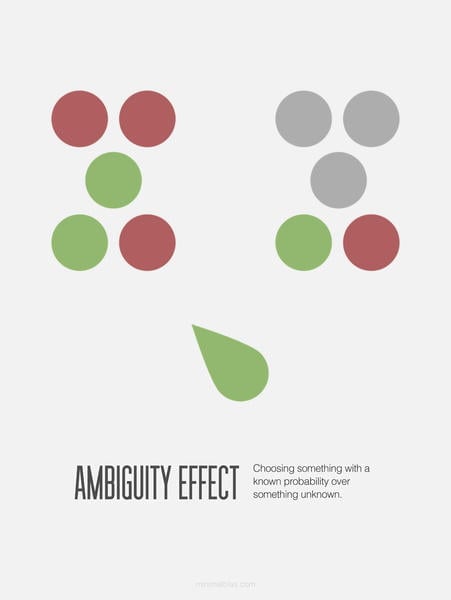
Artwork © Jack Hagley
From a consumer perspective, the ambiguity effect can foster brand loyalty. Even dissatisfied customers might hesitate to switch providers because the perceived risks of change outweigh the potential benefits.
Addressing the Ambiguity Effect on Your Landing Pages
To a certain extent, all businesses grapple with the ambiguity effect, especially startups and newer businesses without established reputations.
One way to counter this bias is to borrow from the best practices of FAQs and incorporate them strategically into your landing pages. Be mindful of text overload, as it can hurt conversions. However, by including well-crafted questions and answers within your landing page copy, you can fill knowledge gaps, making your offerings more appealing.
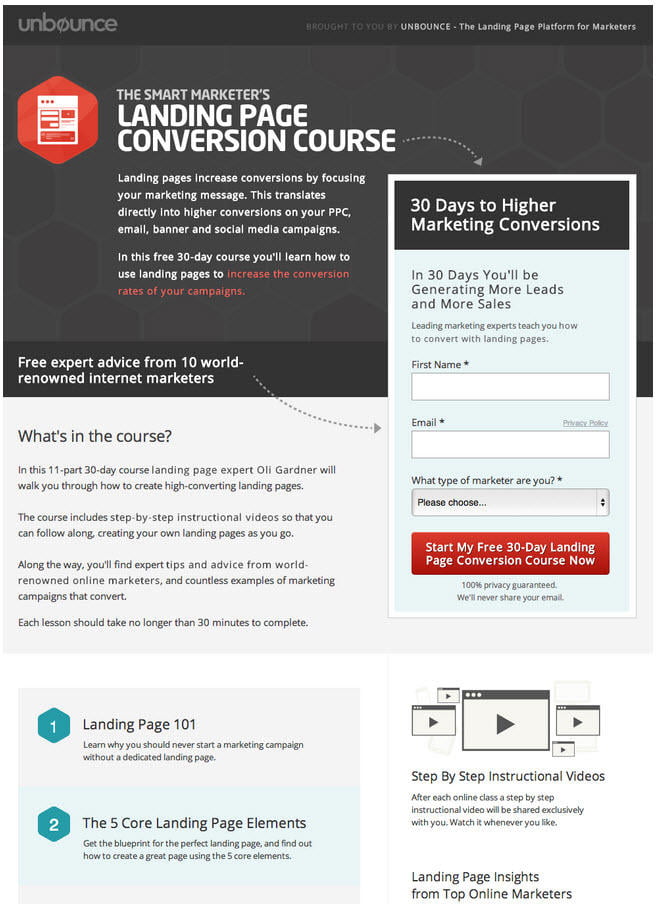
A prime example is Unbounce’s landing page for their landing page conversion course. It provides a concise overview of the course content (“What’s in the course?”), delves into each module, and clarifies the target audience.
The copy clearly outlines the time commitment, minimizing ambiguity about the effort involved. It also includes a straightforward form, a strong call to action, clear visual cues, and an aesthetically pleasing design – all crucial elements for enhancing conversions.
4. Bandwagon Effect: The Allure of Conformity and Trends
Closely linked to herd mentality, the bandwagon effect describes the tendency to value decisions that align with current trends or appeal to one’s social group. In consumer behavior, this translates to making purchases based on the desire to own “the next big thing” or to elevate social status through product ownership.
Characteristics of the Bandwagon Effect (Consumer Perspective):
- Prioritizing design and aesthetics over product specifications
- Willingness to pay a premium for branded goods
- Strong desire to “fit in” with perceived trendsetting demographics
- Strong loyalty to a select group of recognizable brands
- Higher likelihood of promoting brands/companies through social media
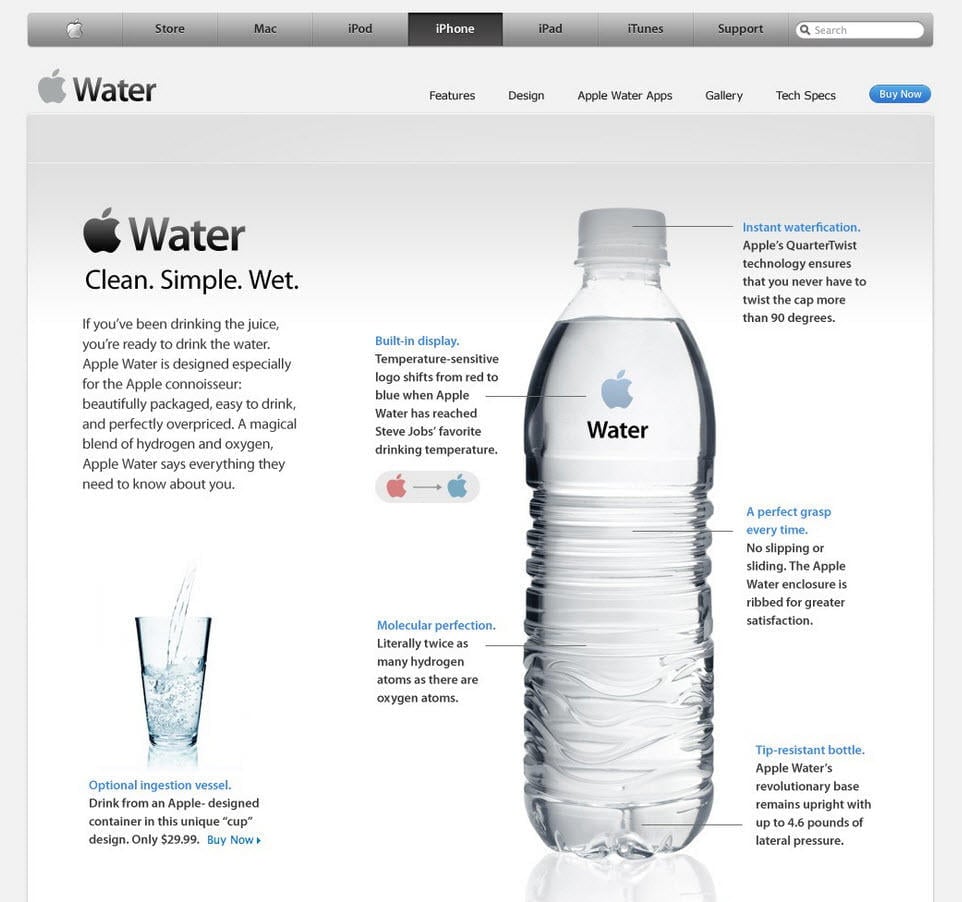
The bandwagon effect is deeply rooted in the human need for belonging and conformity. Apple’s devoted following is a classic example. Through strategic marketing and branding, Apple has mastered the art of influencing consumer behavior. This results in massive demand for their latest products and the perception that owning an Apple product is a lifestyle choice.
Leveraging the Bandwagon Effect on Your Landing Pages
In a competitive market, the key to working with the bandwagon effect lies in how you position your product or service. Instead of an obstacle, consider it a mindset you can leverage.
Visuals are crucial when promoting your offerings. Apple, for instance, doesn’t just focus on technical specs in their iPhone marketing. They sell an aspiration – the idea that the iPhone is an essential part of a modern, digitally connected life. With this in mind, use stylish imagery on your landing pages and emphasize how your products enhance your customers’ lives. The landing page for the iPhone 5S exemplifies this by leading visitors to a video titled “Powerful.”
The video showcases young, attractive people using their iPhones for various tasks – some quite elaborate and unlikely to be used by the average person (like using an iPhone as an amp controller for an electric guitar). However, the brilliance lies in selling a lifestyle. It taps into the desire to be cool, to be part of a band, to embark on adventures. It sells an idealized life that owning an iPhone supposedly grants access to.
While replicating Apple’s marketing might be challenging for some businesses, the underlying principles can be adapted with creativity. Consider Ministry of Supply, a Boston-based clothing e-commerce site.

Ministry of Supply sells high-end dress shirts and apparel made from “phase change” materials – fabrics that regulate body temperature, similar to those used in NASA spacesuits. This unique selling proposition, combined with their website’s stylish imagery, caters to their target audience’s desire for exclusive, cutting-edge clothing. This approach extends to their social media presence, fostering brand consistency and strong customer engagement, much like Apple.
While Ministry of Supply could optimize their PPC ads to lead to dedicated landing pages instead of their homepage, they effectively utilize the principles of the bandwagon effect to their advantage.
5. Status Quo Bias: Resisting Change, Clinging to Familiarity
Many psychologists believe that cognitive biases stem from survival instincts. Status quo bias, our final example, highlights how our need for stability and routine influences our behavior.
Status quo bias is the preference for things to remain unchanged. Individuals influenced by this bias often perceive any deviation from the norm as negative or a loss, leading to resistance to change. This presents a significant challenge for marketers.

Indicators of Status Quo Bias:
- Reluctance to try new products/services due to fear of loss associated with change
- Resistance to traditional sales techniques
- Unintentional loyalty, even to brands offering subpar service
The “if it ain’t broke, don’t fix it” mentality is a major hurdle when dealing with status quo bias. Customers might be reluctant to switch providers, even if unhappy, simply to avoid disrupting the status quo. However, if someone with this bias lands on your page after clicking your ad, you’ve already made progress in overcoming their resistance. Now, you need to present a compelling reason to step outside their comfort zone.
Overcoming Status Quo Bias on Your Landing Pages
In his book “The Ultimate Guide to Google AdWords,” marketing expert Perry Marshall emphasizes that focusing on product features in ad copy is a mistake. People care about solutions, not features. Highlighting the emotional benefits can entice even the most hesitant prospects to click. This principle applies to landing pages as well.
To address status quo bias, focus heavily on the benefits of your offering. If a potential customer has reached your landing page, they’re already open to exploring your product/service, even if hesitant about change. Similar to the FAQ approach for ambiguity bias, use language that directly addresses potential questions. Minimize the need for them to seek additional information elsewhere, as any obstacle, no matter how small, might be perceived as a loss.
Basecamp, a project management software platform for small businesses, does this well:
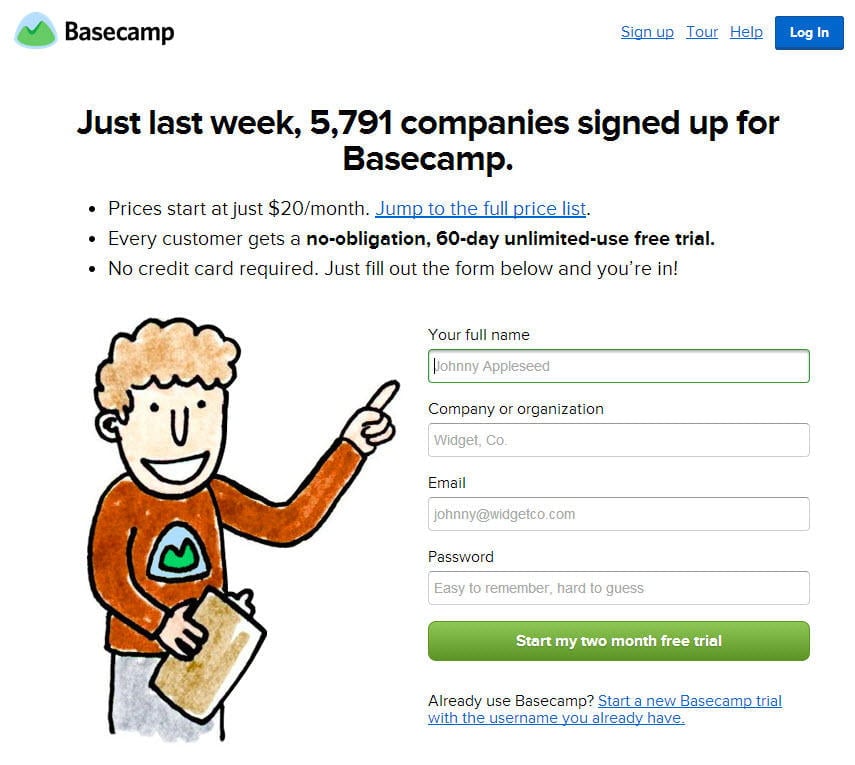
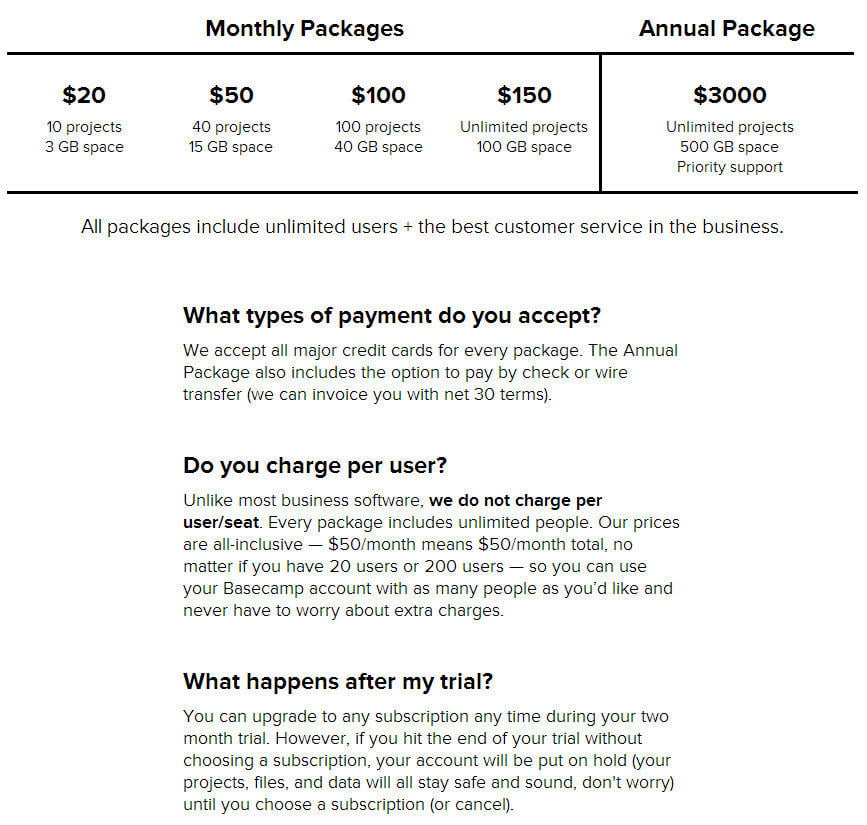
Every aspect of their landing page is approachable, from the design to the language. Like in the anchoring effect example, pricing is transparently displayed upfront (including the highest tier), building trust. FAQs are strategically placed, allowing prospects to find information without leaving the page.
These are just a few of the numerous cognitive biases that can influence your target audience. While it’s impossible to account for every single one, understanding consumer psychology is invaluable when designing landing pages. Even subtle changes, informed by these biases, can significantly impact your conversion rates.