Google has been warning us about the end of third-party cookies for years, and now it’s happening. Since January of this year, Google has been phasing them out for Chrome users. Here’s the problem: most paid advertising relies on third-party cookies for tracking and targeting. So, what can you do? This article will guide you through preparing your PPC accounts for the removal of third-party cookies and what to expect moving forward.
Contents
- Is Google going cookieless?
- Why is Google getting rid of cookies?
- How to prepare your PPC accounts for the end of third-party cookies
- What should you expect next in this cookieless future?
Is Google going cookieless?
The short answer is yes, eventually. As of January 2024, Google began phasing out third-party cookies for Chrome users, with plans to completely retire them by the end of the year. Currently, only about 1% of users are impacted, but the goal for Google (and most other platforms) is to move away from third-party cookies.
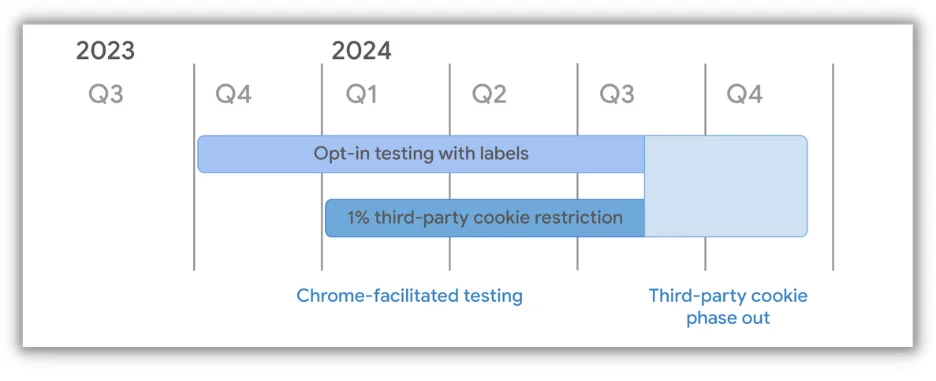 For a detailed timeline of the third-party cookie phase-out, refer to this article.
Why is Google getting rid of cookies?
Google is transitioning to a cookieless environment to address growing privacy concerns. Users want more control over their online tracking, the information collected about them, and how it’s used. “We remain committed to investing in features that protect your data and provide more control over its usage. This includes taking steps to limit the ability to track your activity across different websites,” Google said.
How to prepare your PPC accounts for the end of third-party cookies
So, how can your PPC campaigns thrive in a world without cookies? Here are some steps to guide you.
 Before we begin, ensure your Google Ads account is properly configured. Download now » The Last Guide to Google Ads Account Structure You’ll Ever Need
1. Identify and review existing cookies
Not all cookies on your sites operate the same way. Some are essential and will remain unaffected, while others will be disregarded or removed. You can audit your existing cookies with your developer to determine which ones require attention and which can be left as is.
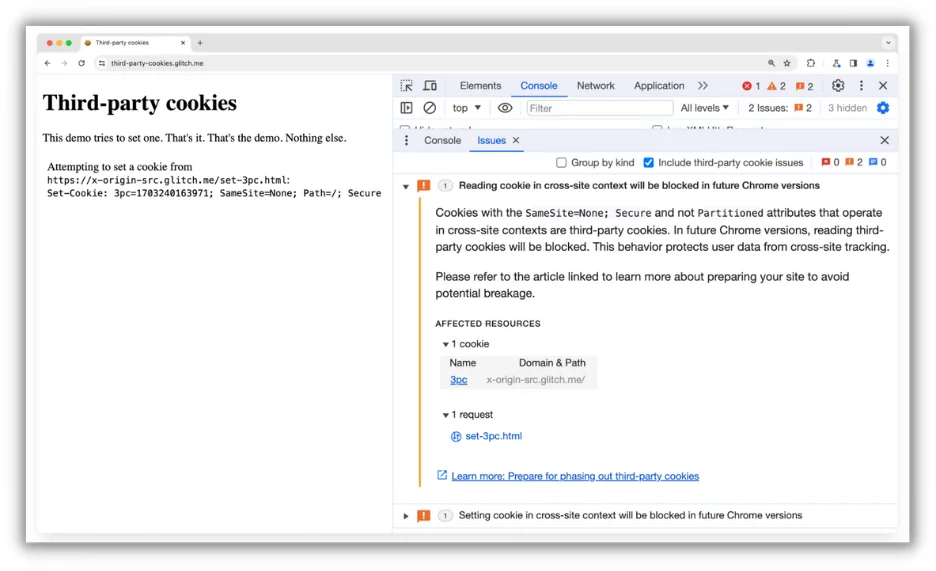 To initiate the audit, follow the steps outlined in this article, which even includes a helpful YouTube video walkthrough. Two options are available: using Chrome Developer Tools
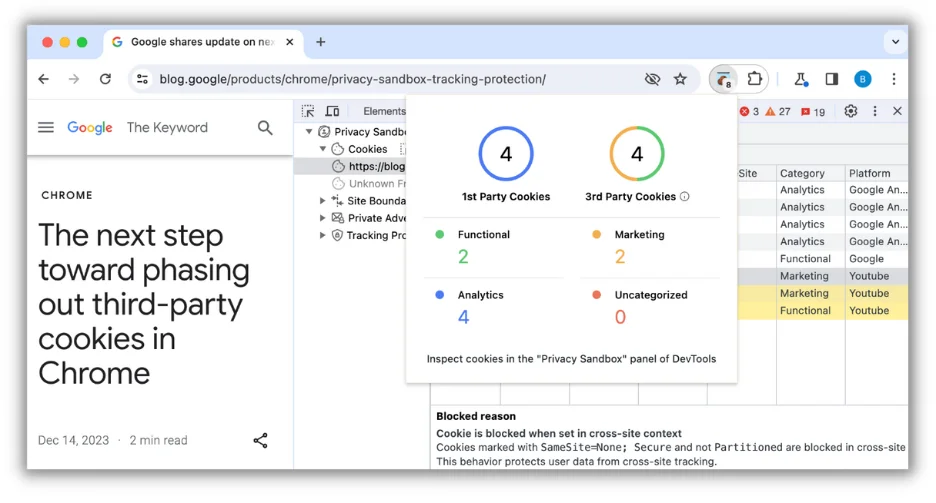 or a custom Chrome Extension developed by Google called the Privacy Sandbox Analysis Tool.
Both methods will help you pinpoint cookies that need addressing and those compliant with the phase-out.
or a custom Chrome Extension developed by Google called the Privacy Sandbox Analysis Tool.
Both methods will help you pinpoint cookies that need addressing and those compliant with the phase-out.
2. Address third-party cookies based on platform requirements
It’s important to note that Google is only changing how Chrome handles third-party cookies, not providing solutions for platforms using them. Here’s Google’s guidance on next steps:
 Essentially, each platform is responsible for finding its own solutions to the cookie phase-out. Conduct research based on your used ad platforms to understand their recommendations for avoiding tracking disruptions. Generally, there are two main shifts most platforms suggest, which we’ll explore next.
3. Take control with first-party data
The first significant shift involves taking ownership of your data collection. Instead of relying on third-party tracking provided by platforms, generating your own first-party data will help alleviate privacy concerns associated with cookies.
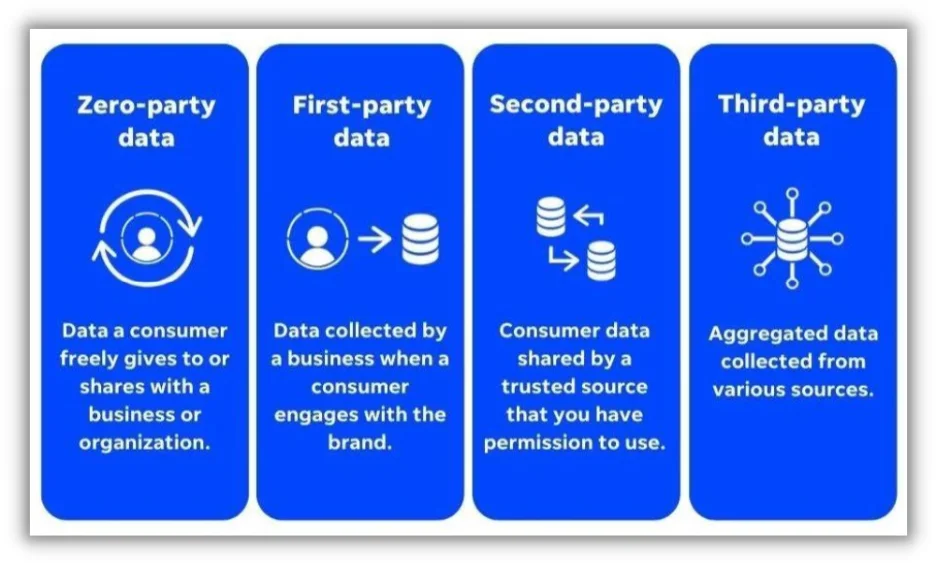 In a first-party relationship, users directly provide their information to your company. It’s not inferred or gathered through external sources like a Google pixel.
There are numerous ways to generate first-party data. Instead of delving into specifics here, I recommend exploring the insights provided by Joe Martinez.
In a first-party relationship, users directly provide their information to your company. It’s not inferred or gathered through external sources like a Google pixel.
There are numerous ways to generate first-party data. Instead of delving into specifics here, I recommend exploring the insights provided by Joe Martinez.
 Worried about wasted spend in Google Ads? Discover potential issues with a free, instant audit » Google Ads Performance Grader
4. Leverage first-party data effectively in ad platforms
Let’s explore how first-party data can be used effectively within ad platforms.
Customer match or audience uploads
Most ad channels, including Google Customer Match and Facebook Custom Audience Uploads, allow importing CRM data to match logged-in users. This enables using gathered customer information for tracking and creating targetable audience segments. For ideas on generating valuable user information, revisit Joe’s article.
Conversions API, enhanced conversions, and offline conversions
While Customer Uploads focus on audience generation and targeting, these solutions prioritize performance and conversion tracking. Facebook’s Conversions API tracks in-platform performance by matching user attributes tracked in your CRM. Although it usually involves developer assistance, here are the steps for implementation. Enhanced Conversions in Google Ads hash and send user data from your website back to Google privately. This requires some Google Site Tag implementation but complies with privacy shifts by anonymizing information before sharing. You can achieve this through your Google Site Tag or via Google Tag Manager.
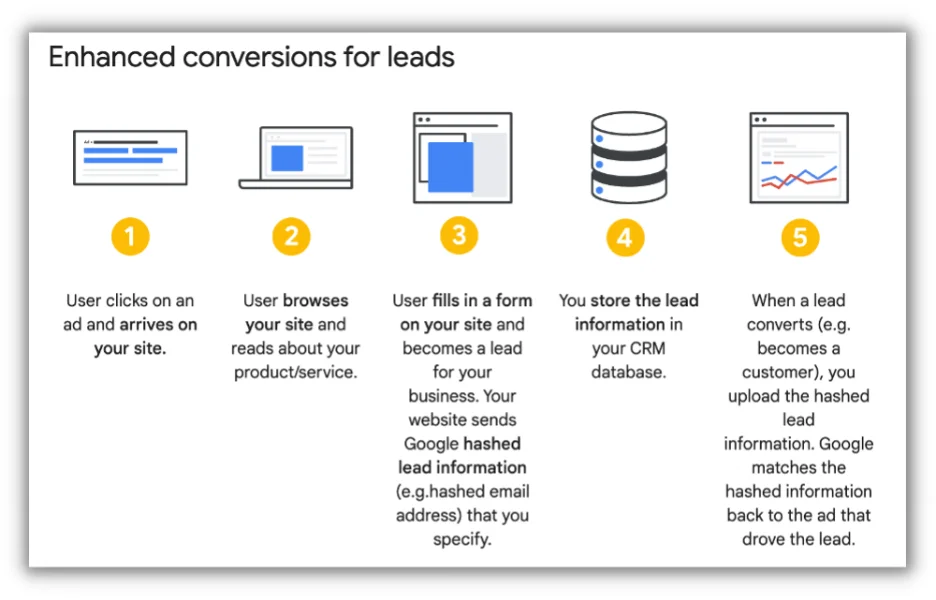 Google’s Offline Conversions function similarly to Facebook’s Conversions API, using CRM data to match logged-in users on Google and track conversion performance. Typically used for offline conversions (e.g., service purchases after online quotes), they can also supplement online conversion tracking in certain cases. For more information and setup guidance, check out this rundown on Offline Conversions.
By implementing these three suggestions, you shift your focus to gathering data through direct, first-party relationships and leveraging it for accurate audience targeting and performance tracking. However, these solutions aren’t perfect and gaps may still exist. Additionally, we still need to address reaching new potential customers, which brings us to the second shift.
Google’s Offline Conversions function similarly to Facebook’s Conversions API, using CRM data to match logged-in users on Google and track conversion performance. Typically used for offline conversions (e.g., service purchases after online quotes), they can also supplement online conversion tracking in certain cases. For more information and setup guidance, check out this rundown on Offline Conversions.
By implementing these three suggestions, you shift your focus to gathering data through direct, first-party relationships and leveraging it for accurate audience targeting and performance tracking. However, these solutions aren’t perfect and gaps may still exist. Additionally, we still need to address reaching new potential customers, which brings us to the second shift.
5. Embrace the power of AI and machine learning
AI and machine learning have been hot topics for years, and their importance is amplified in a privacy-focused world. While third-party cookies enabled incredible targeting capabilities, their phase-out requires finding new solutions. As Google aptly puts it, we are entering an “Era of Prediction.” Platform algorithms have become increasingly adept at identifying potential customers, and this gap will widen with the removal of third-party cookies. Google continues to promote broad match keywords combined with Smart Bidding on Search and suggests using Maximize Conversion bidding strategies even if your account doesn’t meet the usual 50 conversions in 30 days threshold.
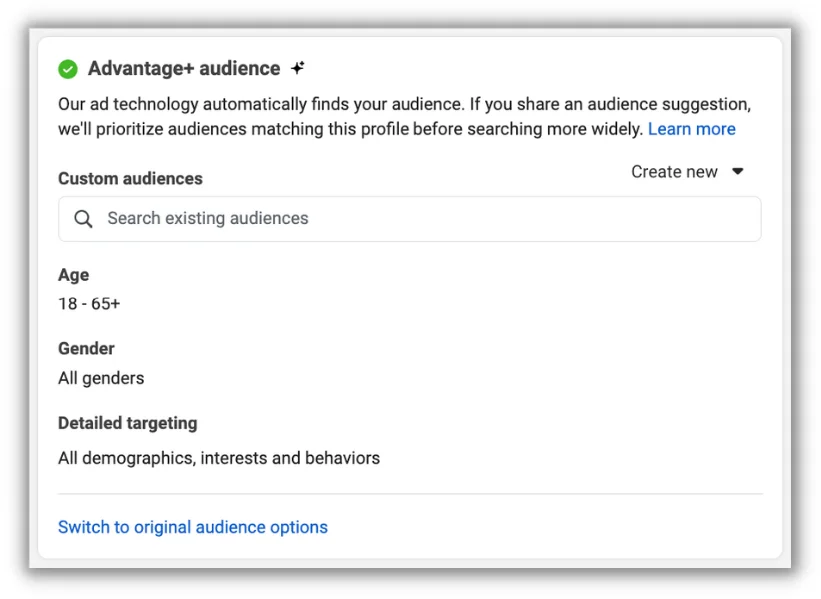 Similarly, Facebook is pushing its Advantage+ Audience targeting, where advertisers provide initial guidance on interests, behaviors, and demographics, which Facebook expands upon using machine learning to achieve campaign objectives.
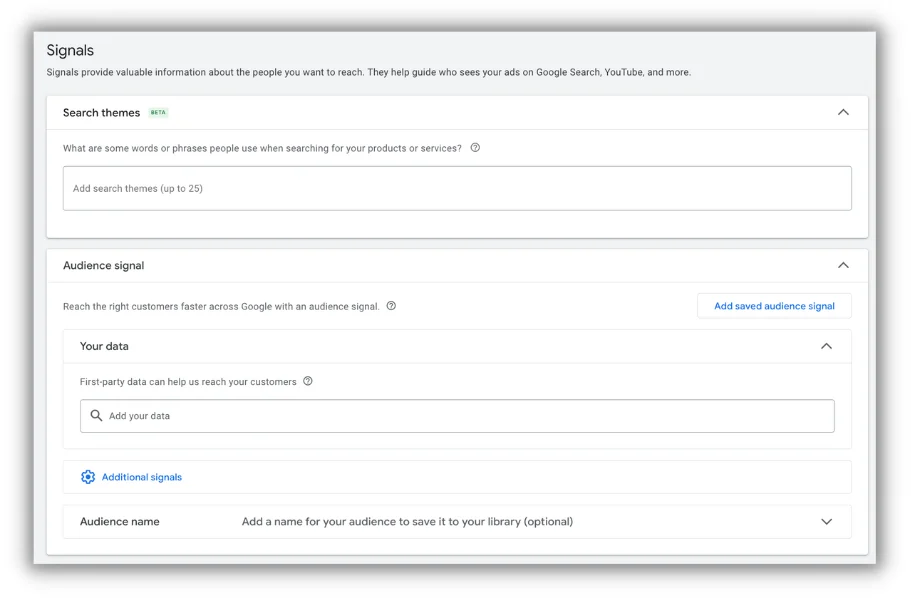 Google’s equivalent is primarily associated with Performance Max and Demand Gen campaigns. These leverage Audience Signals as a starting point and utilize machine learning to target users based on predicted performance.
Embracing AI, whether for targeting or bid optimization, will be crucial for advertisers to maintain and improve campaign performance.
Google’s equivalent is primarily associated with Performance Max and Demand Gen campaigns. These leverage Audience Signals as a starting point and utilize machine learning to target users based on predicted performance.
Embracing AI, whether for targeting or bid optimization, will be crucial for advertisers to maintain and improve campaign performance.
 Want to harness the power of AI? Free download » Emergency Guide to AI in Marketing
What to expect in a cookieless future
Even after implementing these changes, adjustments are inevitable as no solution perfectly replicates the current setup. (“Perfect” is subjective, as anyone familiar with attribution complexities knows.) Here’s what to expect moving forward:
- A shift towards first-party data as the primary advertising focus.
- Increased reliance on CRM and internal tracking for understanding campaign performance, with the caveat that…
- Performance tracking will likely not be as precise as it currently is.
- Increased reliance on machine learning and AI for targeting and bidding optimization, requiring less manual input from advertisers.
Prepare your PPC accounts for a cookieless future
The shift away from third-party cookies is happening, and adaptation is key. As advertisers, our responsibility is to be responsible stewards of the PPC ad accounts we manage and equip them for success in this evolving landscape. Stay informed about changes in online privacy and ensure you’re keeping pace. Here are the key takeaways for preparing your PPC campaigns for a cookieless future:
- Identify and review existing cookies.
- Address third-party cookies based on platform requirements.
- Take control with first-party data.
- Leverage first-party data effectively in ad platforms.
- Embrace the power of AI and machine learning.