Selling products on Facebook is a fantastic option for small businesses, thanks to its vast reach, powerful targeting features, and numerous tools to track your success. However, achieving immediate success isn’t guaranteed, and there’s no magic formula. Finding the right strategy for your business requires experimentation.
With that in mind, I’d like to share some strategies that I believe will help you get started with Facebook ads or improve the results of your existing campaigns.
For a solid foundation, I recommend starting with our Complete Beginner’s Guide to Facebook Ecommerce. This post builds upon the basics covered in Akvile’s guide, so I encourage you to read it beforehand or refer to it if you need clarification!
1. Utilize conversion actions throughout your sales funnel
You’re probably already familiar with the concept of building a sales funnel for your campaigns. (Hint: If not, the beginner’s guide I mentioned earlier is a must-read.)
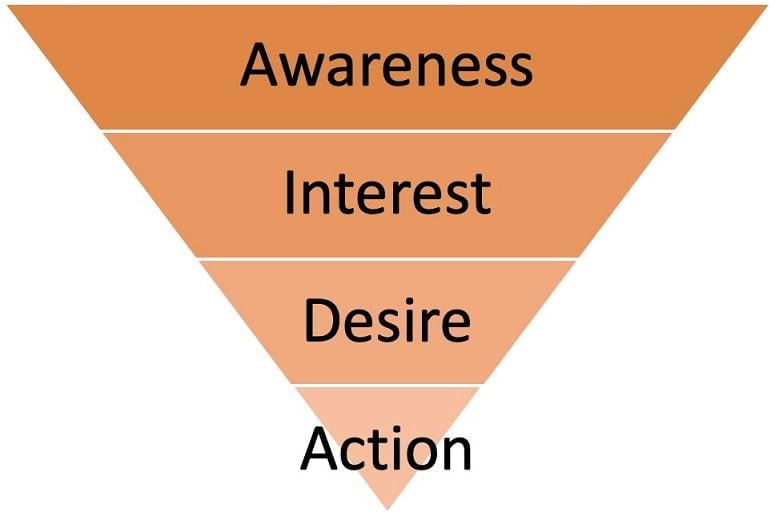
This concept has numerous applications, and I’ll be discussing a few of them today. The first is how you leverage the custom/standard events set up with your Facebook pixel. While all Facebook campaign objectives can be used to sell products, the one I rely on most is the conversion campaign. I then adjust it based on the sales performance. A key principle of this objective is ensuring sufficient conversion volume to feed the algorithm with data. Facebook recommends 50 conversions per ad set per week, but I’ve seen it work effectively with much less. However, not every business achieves 20+ weekly sales for each ad set across all conversion campaigns. To address this, utilize events higher up in the buyer journey to assist Facebook’s optimization, while still targeting actions users take on your site. If purchases are limited, focus on “Add Payment Info.” If that volume is still insufficient, try “Initiate Checkout.”
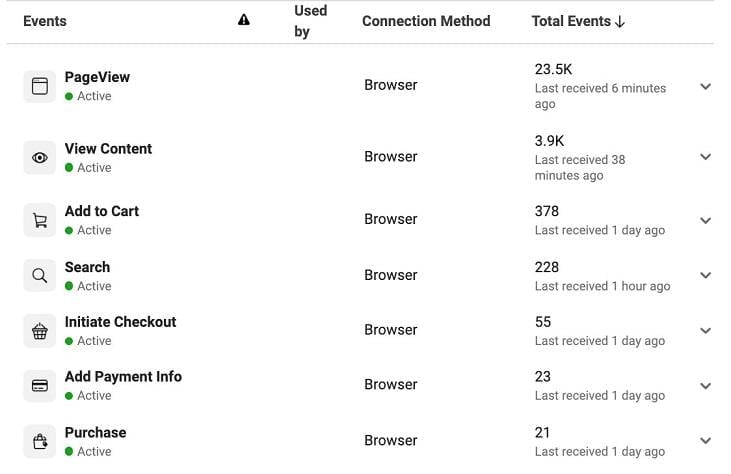
The chart above illustrates a standard Shopify implementation where these events are automatically set up when you connect your pixel. Numerous platforms simplify this setup, which can greatly benefit your accounts.
2. Segment your audience based on funnel stages
These same buyer funnel stages used for conversion optimization can also be used to create audience segments. Consider your own online shopping behavior. How does your mindset shift from browsing to adding an item to your cart? And how does it change further when you proceed to checkout? Personally, my brand connection deepens with each stage, and I expect different communication approaches.
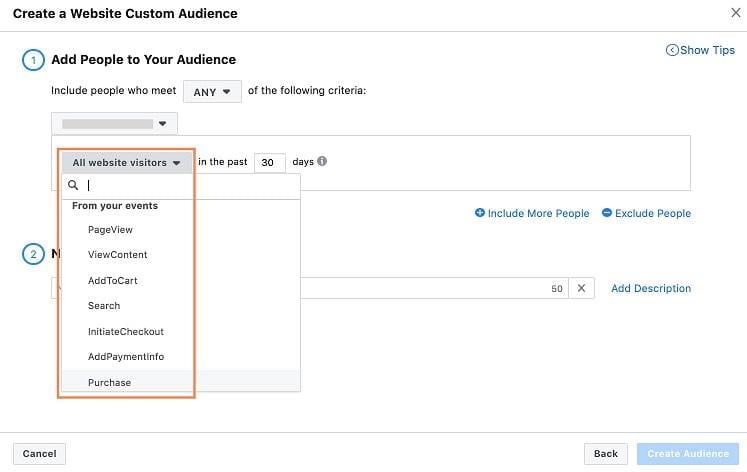
When creating audiences, the dropdown menu defaults to “All website visitors.” However, you’ll also find a section called “From your events.” Use these actions as audience triggers, just like URL rules. Choose the desired event, customize the parameters, and you’re ready!
3. Discover valuable prospecting audiences using the platform
Facebook offers various ways to identify target users. Here are some of my favorites for ecommerce:
Create lookalike audiences based on event audiences
Yes, we’re continuing to utilize those website events! This is the final section where I’ll be discussing them. After creating website user lists for different funnel stages, generate lookalike audiences to help Facebook discover new potential customers. By recognizing patterns in users who completed your on-site events, the algorithm identifies similar users on the platform and targets them with your ads. An added advantage is that your lookalike audiences refresh daily, incorporating newly acquired events.
Create lookalike audiences from engagement audiences
Don’t overlook your on-platform engagement. Facebook is designed for various user interactions, including video views, page likes, and post engagement. Incorporate these users into your prospecting strategies. These actions can be as valuable as on-site actions.
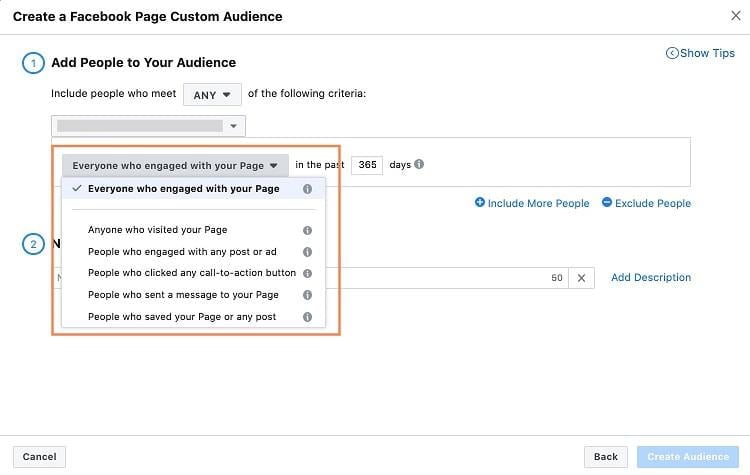
Create lookalikes by first building a base audience of engaged users, then using it to generate a lookalike audience, similar to website retargeting audiences.
Target users interested in similar/competitor brands
Moving away from lookalikes, consider targeting users who follow your competitors or complementary brands. However, not all brands are targetable, so focus on larger, comparable brands. If users show interest in them, your well-crafted products and ads should resonate with them as well.
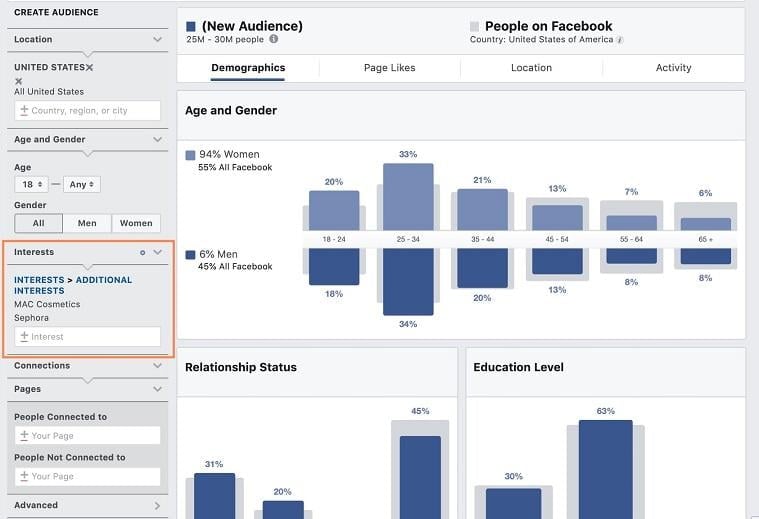
To understand the audience of larger brands, utilize Facebook’s Audience Insights tool. Input your comparable brands in the Interests section, then analyze the resulting audience segment to ensure it aligns with your brand.
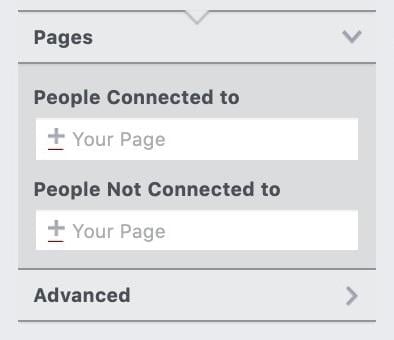
Furthermore, compare your researched brands to your page by adding it in the “Pages” section to see how Facebook categorizes your followers. If the selected brands align well with your page followers, it could be a promising audience to pursue.
4. Present your products clearly and effectively
Your ad creative significantly influences your audience, especially on first impression. Ensure your products are presented favorably and resonate with the target audience.
Ad formats that showcase your products
While single image posts are the easiest and impactful ad format, several others effectively showcase your products. Carousel ads
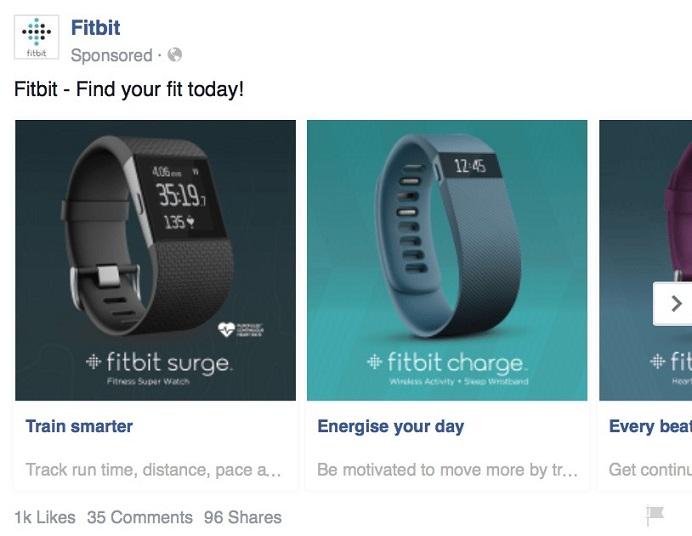
Essentially, Facebook carousel ads are similar to single image ads, but allow you to display multiple images simultaneously. Experiment with various different strategies to maximize carousel ad performance and determine their suitability for your needs. Collections
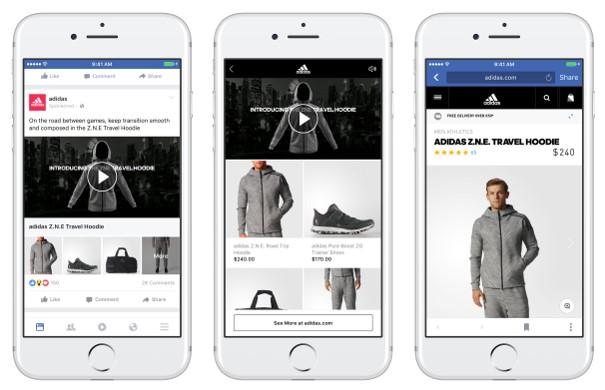
Facebook collections are ideal if you’re using a product catalog. Select “Collection” as your format, then create a custom experience using a template, building from scratch, or, as shown below, utilizing “Dynamic Formats and Creative” for Facebook to dynamically generate collections.
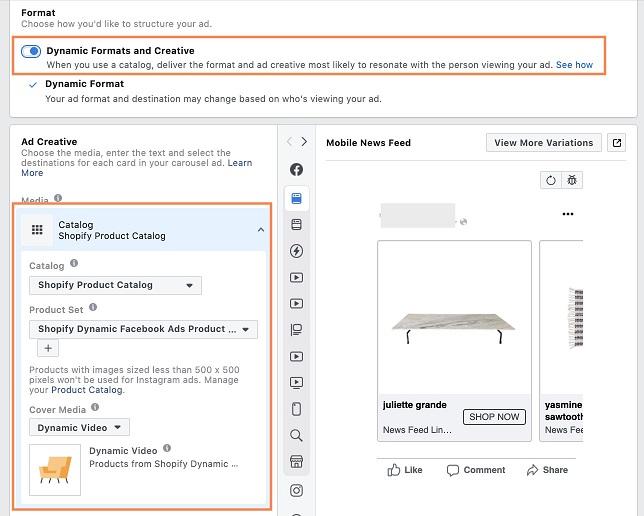
Customize text display for users in a way that applies to all catalog products. Combine this with the catalog sales campaign objective to retarget users with dynamic product ads based on their viewed and engaged-with products, enhancing ad relevance. However, ensure your catalog is current. Your collection and dynamic remarketing ads (discussed shortly) rely heavily on your catalog’s accuracy. An outdated catalog leads to irrelevant ads and potentially a negative user experience. Video ads
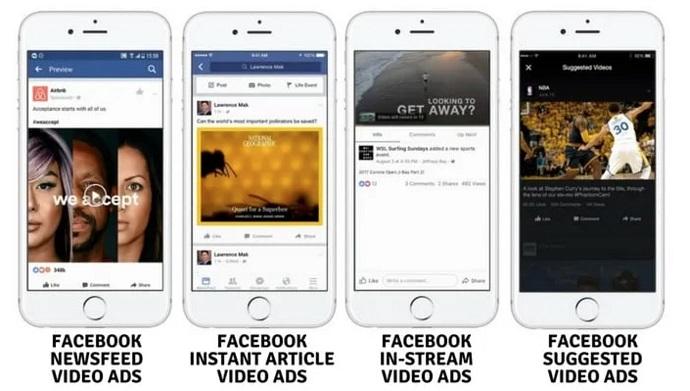
Facebook video ads effectively convey your product’s features, benefits, and real-world usage. Static images showcasing your product are great for capturing attention, but video can solidify your position as a top choice. Moreover, Facebook offers numerous ways to leverage video, and not all require expensive creatives. Simple, low-cost options can be highly effective.
Boost your sales with these Facebook ecommerce tips
Facebook is a powerful channel for online sales. For some businesses, it has been a lifeline during the pandemic and will likely continue to be valuable. Utilize these ideas to enhance your Facebook campaign performance and drive product sales!