The digital marketing landscape is undergoing a significant transformation with Apple’s iOS 14 policies and Google’s phasing out of third-party cookies. These changes, detailed in the provided links, signal a shift in how we target and engage users online. While the full impact remains to be seen, one certainty is the loss of targeting capabilities and third-party data sources we’ve relied on for years.

Although the effects will vary across industries, proactive measures can mitigate potential challenges. A primary strategy is prioritizing the collection of first-party data. This post will explore several tactics to bolster your first-party data acquisition.
Understanding First-Party Data
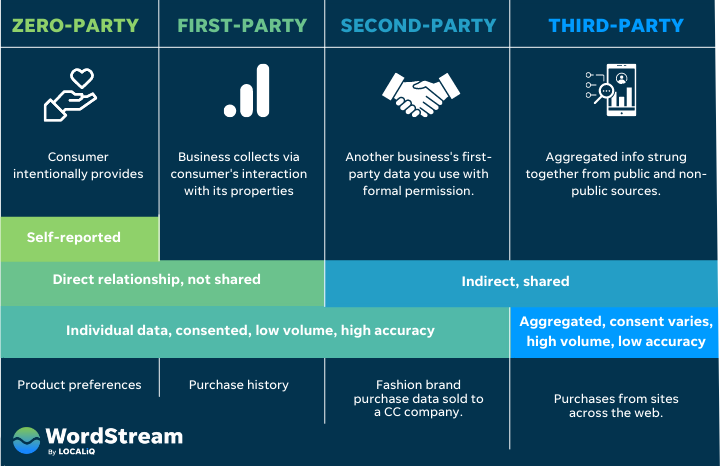
Before delving into strategies, let’s revisit the distinctions between first, second, and third-party data:
- First-party data encompasses information gathered directly from your audience through interactions with your website and/or app. It’s the most valuable data with minimal privacy concerns but can be difficult to scale due to its reliance on your efforts.
- Second-party data essentially refers to another entity’s first-party data acquired through partnerships or purchases. While maintaining accuracy and privacy advantages, it comes at a cost.
- Third-party data involves aggregated first-party data from various websites and apps collected by independent entities and made available for purchase.
With iOS 14’s opt-out tracking feature and Google’s deprecation of third-party cookies (as discussed in our Topics API coverage), first-party data becomes crucial (for further insights, refer to our 2022 marketing trends).
Four Approaches to Enhance First-Party Data Collection
First-party data can be sourced from diverse avenues such as your website, apps, social media, advertising analytics, and CRM systems. This guide focuses on four PPC-centric strategies:
- Leveraging lead generation campaigns
- Incorporating custom questions
- Exploring alternative ad platforms
- Prioritizing brand-building
1. Utilizing Lead Generation Forms (Even Beyond Lead-Focused Accounts)
Lead generation forms within ads provide a straightforward method for paid media advertisers to gather user information. Various platforms offer this feature, including LinkedIn, Facebook, Google (across Search, YouTube, and Discovery campaigns), and Quora. The depth of information collected can be tailored to your marketing objectives.
Importantly, lead generation forms aren’t limited to B2B models.
Currently, several lead generation campaigns are underway for e-commerce clients aiming to maximize email list building. This approach stems from the understanding that email marketing yields the highest conversion rates and ROI for these businesses. The focus here is on quantity,
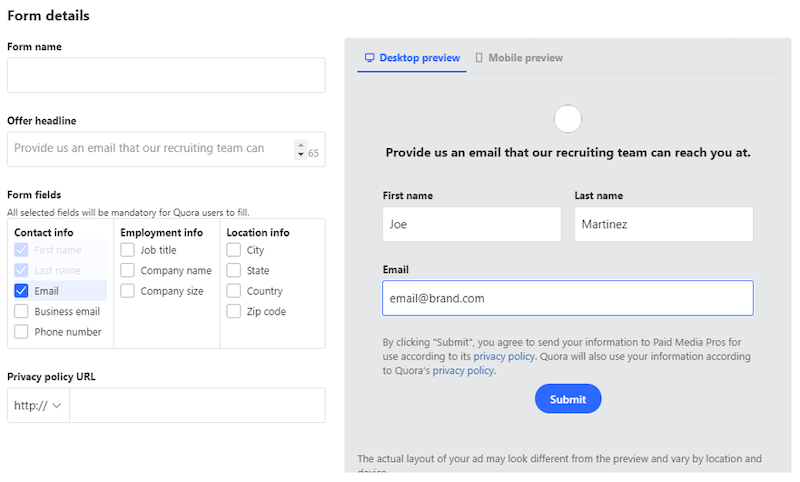
Therefore, only essential information is requested on each platform. For instance, in the Quora form example above (default view), name fields are mandatory, and users typically register with personal emails. Choosing channel-relevant fields maximizes sign-ups. (However, it’s worth noting that business emails might not apply to industries employing this strategy).
Furthermore, lead generation campaigns effectively generate leads on Facebook in the post-iOS 14 landscape.
2. Pre-Qualifying and Segmenting Users with Custom Questions
For accounts prioritizing lead quality over quantity, perhaps due to a highly specific target audience or a desire to streamline sales efforts, custom questions within forms prove valuable.
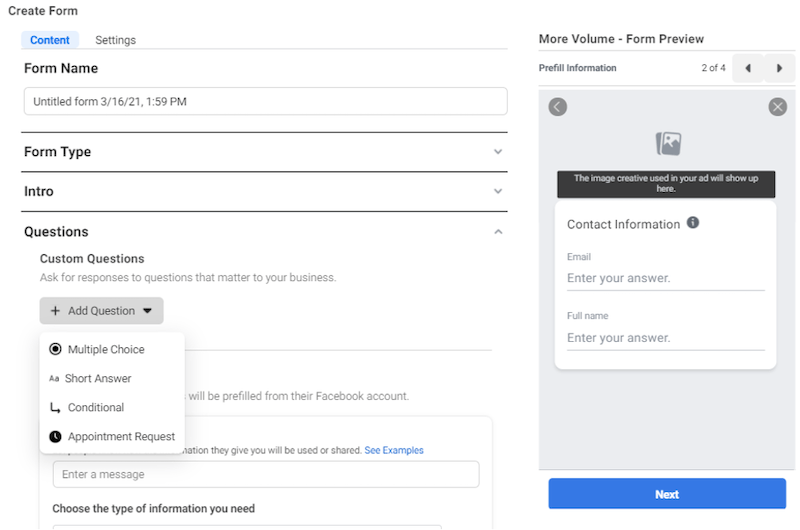
The image above illustrates custom question options available on Facebook, enabling you to gather information that enhances lead nurturing by your sales team. For instance, multiple-choice questions can reveal user preferences for products or services, facilitating targeted email marketing segmentation and tailored offers.
For further guidance on navigating Facebook ads post-iOS 14, refer to our additional tips.
Similarly, Google Ads provides built-in questions for lead form extensions, as shown below.
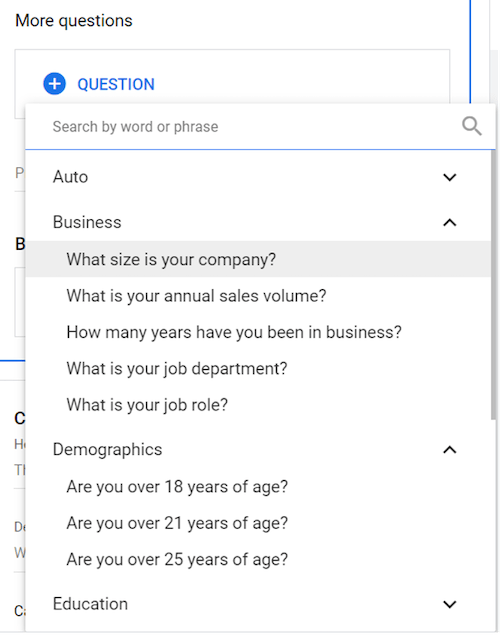
These questions not only aid in lead qualification but also provide insights into your target audience, enabling more effective future targeting.
3. Expanding Reach and Targeting through Diverse Channels and Mediums
While the full impact of third-party cookie deprecation remains to be seen, exploring new advertising channels (if suitable) can expand your reach.
Each platform offers unique targeting options. By diversifying your approach, you can discover new avenues to connect with users and acquire their information. Thorough research and experimentation with various paid media targeting options are crucial.
4. Investing in Brand-Building as a Foundation
While often overlooked, brand-building is paramount. Many companies prioritize bottom-of-the-funnel tactics due to the abundance of targeting options. However, as we transition towards first-party data reliance, compelling users to willingly provide information becomes essential.
Generic calls to action like “Get a free demo!” or “Download our whitepaper” lack appeal without a compelling value proposition. To incentivize information sharing, your content must resonate with your audience.
This requires time, testing, and a deep understanding of your target audience’s needs at each stage of the funnel. Building brand awareness and trust is crucial for companies lacking recognition. Users are more receptive to engaging with and sharing information with brands they perceive as credible and relatable.
Explore our seven brand-building steps for your business.
First-Party Data: Essential in a Cookieless World
As data privacy takes center stage, anticipate further changes in targeting and policies across advertising platforms. Adaptability is key in paid media, and proactively adjusting strategies to align with these shifts is crucial.
Here’s a recap of our four key strategies for enhancing first-party data acquisition:
- Leverage lead generation campaigns
- Utilize custom questions
- Explore alternative ad platforms
- Prioritize brand-building
For website optimization tips related to first-party data collection, consult the CRO section of our website audit checklist.