Adapting Your Local Campaigns for the “Post-Digital” Marketing Landscape
What exactly does “post-digital” mean? It’s not a world where robots rule and we’ve regressed to the Stone Age. Post-digital is our reality now, where digital marketing has blended seamlessly into the broader marketing landscape.
Thinking of digital marketing as a separate entity is no longer effective. “Marketing is king.” Everything else is secondary; incorporating technological advancements or the pervasiveness of social media are just part of modern marketing.
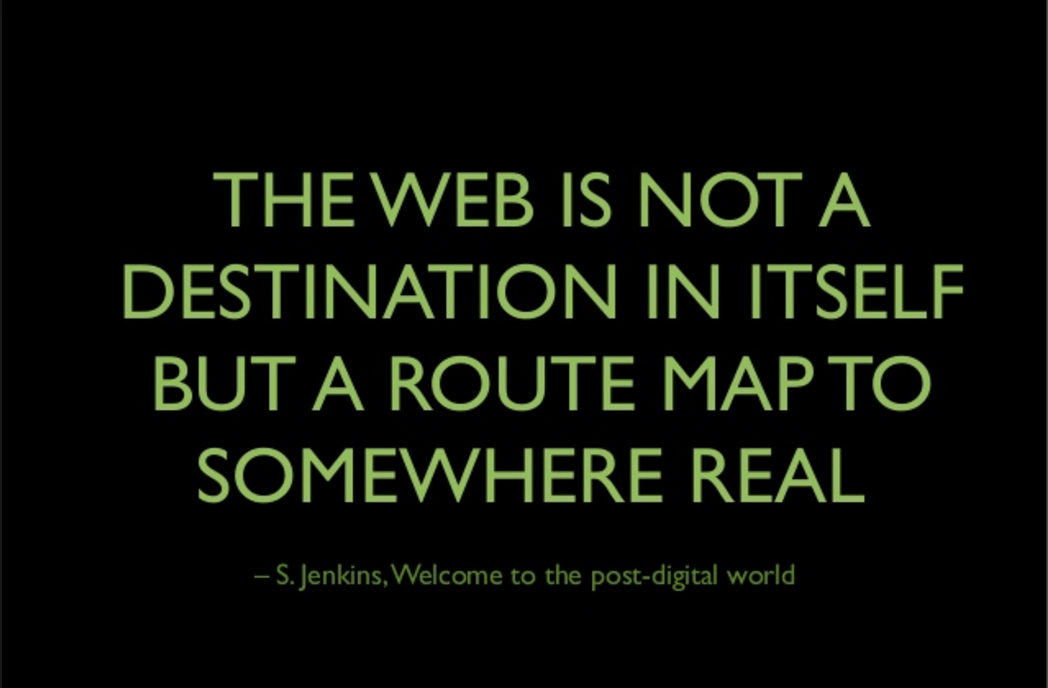
For local businesses and SEO specialists, the key to adapting is understanding evolving post-digital user behavior. What new technologies, apps, or online services are users embracing, and how can your business optimize for that seamless experience? Analyzing social media trends and emerging online services through the lens of lead generation and increasing foot traffic can reveal surprisingly effective ways to improve your local business.
Trend #1: The Dynamic World of Social Media
Social media has exploded in recent years with new platforms like Snapchat and significant updates to existing ones like Facebook Professional Services. With more apps enabling file sharing and live video, creating micro-campaigns that leverage this diversity to reach wider audiences is a powerful way to engage today’s smartphone user.
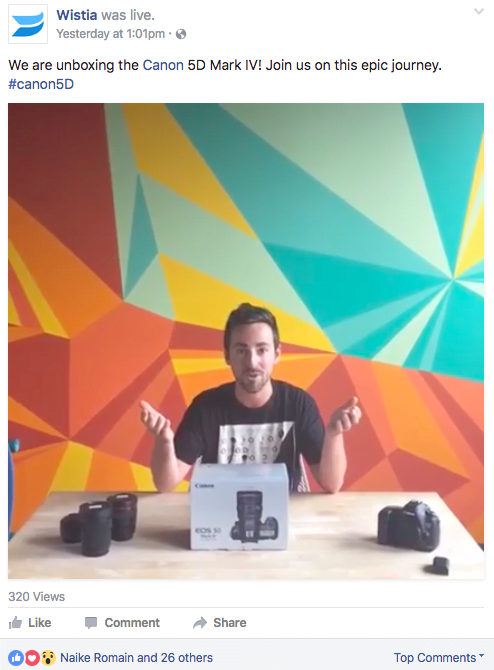
Social media is constantly changing. After a surge in the “broadcasting” mentality (posts not intended for responses), we’re seeing a return to genuine “communication.” Sites like Buzzfeed capitalize on this shift, and emphasize engagements over sales to embrace the communication-focused model. This means users are becoming more valuable as independent advertising platforms. You need to tap into these walking, talking billboards for your local campaigns!
Two Ways to Stay Ahead with Social Media
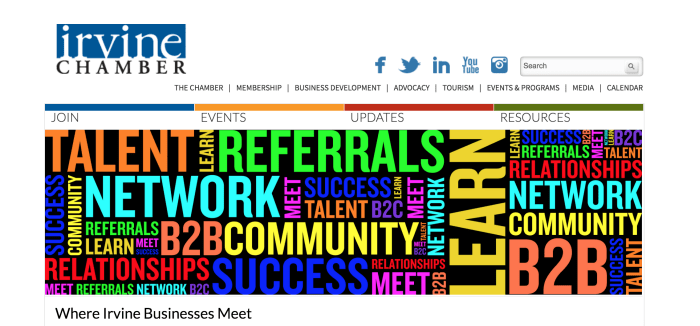
1. Utilize Geofilters for Events or Weekends Local events are fantastic for businesses to showcase their offerings and boost brand visibility. Explore upcoming events in your city on your chamber of commerce page, where you’ll often find lists of sponsors, including startups and creative firms offering services or free consultations.
If sponsoring an event isn’t feasible, creating a Snapchat geofilter promoting your brand at the event location is an excellent alternative. As Snapchat explains, “Geofilters are special overlays that add a fun ‘where and when’ element to a Snap.”
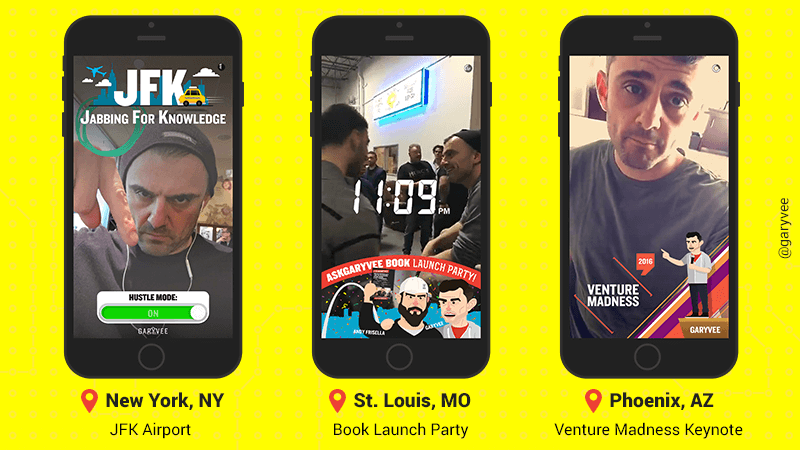
Via Gary Vaynerchuk However, when investing in geofilters, understanding how to optimize them for the right audience at the right time is crucial. Snapchat’s guidelines are relatively broad, but if you understand them and have a good eye for design and optimization, they can be incredibly effective. Snapchat restricts businesses from using community geofilters with the widest reach (designed for cities). Additionally, for user experience, geofilters can’t include logos or trademarked elements and must be entirely original. This means your design’s creativity is paramount. Optimize your geofilter design by following these guidelines: Make it relevant locally – If you’re relying solely on visual design and targeting a specific local market, incorporating landmarks or cultural references is key (a San Francisco geofilter without the Golden Gate Bridge is a missed opportunity).

Don’t overwhelm the screen – Most Snapchat users will tell you a geofilter that dominates the screen gets ignored. There are exceptions, but generally, keeping the space occupied under 20% is a good rule.

Views versus uses – If you’re using geofilters for local market penetration, measuring their effectiveness is essential. While Snapchat’s analytics aren’t super advanced yet, you can see how that may affect your testing here. Keep in mind the distinction between “views” (how many times your geofilter was seen) and “uses” (how many Snaps were sent using it). Don’t restrict usability – Notice how the geofilter below is quite busy and features a Minnie Mouse bow? This limits its use, as it’s designed for a single user interacting with the bow, discouraging groups from using it.

2. Incorporate “Social-Worthy” Elements In-Store + Utilize Hashtags Enhance your store’s social media presence by making it more “social-worthy.” Think free Wi-Fi in a coffee shop. Similarly, shoe stores like Footlocker often have cut-out displays or “selfies with Lebron” posters to encourage photos and tag-ins. Encourage social media use in and around your business to drive foot traffic and gain access to a massive (and free) advertising force.
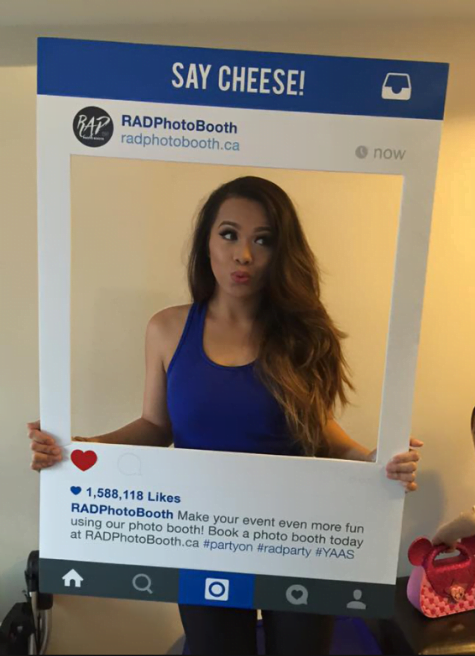
Hashtags are another excellent way to utilize social media’s concise distribution network. Events and conferences often have sponsorable hashtags, similar to geofilters. However, local businesses should leverage Twitter for self-promotion and create their own hashtags to market services, events, and deals. Remember to diversify your hashtag portfolio. Increasing the various links leading to your site has been proven to boost traffic.
Trend #2: Video Makes a Comeback!
Capitalizing on social media also means embracing the resurgence of video marketing. Since YouTube ads became commonplace, millennials have grown weary of traditional video advertising. Popular social media platforms have adapted to this sentiment. If you can advertise to millennials without them realizing it, you’re winning.
Two Ways to Excel with Video
1. Leverage Customer Testimonial Videos Mark Zuckerberg wisely said, “People influence people. Nothing influences people more than a recommendation from a trusted friend… A trusted referral is the Holy Grail of advertising.”

Customer testimonials build brand awareness and trust. This is especially crucial in local markets where customer loyalty and repeat business are vital for profitability. Spreading the word through your customer base can significantly boost local lead generation. For helpful tips on customer testimonials, check out their 12 different posts on improving customer testimonials. Additionally, here are some essential points for local market success: Highlight your customer base – Generally, treat customer testimonials like any other content: focus on quality, quantity, and promotion. Showcase (or at least reference) a large number of satisfied customers. “Nothing draws a crowd like a crowd.” Show real faces – Video marketing is incredibly impactful. When your message’s enthusiasm or emotion becomes tangible, your brand is perceived as a human service, not just a business. Combining these videos with social media, particularly featuring customers from the videos, directly connects you with the community. Humanizing your brand is crucial for community building. Keep it authentic – While this should go without saying, ensure your videos appear natural! Don’t hire actors for testimonials assuming viewers won’t notice – they will. Give your customers and employees a few takes; appearing natural doesn’t mean sacrificing quality. The video should still represent your brand and its standards. 2. Utilize Facebook Video for Retargeted Direct Response Ads Don’t just wait for customers to walk in or the phone to ring – use social media and video to boost slow periods and attract more foot traffic. Creating a retargeting audience from your Facebook video ads allows you to develop Direct Response campaigns that drive foot traffic and conversions. After all, repeat customers, community loyalty, and high turnover are essential for local businesses. One effective method is to build an audience of users who watched at least 25% of your video. Facebook’s strength lies in the demographic, location, and interest data it provides. Once you’ve built this audience, run targeted ads during slow periods offering discounts, specials, and more to drive new business.
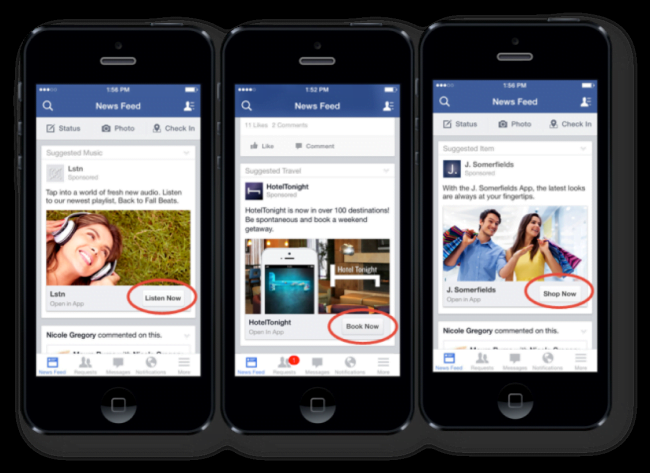
Notice the “listen now,” “book now,” and “shop now” options above? These calls to action encourage immediate conversion, which is perfect for local businesses trying to capitalize on foot traffic. If users are searching for local services or products, utilizing Facebook’s data to target them allows you to retarget with stronger CTAs that drive conversions, not just window shoppers. Learn more about Facebook Remarketing here.
Trend #3: Localized Mobile Advertising
Simply being present on every social media channel isn’t enough; you need to use them to generate leads and increase foot traffic. Localized mobile advertising bridges this gap. More targeted local campaigns will draw in more foot traffic, not just through direct lead generation but also through shares and screenshots. Remember the shift in social media use from “broadcasting” to “communication?” Those glued to their screens can become your brand ambassadors!
Two Ways to Capitalize on Localized Mobile Advertising
1. Leverage Call-Based Ads on Facebook Increasing call volume can be a game-changer for local businesses. It adds another lead generation stream beyond in-store traffic and can boost your pace of business, encouraging mobile users to call in for quick pickups and more. Facebook is ideal for call-based ads as it allows you to fine-tune your audience while maintaining a low cost per thousand impressions (CPM). If you’re using Facebook effectively, your phone number should already be a call to action, encouraging a steady stream of calls. For more ideas on how to increase your call volume to nail down more leads and conversions, check out this blog post. You can customize audience, ad duration, location, and even filter the metrics while tracking data (see the example below).
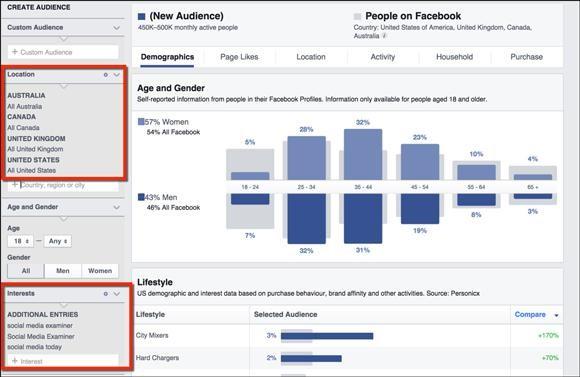
This wealth of data can be used to optimize your campaigns. New demographics (like sale-buyers or those who clicked carousel ads instead of regular posts) allow you to segment and focus all your marketing efforts, not just call-based ones. 2. Combine Local Awareness Ads, Navigation Apps, and Social Media Utilize navigation apps that leverage geolocation to connect your business with mobile users – it’s a powerful new way to reach them. As these technologies and augmented reality apps like Pokemon Go advance, an unprecedented amount of user data is available for local businesses. This has several implications: Firstly, it creates greater market share for local businesses vying for “billboard space” in both the real and augmented worlds. We see this with branded Pokestops and beacon-style advertising through Google My Business.
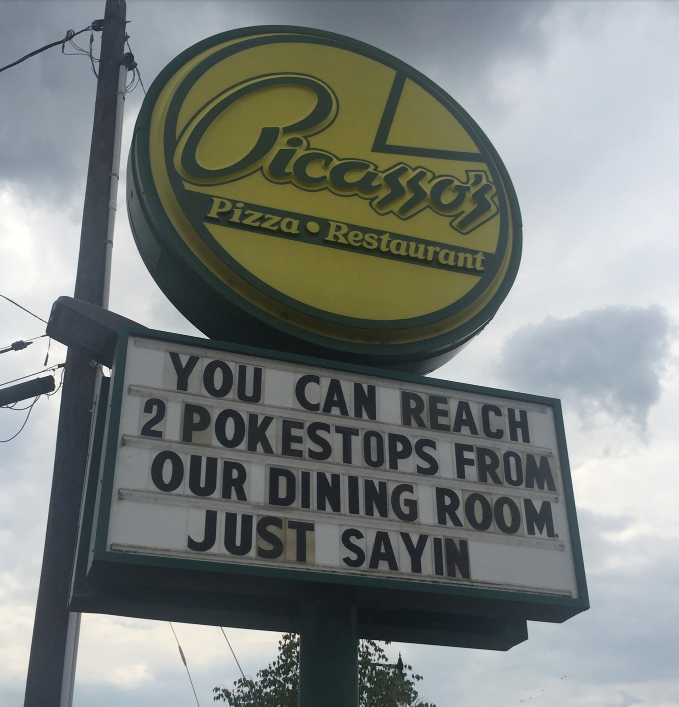
Via marketing4restaurants Research and development in these areas are ongoing, so to stay ahead of the curve, look into Pokemon Go’s effect on local marketing and the future of Google beacons. Regardless of your chosen form of localized mobile advertising (hopefully multiple), consider the various contexts in which your audience interacts with your content. If you’re seeing high traffic from navigation app ads, provide clear directions to your store. Experience a lull during rush hour? Add timed ads to your local campaigns to divert traffic from congested roads to your business.
Trend #4: Looking Beyond the Big 3 Search Engines
Search is evolving alongside social media and the digital landscape. While Google, Bing, and Yahoo remain dominant, search navigation is diversifying. Accounting for niche-market search avenues can significantly benefit your local marketing.
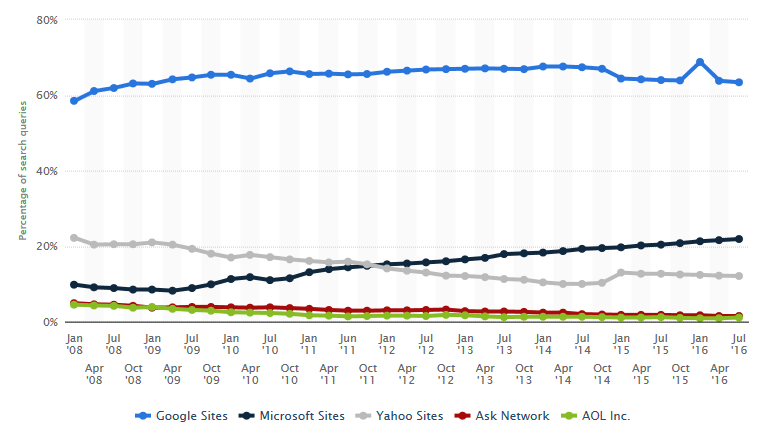
Via Statista New search engines are emerging, some focusing on testimonial or customer-review based algorithms for more personalized results (like Quora). Others tap into the multitude of search practices, aggregating results from various engines while minimizing tracking or adware (DuckDuckGo, Dogpile). However, for local marketing, review sites hold significant weight.
Two Ways to Succeed with Review Sites
1. Embrace the System – Encourage Customer Feedback Review sites are here to stay. Instead of feeling overwhelmed by the anonymous feedback (both positive and negative, genuine and fabricated), adapt to it.
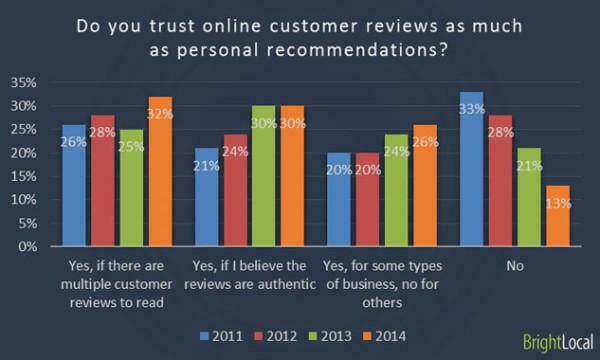
For local businesses especially, review sites wield immense influence. Address any performance or site issues (ideally before reaching out to customers), then encourage feedback. A well-run, customer-centric business will naturally attract positive reviews, especially with visible prompts encouraging feedback! However, no business is perfect, and negative reviews are inevitable. Don’t panic; remain calm and respectful. Apologize and offer to address the issue directly with the dissatisfied customer. This accomplishes two things: First, it de-escalates the situation, avoiding a public comment war that reflects poorly on your brand. Second, it demonstrates maturity and business acumen; other users will recognize your commitment to improvement, further reinforcing customer satisfaction. 2. Collaborate with Local Bloggers for PR Bloggers for local publications are a goldmine for new leads and increased search engine results page (SERP) visibility. Consider this local search: “orange county coffee shops.” Google prioritizes and consistently ranks these local news sites.
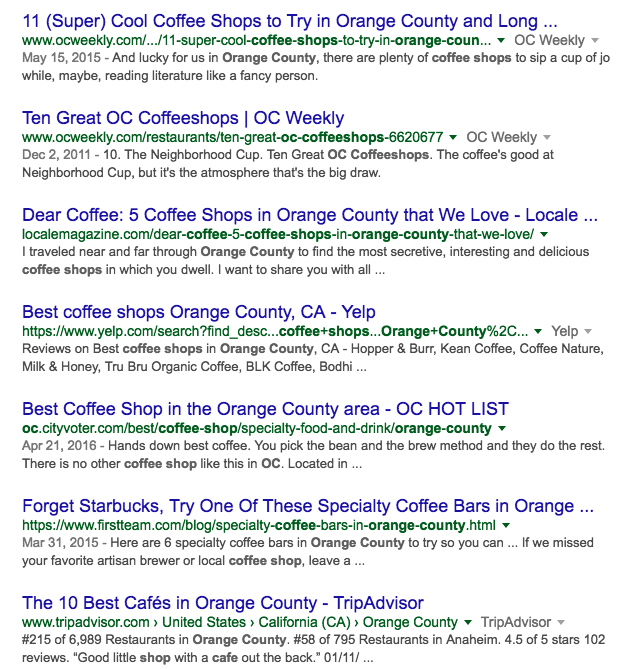
Notice there isn’t a single coffee shop website on the list. In 2017 and beyond, consider SEO an extension of PR. To capture local market share beyond your website, identify your most profitable keywords (e.g., “orange county coffee shops” for a coffee shop). Find the authors of relevant articles and offer them a complimentary experience in exchange for coverage. If a list already exists, request inclusion. Here’s a sample script: Hi (first name), My name is Sean, and I loved your recent piece for____. Your last post on ___ made me want to get out more often. I’m the owner of (your business name) and would love to host you at my store for ___. If you enjoy the experience, feel free to share your thoughts! Think beyond your website and watch the leads and foot traffic roll in!
Update: Trend #5
The Google My Business platform is revolutionizing how consumers discover, evaluate, and interact with local businesses. It provides online visibility for the entire local business community, ranking them in search results based on the completeness and quality of their listings (known as Business Profiles). Furthermore, due to their comprehensive nature, consumers are increasingly engaging with businesses directly through their Google Business Profiles in SERPs rather than their websites. Optimizing your Business Profile for both ranking and conversion is crucial. Google Business Profiles offer a wealth of SEO opportunities, with new features constantly emerging. Create and verify your Google My Business account today to harness the power of this free marketing tool for your local business.
Embracing the “Homo-Digitus”
Today’s post-digital consumer is active across multiple social media channels, well-informed (or at least has easy access to information), and most importantly, expects value from every interaction. Whether you’re building your brand, driving foot traffic, or promoting content locally, offer something valuable in each marketing touchpoint. Snapchat micro-moment ads offer geofilters, beacon campaigns broadcast deals, video campaigns provide expert advice or how-to guides – the possibilities are endless. The global reach of online marketing has merged with the immediacy of the post-digital revolution. The world’s information is at our fingertips. The global is digital, the digital is navigational, the navigational is local, and the local is social. Remember: in today’s post-digital world, separating digital from marketing is no longer viable. The two are intertwined, like “the caveman and his iPhone.”