For digital marketing agencies handling Google AdWords for clients, the platform’s recent transformation into “Google Ads” signifies more than just a logo change. Beyond the cosmetic update, there are noteworthy alterations that agencies and their clients need to understand.
While AdWords has always included various marketing tools like GDN, Shopping, and YouTube, the brand has been closely associated with paid search. This rebranding aims to present a comprehensive platform encompassing all Google ad channels under a single, unified umbrella. This article will delve into the most significant changes that could impact your agency’s operations, enabling you to deliver greater value to clients and develop distinctive selling points for future prospects.
A Crucial Point to Remember
Working with Google AdWords for an extended period reveals one clear truth: not all new product features live up to their initial hype. What might seem like a missed opportunity at first glance could actually be a detrimental addition to an account. Let me clarify that this is not to downplay Google’s innovation. My intention is to advise agencies, whose success depends on their clients’ performance, to approach new technologies thoughtfully and with caution. It’s essential to test the waters before diving in headfirst. The actual experience might be vastly different from initial expectations.
#1. Responsive Search Ads
The ability to craft compelling expanded text ads has been a significant advantage for agencies taking over accounts with lackluster or underperforming ads. The extra space for headlines made a world of difference when proposing improvements. Fast forward to 2018, and Google introduces Responsive Search Ads. These ads allow for up to 15 headlines and four descriptions. Google’s machine learning then tests various combinations, selecting the top performers based on factors like keyword, device, and past browsing history. This dynamic approach contrasts sharply with the traditional method of creating multiple static ad versions and awaiting performance data.
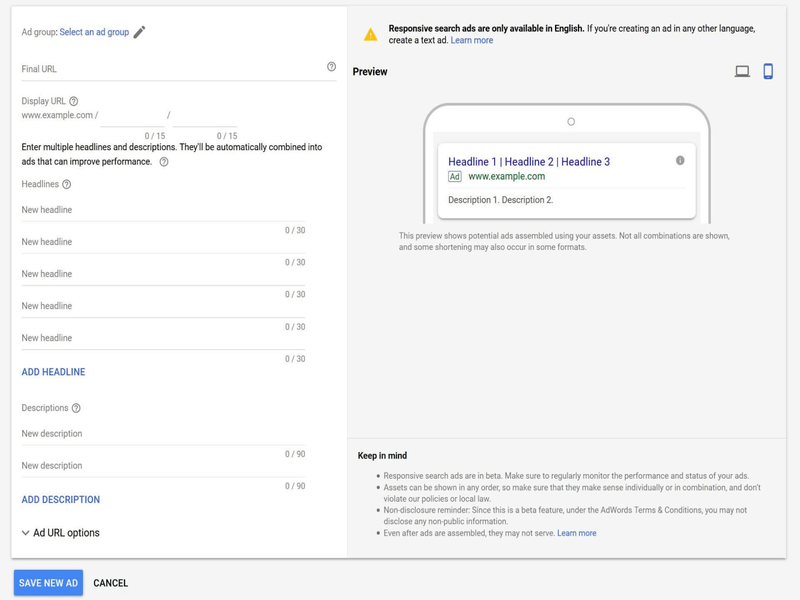
Furthermore, responsive search ads can display up to three headlines with 30 characters each and two description fields with 90 characters each. On paper, this has agencies excited about replacing their expanded text ads with these larger, “smarter” options. However, caution is advised. Experience shows that even minor changes can significantly impact performance. That being said, this update holds great promise. While I have reservations about the effectiveness of “machine learning,” often used by tech companies to suggest their algorithms rival those of science fiction, the key takeaway for agencies is the opportunity to test something entirely new for their clients. These ads have the potential to revolutionize account performance through extensive testing and optimization.

#2. Lead Ads on YouTube
YouTube’s vast audience reach, coupled with the ability to keep users on the platform, makes lead ads a format with immense potential. The success of Facebook’s lead ads likely inspired Google’s decision to follow suit, and it’s a welcome development.
The only potential drawback is how Google plans to integrate this feature with services like Hubspot, Marketo, and Salesforce, which businesses use for lead processing and sales handoff. Downloading leads directly from Google Ads could pose challenges. While this shouldn’t be a long-term problem, the initial implementation might have limitations. For clients running display ads, it’s worth analyzing placements. If YouTube drives significant clicks, especially with high CPAs, this is crucial. When available, testing remarketing audiences of non-converters is recommended. If a client or prospect finds success with Facebook Lead Ads, replicating this on YouTube could be a compelling pitch. For clients looking to expand their reach beyond Facebook, your experience with Google Lead Ads could be a strategic advantage.
«Free Guide: How to Gain and Retain More Clients»
#3. Smart Campaigns and Agencies for Small Businesses
Marketed as a simplified advertising solution for small businesses, Smart Campaigns might not be your primary focus, but they can be leveraged when engaging potential clients.
Scalability: A prospect successfully using Smart Campaigns might benefit from scaling their operations. Conversely, limited success with Smart Campaigns presents an opportunity to highlight the advantages of a more intricate and tailored account structure. Expertise: Smart Campaign users might resemble those who claim Facebook ads didn’t work for them. Further inquiry often reveals they merely boosted posts without utilizing the full Ads Manager. This allows you to showcase the benefits of maximizing the platform’s potential beyond basic usage.
#4. Smart Shopping for Ecommerce
Most digital marketing agencies manage ecommerce clients. In recent months, Google announced the integration of its machine learning technology into its shopping platform. Smart Shopping allows advertisers to focus on store visits and new customers as goals. Machine learning then handles bid adjustments, ad placement, and product selection based on various factors.
While I’ve poked fun at machine learning, this is a game-changer for ecommerce. Competition fuels innovation, evident in Google’s efforts to surpass Facebook’s advertising offerings. The supporting data for Smart Shopping is compelling, showcasing a 20% increase in conversion value at a comparable cost. The launch of “automated feeds” further enhances this. This feature simplifies product feed creation by directly importing products from a website into the interface. If you’re managing successful catalog ads on Facebook, exploring these Google features is recommended. The integration with Shopify makes adoption less daunting, addressing a concern I had with YouTube Lead Ads. So, what does this mean for agencies with ecommerce clients? Added Value to Existing Clients: For those running successful shopping ads, this presents an opportunity for optimization. As mentioned earlier, early adoption has minimal drawbacks. For underperforming campaigns, this could be the solution. Selling Point for Prospects: If a prospect has had negative experiences with their previous agency, these updates offer a chance to present fresh ideas.
Final Takeaways
Testing is Crucial: Just because a feature doesn’t yield immediate results doesn’t mean it won’t ever. Gmail ads had initial challenges but evolved over time. Features that fail initially might become viable options later. Regularly revisiting past failures can lead to future success. Platform Differences Matter: While Google is introducing Facebook-like features, remember they are distinct platforms. What works on one might not on the other. This shouldn’t discourage testing but emphasizes the need for realistic expectations. Client Specificity: Some features might resonate with certain clients while falling short for others. YouTube Lead Ads might succeed where responsive search ads don’t. Avoid generalizing failures and tailor your approach based on individual client needs. Experience is Key: Ultimately, the best way to understand a feature’s potential is through firsthand experience.