I recently returned from MozCon, and the experience is still lingering – it’s like that feeling after you get off a trampoline, struggling to readjust to walking normally. You could call it a version of the Tetris Effect.

MozCon is a well-known name in search marketing, but in case you’ve never attended, trust me, the presentations are top-notch. They don’t even accept pitches – it’s strictly invitation-only. Plus, the conference is single-track, meaning if you’re lucky enough to speak at MozCon, you’ll have the undivided attention of a large, discerning audience. However, this high bar for quality presents a challenge for speakers.
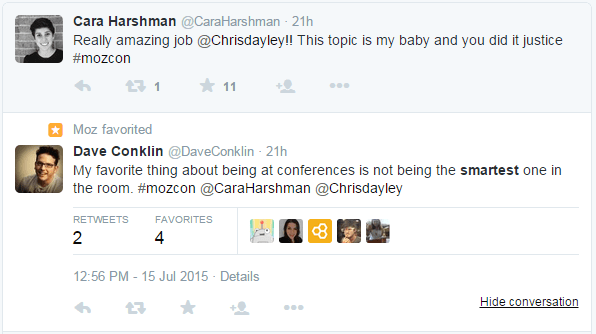
_Suddenly feeling less intelligent than everyone else? #humblebrag _ When surrounded by excellence, you must up your game to stand out. Any session at MozCon could easily be the highlight of a less prestigious conference. But amidst so many skilled and acclaimed speakers, only the truly exceptional ones will leave a lasting impression. So, what elevates a conference session to that “MEGA great” status? While I’ve done my share of public speaking (mostly poetry readings, surprisingly), I wouldn’t call myself a marketing conference superstar. In this post, I aim to share what makes a session memorable from the audience’s perspective. Aspiring to be not just a good, but a great public speaker? Here are four key elements that will help you stand out and leave a lasting impression long after the conference is over.
An unforgettable catchphrase
The power of a catchphrase shouldn’t be underestimated, both in movie trailers and conference sessions. At this year’s MozCon, Cyrus Shepard mentioned Wil Reynolds’ memorable session from the previous year, where his repeated use of “Real Company Shit” turned it into a catchy phrase. However, a single utterance can be enough to birth a catchphrase – the key is its quotability. It should be concise and impactful, something people can easily tweet verbatim. When you achieve this, the conference hashtag explodes with attendees sharing your catchphrase. Here are a few that resonated at this year’s MozCon:
- “When you keep hammering at a door, it often opens” – Lexi Mills
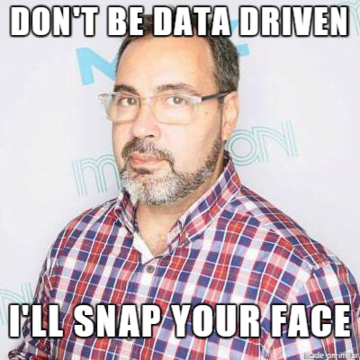
- “Don’t be data-driven, be data-informed” – Gianluca Fiorelli
- “In the future we’ll be optimizing for two algorithms” – Rand Fishkin You need to strategically weave these catchphrases into your presentation. Think about concepts that are tweetable, meme-worthy, and memorable enough to be encapsulated in a single sentence. Your presentation likely already contains this valuable content – something both original and compelling – but it’s crucial to refine it into a concise, quotable catchphrase and incorporate it into your script or even directly onto your slides (ideally both). Don’t leave this task to your audience.
Offer concrete, actionable advice, not subjective opinions
Industry “thought leaders” can be loosely categorized into two groups: those who are heavy on inspiration (all catchphrases) and those focused on technical details and tactics (data over catchphrases). In my experience, MozCon strikes a balance, featuring both high-level, conceptual speakers and those who delve into the nitty-gritty details. Both styles resonate with the audience, so neither is inherently superior. However, I believe the ineffective way to inspire is by offering prescriptive advice based solely on personal opinions. For instance: “Don’t be creepy.” Or “Be amazing.” The problem is that terms like “creepy” and “amazing” hold weight only when you know and trust the source of the judgment. While you may trust your own definition of creepy/uncreepy and awesome/unawesome, you likely don’t extend that same trust to everyone else, and there’s no guarantee that they trust your judgment. The reality is that very few people consider themselves creepy, while a significant number believe they’re awesome. It’s similar to everyone thinking they’re a good driver or make fantastic smoothies. (Seriously, why does everyone think their smoothies are the best?!)
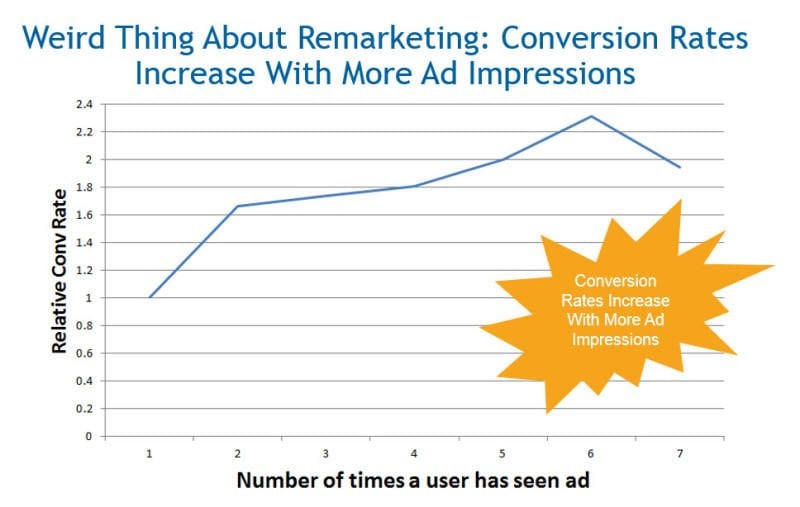
Discussions about remarketing often involve the “creepy” argument. However, the data suggests otherwise. In reality, people are far more accepting of remarketing ads compared to general display ads, even when exposed to them more frequently; they also result in better conversion rates, even after numerous impressions. The perception of remarketing as “creepy” largely stems from industry insiders. However, as a business, your most astute marketing peers might not accurately represent your target audience. Instead of vague, subjective recommendations, focus on providing concrete, actionable advice. For example, instead of saying “Just create great content,” suggest: “Provide answers to your customers’ real questions, exceeding the quality of information provided by anyone else ranking on page 1.” (And not just better, emphasizes Rand Fishkin, Wizard of Moz, but 10X better.) Then, demonstrate HOW to uncover those questions and illustrate what “better than everyone else” entails using concrete examples. Instead of advising, “Don’t be creepy,” present data that reveals when people start to perceive you as such. Teach them how to navigate around those data points. This type of advice is far more practical and actionable. This brings me to my next point …
Spark note-taking moments
I’ve had several conversations at MozCon (sometimes initiated by me) where someone remarked, “X was a fantastic speaker … but I didn’t jot down any notes.” Conversely, I’ve also heard: “X wasn’t a particularly engaging speaker, but I took a ton of notes.” Taking notes signifies encountering NEW AND INTERESTING INFORMATION. While I advocate for inspiration, it should always be coupled with valuable information. Don’t just rehash what the audience already knows, such as “You need a content strategy” or “Your brand could be much more popular.” They are aware of these things! That’s why they’re attending a marketing conference! Your focus should always be on the how – explain how to execute the strategies you’re an expert in. That’s what prompts note-taking. To be more specific, here’s what people write down:
- Astonishing facts or statistics they weren’t aware of
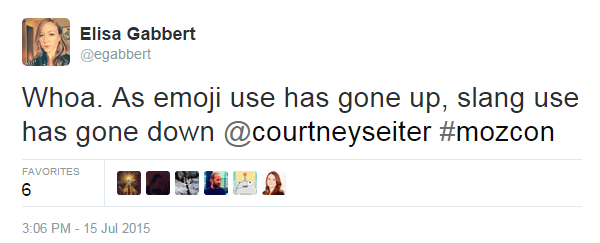
- Impressive tools they didn’t know about or weren’t utilizing effectively
- Tactics/processes/shortcuts previously unknown to them
- Novel concepts/frameworks/paradigms that fundamentally shift their perspective If brand strategy is your forte, don’t waste time preaching its importance. Your audience chose to attend your talk, so they likely already agree. Share the insights and practices that make you a brand strategy expert.
Incorporate at least one high-impact chart or list
While reviewing our Twitter analytics a few months ago, I observed a pattern in our top-performing tweets: Images rich in data consistently perform exceptionally well. While image tweets generally outperform text-only tweets, and colorful images also fare well, sharing images that convey valuable information is crucial, particularly in our field. These images typically feature a substantial amount of text, data, or a combination of both. For instance, here’s a tweet incorporating a list within the image:
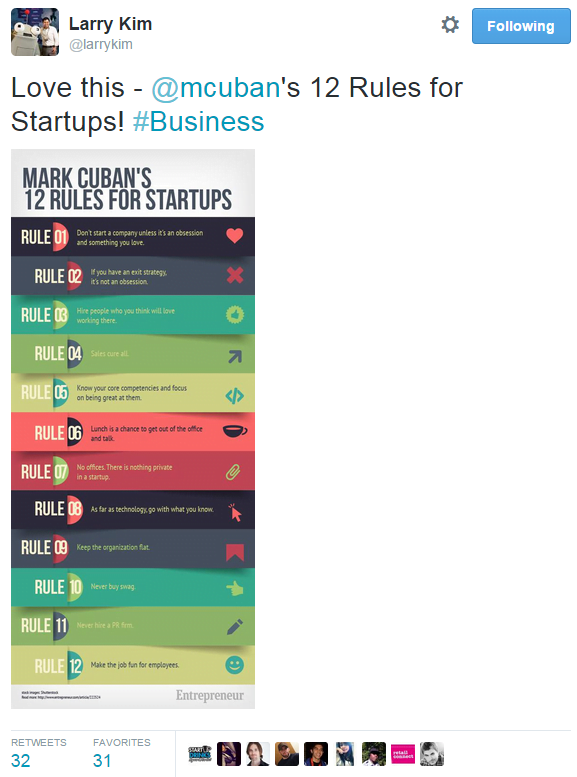
Here’s another example that’s rich in visual data:
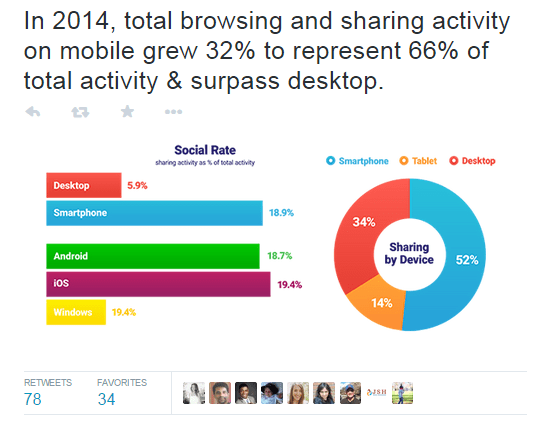
The beauty of such images lies in their ability to convey a wealth of information within the tweet itself. Users don’t even need to click through to the linked article (if there is one) to gain valuable insights. Simply reading the tweet provides a valuable experience, and when your audience learns something new, they are more likely to share it. You can leverage this same principle in your conference presentations by including slides that pack a significant amount of information into a single visual, be it a list, graph, or chart. Ideally, this visual should be original to you, not a commonly used or unoriginal one. Here’s an example from Rand’s insightful presentation on the future of on-site SEO:
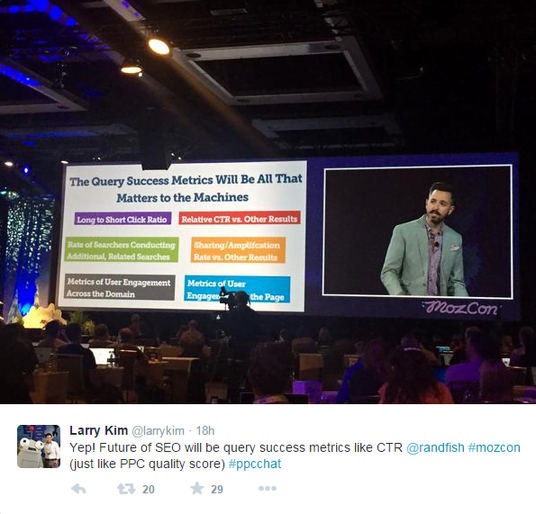
People will capture your slides through photos or screenshots and share them on Twitter, further amplifying the reach of your presentation and solidifying its memorability. You’re essentially hacking collective memory! (On a side note, if you’re interested in Rand’s presentation, Larry and I have been exploring a similar model for SEO since early last year. Learn more about our concept of “Quality Score for organic search" here.) For those who couldn’t make it to the conference, you can download all the slides here. Some of the standout speakers who truly impressed me this year were Matthew Brown, Cara Harshman, Pete Meyers, Marshall Simmonds, Courtney Seiter, and of course, Rand Fishkin. Did you attend MozCon this year? Who were your favorite speakers? What valuable insights did you note down?