Let’s imagine a game of “Who Do You Trust?” Would you choose the sponsored results at the top of a search results page, or your own sister? What about a flashy banner on YouTube versus a recommendation from your closest college friend?

This is a no-brainer, right? We inherently trust those we know – family, friends, even acquaintances – more than we trust advertisements or companies. We’re swayed by suggestions, reviews, testimonials, online discussions, and above all, referrals. Leveraging referral marketing can make your business stand out in a crowded marketplace, but only if done right. Here’s a comprehensive guide to get you started, including inspiring examples from companies that have successfully used referral marketing to boost their business.
What exactly is referral marketing?
Referral marketing is a strategy that capitalizes on recommendations and word-of-mouth to expand a business’s customer base. It harnesses the power of existing customers’ networks. Referral programs can take various forms, but fundamentally, they empower your most enthusiastic customers to become brand ambassadors. In essence, referral marketing transforms your current customers into your most vocal advocates.
Why is referral marketing so effective?
Before diving into the how of building your referral marketing strategy, let’s explore the why. Just how impactful are referrals? Consider these statistics:
- A word-of-mouth impression drives at least 5x more sales than a paid impression.
- Customers acquired through word-of-mouth spend 2x more and make 2x as many referrals themselves.
- Referred leads convert 30% better and have a 16% higher lifetime value than leads acquired via other channels.
- Half of Americans would pick word-of-mouth if they could only select one source for information on potential purchases.
Word-of-mouth and referral marketing are budget-friendly, potent, and inherently trustworthy. When we have a positive experience with a brand, product, or service, we naturally want to spread the word. In his acclaimed book Contagious, marketing expert Jonah Berger outlines six key principles that drive sharing and word-of-mouth:
- Social currency: We share what elevates our social standing.
- Triggers: We share what’s currently on our mind.
- Emotion: We share what resonates with us emotionally.
- Public: We emulate the actions of those around us.
- Practical value: We share things that benefit others.
- Stories: We connect with and share stories, not just information.
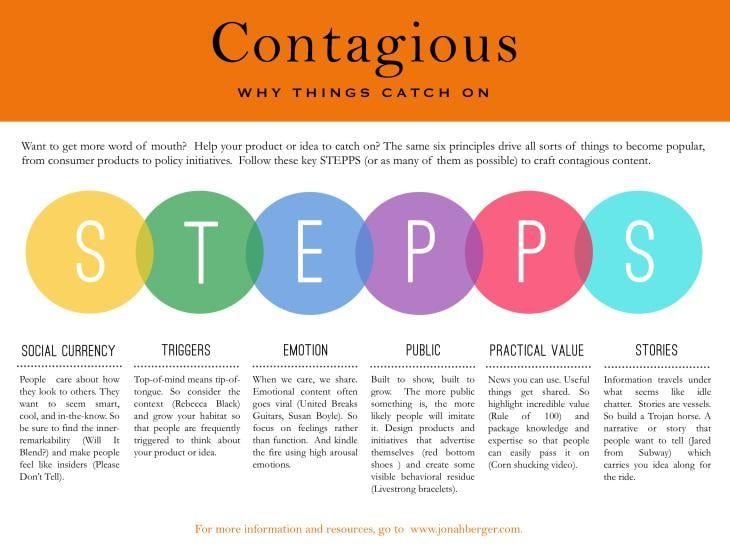
Image Source Integrate as many of these principles as you can, and you’ll create something buzzworthy – an idea, a product, an announcement – that people will naturally want to discuss and share, setting you apart from the competition.
Leveraging referral marketing for a competitive edge
The numbers speak for themselves: Recommendations and referrals are not just beneficial; they’re essential for cutting through the noise. Consumers actively seek them out, and they can be the deciding factor between two comparable products or brands. The digital age has made establishing and running a business more accessible than ever, but it’s a double-edged sword, bringing with it heightened competition. Referrals transform your satisfied customers into your most persuasive advocates. They’ve invested in your product, and if they’re happy with their purchase and the value it delivers, it becomes a compelling endorsement. Implement a user-friendly and mostly automated referral program with enticing incentives, and you create a self-sustaining lead generation engine. It’s a spotlight on your brand in a sea of similar offerings.
Drawing from my experience working with Raúl Galera of ReferralCandy, I’ve compiled a few examples of how businesses have strategically used referral marketing to differentiate themselves.
Referral Marketing Strategy #1. Girlfriend Collective’s grand entrance into a saturated market
The fashion industry is notoriously competitive, and womenswear is even more so. Making a memorable first impression is crucial. Girlfriend Collective, an athleisure wear e-commerce company, recognized the need to carve out its niche. They wanted to rapidly gain traction and compete with established giants like Lululemon, Adidas, and Nike. Their first step was creating an exceptional product: Leggings and bodysuits crafted entirely from recycled plastic bottles, produced under ethical and fair-trade practices. Next, Girlfriend Collective needed to maximize brand awareness cost-effectively. Instead of pouring resources into traditional marketing, they opted for a bold move: giving away their $80 leggings for free. Co-founder Elle Dinh explained their reasoning:
“It’s a bit daunting to buy a $100 pair of leggings from a brand you’ve never heard of. We wanted to build trust, and we believed in our product so strongly that we knew giving it away would achieve that.”
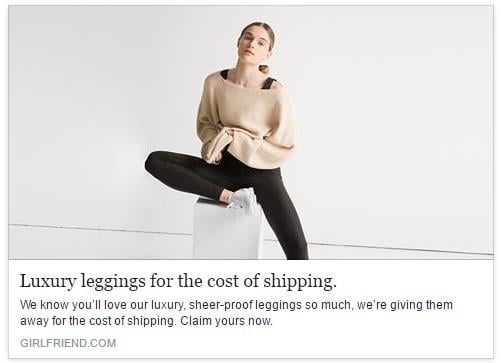
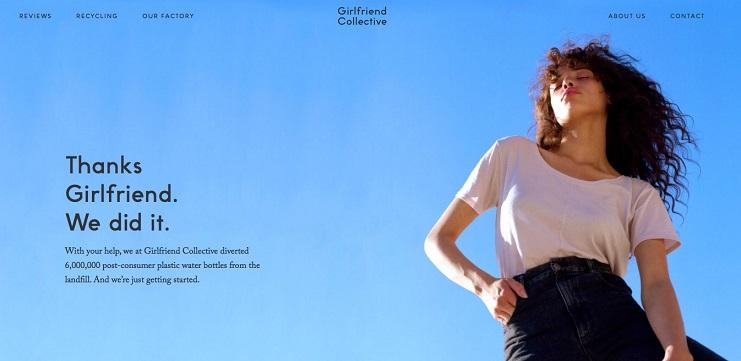
Girlfriend Collective’s pre-launch website highlighted their commitment to sustainability and ethical production, using recycled plastic bottles and ensuring fair-trade practices. Customers weren’t just getting free leggings; they were supporting a brand with a conscience.
This strategy cleverly tapped into Jonah Berger’s “emotion principle” – people are driven to share things they’re passionate about. Those who came across this offer were eager to spread the word about the free, eco-friendly leggings, creating a win-win scenario that was inherently shareable. The limited-time nature of the offer created a sense of urgency. Scarcity marketing tactics like this are effective because people place a higher value on things that are in short supply. The results were astounding. Girlfriend Collective’s word-of-mouth campaign generated 10,000 orders on the very first day, crashing their website and even overwhelming Facebook’s sharing feature! The brand was also featured in numerous online publications, including Refinery29, Observer and InStyle. Today, Girlfriend Collective boasts a substantial social media following with 187,000 Instagram followers and 66,000 on Facebook. Their strategic use of word-of-mouth marketing enabled them to rapidly build a loyal customer base and a strong following, arguably at a fraction of the cost of traditional advertising.
Referral Marketing Strategy #2. Critical Pass Achieves Scalability with a Referral Program
The market for exam preparation resources is vast. From tangible study aids like flashcards to online platforms offered by giants like Kaplan, students have a plethora of choices. Critical Pass specializes in flashcards designed for law school and the bar exam. They offer a proven study method, a high-quality product, and all at an accessible price point.
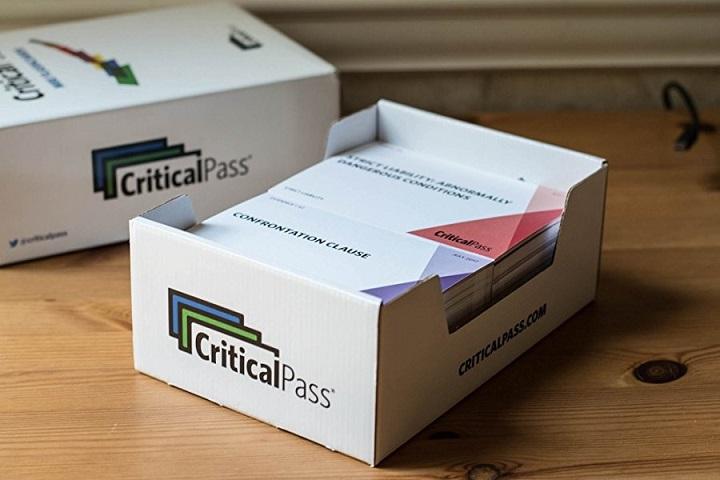
The company’s challenge was convincing students that their flashcards were the superior choice. They faced two primary hurdles. First, the very nature of their product meant repeat purchases were unlikely. Once a student passed the exam, they wouldn’t need the flashcards again. Second, they couldn’t guarantee a specific score improvement due to individual variations in study habits and learning styles. Initially, the company experimented with various marketing avenues, achieving moderate success. However, they realized that their happiest customers held the key to attracting new ones. As Nathan Kleiner, CEO of Critical Pass, aptly puts it, “Our aim is to have customers only once. They use our product, succeed in their exams, and then they don’t need to buy from us again. They’re so thrilled with the results that they readily refer their friends.” The bar exam is notoriously challenging, leading law students to actively seek advice and recommendations on social media, forums, and online communities. This organic community aligns with the practical principle in Jonah Berger’s STEPPS framework, where successful students naturally share the tools and strategies that helped them achieve their goals. Critical Pass recognized an opportunity. Since their satisfied customers were already inclined to share their positive experiences, a referral program that rewarded this behavior could amplify their efforts. It would incentivize and, consequently, encourage more sharing.
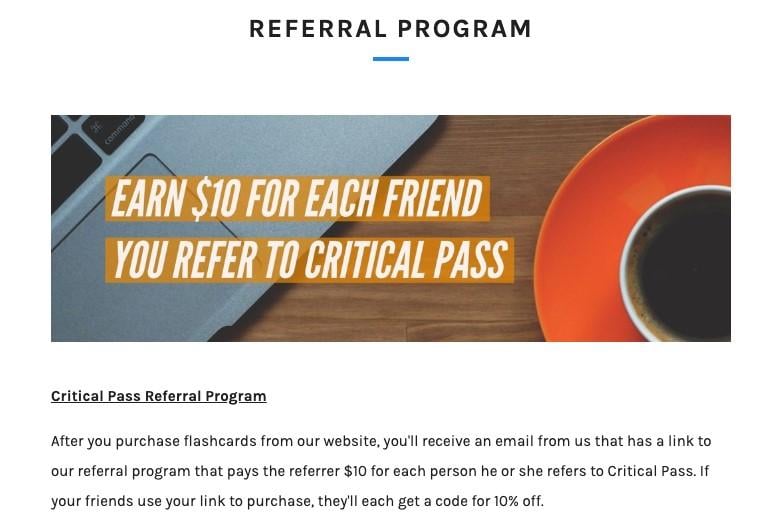
They implemented a system where customers received a $10 reward for each successful referral (leading to a purchase), and new customers enjoyed a 10% discount. These financial incentives resonated with law students, many of whom relied on part-time jobs or student loans. The referral program was a resounding success, delivering a 24x return-on-investment, and now contributes to over 10% of their revenue and orders. A testament to a system that practically runs itself.
Referral Marketing Strategy #3. Hawkers: Turning Every Customer into an Influencer
The founders of Hawkers, a global e-commerce retailer of sunglasses, began their journey as distributors for Knockaround, a popular sunglasses brand, in their home country of Spain. They had achieved considerable success with Knockaround by leveraging a clever strategy: gifting sunglasses to individuals with large Facebook followings in exchange for featuring the product in their posts. However, they aspired to build their own brand. Thus, Hawkers Co. was born. For Hawkers, they replicated the micro-influencer social media strategy that had proven so effective previously. They started with Facebook Ads and micro-influencers, sending free sunglasses to those with a substantial online presence. They then expanded to Instagram, and their approach was so impactful that Instagram even featured them in a case study highlighting successful advertising strategies.
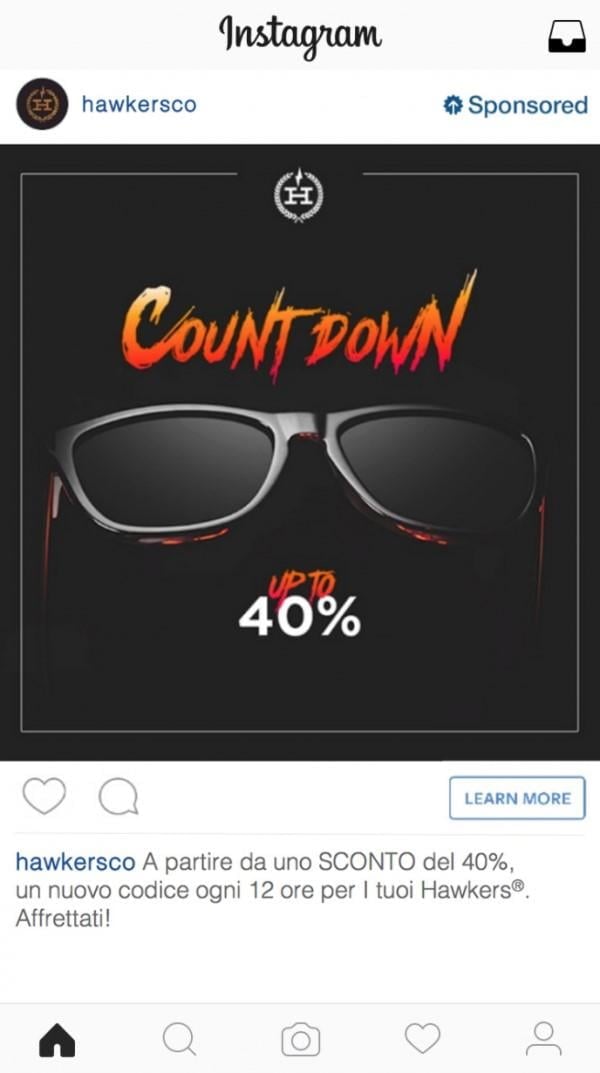
Hawkers didn’t stop at free sunglasses. They eventually launched a comprehensive referral program that benefited influencers, their followers, and naturally, the company itself. This gave customers even more incentive to showcase Hawkers’ sunglasses. It provided social currency and a chance to offer their followers a great deal. With personalized promo codes, every customer became a potential influencer, earning commissions on successful referrals while their friends received attractive discounts.
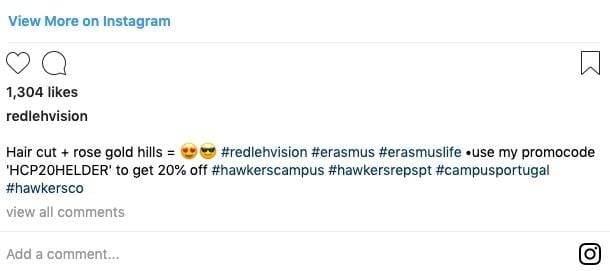
This referral program amplified the organic social sharing spurred by their word-of-mouth strategy, allowing them to achieve roughly 90% of revenue to come from social media. The company now boasts annual sales exceeding $70 million USD. Thanks to brands like Hawkers Co., the eyewear industry, once heavily reliant on celebrity endorsements, has undergone a transformation. Now, anyone can leverage social media and referral marketing to become an influencer within their own circles. With the right tools and messaging, referral marketing can become an incredibly potent and cost-effective tool for your business. Here are key takeaways to keep in mind:
- Craft a clear and concise brand message that is easy to grasp and repeat.
- Cultivate a community around your brand. It’s more than just a product or a logo; it represents a set of values. When your customers connect with those values, they’ll naturally become brand advocates, with or without a structured referral program.
- Your customers are your most authentic salespeople. They can promote your brand to their personal networks without sounding overly promotional. People are more likely to trust a recommendation from someone they know compared to a celebrity endorsement.
- Make referrals effortless. The process should be seamless, allowing customers to easily share your brand. Offer enticing rewards that align with their purchasing behavior, and you’ll create an army of passionate brand ambassadors. How are you integrating referral marketing to amplify your brand’s story? We’d love to hear your examples! Share your thoughts in the comments below!