The question is, what kind of advertiser wouldn’t want their ad to take up as much space as possible on a prospect’s search engine results page? The answer is, a bad one. How do you dominate the search results page? Ad extensions, of course! As most of you know, ad extensions are those extra pieces of information Google lets advertisers add to their Expanded Text Ads to give searchers more (and more relevant) information. They’re easy to set up, free to display, and they transform your search ads from this…

Into this…
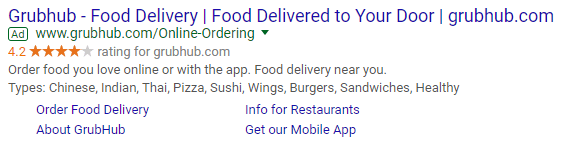
After a long night out, which ad would you click? Now, while they’re super useful, ad extensions aren’t a secret. Your competitors are already using them. They’re probably doing it inefficiently, using broad messaging at the account level (you can actually tailor some of these to specific ad groups), but their ads are still beefed up. In a world where everyone’s ads are bursting with clickable, informative extras, how can you stand out? By getting creative with how you use ad extensions. Today, I’m going to show you three creative, outside-the-box ways to use ad extensions that will help you stand out from the crowd. They are:
- The zero-dollar price extension
- The message extension as lead generation
- The daily callout extension Let’s get started!
#1: The Zero-Dollar Price Extension
Price extensions are relatively new to the ad extension scene, but if you sell something (which I’m guessing you do), they’re a must-have. Basically, price extensions let you call out specific products or services and show their prices right alongside the rest of your ad. They look like this:
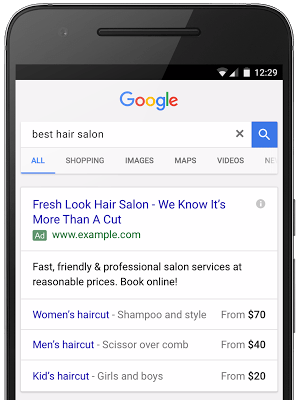
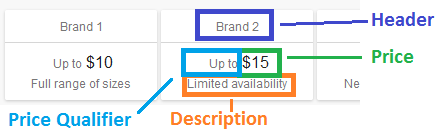
As you can see, the price extensions appear below the ad description and link directly to the product pages on your website. You can also add a category (header), a price qualifier (like “from” or “up to”), and a short description. Price extensions are some of the most information-rich ad extensions available.
When they first came out, they were only available on mobile, which made them super useful for e-commerce and simple lead generation but not so much for businesses selling more complex things, like online advertising software. But now, price extensions are available on all devices, making them a valuable tool for all advertisers, especially those who want to give something away for “free.” Yes, you read that right. If your goal isn’t to make an immediate sale, but to introduce potential customers to your business with free tools or gated content (like white papers, infographics, etc.), you can use price extensions to highlight these freebies and increase your chances of converting leads. For example, we use price extensions to emphasize that our AdWords Performance Grader is free (we mention it twice!) and offer people the chance to start a free trial of nexus-security Advisor or check out our revamped Free Keyword Tool:
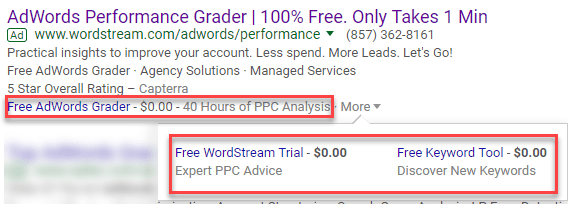
Instead of just using sitelink extensions with descriptions that mention these offers are free, we use the power of the dollar sign (or lack thereof). While it’s still best to use individual ads that focus on the most relevant tool based on the keyword, offering additional free options through price extensions will a) take up more space on the search results page, b) grab attention, and c) show potential customers how much value your brand offers (for free). If your business has a multi-step sales process and you can offer value to prospects who aren’t quite ready to buy, set up zero-dollar price extensions. You’ll make a great first impression, build brand awareness, and be able to retarget those same prospects (who are now familiar with your business) with an offer they can’t refuse.
#2: Message Extensions as Lead Generation
Google knows that people spend a ton of time on their phones. They probably also know that most people would rather use their thumbs than their voices to communicate on their smartphones. That’s where message extensions come in. They let people on their phones contact advertisers via text message instead of having to make a call.
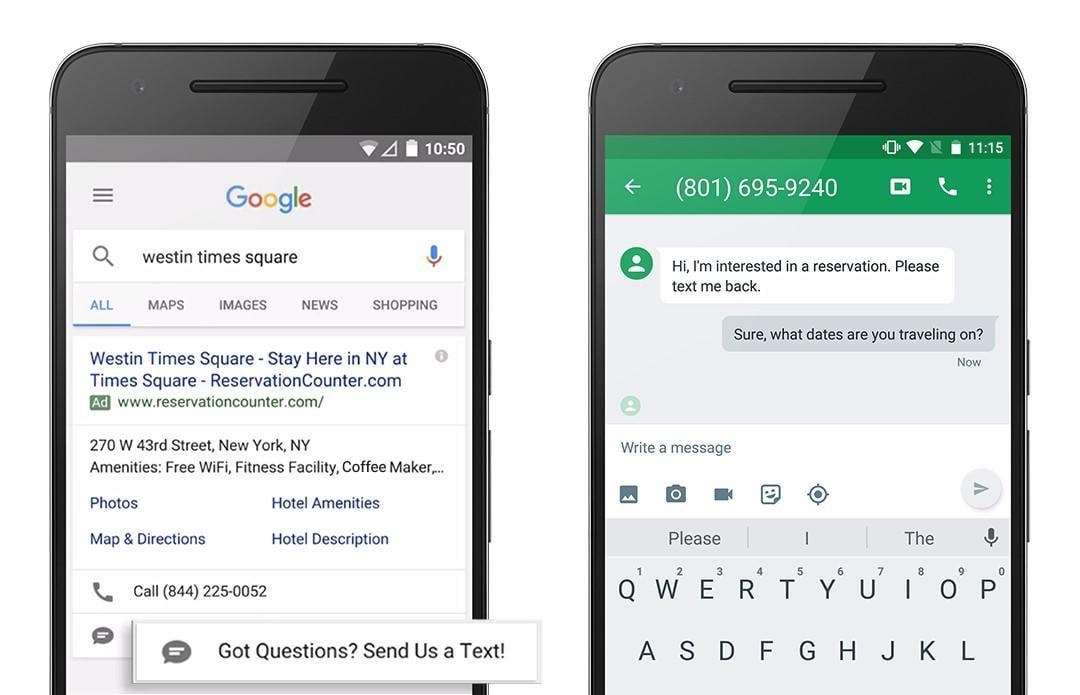
Instead of asking a potential customer to go to your website or click on your call extension, a message extension lets them connect with someone from your business through text. You can even include a pre-written message to get the conversation started right away, so they don’t get impatient and look for a quicker solution elsewhere. The best part? Clicks on message extensions cost the same as clicks on any other part of your ad: you get a direct line to a potential customer who is actively looking for what you offer, at the same price as a form fill. How awesome is that? Now, message extensions work really well for their intended purpose. When they were still in beta, our own Mark Irvine found that message extensions had click-through rates that rivaled call extensions:
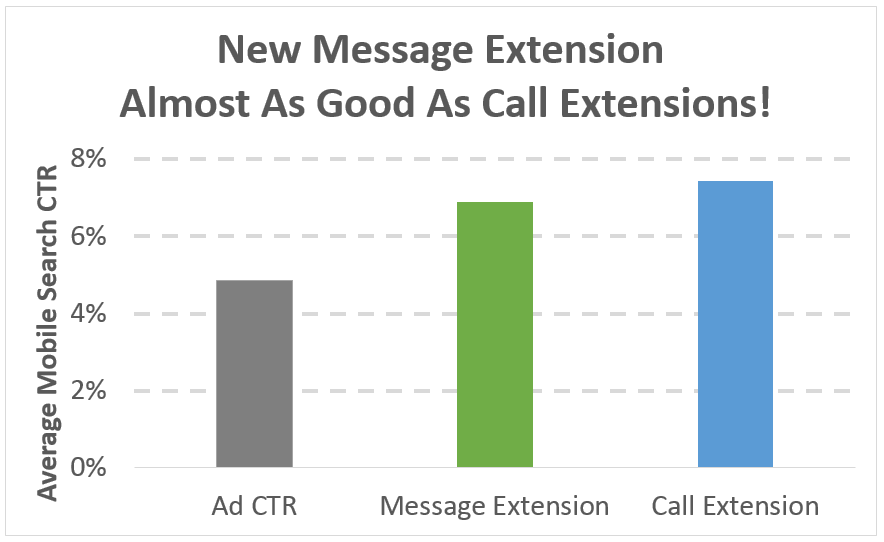
Pretty cool, right? The only real downside to message extensions is that you can’t track conversions. You can text your prospects, but you can’t track those conversations or attribute any value to them within Google Ads (formerly AdWords). Here’s the creative part: use message extensions as a form of lead generation. Don’t just use them to answer questions, use them to get prospects on the phone while they’re actively looking for information about your product or service. You won’t find a hotter lead! If you have a sales team (or you are the sales team) and a prospect texts you through a Google Ads ad, you have an immediate opportunity to start a productive conversation. Just give them a call, and break the ice by mentioning the keyword they used to find you and what they asked about. This will help you get the most value out of both informational and transactional searchers. Now, you don’t want to use this strategy for all your keywords. Some keywords are too early in the buying cycle (low intent) to justify a phone call.
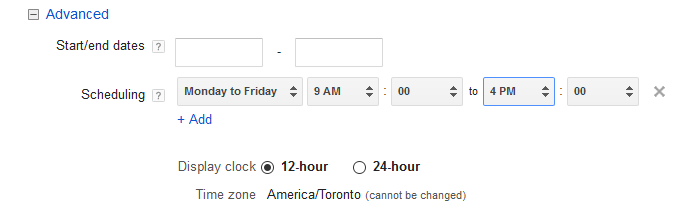
This is where a well-organized account structure comes into play. For campaigns with broad keywords (low intent), you can probably skip message extensions altogether. For informational campaigns, use them as intended: to answer questions via text. But for high-intent, high-value keywords and/or branded keywords, use them to get prospects on the phone. To make sure you’re not missing out on opportunities, make sure your message extensions are scheduled to align with your business hours. You’re dedicated, but everyone needs sleep!
#3: Daily Callout Extensions
While price and message extensions are relatively new, callout extensions are a staple in most Google Ads accounts. If you’re not familiar with them, here’s what they look like in action:

They’re pretty straightforward to use: to provide quick snippets of supporting information about your business, product, or service. Many advertisers implement them at the account level and keep their messaging general. That’s totally fine—more real estate on the search results page and useful information is always good. But Google Ads is all about being specific, right? Instead of using broad callout extensions with general information about your business, try changing them up daily. Take a look at this:
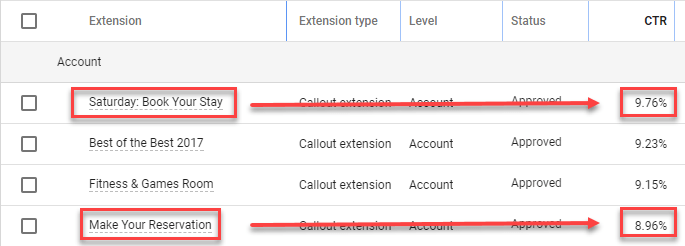
By simply adding the day of the week to their booking-related callout extensions, this hotel saw their click-through rates increase by almost a full percentage point. If you’re a plumber trying to get more jobs, why not try adding the day of the week to your callout extensions (or rotating different callout extensions daily) and see how it affects your ad performance? Even e-commerce businesses can benefit from this tactic. If you know your products ship within two days, you could run a callout extension on Tuesdays that says, “Get Your Widget By Thursday.” People love free stuff, but they also love speed and personalization. Why not give them both?
Final Thoughts
Extensions are a great way to improve your ad performance when you use them the way Google intended. But with a little out-of-the-box thinking, you can go beyond just pushing your competitors down the search results; you can get more new business, too.