Despite its age, email remains a powerful and adaptable tool for business marketing. From building customer trust to gathering valuable feedback and boosting retention, its uses are incredibly diverse.
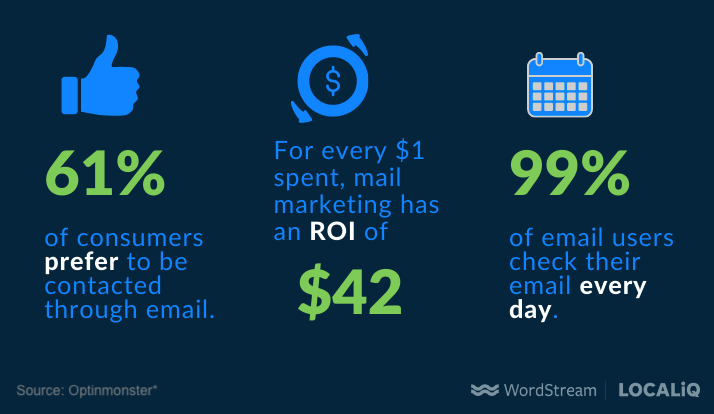
However, the sheer volume of emails sent daily necessitates creating messages that stand out, engage readers, and effectively achieve your marketing objectives. This article presents 13 email marketing strategies to optimize your campaigns for success. We’ll begin with the basics and progressively delve into more sophisticated techniques.
13 Tips for High-Performing Email Campaigns
While the fundamental principles of email marketing remain constant, their implementation must adapt to a changing world. This list offers proven strategies rooted in recent research, 2021 digital marketing trends, and advanced tools. These tips are applicable to both B2C and B2B email marketing.
1. Divide Your Audience for Targeted Messaging
Email marketing campaigns can achieve various goals, such as welcoming new customers, guiding them through the sales funnel, announcing new features, sharing promotions, and more. Segmenting your subscriber list is essential to leverage these strategies effectively. Here are some key segmentation methods:
- Demographics: Utilize your CRM to create email lists based on specific locations.
- Engagement: Consider resending emails or sending slightly modified versions to subscribers who didn’t open the first one.
- Customer Journey Stage: Tailor your offers based on whether customers are new or long-term.
- Source: Identify which website forms provided you with their contact information. Implementing this requires setting up rules and conditions within an automated email platform.
2. Make It Personal
Research by Janrain and Blue Research reveals that 96% of consumers have received poorly targeted marketing messages, including:
- Irrelevant offers demonstrating a lack of customer understanding.
- Errors in basic customer information.
- Inconsistent messaging across platforms. The same study indicates that 68% of customers delete such emails, and 54% unsubscribe. Conversely, personalization offers several advantages:
- Personalized subject lines can result in open rates up to 50% higher.
- Personalized emails yield a return on investment of 122%.
- Birthday emails can generate 342% more revenue per email than standard promotions.
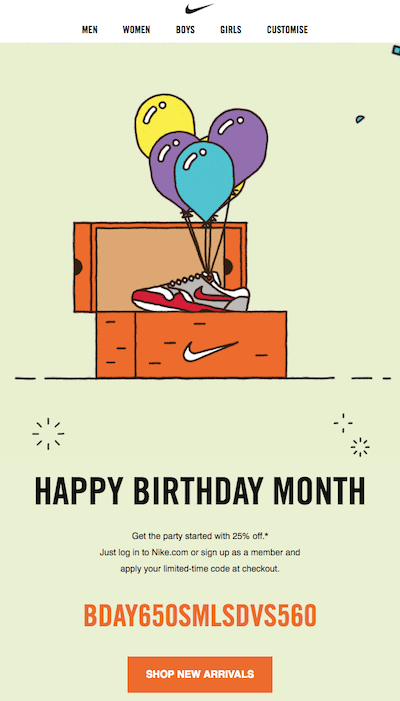
Image source Digital marketing provides you with a wealth of customer data for personalization.
- Analyze your website and social media to identify topics, products, services, or messages that generate the most engagement.
- Use lead forms to collect email addresses along with additional fields to gather personalization data.
- For smaller subscriber lists, you can use an email lookup tool to obtain basic customer information, such as name, company, server location, and social media profiles.
 Free email templates! >> 30 Free Small Business Email Examples & Templates
3. Mobile Optimization is Key
A negative mobile experience makes 52% of users less likely to engage with a company, and 53% would abandon a website that doesn’t load within three seconds. With 70% of emails opened on mobile devices and CTAs leading to your website, mobile optimization is crucial. A mobile-optimized experience entails:
- All essential text being readable on a single screen without horizontal scrolling.
- Fast email and landing page loading times.
- Clear, easily tappable buttons.
- Easy-to-read font type, size, and color. For further information, explore Google’s 2021 mobile-first algorithm update!
4. Re-engage Inactive Subscribers with Appealing Offers
While attracting new customers is vital, don’t neglect your existing ones! Re-engaging dormant customers or readers can be achieved through enticing offers and compelling email copy. Analyze past data to determine the content they previously engaged with and send them an updated and improved version. Alternatively, simply offer a discount!
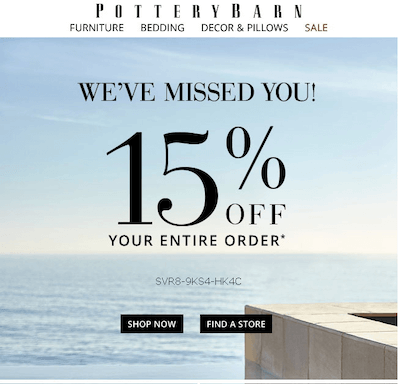
Image source For inactive subscribers who remain unresponsive, consider removing them from your list to maintain a clean and engaged audience.
5. A/B Testing: Your Key to Email Perfection
Utilize A/B testing to gain deeper insights into your subscribers’ preferences. Test elements like subject lines, body copy, layout, CTA language, button color, images, and more. Remember to change only one element at a time for clear and actionable results. For example, when promoting a free guide on website traffic, try these subject line variations:
- 10 Strategies to Boost Your Website Traffic
- Are You Missing Out on Website Traffic? 10 Simple Tips
- 10 Ways to Drive More Traffic to Your Site [Free Guide] This helps determine which words resonate with your readers (“download” or “guide”) and whether they respond better to a preventive or goal-oriented tone.
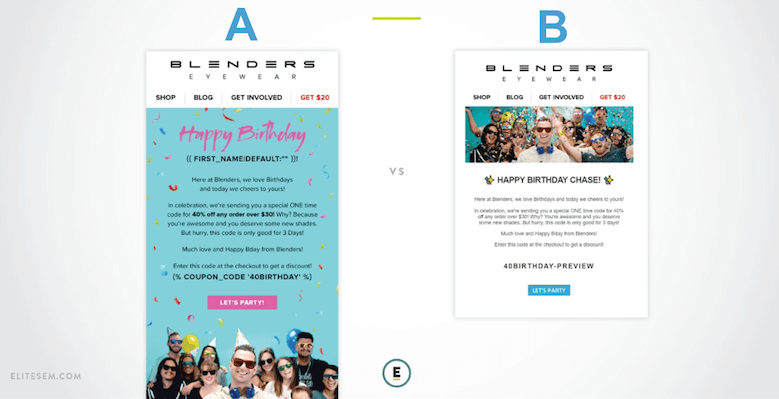
Image source Important: With the iOS 15 update, A/B testing based on open rates might be unreliable. Explore alternative post-iOS 15 email marketing strategies.
6. Triggered Emails: Seize Every Opportunity
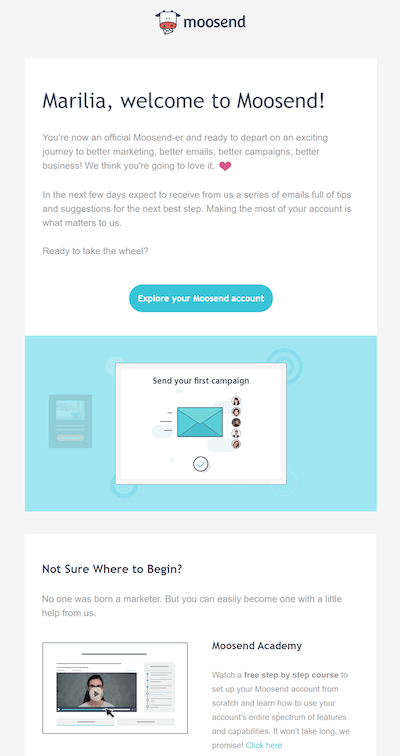
Triggered emails are automatically sent based on specific customer actions. These emails boast a 70.5% higher open rate due to timely delivery during moments of engagement. Examples include:
- Cart abandonment reminders.
- Post-purchase feedback requests.
- Product review requests after purchase.
- Welcome emails for new subscribers.
7. Nurture Leads into Loyal Customers
For B2C businesses and low-cost products, new subscribers might convert immediately. However, high-ticket purchases and B2B marketing often involve more research and deliberation. Nurture emails build trust and present gradually increasing offers through a series of messages.
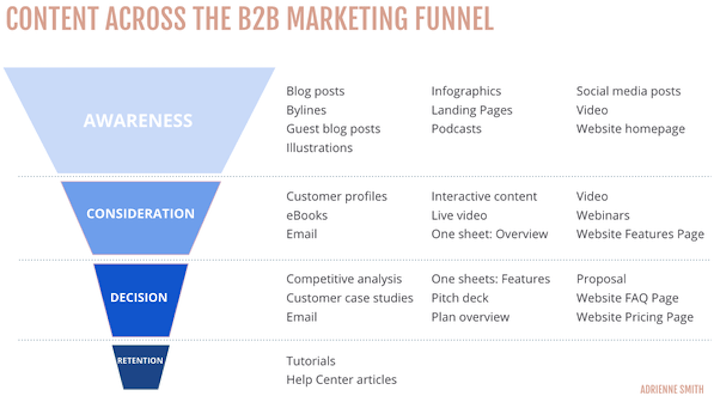
Image source Consider this example sequence: After subscribing and receiving a welcome email, subsequent emails encourage the subscriber to:
- Download a concise guide
- Download a comprehensive ebook
- Attend a webinar
- Explore a case study
- Schedule a consultation By providing valuable and relevant content and gradually increasing the “ask,” you’ll significantly improve the likelihood of them booking a consultation. Nurturing is a vital aspect of any lead generation process. For assistance in crafting effective email sequences, refer to follow-up email templates.
8. Connect Through Emotion
Customer pain points and desires stem from emotions. An accountant’s clients seek relief from the fear of missed tax deadlines and desire peace of mind knowing they’ll receive the highest return. Users of an analytics platform want to eliminate reporting stress and feel confident during presentations. Enhance email engagement by incorporating emotional marketing copy.
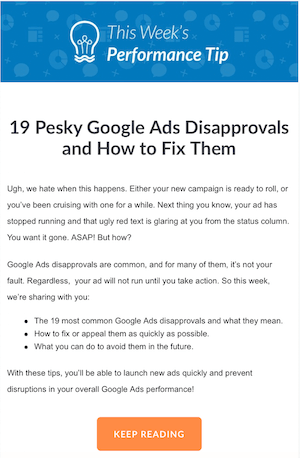
Email is an excellent channel for emotional marketing, allowing you to tailor messages to specific segments and experiment with A/B testing.
9. Values Matter: Showcase Yours
Modern customers have higher expectations than ever. They prefer supporting companies whose missions align with their values and who view them as more than just a source of revenue. They also appreciate vulnerability and transparency. Highlight your values in various ways:
- Directly state them: For example, “At Flockjay, we believe in teamwork, and that includes you. Our new service center provides 24/7 human support…”.
- Share milestones in your social responsibility efforts, such as the number of trees saved through your product or the amount donated to a cause you support.
- Conclude emails with inspiring quotes that reflect your values.
10. The Power of Storytelling
Stories, whether short or long, are memorable and engaging. Integrate storytelling into your email marketing:
- Share the backstory of your latest product or service. Readers will be intrigued by its development and reminded of your commitment to quality.
- Present a concise success story and provide a link to the full version for those interested.
- Even better, start by describing a customer problem that resonates with your audience (using the P-A-S formula), highlight impressive (quantifiable) results, and end with “How did we do it?” and a “Find out here” CTA.
- Get creative and use a personal anecdote as an introduction to the email. Sleeknote provides an excellent example of this tactic (though removing line breaks would enhance readability).
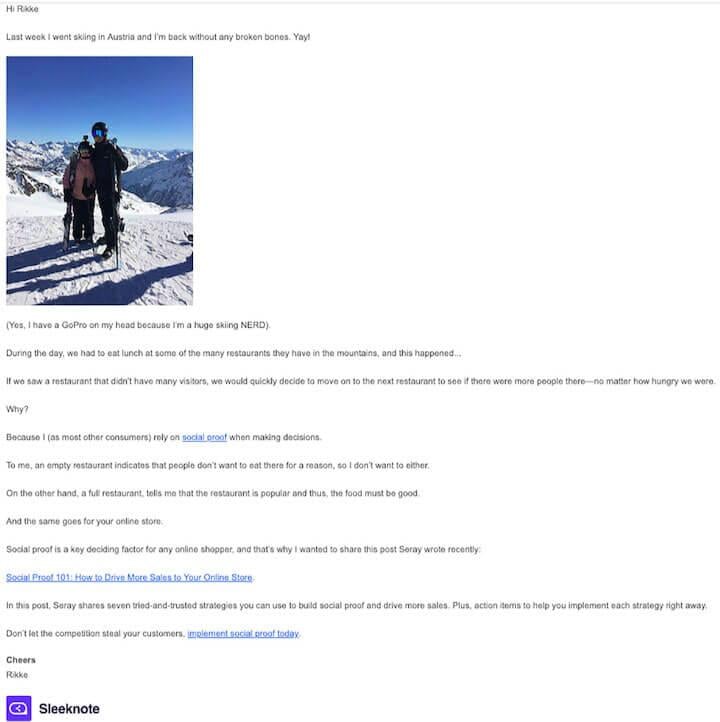
Image source For more tips, read our post on writing emails that resonate.
11. Timing is Everything: Find the Optimal Sending Time
Generally, the best time to send marketing emails is:
- During daytime hours
- On weekdays
- Avoid Mondays
- Midweek tends to be ideal However, these are just guidelines. The best approach is to analyze your data and conduct A/B tests to determine the optimal sending times for your audience. Consider the rise of remote work and its impact on schedules.
12. Dynamic Content: Personalization on Autopilot
Dynamic content takes personalization to the next level. It automatically adjusts email content based on reader criteria such as gender, location, purchasing habits, or website behavior. Customers receive the same template but see different images, offers, and CTAs.
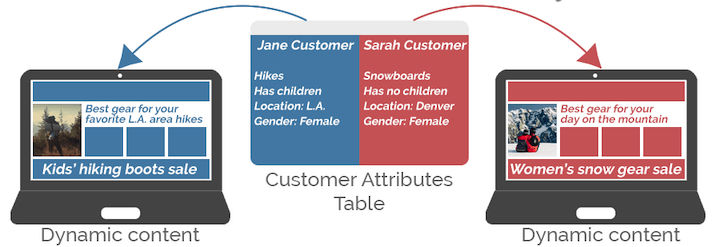
Dynamic content can also include countdown timers or live feeds from your blog or social media.
13. Embrace Simplicity with Plain Text Emails
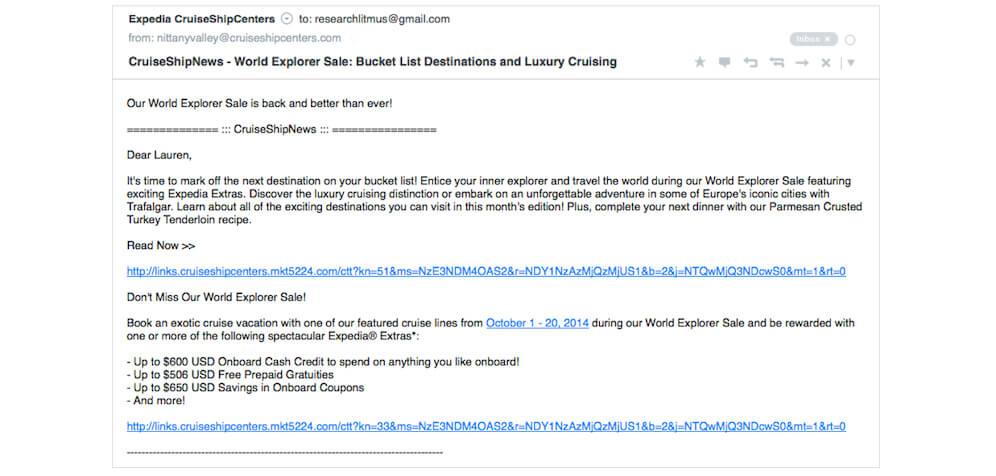
While it might seem counterintuitive, plain text emails are gaining popularity. Amidst flashy designs and animations, consumers appreciate minimalism. Plain text emails align with this trend, display well on various devices, and often bypass spam filters.
Achieve Email Marketing Success with These Tips
From promoting new offerings to fostering lasting customer relationships and building brand identity, email marketing is a versatile tool. Utilize these strategies to maximize your campaign results:
- Segment your audience.
- Personalize your messages.
- Optimize for mobile.
- Re-engage inactive subscribers.
- Conduct A/B tests for continuous improvement.
- Leverage triggered emails.
- Nurture leads into customers.
- Infuse emotions into your email copy..
- Showcase your company values.
- Utilize the power of storytelling.
- Identify the optimal sending times.
- Implement dynamic content.
- Consider plain text emails. *Statistics in the introduction sourced from Optinmonster.