“You can’t connect the dots looking forward; you can only connect them looking backward.” This insightful quote from Steve Jobs holds true in various business contexts, particularly when it comes to understanding customer insights.
 Leveraging past data to glean customer insights is crucial for any company aiming to attract and retain customers, and differentiate itself in the market. This article will delve into:
- The concept and significance of customer insights
- Ten approaches to gather customer insights
- Over 30 strategies to leverage these insights for marketing and business growth
Decoding Customer Insights
Customer insights encompass the interpretations and patterns derived from the data collected about your customers across all interaction points. Some insights are directly obtained, such as through customer feedback forms, while others are deduced from sources like website analytics or loyalty program engagement. Numerous quantitative and qualitative metrics contribute to customer insights, and their relevance varies depending on your specific business and target audience. Notably, a study conducted by GetApp revealed that 16% of teams struggle with extracting meaningful insights despite having ample data.
The Indispensable Role of Customer Insights in Marketing
Customer insights are the bedrock of building buyer personas - fictional representations of your ideal customers. These personas encapsulate their demographics, pain points, preferences, purchasing behaviors, and other key characteristics. A deep understanding of your audience empowers you to:
- Deliver timely and relevant messages.
- Showcase the right products at optimal price points.
- Emphasize features that resonate with customers.
- Cultivate empathy and emotional connections.
- Strengthen your unique selling proposition.
- Segment, target, and personalize your marketing efforts. These efforts contribute to heightened customer satisfaction, reduced churn, increased loyalty, and ultimately, a robust growth marketing strategy.
Unveiling Customer Insights: Sources and Strategies
Unearthing valuable customer insights can seem like searching for a needle in a haystack. However, with a strategic approach and the right tools, you can effectively separate valuable insights from the noise. Explore these ten sources and practical tips to guide your quest for customer insights.
1. Online Reviews: A Goldmine of Customer Sentiment
Online reviews offer an unfiltered glimpse into customer perceptions of your products and services. These reviews highlight what your brand excels at, areas needing improvement, and aspects where competitors might be outperforming you. Platforms like Google, Facebook, Yelp, the Better Business Bureau, Glassdoor, and other industry-specific directories are rich sources of customer reviews. For software and SaaS companies, platforms like G2, Capterra, Clutch, Trustpilot, and TrustRadius are invaluable. The use of social credentials like Facebook, Google, or LinkedIn for account creation on these platforms adds a layer of authenticity to the reviews.
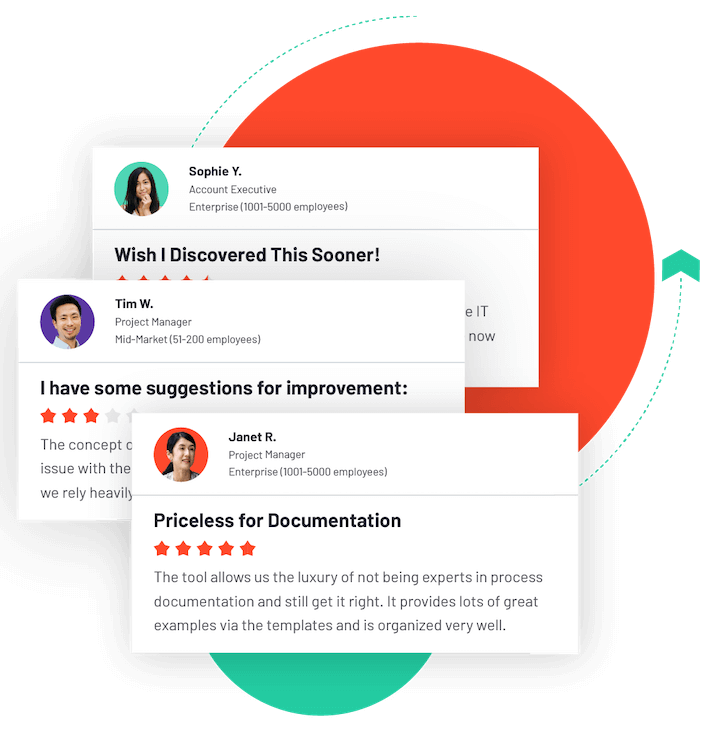 Image source
Extracting Value from Online Reviews:
Image source
Extracting Value from Online Reviews:
- Identify and leverage positive feedback to enhance customer service.
- Address complaints and product/service shortcomings proactively.
- Incorporate customer language and terminology into your copywriting.
2. Competitor Reviews: Unveiling Opportunities and Threats
Analyzing competitor reviews provides valuable insights into your target audience’s expectations and experiences. Explore reviews on platforms mentioned earlier and delve into online communities and social media groups related to your industry. Scott Chow, a B2B consultant and founder of The Blog Starter, emphasizes, “Deep dive into customer reviews to grasp their expectations from competitor offerings and whether those expectations were met. Identify gaps that your product can bridge, and leverage these insights to refine your product messaging and positioning. Aligning your offerings with customer expectations will ultimately generate more leads.” Leveraging Insights from Competitor Reviews:
- Capitalize on competitor shortcomings to position your brand strategically.
- Identify and adopt competitor strengths that you may be lacking (consider using a SWOT analysis for this).
- Gain inspiration for features or initiatives that resonate with your audience.
3. Website Data: A Treasure Trove of Customer Behavior
Google Analytics and Search Console offer a wealth of information about your customers, encompassing:
- Behavioral Data: Keywords used to find your site, navigation patterns, exit pages, content preferences, and more.
- Demographic Data: Age, gender, location, interests, devices used, and more.
- Campaign Data: Pages driving leads and sales, purchase paths, and more. A well-designed website that serves as a central hub for your marketing campaigns is crucial for capturing this data.
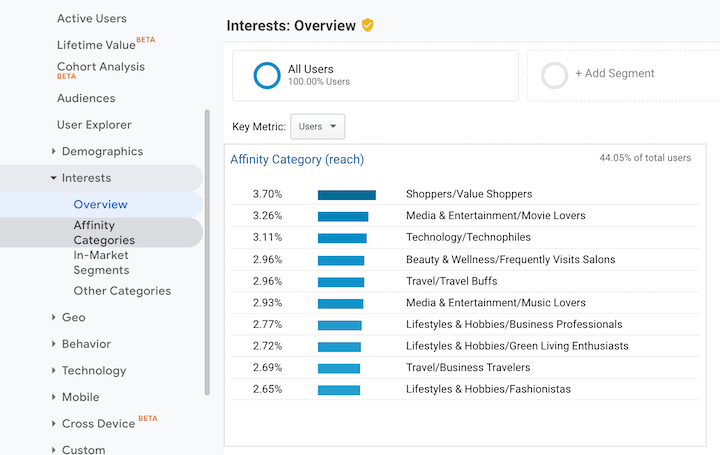 Affinity Categories represent just one of the many insights available through Google Analytics regarding your website visitors.
Harnessing Website Data for Customer Insights:
Affinity Categories represent just one of the many insights available through Google Analytics regarding your website visitors.
Harnessing Website Data for Customer Insights:
- Identify relevant keywords and topics for content creation.
- Optimize exit pages with popups or calls to action based on user behavior.
- Determine landing page copy that drives conversions.
- Allocate resources strategically based on channel performance.
4. Competitor Website Data: Unveiling Competitive Strategies
While accessing granular data from competitor websites is limited, SEO tools like Semrush and Ahrefs offer valuable insights. For instance, if you’re a design agency and consider Venngage a competitor, Ahrefs reveals the keywords they target through content and ads.
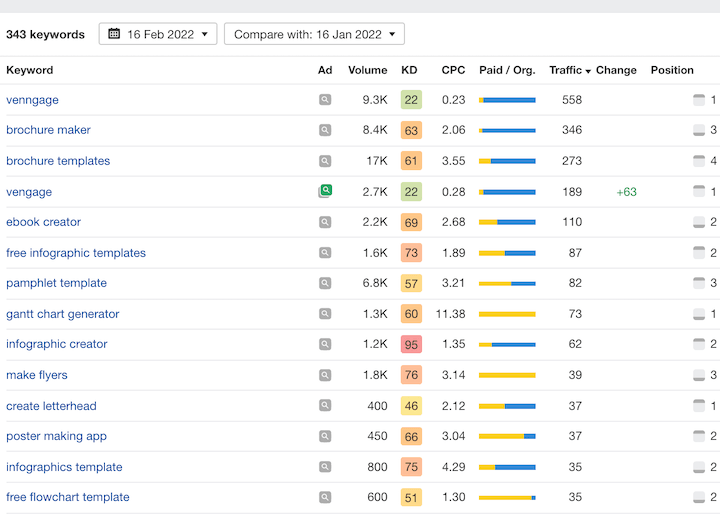 These results clearly indicate that Venngage’s customers value templates. Consider incorporating this insight into your offerings or adjusting your positioning accordingly.
Leveraging Competitor Website Data:
These results clearly indicate that Venngage’s customers value templates. Consider incorporating this insight into your offerings or adjusting your positioning accordingly.
Leveraging Competitor Website Data:
- Refine your product messaging and positioning within the market.
- Identify valuable keywords to target for both paid and organic search.
- Discover potential domains for link-building opportunities.
5. Preferences & Purchase Activity: Unlocking Customer Desires
Customer purchasing patterns offer direct insights into popular products and services, both in general and for individual customers. This data is readily available through CRM systems, e-commerce platforms, or preference centers within email lists and other account-based platforms. These direct insights, known as zero and first-party data, are becoming increasingly crucial as third-party cookies approach obsolescence.
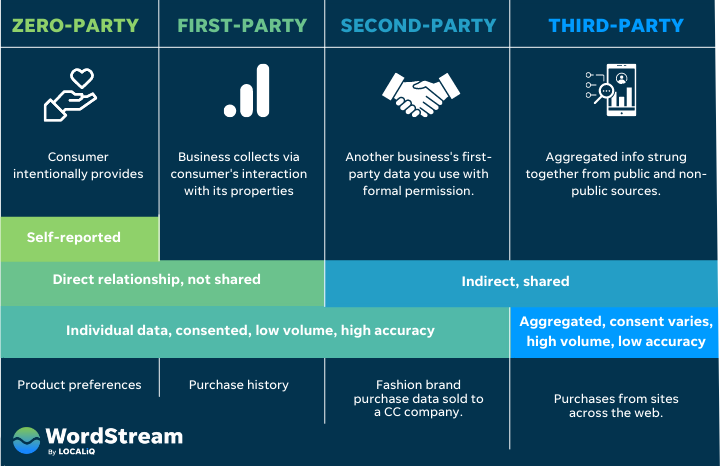 Utilizing Preference and Purchase Activity Data:
- Identify seasonal trends and optimize inventory accordingly (a key marketing trend).
- Personalize communications and tailor marketing campaigns.
- Identify promising products and services for further development. A Note on Data Privacy: Given the emphasis on data, prioritizing customer data protection through best practices is paramount.
6. Customer Surveys: Gathering Direct Feedback
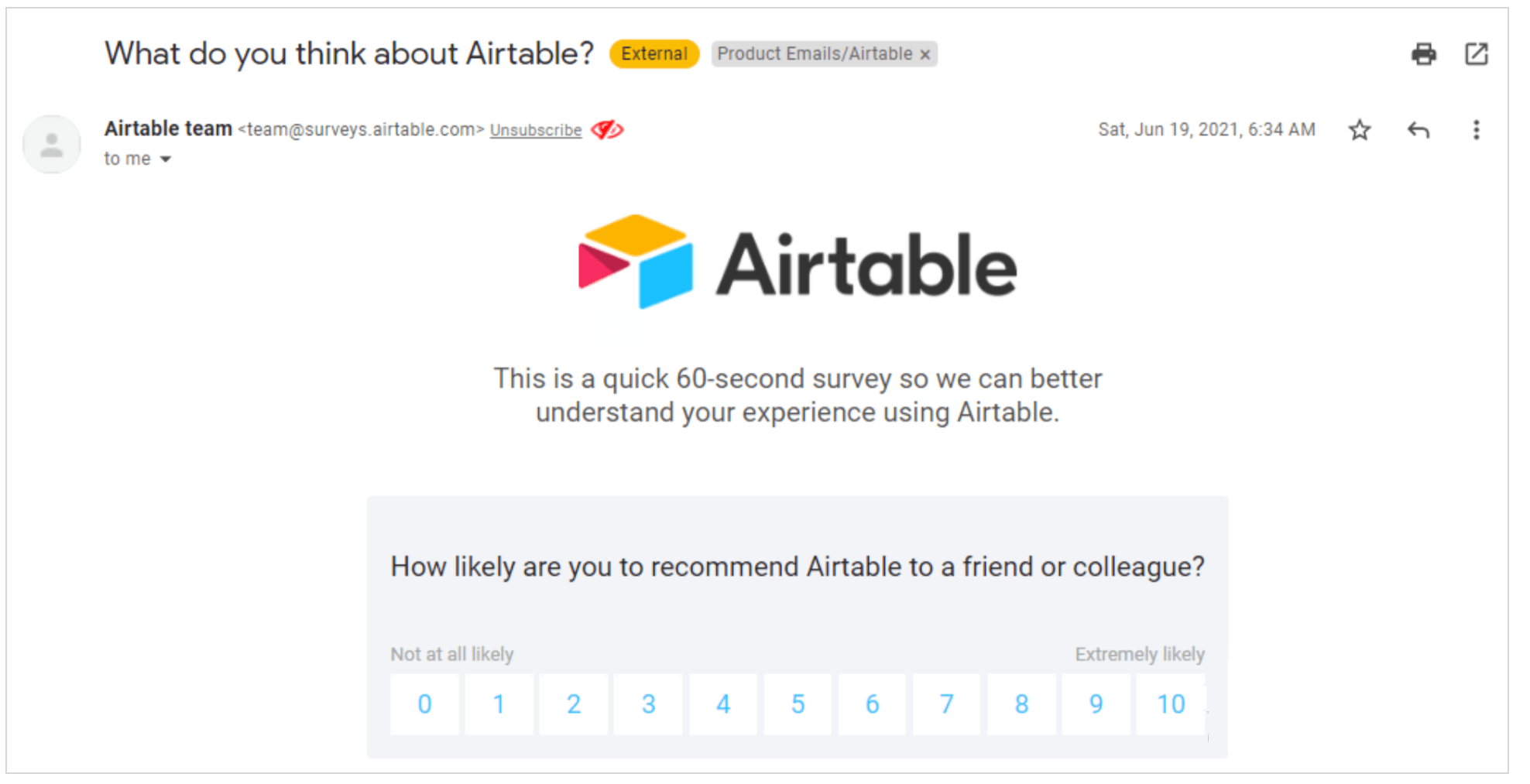
Surveys have been a cornerstone of market research for decades. Today, online survey tools facilitate distribution through email, social media, mobile apps, and more. Surveys can employ various formats, including point-based systems, multiple-choice questions, open-ended responses, or a combination thereof. Segmenting survey campaigns for specific customer cohorts, such as new customers, loyal patrons, top referrers, or even disengaged individuals, allows for tailored questions and more insightful responses. Consider incorporating questions like:
- How did you discover our company?
- What aspects did you appreciate the most?
- Order placement process
- Customer service interactions
- Pricing structure
- Packaging quality
- Other noteworthy factors
- What areas do you believe we could improve? The Net Promoter Score (NPS) survey, a concise and insightful tool, poses a single, powerful question: “On a scale of 0 to 10, how likely are you to recommend our business to a friend or colleague?”
 Utilizing Survey Insights:
- Gauge general customer sentiment towards your business.
- Identify strengths to leverage and weaknesses to address.
- Evaluate the potential return on investment for a referral program.
7. Customer Interviews: Delving Deeper into Insights
Unlike surveys distributed en masse, customer interviews offer a personalized, one-on-one approach to gathering feedback. Conducted in person, over the phone, or via video call, interviews allow for more elaborate responses and deeper exploration of customer perspectives. Engage in discussions covering aspects like:
- How did you become aware of our company?
- What factors influenced your decision to choose us over competitors?
- Which specific features of our business do you utilize the most?
- In your opinion, what enhancements could elevate our product further? Assaf Cohen, who leads the gaming studio Solitaire Bliss, highlights the advantages of customer interviews, “Customer interviews enable real-time deep dives and yield richer insights than surveys. For instance, while exploring potential game development avenues through customer interviews, we discovered a strong preference for multiplayer games due to their inherent social element.” Harnessing the Power of Customer Interviews:
- Uncover subtle nuances and micro-moments for improvement.
- Strengthen customer relationships through personalized interactions.
- Generate ideas for new features or offerings to enhance your product roadmap.
8. Success Stories and Case Studies: Showcasing Customer Success
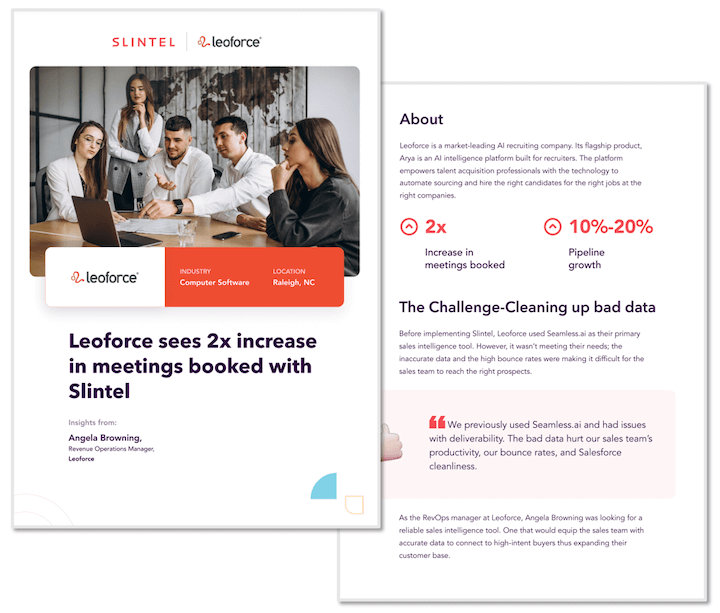
Success stories, testimonials, and case studies represent another form of customer interview, but with a distinct focus on showcasing customer success stories and how they leveraged your business to overcome specific challenges. These public-facing materials can be presented in written, video, or audio format. Effective success stories address key questions such as:
- What specific problem were you facing? What were the implications of this problem?
- How did you discover our company, and what factors led you to choose us?
- Which product or service did you utilize to address your challenge?
- What were the tangible results and benefits you experienced?
 Leveraging Success Stories:
- Incorporate them into discovery calls and sales pitches to provide compelling evidence.
- Feature them prominently on your website for visitor engagement.
- Develop and promote persona-specific use cases.
9. Partnerships: Unlocking Shared Insights
In today’s interconnected digital landscape, collaboration is key. Partnerships and integrations with complementary services and applications can enhance product appeal and unlock valuable shared insights. For instance, a SaaS payment solution provider might benefit from partnering with companies offering invoicing, proposal creation, accounting, or sales software. This not only expands the product ecosystem but also facilitates the exchange of valuable customer insights. Leveraging Partnership Insights:
- Develop creative joint promotions and giveaways.
- Explore adjacent topics for blog content creation.
- Gain inspiration for new add-ons and features.
10. Social Media: Tapping into the Voice of the Customer
Social media serves as a platform where customers freely express praise and voice concerns. Actively monitoring comments, posts, and engaging in open dialogue through posts, polls, and interactive content like Instagram Story polls provides valuable customer insights. _

_ Social media analytics also offer a wealth of information about your audience, though it’s important to note that your social media audience may not perfectly mirror your actual customer base. Harnessing Social Media Insights:
- Gain a deeper understanding of customer language and communication style.
- Develop empathy by understanding customer perspectives on an emotional level.
- Uncover product preferences and areas of interest.
Transforming Insights into Actionable Strategies
Customer insights provide clarity amidst the noise, guiding your focus towards the most impactful channels, positioning strategies, product offerings, and messaging. These insights, however, are not confined to a single source or file. They require meticulous gathering and synthesis from multiple avenues. Thankfully, the digital marketing landscape provides the tools to accomplish this effectively. To recap, here are ten key sources for gathering customer insights:
- Online Reviews
- Competitor Reviews
- Website Data
- Competitor Website Data
- Polls and Surveys
- Preference and Purchase Activity
- Customer Interviews
- Case Studies
- Partnerships
- Social Media