It might seem like working with a SaaS company is the same as any other client for your PPC agency, but that’s far from the truth. These companies have unique characteristics, and if you’re not prepared, your partnership won’t last long.

SaaS companies are distinct in several ways, from their specialized terminology and lead generation methods to their ambitious goals and rapid growth (and let’s not forget the many stakeholders involved). This article will guide you through the important factors to consider when working with SaaS companies as a PPC agency and offer advice on effective collaboration to ensure a long-lasting partnership (and a substantial monthly retainer).
#1: Thoroughly Understand the Client’s Business
This might seem obvious, but it’s more complex than it sounds. SaaS companies often have intricate business structures. For instance, selling guitars involves straightforward search terms, Facebook audiences, and conversions. In contrast, many SaaS companies target various buyer personas and provide diverse products and features, aiming to stay ahead of the competition or enhance user value. This makes creating campaigns and audiences for SaaS more challenging: tailoring campaigns and landing pages to each audience and value proposition might be necessary. Additionally, factors like product and subscription pricing, along with average customer lifetime value, come into play. If leads cost $100 each and the monthly subscription is $50, achieving a positive return on investment will take time unless every deal closes – valuable time your agency needs to demonstrate its effectiveness.
When engaging with a new SaaS client, delve deeper to understand their product thoroughly. Don’t rely on a brief website summary; go beyond! SaaS companies often have recorded product demos used for training and quality assurance, or they might be happy to let you observe a live one. Most also offer access to demo software accounts. Since you’ll be marketing their product, experiencing it firsthand, just like a potential customer, is crucial, right? This approach serves two purposes. Firstly, it familiarizes you with the client’s product and the features highlighted during sales, which is invaluable for crafting compelling ad copy and extensions. Secondly, it demonstrates your willingness to go above and beyond to grasp both the product and the sales process, showcasing a level of commitment that is highly valued.
#2: Deciphering the World of MQLs, SQLs, and AQLs
Understanding how your client evaluates leads is vital. This knowledge enables you to allocate budget effectively, create targeted remarketing campaigns, and most importantly, deliver lasting value. However, just like their products, SaaS lead scoring comes in various forms, and navigating a maze of acronyms can be overwhelming: MQL, SQL, AQL, Opps, Wins, LMFAO’s – it’s enough to make your head spin. But don’t throw in the towel just yet! You must grasp these concepts.
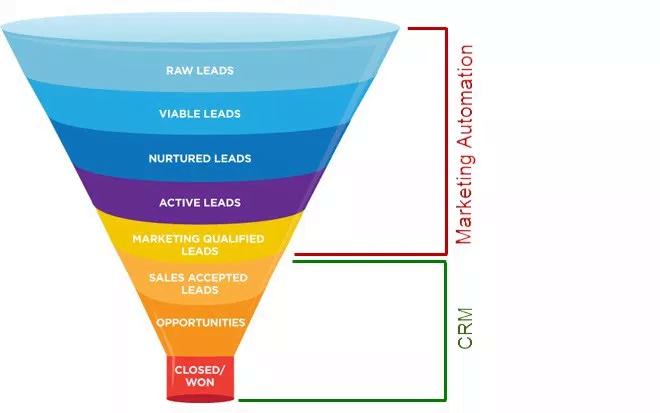
In fact, this is arguably the most critical aspect to grasp when working with SaaS clients. For instance, let’s say your AdWords campaigns generate a lead classified as an “MQL” (marketing qualified lead). If the average MQL for Company X converts to an opportunity (sales demo) at a 20% rate, and the marketing team’s primary goal revolves around opportunity volume rather than MQLs, you gain a significant advantage. Instead of focusing solely on MQLs, you can now prioritize improving conversion rates further down the funnel. If you can enhance conversion rates to opportunities, perhaps by refining Facebook targeting or promotional messaging, you can offset increases in cost-per-acquisition (CPA) to some extent. While a typical agency might only focus on surface-level AdWords and Facebook metrics, adjusting bids and adding negative keywords, you’ll be diving deeper, understanding the bigger picture, and achieving superior results.
#3: Navigating the SaaS Sales Process
A disconnect between marketing and sales is common across all companies. However, the extent of this gap can vary significantly. Ideally, companies have a seamless marketing and sales process. Marketing understands the types of leads sales require, and the sales team leverages marketing messaging effectively to initiate conversations and close deals. Unfortunately, this isn’t always the case. Often, communication gaps or strained relationships between internal teams can lead to a situation where you’re driving seemingly qualified leads, only to discover they don’t translate into opportunities or sales. This reflects poorly on you, even if you’re doing your job!

Fortunately, you can sidestep this issue by asking yourself a few critical questions when working with SaaS clients.
Is There a Lead Scoring System?
If all leads are treated equally upon entering the funnel, you’re in for trouble. Let’s revisit the MQL to Opportunity example. If every form submission is considered an MQL, the sales team will be inundated with unqualified leads, overshadowing the qualified ones. As volume increases, you’ll face pushback, potentially being asked to halt campaigns that are actually working.
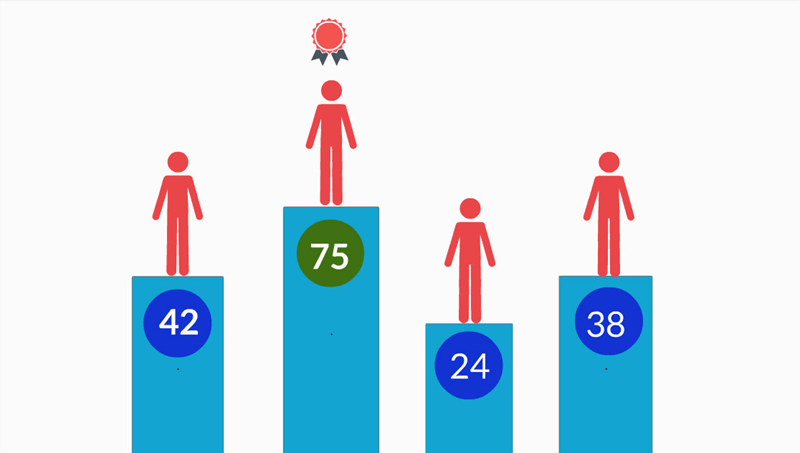
Lead scoring can resolve this, but as an agency, implementation isn’t your responsibility. However, recognizing the need for lead scoring and recommending it to your client can significantly impact their (and your) success.
Do They Have BDRs?
BDR stands for “Business Development Representative.” Similar to lead scoring, BDRs act as a buffer between marketing and sales. No matter how well-prepared leads are, sales representatives might not always be content. It’s the nature of their role and the pressure to perform. BDRs qualify leads before they reach the sales team, ensuring higher conversion potential. This is crucial for you as an agency because it provides feedback on lead quality before it reaches sales, preventing knee-jerk reactions like “this isn’t working for us.”
#4: Uncover Why They’re Hiring an Agency
Before signing any contracts, address this question: Why is the client seeking an agency? The reasons could vary, ranging from a lack of in-house expertise to ambitious targets after a funding round, or simply an overworked and understaffed team. These are all valid reasons that present an excellent opportunity for a seasoned professional like yourself. However, be wary of certain reasons why a SaaS company might seek an agency.
The Revolving Door
Sometimes the grass isn’t greener on the other side. A previous agency might have underperformed, which is understandable. However, if a client has worked with numerous agencies in a short period, it’s a red flag. Be cautious of clients who are impatient or unwilling to acknowledge internal inefficiencies. If their processes hinder your success, it’s not a good fit. Your focus should be on lead generation and quality improvement, not navigating a flawed demo process or dealing with a lack of resources like landing pages, pixel implementation, or a product that lacks differentiation.
Internal Turmoil
A “toxic work environment” is detrimental, even for external agencies or freelancers. While you may not physically work at the client’s office, a dysfunctional team will impact you. Understand the marketing team’s dynamics. How long have people been there? What’s the team size? Are they passionate about their work? A jaded, resentful team with high turnover won’t be easy to collaborate with.

The Skeptic
While landing a new client is exciting, working with one who doubts the value you offer is a recipe for disaster. You shouldn’t have to convince a skeptical client about the effectiveness of paid advertising. There needs to be a shared understanding that it works and your role is to find what works best for them. Seek SaaS clients who prioritize growth and are not afraid of experimentation or budget allocation.
#5: Learn From the Past
Building on the previous point, you need to understand the company’s paid advertising history. If they have no prior experience, explore the reasons why and what prompted them to consider it now. If they do have a history, analyze their previous paid advertising approaches. What were the challenges? Was it targeting, cost, poor account management, or strained relationships? Use this information alongside your insights from the previous points to craft a new strategy. Your understanding of the product, marketing process, and sales process will be invaluable, giving you an edge and accelerating your path to delivering significant results for your new SaaS client. Your depth of knowledge and meticulous approach should impress the client, offering a refreshing change if they’ve worked with other agencies before. When collaborating with SaaS companies, aim to become an extension of their team, demonstrating a genuine investment in achieving their objectives.
#6: Seamlessly Integrate Into the Team
As mentioned earlier, SaaS companies place great emphasis on teamwork. Every company has teams with specific goals. Shared responsibility for achieving these goals promotes accountability and often sparks innovation. Venture-backed companies, in particular, tend to have ambitious targets. Having a proactive and deeply involved agency working alongside their employees yields long-term benefits. If your agency is geographically close to the client, consider monthly or quarterly visits. Meet with management and team members face-to-face. Be more than just a voice on the other end of the line.

This focus on building strong client relationships is invaluable. Make the client feel like they know and trust you as a person, not just an anonymous agency. Convey your unwavering commitment.
#7: Provide Value-Added Services
The rapid growth of SaaS companies often strains their resources. If you offer additional services that could benefit the client, don’t hesitate to lend a helping hand. The most common areas where marketing teams face bandwidth issues include:
Design
Offering design services is a major advantage, especially if you’re handling display or paid social media advertising. While many SaaS companies have designers, they’re usually at capacity. Providing graphic design support can make your services even more appealing.
Web Development
Web development skills are in high demand, especially within smaller teams. The ability to implement tracking across various channels is crucial, making web development a valuable addition to your offerings.

Beyond basic code implementation, your client might require a new website or a lead generation tool. These tools, particularly the latter, can significantly simplify your work, especially if you contribute to their functionality.
Landing Page Creation
Many companies have limited resources to create and implement landing pages quickly for new promotions. If you propose a creative promotion, having the ability to launch those assets swiftly is essential. Providing landing page creation and conversion rate optimization (CRO) services can be a significant competitive advantage when securing and retaining SaaS clients.
#8: Secure Necessary Access
For a smooth and efficient onboarding process, clarify the access levels required to effectively serve your SaaS client. While these may vary, some constants exist. Commonly encountered systems include:
- Hubspot: Access is generally straightforward and can be set to “view only.” This is essential for integrating lead ads via Facebook or monitoring landing page performance.
- Marketo: Depending on the level of involvement required, access to Marketo might be necessary to create assets and conduct A/B testing on promotions.
- Salesforce: Access to marketing and sales dashboards within Salesforce is crucial for decision-making. Some clients might even have Salesforce integrated with their AdWords account, aligning attribution data and streamlining your work.
- Google Analytics: In the absence of more sophisticated integrations, you might rely on goal completions tracked through Google Analytics to attribute revenue to your paid efforts. It’s also valuable for building remarketing audiences and uncovering potential keywords and high-performing landing pages. Gaining access to these marketing and sales systems (along with any others they use) provides a deeper understanding of the client’s sales funnel. This insight is invaluable for campaign optimization, allowing you to identify opportunities and address challenges effectively.
#9: Transparent Reporting is Key
Utilize tools, whether Google Sheets, Excel, or dedicated services, to demonstrate the effectiveness of your work. Databox is a fantastic tool for this purpose. While numerous tools connect paid advertising channels, few offer the integration capabilities of Databox:
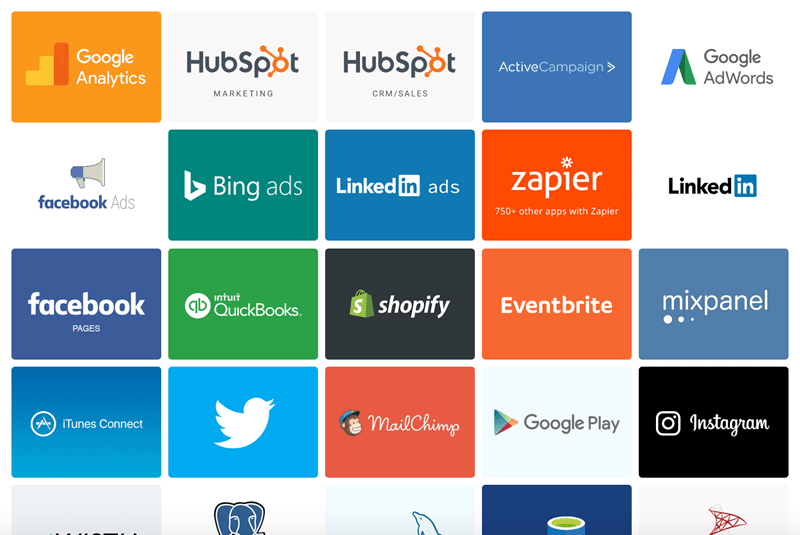
Databox seamlessly integrates with virtually any system a SaaS company might need insights from, including all major paid advertising platforms, Hubspot, Salesforce, and other relevant systems.
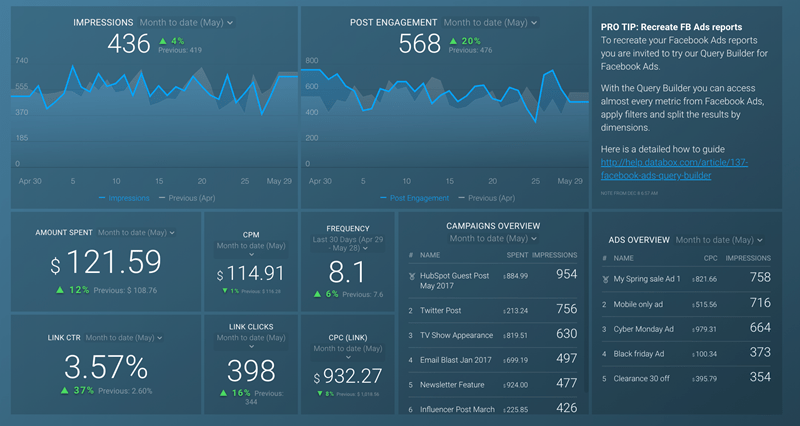
More importantly, it allows for the effortless creation of visually appealing dashboards for your clients using pre-built templates or custom designs (like the one shown above).
#10: Manage Expectations and Set Realistic Timelines
We’ve established that SaaS companies have ambitious goals and face immense pressure to achieve them. However, given their complex business models, settling in takes time. When onboarding new SaaS clients, establish a 30-60-90 day plan. This plan should adopt a gradual approach, with the expectation that operations will be fully optimized after three months. Structuring the plan this way demonstrates your attention to detail and strategic thinking by focusing on achieving incremental goals without overpromising and underdelivering. In some instances, three months might seem excessive to the client. If they expect miraculous results within a week, they might not be the right fit for you. Transparency regarding the time required for your strategy to yield results is crucial for setting realistic expectations and fostering a successful partnership.
Embrace the SaaS Challenge
Whether you’re already working with SaaS companies or hesitant to take them on, these ten points provide a roadmap for what to expect and how to onboard them effectively. You might decide it’s not the right fit for you, and that’s perfectly fine. However, if you embrace the challenge and implement the advice provided, you’ll find servicing SaaS clients to be an incredibly rewarding experience.