Last week was a significant one for PPC marketers, as Google made several announcements regarding upcoming changes to AdWords and Analytics at the Google Performance Summit. The main focus was on mobile. Among the announcements was several incredible mobile statistics. Additionally, Google introduced Expanded Text Ads and offered a sneak peek of the new Google AdWords interface, among other things. Another major change was what Google referred to as “the next generation” of local search ads.

What exactly are these new Google Maps ads, and what’s changing? This article addresses the top 10 questions you may have about the new Google Maps local search ads.
1. What’s changing with Local Search Ads on Google Maps?
The new Google Maps ads aim to increase business visibility when consumers use online searches, especially on mobile devices, to find places to eat or shop. Over the next few weeks and months, Google will be introducing new ad formats and features for Maps that are intended to drive more foot traffic to brick-and-mortar locations. These include Promoted Pins (including brand logos), in-store promotions, customizable business pages, and local inventory search. Google’s objective is to enhance the Google Maps experience by displaying ads to users without being overly intrusive or distracting, especially for those who may be driving. For this reason, there are no plans to implement interstitials or audio ads.

Local ads on the Google Maps app were first introduced by Google in in 2013.
2. Where will the new ads be displayed?
These new local search ads will appear within the Google Maps app, across Google Maps mobile, desktop, and tablet sites, and on Google.com Expanded Maps results.
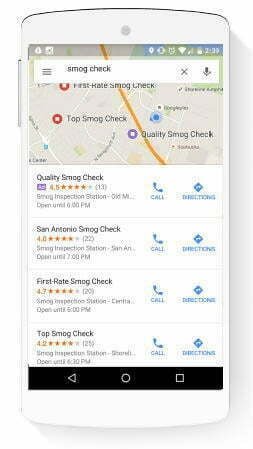
The Google Maps app, which boasts over a billion downloads, will display a single ad with a purple ad label prominently at the top, above the organic results.
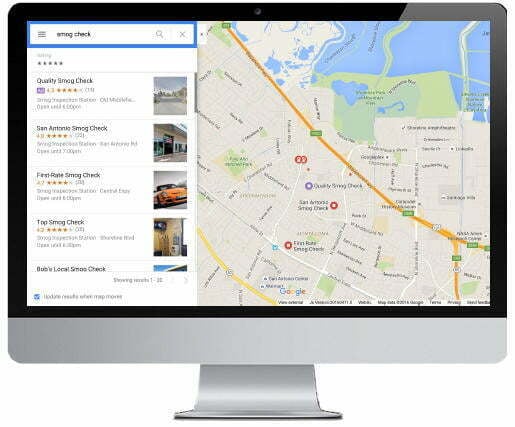
Within Google Maps searches, a maximum of two ads with purple labels will appear at the top of the search results.
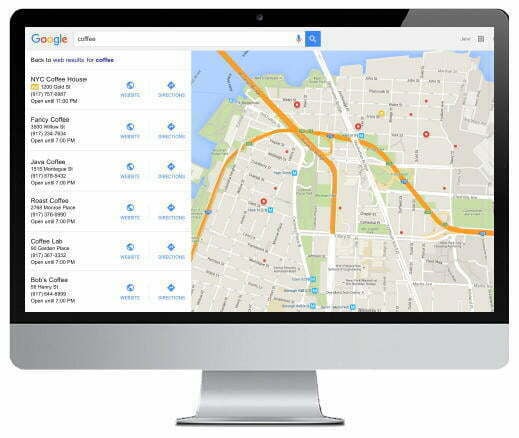
When conducting location-related searches on Google.com (known as Google.com Expanded Maps Results), clicking on the “More places” link at the bottom of the Local 3-Pack will lead to a page where a Google Maps ad with a yellow ad label is displayed first, positioned above other map results.
3. What prompted these changes from Google?
During the Summit, Google presented some compelling statistics that should make all marketers pay attention.

Here are seven remarkable mobile statistics that highlight the need to bridge the gap between the mobile and physical worlds:
- Roughly 90 percent of all global sales are expected to occur in physical stores, not online.
- Nearly one-third of mobile searches are related to finding a location.
- The growth of location-related searches has outpaced overall mobile searches by 50 percent in the past year.
- Over a billion people currently use Google Maps.
- Google searches, both on Google.com and Maps, lead consumers to 1.5 billion destinations annually.
- 84 percent of consumers use search engines for local searches.
- Three out of four individuals who search for something nearby on their smartphones visit a store within a day, with 28 percent of those searches resulting in a purchase. If your business has a physical location and you’re looking to expand, making it incredibly easy for potential customers to find you online when they search for businesses like yours on their smartphones is crucial.
4. Can you explain Promoted Pins?
Google will soon introduce Promoted Pins on Google Maps. These branded pins aim to make your business easily noticeable to those in the vicinity, including those walking or driving by. It’s your chance to stand out from the crowd. For example, if you own a restaurant, your ad could entice passersby to stop in for a meal. Similarly, a Promoted Pin for a gas station could persuade drivers to refuel. Here’s a visual representation of Promoted Pins:
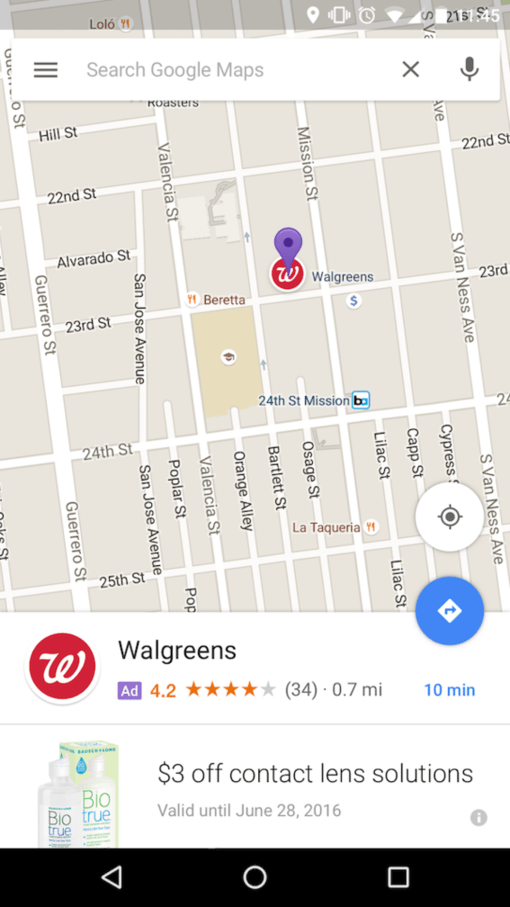
If you were looking for a pharmacy, for instance, a Walgreens ad might appear at the top of your search results, assuming there’s one nearby. Along with details about the Walgreens location, you might also see an in-store promotion, such as $3 off contact lens solution. A well-placed promotion can effectively drive more customers to your store. Let’s imagine you’ve successfully purchased contact lens solution at Walgreens and are on your way back. You’re a regular at a Starbucks a few blocks away. To encourage you to visit, Starbucks might use a Promoted Pin on Google Maps to offer $1 off any beverage when you use your rewards card.
5. How does Google Maps determine which ads are shown?
With potentially hundreds of stores in your vicinity, how does Google decide which listing is the most pertinent to the searcher given the limited ad space? Google indicates that they utilize a “variety” of factors to make this determination, including:
- The user’s query context.
- Their current location.
- Their search and browsing history.
- Their interests.
- Their online behaviors.
- The time of day.
- Their demographics. Google Maps’ approach is comparable to the ad serving used on the Google Display Network. This means that if Google is aware that you don’t frequent Starbucks, you won’t be shown Starbucks ads. Smart, right?
6. What other changes are being implemented in Google Maps?
Local pages are getting a redesign, all with the goal of attracting more foot traffic to physical stores.
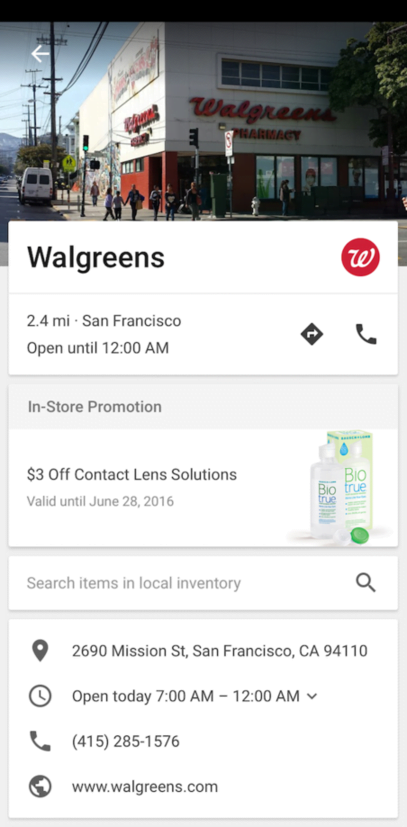
Clicking or tapping on a local search ad will now lead users to a customizable page. These local pages will include key business information such as store hours, phone number, address, and driving directions. Additionally, businesses can use these pages to highlight promotions specific to that location (e.g., 10 percent off a particular item) and enable customers to search for items available in the store’s local inventory. Google will only display local inventory if it’s applicable to the business.
7. How can businesses showcase their local inventory?
According to Google data, one in four people avoid visiting stores because they’re unsure if a particular product is in stock. This highlights the importance of including local inventory information on your customizable local page, along with a feature allowing customers to search through that inventory. This can be done by providing Google with your inventory feed. More information on this can be found Google’s specifications here.
8. What is the cost of the new local search ads?
Currently, advertisers are charged for Google Local Search ads on a cost-per-click basis. These clicks encompass:
- Clicks on “Get location details.”
- Clicks on “Get directions.”
- Click-to-call interactions.
9. When will the new local search ads be launched?
These new local search ads are currently in beta testing. While Google hasn’t announced a specific date for their wider release, it’s reasonable to expect them to become available to more advertisers within the next three months.
10. What actions should location-based businesses take?
While waiting for access to the new ads, there are a couple of things you can do to prepare. Firstly, and most importantly, make sure you have location extensions enabled, as only ads with this feature will be eligible for display. Location extensions have been proven to improve ad performance. You can take care of this advertise on Google Maps and ensure all the information in your Google My Business profile is complete, accurate, and current. Inaccurate information will only make it more challenging for potential customers to find you when they are ready to make a purchase, which could be right now. For more useful advice, take a look at this comprehensive Ultimate Guide to Google Maps Marketing.